Attila Varga - Böcker
Visar alla böcker från författaren Attila Varga. Handla med fri frakt och snabb leverans.
11 produkter
11 produkter
444 kr
Skickas inom 10-15 vardagar
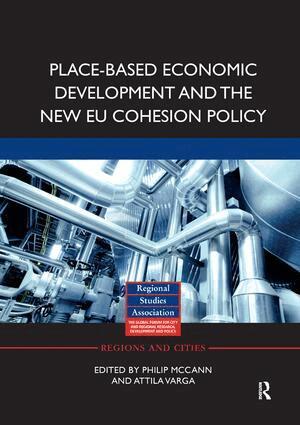
The new EU Cohesion Policy is one of the largest integrated development policies in the Western world, and one of the largest of such programmes anywhere in the world. The reforms to the EU Cohesion Policy contain many different elements each of which interlink in order to provide a cohesive overall framework. Some of the key elements in the reforms, however, relate to the conditionalities employed and their effects on policy governance and the control mechanism, the smart specialization approach to policy prioritization and resource allocation, the underlying place-based logic of the policy, and the overall results orientation and evaluation emphasis of the policy. In each of the areas of the EU Cohesion Policy reforms, many different scholars from the fields of regional studies, regional science and economic geography have played important roles in shaping the new policy, and the chapters here highlight these increasing interactions between the policy and academic spheres of debate. The collection of essays in this book each deal with specific aspects of these critical elements of the Cohesion Policy reforms. In particular, they examine some of the strengths and weaknesses of these individual elements and allowing for a better understanding of the origins and backgrounds of many of the ideas underpinning these reforms. This book was previously published as a special issue of Regional Studies.
University Research and Regional Innovation
A Spatial Econometric Analysis of Academic Technology Transfers
Inbunden, Engelska, 1998
1 095 kr
Skickas inom 10-15 vardagar
This text represents a study in the literature that provides a systematic, US-wide analysis of local university-high technology connections at the lowest possible level of spatial aggregation. Its contributions are twofold: it focuses on the regional aspects of the interaction between high technology innovations, university and private R&D at the proper spatial scale, at the level of counties and metropolitan areas; and it uses the specialized methodology of spatial econometrics to explicitly deal with potential spatial effects in cross-sectional data. The study is based on a data set of high technology innovations and industrial R&D employment in the USA in 1982. From an exploratory spatial data analysis implemented at the county level, it is shown that the concentration of high technology product innovations, private R&D and university research follow a similar spatial pattern across the United States. A formal regression analysis is carried out for 43 States and 125 Metropolitan Statistical Areas which implements the Griliches-Jaffe knowledge production function framework.This provides strong evidence that university research expenditures have a positive and very significant effect on aggregate high technology innovation. However, the intensity of knowledge transfers between university research and regional innovation is not constant over space. It is demonstrated that the same amount of university research expenditure yields substantially different levels of local innovation activity depending on the concentration of economic activities in the metropolitan area. The findings in this book strongly indicate that a stimulation of research activities in universities located in existing agglomerations of high technology production and research has significant positive effects on the regional economy. This book aims to serve the interests of both academic researchers in the fields of regional science and economics of technological change, and economic developers concerned with practical problems of innovative technology regions. The text may be used in graduate-level courses of regional economics, economics of technological change, economics of education, and applied spatial econometrics.
1 339 kr
Skickas inom 10-15 vardagar
The new EU Cohesion Policy is one of the largest integrated development policies in the Western world, and one of the largest of such programmes anywhere in the world. The reforms to the EU Cohesion Policy contain many different elements each of which interlink in order to provide a cohesive overall framework. Some of the key elements in the reforms, however, relate to the conditionalities employed and their effects on policy governance and the control mechanism, the smart specialization approach to policy prioritization and resource allocation, the underlying place-based logic of the policy, and the overall results orientation and evaluation emphasis of the policy. In each of the areas of the EU Cohesion Policy reforms, many different scholars from the fields of regional studies, regional science and economic geography have played important roles in shaping the new policy, and the chapters here highlight these increasing interactions between the policy and academic spheres of debate. The collection of essays in this book each deal with specific aspects of these critical elements of the Cohesion Policy reforms. In particular, they examine some of the strengths and weaknesses of these individual elements and allowing for a better understanding of the origins and backgrounds of many of the ideas underpinning these reforms. This book was previously published as a special issue of Regional Studies.
University Research and Regional Innovation
A Spatial Econometric Analysis of Academic Technology Transfers
Häftad, Engelska, 2012
1 101 kr
Skickas inom 10-15 vardagar
4 UNIVERSITY RESEARCH AND THE SPATIAL DISTRIBUTION OF HIGH TECHNOLOGY INNOVATIONS AND PRIVATE RESEARCH . . . . . . . . 45 4. 1. INTRODUCTION . . . . . . . . . . . . . . . . . . . . . . . . . . . . . . . . . . . . . . . . . . . . . . . . . . . . . . . . . . . . . . . . . . . . . . . . . . . . . . . . . . . . . . . . . . . . . . 45 4. 2. THE INNOVATION, PRIVATE RESEARCH AND UNIVERSITY RESEARCH DATA . . . . 46 4. 3. THE SPATIAL DISTRIBUTION OF HIGH TECHNOLOGY INNOVATIONS . . . . . . . . . . . . . . . . 50 4. 4. THE SPATIAL DISTRIBUTION OF HIGH TECHNOLOGY R&D ACTIVITIES . . . . . . . . . . . 55 4. 5. THE SPATIAL DISTRIBUTION OF HIGH TECHNOLOGY UNIVERSITY RESEARCH AND ITS RELATION TO INNOVATIONS AND INDUSTRIAL RESEARCH . . . . . . . . . . . . . . . . . . . . . . . . 58 4. 6. SUMMARy . . . . . . . . . . . . . . . . . . . . . . . . . . . . . . . . . . . . . . . . . . . . . . . . . . . . . . . . . . . . . . . . . . . . . . . . . . . . . . . . . . . . . . . . . . . . . . . . . . . . . . 63 5 LOCAL KNOWLEDGE TRANSFERS: STATE LEVEL ANALYSIS . . . . . . . . . 67 5. 1. INTRODUCTION . . . . . . . . . . . . . . . . . . . . . . . . . . . . . . . . . . . . . . . . . . . . . . . . . . . . . . . . . . . . . . . . . . . . . . . . . . . . . . . . . . . . . . . . . . . . . . 67 5. 2. STATE ANALYSIS AND LOCAL KNOWLEDGE TRANSFERS: SUMMARY OF EARLIER FINDINGS . . . . . . . . . . . . . . . . . . . . . . . . . . . . . . . . . . . . . . . . . . . . . . . . . . . . . . . . . . . . . . . . . . . . . . . . . . . . . . . . . . . . . . . . . . . . . . . . . . . . . . . . . . . . . . . 68 5. 3. ALTERNATIVE INDICATORS OF LOCAL UNIVERSITY KNOWLEDGE TRANSFERS 72 EMPIRICAL RESULT . . . . . . . . . . . . . . . . . . . . . . . . . . . . . . . . . . . . . . . . . . . . . . . . . . . . . . . . . . . . . . . . .. . . . . . . . . . . . . . . . . . . . . . . 74 5. 4. 5. 5. SUMMARy . . . . . . . . . . . . . . . . . . . . . . . . . . . . . . . . . . . . . . . . . . . . . . . . . . . . . . . . . . . . . . . . . . . . . . . . . . . . . . . . . . . . . . . . . . . . . . . . . . . . . . 78 6 THE SPATIAL EXTENT OF UNIVERSITY EFFECTS: MSA LEVEL ANALySIS . . . . . . . . . . . . . . . . . . . . . . . . . . . . . . . . . . . . . . . . . . . . . . . . . . . . . . . . . . . . . . . . . . . . . . . . . . . . . . . . . . . . . . . . . . . . . . . . . . . . . . . . . . . . . 81 6. 1. INTRODUCTION . . . . . . . . . . . . . . . . . . . . . . . . . . . . . . . . . . . . . . . . . . . . . . . . . . . . . . . . . . . . . . . . . . . . . . . . . . . . . . . . . . . . . . . . . . . . . . 81 6. 2. THE MODEL . . . . . . . . . . . . . . . . . . . . . . . . . . . . . . . . . . . . . . . . . . . . . . . . . . . . . . . . . . . . . . . . . . . . . . . . . . . . . . . . . . . . . . . . . . . . . . . . . . . . 82 6. 2. ESTIMATION ISSUES . . . . . . . . . . . . . . . . . . . . . . . . . . . . . . . . . . . . . . . . . . . . . . . . . . . . . . . . . . . . . . . . . . . . . . . . . . . . . . . . . . . . . . . 89 6. 3. EMPIRICAL RESULTS . . . . . . . . . . . . . . . . . . . . . . . . . . . . . . . . . . . . . . . . . . . . . . . . . . . . . . . . . . . . . . . . . . . . . . . . . . . . . . . . . . . . . . 90 6. 4. SUMMARy . . . . . . . . . . . . . . . . . . . . . . . . . . . . . . . . . . . . . . . . . . . . . . . . . . . . . . . . . . . . . . . . . . . . . . . . . . . . . . . . . . . . . . . . . . . . . . . . . . . . . . 97 7 FACTORS GOVERNING UNIVERSITY EFFECTS . . . . . . . . . . . . . . . . . . . . . . . . . . . . . . . . . . . 101 7. 1. INTRODUCTION . . . . . . . . . . . . . . . . . . . . . . . . . . . . .. . . . . . . . . . . . . . . . . . . . . . . . . . . . . . . . . . . . . . . . . . . . . . . . . . . . . . . . . . . . . . . 101 7. 2. THE EMPIRICAL MODEL . . . . . . . . . . . . . . . . . . . . . . . . . . . . . . . . . . . . . . . . . . . . . . . . . . . . . . . . . . . . . . . . . . . . . . . . . . . . . . . . 102 7. 3. REGRESSION RESULTS . . . . . . . . . . . . . . . . . . . . . . . . . . . . . . . . . . . . . . . . . . . . . . . . . . . . . . . . . . . . . . . . . . . . . . . . . . . . . . . . . . 105 7. 4. SPATIAL VARIATION IN THE INTENSITY OF UNIVERSITY KNOWLEDGE TRANSFERS . . . . . . . . . . . . . . . . . . . . . . . . . . . . . . . . . . . . . . . . . . . . . . . . . . . . . . . . . . . . . . . . . . . . . . . . . . . . . . . . . . . . . . . . . . . . . . . . . . . . . . . . . 107 7. 5. THE "CRITICAL MASS" OF AGGLOMERATION . . . . . . . . . . . . . . . . . . . . . . . . . . . . . . . . . . . . . . . . . . . . . . . . 112 7. 6. SUMMARy . . . . . . . . . . . . . . . . . . . . . . . . . . . . . . . . . . . . . . . . . . . . . . . . . . . . . . . . . . . . . . . . . . . . . . . . . . . . . . . . . . . . . . . . . . . . . . . . . . . . 119 8 SUMMARY AND CONCLUSIONS . . . . . . . . . . . . . . . . . . . . . . . . . . . . . . . . . . . . . . . . . . . . . . . . . . . . . . . . . . . . . . . . 121 APPENDIX A: DEFINING HIGH TECHNOLOGY FOR THE EMPIRICAL STUDY . . . . . . . . . . . . . . . . . . . . . . . . . . . . . . . . . . . . . . . . . . . . . . . . . . . . . . . . . . . . . . . . . . . . . . . . . . . . . . . . . . . . . . . . . . . . . . . . . . . . . . . . . . . . . . . . . . 127 APPENDIX B: VARIABLE DEFINITIONS AND SOURCES . . . . . . . . . . . . . . . . . . . . . . . 131 REFERENCES . . . . . . . . . . . . . . . . . . . . . . . . . . . . . . . . . . . . . . . .. . . . . . . . . . . . . . . . . . . . . . . . . . . . . . . . . . . . . . . . . . . . . . . . . . . . . . . . . . . . . . . 135 INDEX . . . . . . . . . . . . . . . . . . . . . . . . . . . . . . . . . . . . . . . . . . . . . . . . . . . . . . . . . . . . . . . . . . . . . . . . . . . . . . . . . . . . . . . . . . . . . . . . . . . . . . . . . . . . . . . . . 149 List of Tables Table 2. 1.
209 kr
Skickas inom 5-8 vardagar
3 360 kr
Skickas inom 7-10 vardagar
The Handbook of Universities and Regional Development offers a comprehensive and up-to-date insight into how academic institutions impact and enhance their surroundings. It also sheds light on universities as regional development actors from a historical perspective, both by introducing institutional changes and highlighting the interrelatedness of society, business and academia.Chapters provide comprehensive investigations into knowledge transfer mechanisms to explore the diverse ways in which ideas and intellectual property can flow between universities and businesses. Detailed comparative case studies from across the globe expose the highly contextual nature of interactions between academic institutions and their regions.Regional studies scholars will find this Handbook offers a thorough analysis of the topic, as well as a range of key interpretations on the relationships between universities and regional development. Providing important policy recommendations aimed at creating improved relations between academic institutions and their environment, this thought-provoking Handbook is key reading for regional policy makers as well as university managers and administrators.Contributors include: S. Bagchi-Sen, P. Benneworth, M. Breul, Y. Cai, F. Eckardt, L. Edmunds, K. Erdós, H. Etzkowitz, M.P. Feldman, Z. Gál, H. Goldstein, R. Huggins, A. Inzelt, A. Johnston, H. Lawton Smith, A. Lyytinen, J. Manoel Carvalho de Mello, C. Martínez, P. McCann, L. Melo, E.I. Nwakpuda, R. Ortega-Argilés, P. Ptácek, V. Radinger-Peer, E. Rasmussen, T. Renault, J. Revilla Diez, S. Sedlacek, S. Slaughter, N.M. Sorber, R. Sternberg, V. Sterzi, B.J. Taylor, J. van den Broek, A. Varga, A. Vorderwülbecke, J. Wrana, P. Yang, S.R. Yates
Universities, Knowledge Transfer and Regional Development
Geography, Entrepreneurship and Policy
Inbunden, Engelska, 2009
2 251 kr
Skickas inom 7-10 vardagar
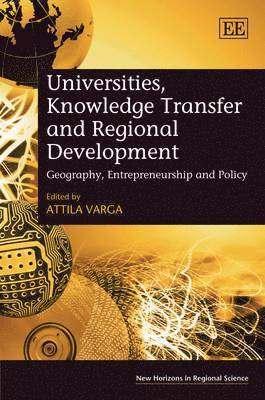
The transfer of new, economically useful knowledge from universities to the regional economy has recently attracted the attention of academics, professionals and policymakers alike. This book focuses on three issues at the centre of current research: the geography of academic knowledge transfers, the mechanisms of these transfers with regard to academic entrepreneurship and graduate mobility, and policy experience in university-based regional economic development. The expert contributors provide state-of-the-art overviews of the field, reviewing and outlining important advancements in theory, empirics and policy analysis. Importantly, the book includes unique case studies of university-based development in three lagging regions of Asia, Europe and North America to illustrate individual experiences. This timely and highly original book will be warmly welcomed by academics, students and researchers focusing on regional science, the economics of innovation, economic growth and technological change. Policymakers involved with regional development and innovation will also find much to interest them in this book.
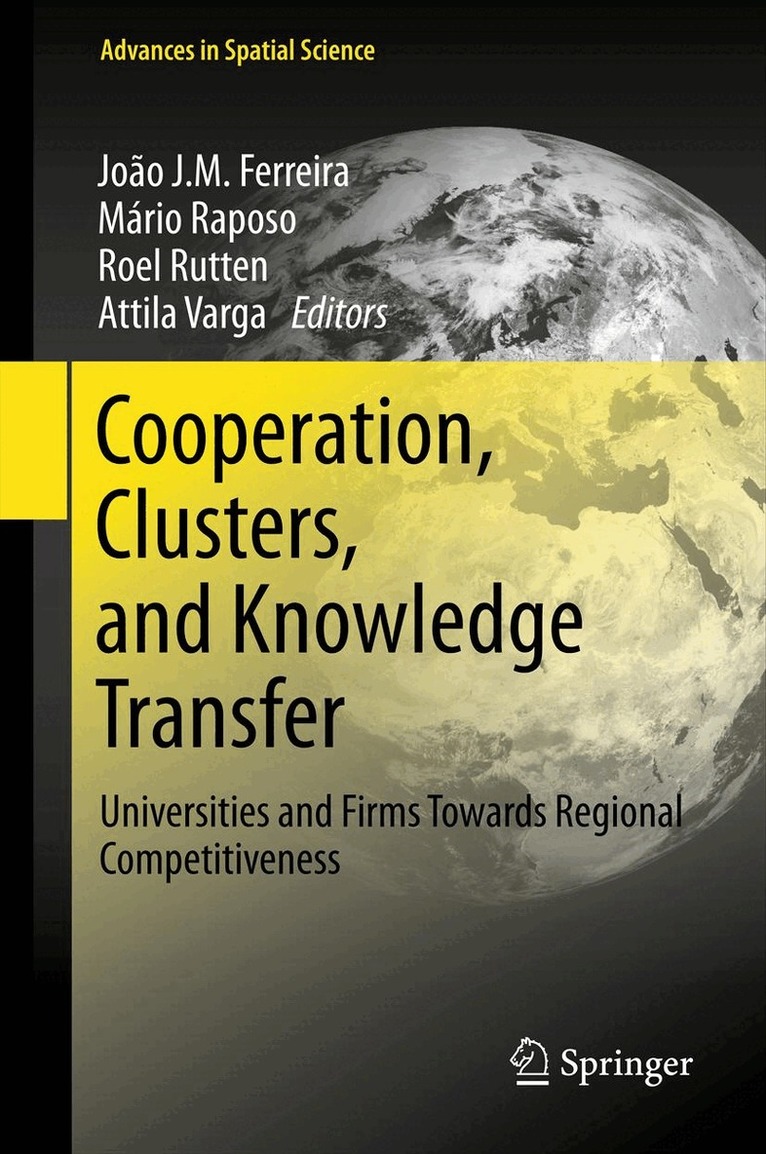
Cooperation, Clusters, and Knowledge Transfer
Universities and Firms Towards Regional Competitiveness
Inbunden, Engelska, 2013
1 064 kr
Skickas inom 10-15 vardagar
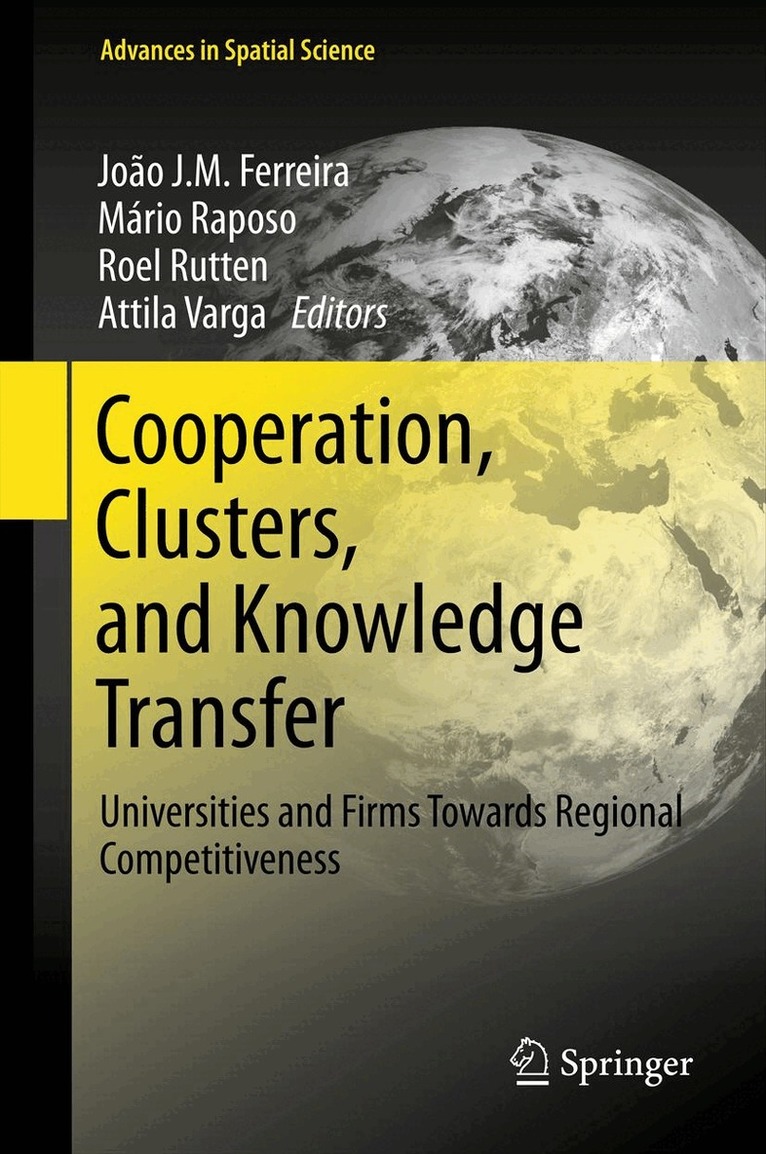
Cooperation and clusters have become the guiding paradigms for explaining and promoting regional competitiveness, but the cooperation process between firms and universities and the transfer of knowledge in guiding and nurturing regional competitiveness has received relatively little attention. This book strives to fill this gap in highlighting the connection between inter-firm cooperation in regional clusters, innovation and regional networks, and the role of universities in them . It goes beyond the traditional economic approach of clusters and includes ‘soft factors’ in the explanation of regional competitiveness, and connects the literature on clusters to the literature of learning and knowledge creation as sources of regional competitiveness. It aims to foster an international and interdisciplinary exchange of perspectives by presenting current developments, case studies, best practices as well as new integrated theoretical approaches and applications.
Cooperation, Clusters, and Knowledge Transfer
Universities and Firms Towards Regional Competitiveness
Häftad, Engelska, 2015
1 064 kr
Skickas inom 10-15 vardagar
Cooperation and clusters have become the guiding paradigms for explaining and promoting regional competitiveness, but the cooperation process between firms and universities and the transfer of knowledge in guiding and nurturing regional competitiveness has received relatively little attention. This book strives to fill this gap in highlighting the connection between inter-firm cooperation in regional clusters, innovation and regional networks, and the role of universities in them . It goes beyond the traditional economic approach of clusters and includes ‘soft factors’ in the explanation of regional competitiveness, and connects the literature on clusters to the literature of learning and knowledge creation as sources of regional competitiveness. It aims to foster an international and interdisciplinary exchange of perspectives by presenting current developments, case studies, best practices as well as new integrated theoretical approaches and applications.
Computer und Internet leicht gemacht: Der ideale Einstieg für Senioren und Anfänger
Häftad, Tyska, 2024
128 kr
Skickas inom 3-6 vardagar
212 kr
Skickas inom 3-6 vardagar