Austin Choi-Fitzpatrick - Böcker
Visar alla böcker från författaren Austin Choi-Fitzpatrick. Handla med fri frakt och snabb leverans.
9 produkter
9 produkter
1 161 kr
Skickas inom 5-8 vardagar
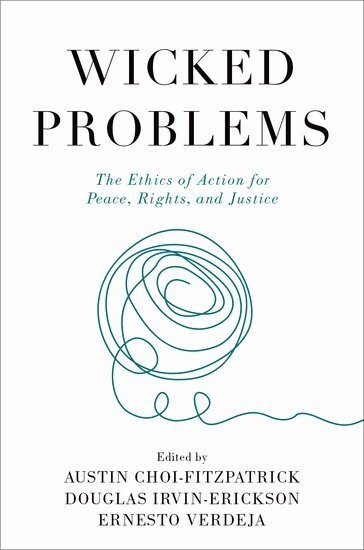
The ethics of changemaking and peacebuilding may appear straightforward: advance dignity, promote well-being, minimize suffering. Sounds simple, right? Actually acting ethically when it really matters is rarely straightforward. If someone engaged in change-oriented work sets out to "do good," how should we prioritize and evaluate whose good counts? And, how ought we act once we have decided whose good counts? Practitioners frequently confront dilemmas where dire situations may demand some form of response, but each of the options may have undesirable consequences of one form or another. Dilemmas are not merely ordinary problems, they are wicked problems: that is to say, they are defined by circumstances that only allow for suboptimal outcomes and are based on profound and sometimes troubling trade-offs.Wicked Problems argues that the field of peacebuilding and conflict transformation needs a stronger and more practical sense of its ethical obligations. For example, it argues against posing false binaries between domestic and international issues and against viewing violence and conflict as equivalents. It holds strategic nonviolence up to critical scrutiny and shows that "do no harm" approaches may in fact do harm. The contributors include scholars, scholar practitioners in the field, and activists on the streets, and the chapters cover the role of violence in conflict; conflict and violence prevention and resolution; humanitarianism; community organizing and racial justice; social movements; human rights advocacy; transitional justice; political reconciliation; and peace education and pedagogy, among other topics. Drawing on the lived experiences and expertise of activists, educators, and researchers, Wicked Problems equips readers to ask--and answer--difficult questions about social change work.
334 kr
Skickas
The ethics of changemaking and peacebuilding may appear straightforward: advance dignity, promote well-being, minimize suffering. Sounds simple, right? Actually acting ethically when it really matters is rarely straightforward. If someone engaged in change-oriented work sets out to "do good," how should we prioritize and evaluate whose good counts? And, how ought we act once we have decided whose good counts? Practitioners frequently confront dilemmas where dire situations may demand some form of response, but each of the options may have undesirable consequences of one form or another. Dilemmas are not merely ordinary problems, they are wicked problems: that is to say, they are defined by circumstances that only allow for suboptimal outcomes and are based on profound and sometimes troubling trade-offs.Wicked Problems argues that the field of peacebuilding and conflict transformation needs a stronger and more practical sense of its ethical obligations. For example, it argues against posing false binaries between domestic and international issues and against viewing violence and conflict as equivalents. It holds strategic nonviolence up to critical scrutiny and shows that "do no harm" approaches may in fact do harm. The contributors include scholars, scholar practitioners in the field, and activists on the streets, and the chapters cover the role of violence in conflict; conflict and violence prevention and resolution; humanitarianism; community organizing and racial justice; social movements; human rights advocacy; transitional justice; political reconciliation; and peace education and pedagogy, among other topics. Drawing on the lived experiences and expertise of activists, educators, and researchers, Wicked Problems equips readers to ask--and answer--difficult questions about social change work.
What Slaveholders Think
How Contemporary Perpetrators Rationalize What They Do
Inbunden, Engelska, 2017
978 kr
Skickas inom 7-10 vardagar
Drawing on fifteen years of work in the antislavery movement, Austin Choi-Fitzpatrick examines the systematic oppression of men, women, and children in rural India and asks: How do contemporary slaveholders rationalize the subjugation of other human beings, and how do they respond when their power is threatened? More than a billion dollars have been spent on antislavery efforts, yet the practice persists. Why? Unpacking what slaveholders think about emancipation is critical for scholars and policy makers who want to understand the broader context, especially as seen by the powerful. Insight into those moments when the powerful either double down or back off provides a sobering counterbalance to scholarship on popular struggle. Through frank and unprecedented conversations with slaveholders, Choi-Fitzpatrick reveals the condescending and paternalistic thought processes that blind them. While they understand they are exploiting workers' vulnerabilities, slaveholders also feel they are doing workers a favor, often taking pride in this relationship.And when the victims share this perspective, their emancipation is harder to secure, driving some in the antislavery movement to ask why slaves fear freedom. The answer, Choi-Fitzpatrick convincingly argues, lies in the power relationship. Whether slaveholders recoil at their past behavior or plot a return to power, Choi-Fitzpatrick zeroes in on the relational dynamics of their self-assessment, unpacking what happens next. Incorporating the experiences of such pivotal actors into antislavery research is an immensely important step toward crafting effective antislavery policies and intervention. It also contributes to scholarship on social change, social movements, and the realization of human rights.
250 kr
Skickas inom 7-10 vardagar
Drawing on fifteen years of work in the antislavery movement, Austin Choi-Fitzpatrick examines the systematic oppression of men, women, and children in rural India and asks: How do contemporary slaveholders rationalize the subjugation of other human beings, and how do they respond when their power is threatened? More than a billion dollars have been spent on antislavery efforts, yet the practice persists. Why? Unpacking what slaveholders think about emancipation is critical for scholars and policy makers who want to understand the broader context, especially as seen by the powerful. Insight into those moments when the powerful either double down or back off provides a sobering counterbalance to scholarship on popular struggle. Through frank and unprecedented conversations with slaveholders, Choi-Fitzpatrick reveals the condescending and paternalistic thought processes that blind them. While they understand they are exploiting workers' vulnerabilities, slaveholders also feel they are doing workers a favor, often taking pride in this relationship. And when the victims share this perspective, their emancipation is harder to secure, driving some in the antislavery movement to ask why slaves fear freedom. The answer, Choi-Fitzpatrick convincingly argues, lies in the power relationship. Whether slaveholders recoil at their past behavior or plot a return to power, Choi-Fitzpatrick zeroes in on the relational dynamics of their self-assessment, unpacking what happens next. Incorporating the experiences of such pivotal actors into antislavery research is an immensely important step toward crafting effective antislavery policies and intervention. It also contributes to scholarship on social change, social movements, and the realization of human rights.
425 kr
Skickas inom 5-8 vardagar
378 kr
Skickas inom 10-15 vardagar
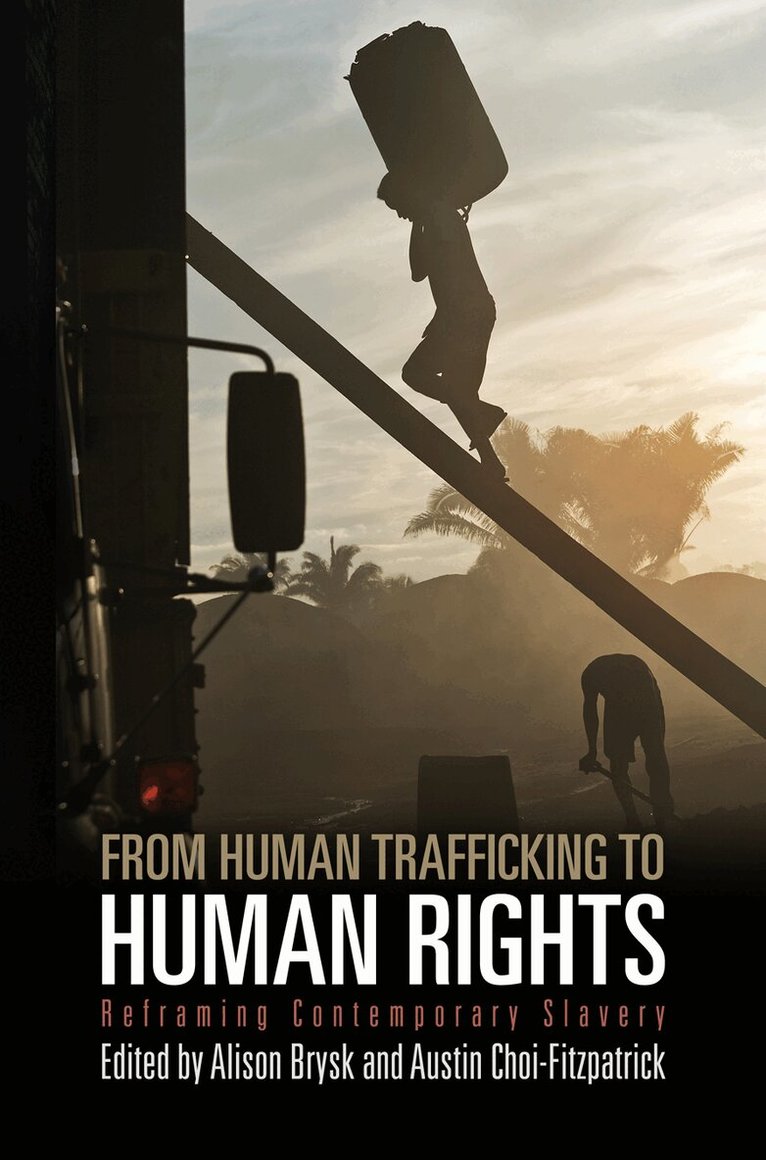
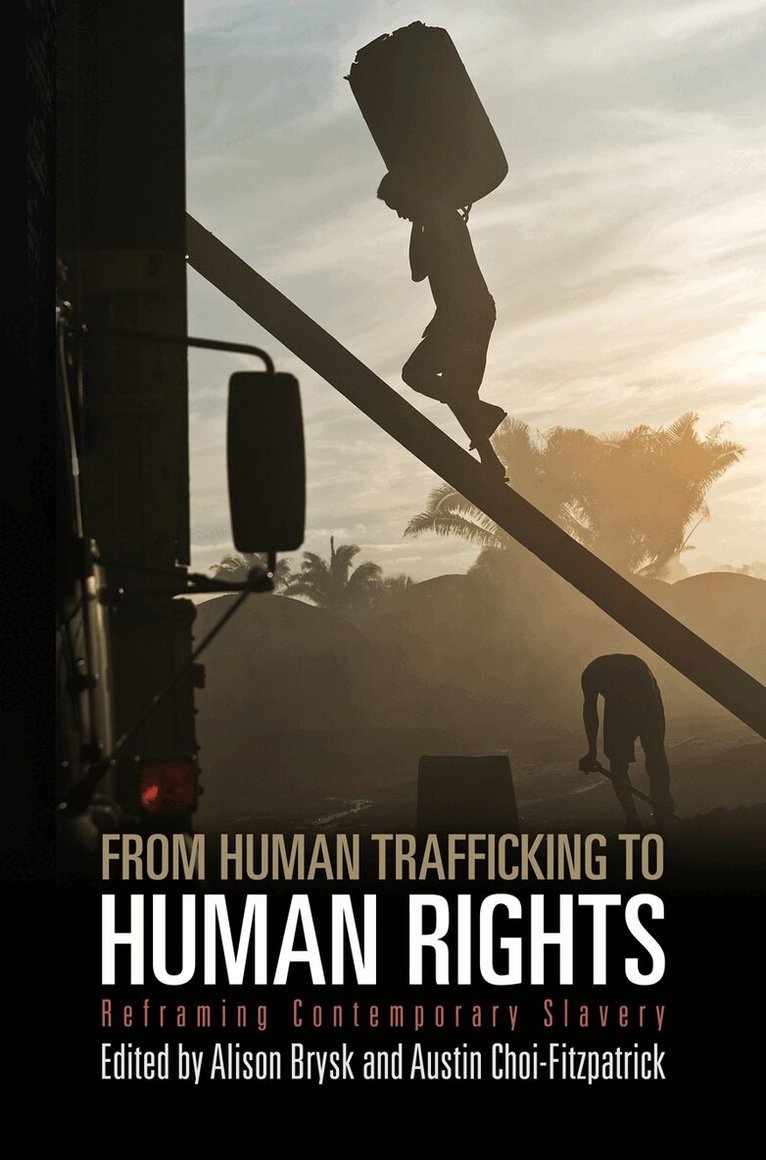
Over the last decade, public, political, and scholarly attention has focused on human trafficking and contemporary forms of slavery. Yet as human rights scholars Alison Brysk and Austin Choi-Fitzpatrick argue, most current work tends to be more descriptive and focused on trafficking for sexual exploitation.In From Human Trafficking to Human Rights, Brysk, Choi-Fitzpatrick, and a cast of experts demonstrate that it is time to recognize human trafficking as more a matter of human rights and social justice, rooted in larger structural issues relating to the global economy, human security, U.S. foreign policy, and labor and gender relations. Such reframing involves overcoming several of the most difficult barriers to the development of human rights discourse: women's rights as human rights, labor rights as a confluence of structure and agency, the interdependence of migration and discrimination, the ideological and policy hegemony of the United States in setting the terms of debate, and a politics of global justice and governance.Throughout this volume, the argument is clear: a deep human rights approach can improve analysis and response by recovering human rights principles that match protection with empowerment and recognize the interdependence of social rights and personal freedoms. Together, contributors to the volume conclude that rethinking trafficking requires moving our orientation from sex to slavery, from prostitution to power relations, and from rescue to rights. On the basis of this argument, From Human Trafficking to Human Rights offers concrete policy approaches to improve the global response necessary to end slavery responsibly.
775 kr
Skickas inom 7-10 vardagar
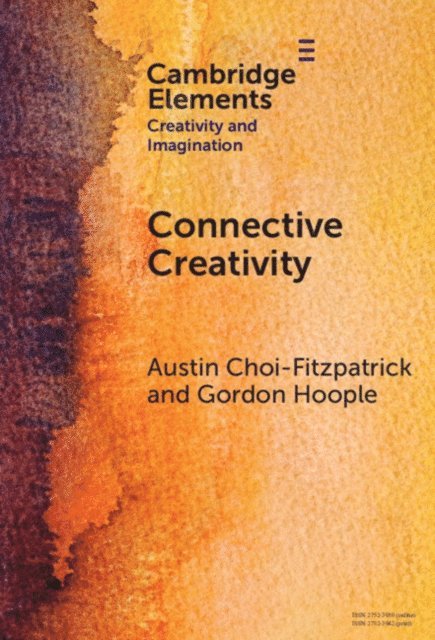
The story we often tell about artists is fiction. We tend to imagine the starving artists toiling alone in their studio when, in fact, creativity and imagination are often relational and communal. Through interviews with artistic collectives and first-hand experience building large scale installations in public spaces and at art events like Burning Man, Choi-Fitzpatrick and Hoople take the reader behind the scenes of a rather different art world. Connective Creativity leverages these experiences to reveal what artists can teach us about collaboration and teamwork and focuses in particular on the importance of embracing playfulness, cultivating a bias for action, and nurturing a shared identity. This Element concludes with an invitation to apply lessons from the arts to promote connective creativity across all our endeavors, especially to the puzzle of how we can foster more connective creativity with other minds, including other artificial actors.
241 kr
Skickas inom 7-10 vardagar
The story we often tell about artists is fiction. We tend to imagine the starving artists toiling alone in their studio when, in fact, creativity and imagination are often relational and communal. Through interviews with artistic collectives and first-hand experience building large scale installations in public spaces and at art events like Burning Man, Choi-Fitzpatrick and Hoople take the reader behind the scenes of a rather different art world. Connective Creativity leverages these experiences to reveal what artists can teach us about collaboration and teamwork and focuses in particular on the importance of embracing playfulness, cultivating a bias for action, and nurturing a shared identity. This Element concludes with an invitation to apply lessons from the arts to promote connective creativity across all our endeavors, especially to the puzzle of how we can foster more connective creativity with other minds, including other artificial actors.
356 kr
Skickas inom 10-15 vardagar
What in the world is a social scientist doing collaborating with an engineer, and an engineer with a sociologist, and together on a book about drones and sociotechnical thinking in the classroom?