A.V. Bruschke – författare
Visar alla böcker från författaren A.V. Bruschke. Handla med fri frakt och snabb leverans.
7 produkter
Left Ventricular Hypertrophy
Physiology versus Pathology
Av Ernst E. van der Wall, A. van der Laarse m. fl.
Inbunden, 1999
1129 kr
Lägg i varukorg
The importance of left ventricular hypertrophy in cardiovascular disease has gained wide recognition. Left ventricular hypertrophy is a highly important risk factor associated with major cardiovascular events, including symptomatic heart failure, particularly in patients with systemic hypertension. …
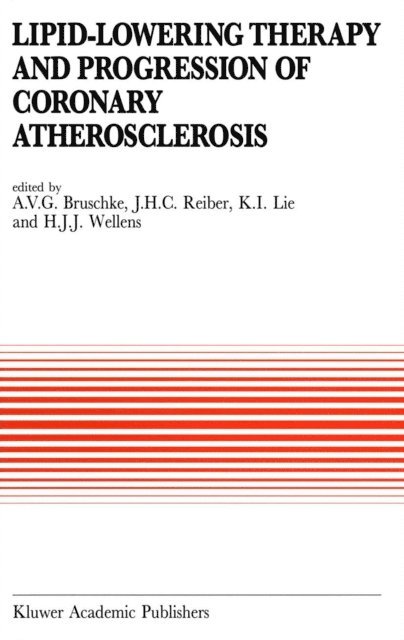
Lipid-Lowering Therapy and Progression of Coronary Atherosclerosis
Av Hein J.J. Wellens, K.J. Lie m. fl.
E-bok, 2012
732 kr
Lägg i varukorg
A unique overview of all major angiographic lipid intervention trials, presented by their principal investigators. Basic mechanisms and methodological aspects, including biochemical as well as angiographic aspects, are discussed by experts in these fields. A careful comparison of all available data …
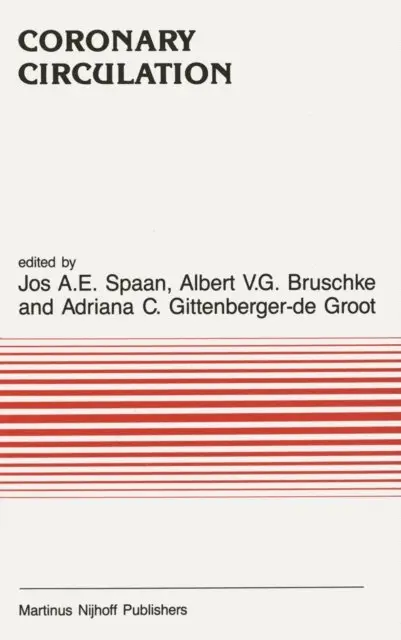
Coronary Circulation
From basic mechanisms to clinical implications
Av Adriana C. Gittenberger-de Groot, A.V. Bruschke m. fl.
E-bok, 2012
755 kr
Lägg i varukorg
Few diagnostic methods in Cardiology have heralded such revolutionary developments as the introduction of coronary arteriography. When, in the early 1960''s, Dr. F. Mason Sones demonstrated that visualization of the coronary anatomy in living humans was not only feasible but sufficiently safe and …
Left Ventricular Hypertrophy
Physiology versus Pathology
Av Ernst E. van der Wall, A. van der Laarse m. fl.
Häftad, 2012
1129 kr
Lägg i varukorg
The importance of left ventricular hypertrophy in cardiovascular disease has gained wide recognition. Left ventricular hypertrophy is a highly important risk factor associated with major cardiovascular events, including symptomatic heart failure, particularly in patients with systemic hypertension. …
Lipid-Lowering Therapy and Progression of Coronary Atherosclerosis
Av A.V. Bruschke, Johan H. C. Reiber m. fl.
Häftad, 2011
568 kr
Lägg i varukorg
A unique overview of all major angiographic lipid intervention trials, presented by their principal investigators. Basic mechanisms and methodological aspects, including biochemical as well as angiographic aspects, are discussed by experts in these fields. A careful comparison of all available data …
Coronary Circulation
From basic mechanisms to clinical implications
Av J.A. Spaan, A.V. Bruschke m. fl.
Häftad, 2012
568 kr
Lägg i varukorg
Few diagnostic methods in Cardiology have heralded such revolutionary developments as the introduction of coronary arteriography. When, in the early 1960's, Dr. F. Mason Sones demonstrated that visualization of the coronary anatomy in living humans was not only feasible but sufficiently safe and …
Left Ventricular Hypertrophy
Physiology versus Pathology
Av A.V. Bruschke, Babette M. Pluim m. fl.
E-bok, 2012
1502 kr
Lägg i varukorg
The importance of left ventricular hypertrophy in cardiovascular disease has gained wide recognition. Left ventricular hypertrophy is a highly important risk factor associated with major cardiovascular events, including symptomatic heart failure, particularly in patients with systemic hypertension. …