Ayotunde Dawodu - Böcker
Visar alla böcker från författaren Ayotunde Dawodu. Handla med fri frakt och snabb leverans.
8 produkter
8 produkter
2 091 kr
Skickas inom 10-15 vardagar
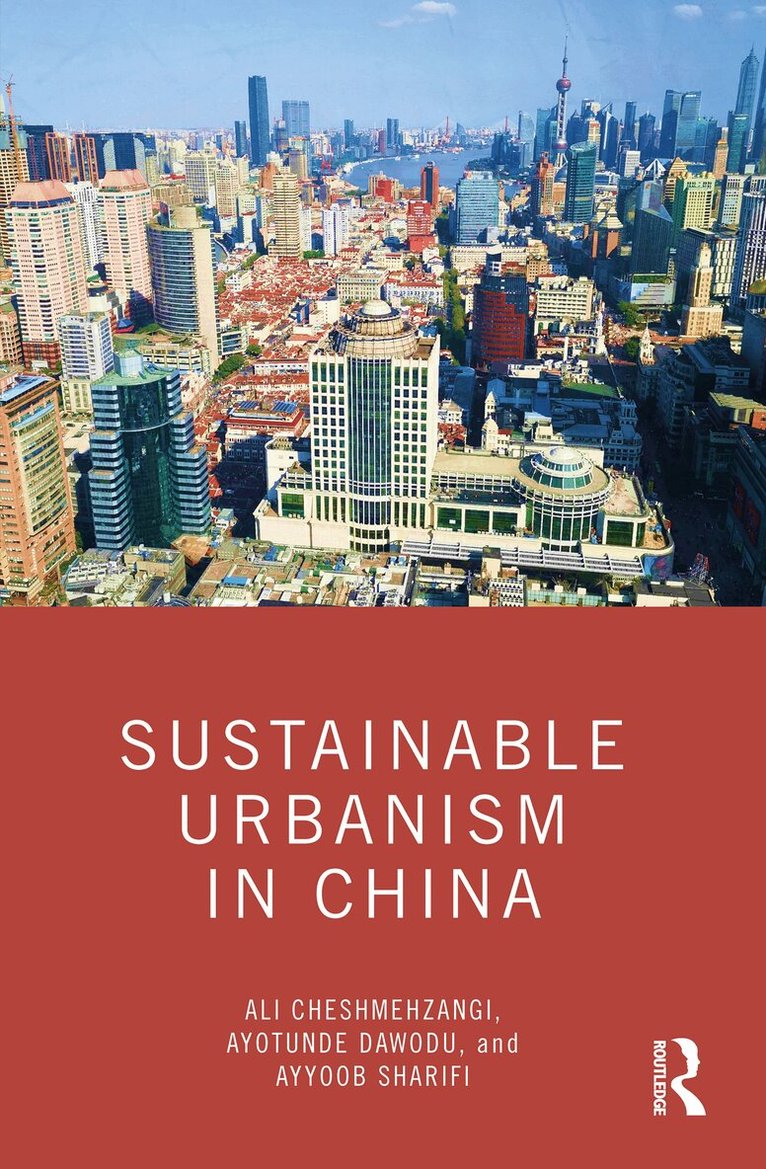
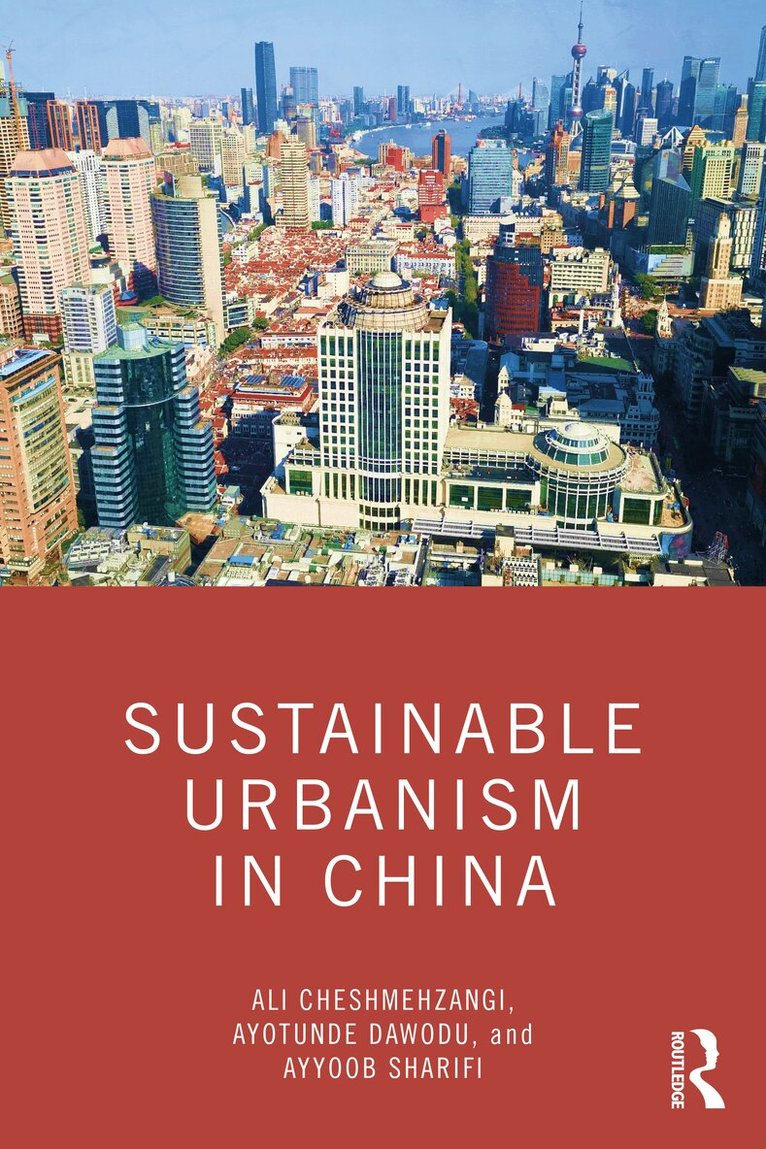
Sustainable Urbanism in China explores the notion of "Sustainable Urbanism" by considering the role sustainable neighborhood planning plays in the larger picture of sustainable urbanism and suggests innovations and best practices that are either developed or adopted by China. These are narrated as lessons learnt for other countries where we see similar trends of development patterns or emerging practices. Through various explorations of challenges, paradigms, and innovations of urban sustainability, this book highlights how planning, policy, and design are forming and reforming in the context of China. These are offered through a set of guidelines and pathways for urban sustainability at the scale of neighborhoods/communities or districts in a wider context of urban environments, as well as strategies for planners, developers, policy makers, and educators in the field of the built environment. Through a comprehensive overview of urban sustainability practices in China, this book investigates 12 case study projects. These comprehensive explorations should in turn help construct the future directions of China’s sustainable urban development and provide innovative pathways of sustainable urbanism in China and around the globe.
550 kr
Skickas inom 10-15 vardagar
Sustainable Urbanism in China explores the notion of "Sustainable Urbanism" by considering the role sustainable neighborhood planning plays in the larger picture of sustainable urbanism and suggests innovations and best practices that are either developed or adopted by China. These are narrated as lessons learnt for other countries where we see similar trends of development patterns or emerging practices. Through various explorations of challenges, paradigms, and innovations of urban sustainability, this book highlights how planning, policy, and design are forming and reforming in the context of China. These are offered through a set of guidelines and pathways for urban sustainability at the scale of neighborhoods/communities or districts in a wider context of urban environments, as well as strategies for planners, developers, policy makers, and educators in the field of the built environment. Through a comprehensive overview of urban sustainability practices in China, this book investigates 12 case study projects. These comprehensive explorations should in turn help construct the future directions of China’s sustainable urban development and provide innovative pathways of sustainable urbanism in China and around the globe.
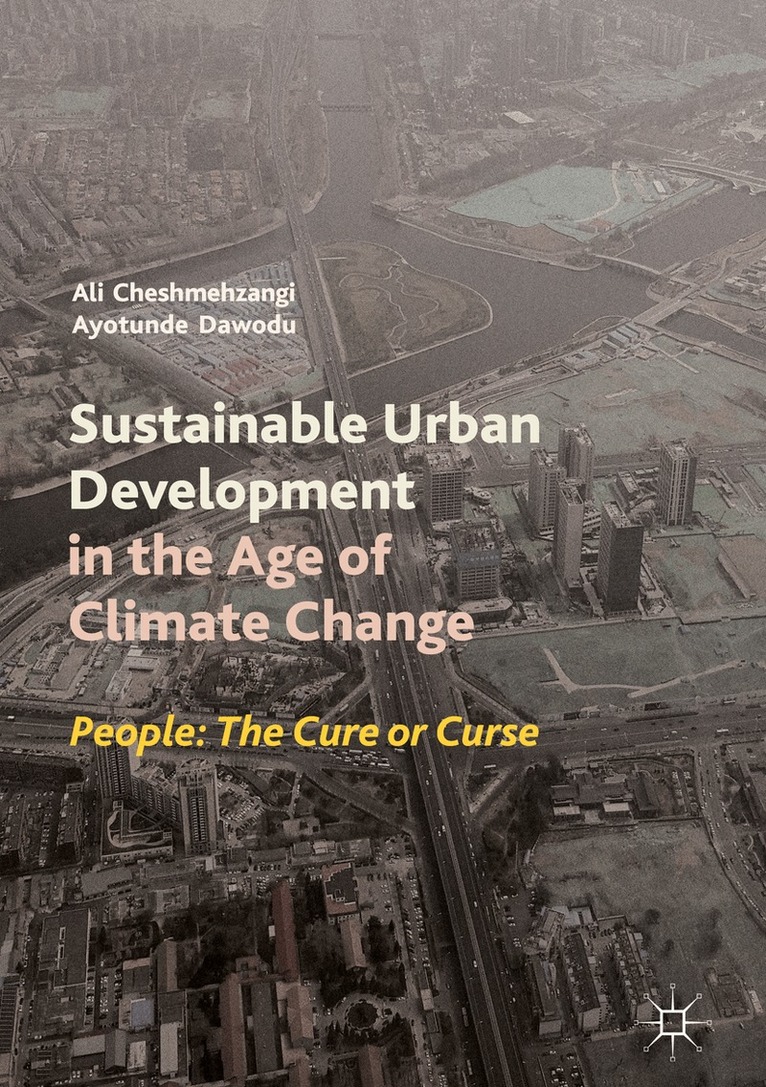
Sustainable Urban Development in the Age of Climate Change
People: The Cure or Curse
Inbunden, Engelska, 2018
1 173 kr
Skickas inom 10-15 vardagar
This book considers the impact of climate change on cities, advocating that people are the panaceas and antidote to mitigating climate change, by enhancing their involvement in achieving sustainable development Goals (SDGs).
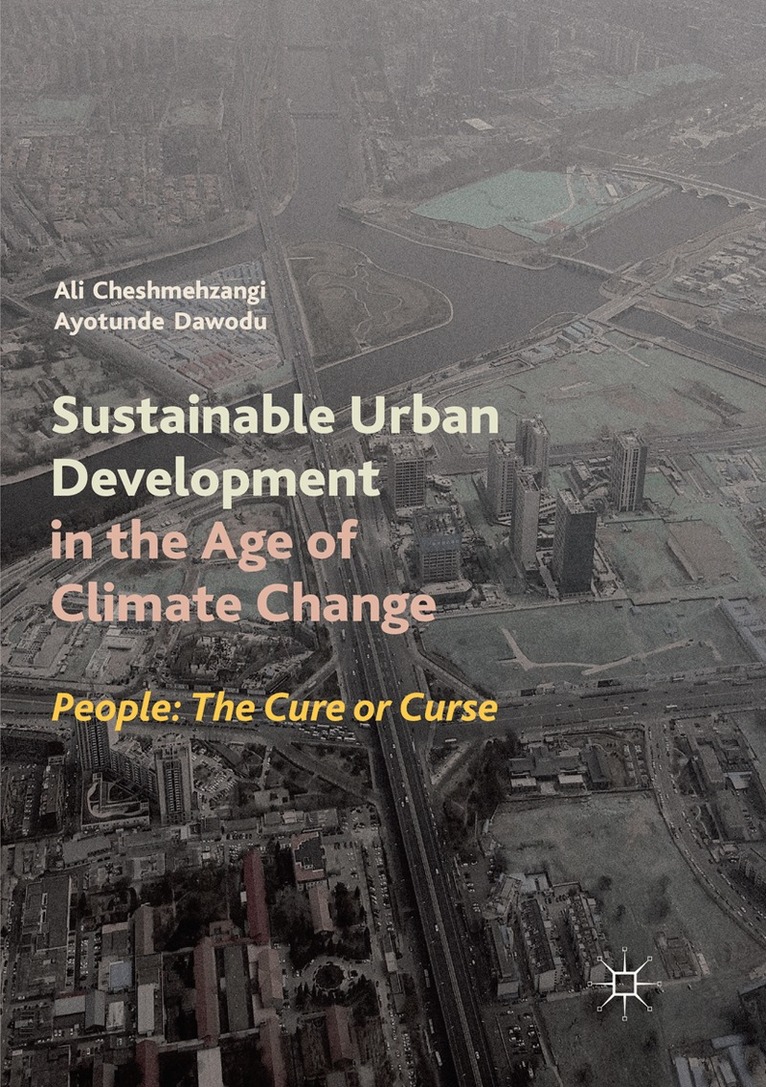
Sustainable Urban Development in the Age of Climate Change
People: The Cure or Curse
Häftad, Engelska, 2018
860 kr
Skickas inom 10-15 vardagar
This book considers the impact of climate change on cities, advocating that people are the panaceas and antidote to mitigating climate change, by enhancing their involvement in achieving sustainable development Goals (SDGs).
1 434 kr
Skickas inom 10-15 vardagar
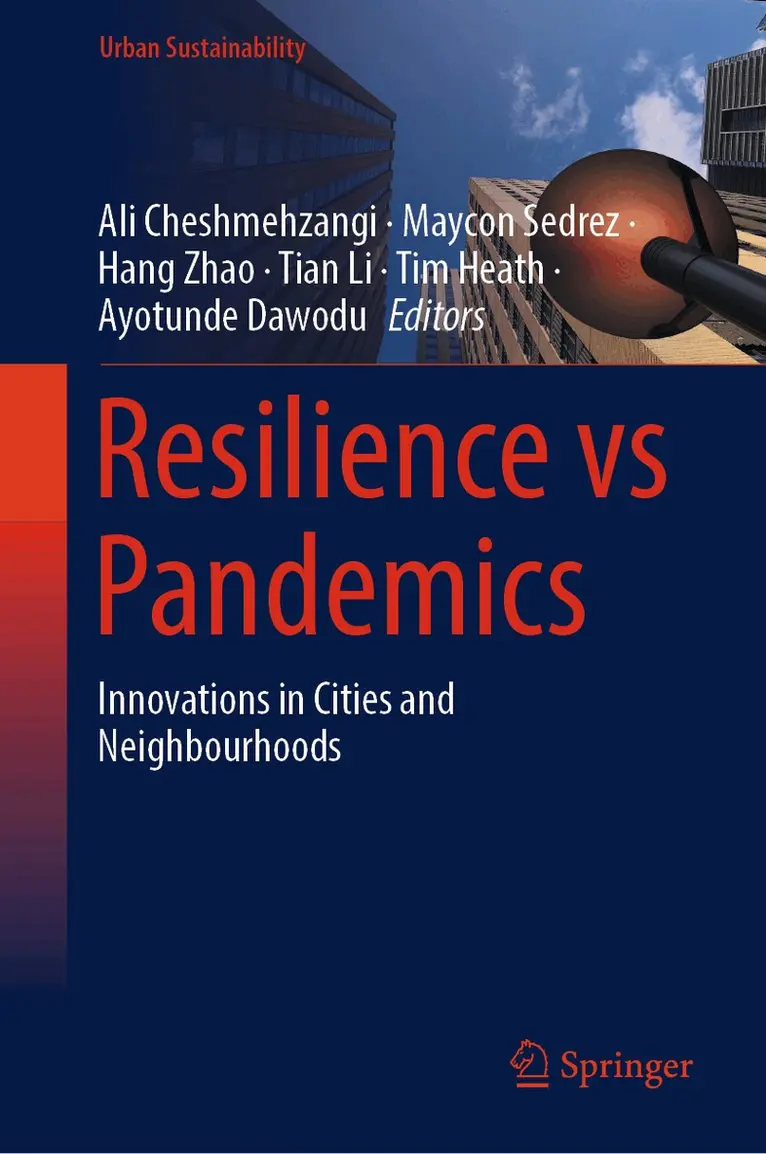
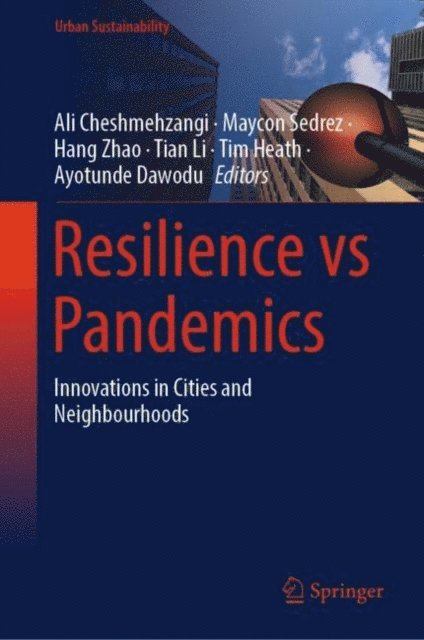
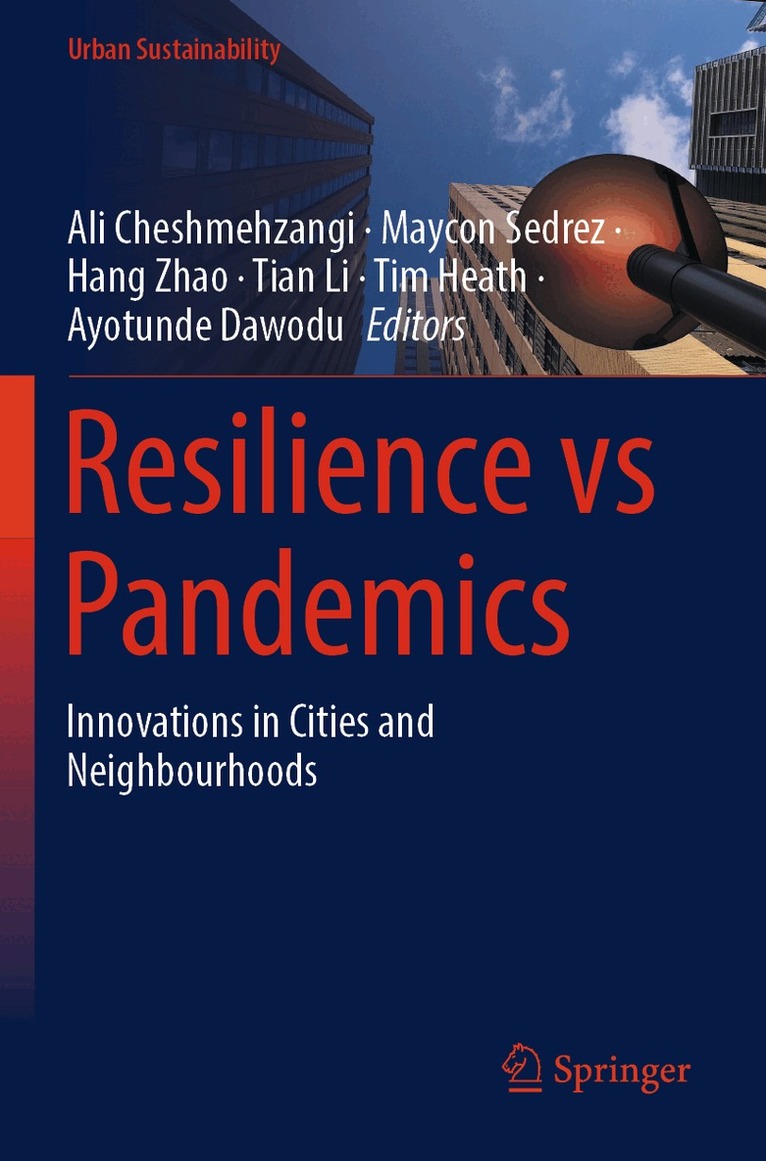
The COVID-19 pandemic and other highly transmissible diseases outbreaks have given a new significance to the concept of “resilience”, placing it in the spotlight of built environment-related studies. New directions have emerged from expanding on adaptive planning, urban layouts, urban morphologies, spatial planning, healthy cities, etc. To enhance resilience in the post-pandemic era, various theories, practices, and hypotheses are being formulated by scholars around the world.For this book project, we invite chapter proposals that provide forefront discoveries about the built environment resilience during and after the ongoing pandemic. Historical perspectives of resilience and other highly transmissible diseases are also relevant to understanding the COVID-19 issues. The authors are encouraged to elaborate on critical exploratory, innovative, and cutting-edge research approaches, highlighting the effects of COVID-19 and other highly transmissible diseases in the design,planning, and perception of the built environment. We aim to gather scientific experiences, reviews, analyses, discussions, recommendations, and solutions in the fields of urban planning, urban design, urban management, environmental science, architecture, etc.The book aims to document resilience-related innovations and new perspectives for the built environment, how people’s interactions adapt to new realities, and which mechanisms, tools, and strategies are required for such transformations in the following two scales of the built environments:(1) City/district; research on planning, commuting and mobility, politics, urban configurations, regulations, transmission and prevention, models, top-down processes, innovation processes, etc.(2) Community/neighborhood; research on collaboration, transmission and prevention, isolation and quarantine, social aspects, accessibility to services, technologies, education, policies, and innovative solutions.The book covers a wide range of studies, including physical and non-physical studies, which may refer to the city infrastructure, green/blue spaces, housing, policy-making, health services, social and economic issues, etc. The findings and results contribute to the decision-making of governments, organizations, and institutions, as well as inspire scholars and future research for developing resilience in the post-pandemic era.
1 434 kr
Skickas inom 10-15 vardagar
The COVID-19 pandemic and other highly transmissible diseases outbreaks have given a new significance to the concept of “resilience”, placing it in the spotlight of built environment-related studies. New directions have emerged from expanding on adaptive planning, urban layouts, urban morphologies, spatial planning, healthy cities, etc. To enhance resilience in the post-pandemic era, various theories, practices, and hypotheses are being formulated by scholars around the world.For this book project, we invite chapter proposals that provide forefront discoveries about the built environment resilience during and after the ongoing pandemic. Historical perspectives of resilience and other highly transmissible diseases are also relevant to understanding the COVID-19 issues. The authors are encouraged to elaborate on critical exploratory, innovative, and cutting-edge research approaches, highlighting the effects of COVID-19 and other highly transmissible diseases in the design,planning, and perception of the built environment. We aim to gather scientific experiences, reviews, analyses, discussions, recommendations, and solutions in the fields of urban planning, urban design, urban management, environmental science, architecture, etc.The book aims to document resilience-related innovations and new perspectives for the built environment, how people’s interactions adapt to new realities, and which mechanisms, tools, and strategies are required for such transformations in the following two scales of the built environments:(1) City/district; research on planning, commuting and mobility, politics, urban configurations, regulations, transmission and prevention, models, top-down processes, innovation processes, etc.(2) Community/neighborhood; research on collaboration, transmission and prevention, isolation and quarantine, social aspects, accessibility to services, technologies, education, policies, and innovative solutions.The book covers a wide range of studies, including physical and non-physical studies, which may refer to the city infrastructure, green/blue spaces, housing, policy-making, health services, social and economic issues, etc. The findings and results contribute to the decision-making of governments, organizations, and institutions, as well as inspire scholars and future research for developing resilience in the post-pandemic era.
1 630 kr
Skickas inom 10-15 vardagar
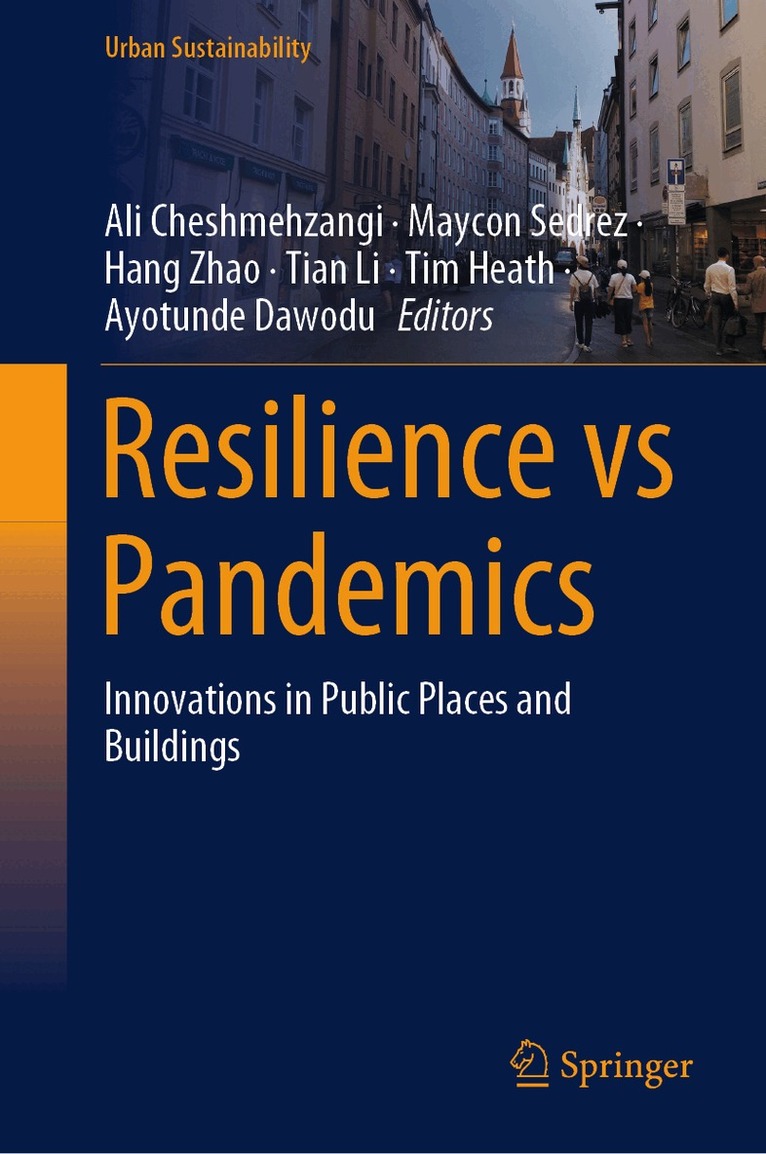
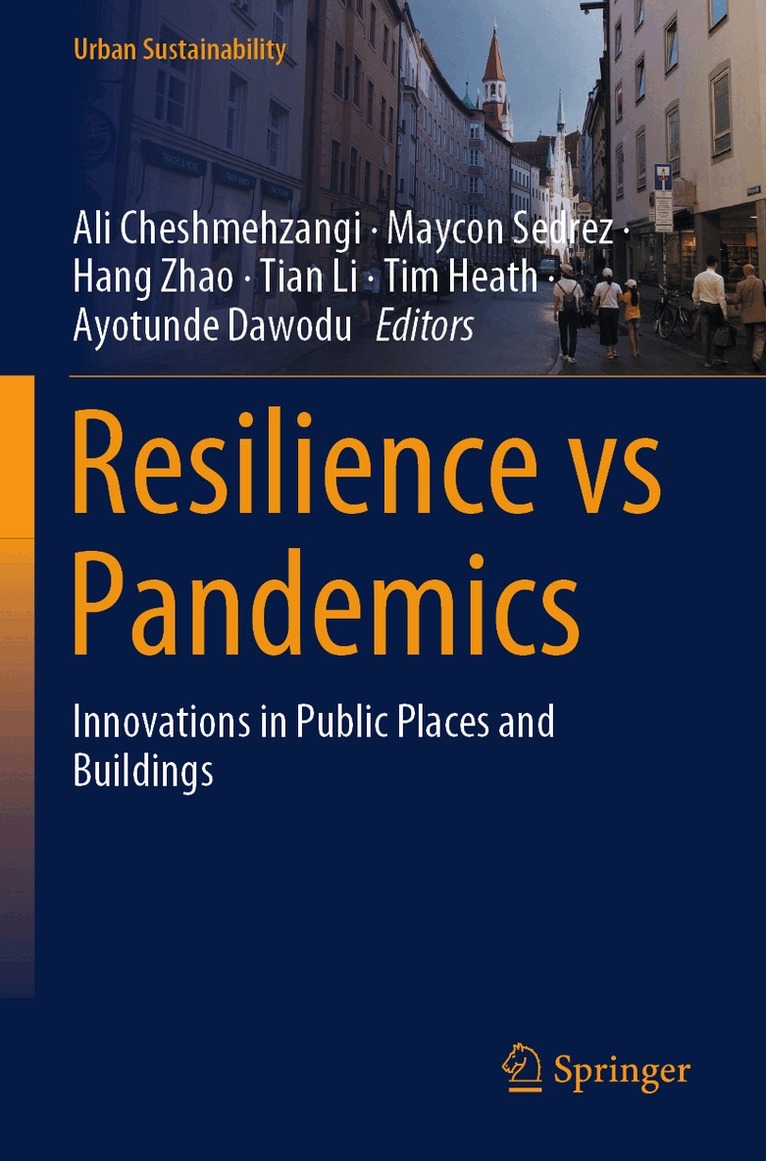
“Resilience vs Pandemics: Innovations in Public Places and Buildings” explores innovative solutions for architecture and public places during and after the pandemic. Additionally, the authors contribute to the documentation of architectural and social transformations that have been prompted by previous transmissible diseases, as this knowledge can inform responses to future pandemics. In this volume, the chapters present critical, exploratory, multi- and interdisciplinary, and cutting-edge research approaches; with a particular focus on the effects of COVID-19 and other highly transmissible diseases on the design, use, performance, and perception of the built environment, particularly at the building scale. This volume aims to organize a collection of scientific studies, reviews, analysis, recommendations, and solutions in the fields of urban design, architecture, design, landscape design, etc. The overarching goal is to document new approaches to createand enhance built environment resilience. Chapters shed light on novel methods, tools, processes, regulations, behaviours, and other relevant details contributing to a comprehensive understanding of this crucial issue. The two scales of the built environment under consideration are:(1) Public Places, including research on transformations (death, emergencies, changes), requirements, adaptability, usability, virtual immersion, historical perspectives, interactivity, shifts in use and programs, etc.(2) Buildings, including regulations, shifts in use and program, non-pharmaceutical interventions, human interactions, and human-machine interfaces. The book covers a wide range of studies, including physical and non-physical studies, which may refer to the city infrastructure, green/blue spaces, housing, policy-making, health services, social and economic issues, etc. The findings and results of various global case study examples contribute to the decision-making of governments, organizations, and institutions, as well as inspire scholars and future research for developing resilience in the post-pandemic era.
1 630 kr
Skickas inom 10-15 vardagar
“Resilience vs Pandemics: Innovations in Public Places and Buildings” explores innovative solutions for architecture and public places during and after the pandemic. Additionally, the authors contribute to the documentation of architectural and social transformations that have been prompted by previous transmissible diseases, as this knowledge can inform responses to future pandemics. In this volume, the chapters present critical, exploratory, multi- and interdisciplinary, and cutting-edge research approaches; with a particular focus on the effects of COVID-19 and other highly transmissible diseases on the design, use, performance, and perception of the built environment, particularly at the building scale. This volume aims to organize a collection of scientific studies, reviews, analysis, recommendations, and solutions in the fields of urban design, architecture, design, landscape design, etc. The overarching goal is to document new approaches to createand enhance built environment resilience. Chapters shed light on novel methods, tools, processes, regulations, behaviours, and other relevant details contributing to a comprehensive understanding of this crucial issue. The two scales of the built environment under consideration are:(1) Public Places, including research on transformations (death, emergencies, changes), requirements, adaptability, usability, virtual immersion, historical perspectives, interactivity, shifts in use and programs, etc.(2) Buildings, including regulations, shifts in use and program, non-pharmaceutical interventions, human interactions, and human-machine interfaces. The book covers a wide range of studies, including physical and non-physical studies, which may refer to the city infrastructure, green/blue spaces, housing, policy-making, health services, social and economic issues, etc. The findings and results of various global case study examples contribute to the decision-making of governments, organizations, and institutions, as well as inspire scholars and future research for developing resilience in the post-pandemic era.