B Harold Chetkow-Yanoov - Böcker
Visar alla böcker från författaren B Harold Chetkow-Yanoov. Handla med fri frakt och snabb leverans.
6 produkter
6 produkter
2 568 kr
Skickas inom 10-15 vardagar
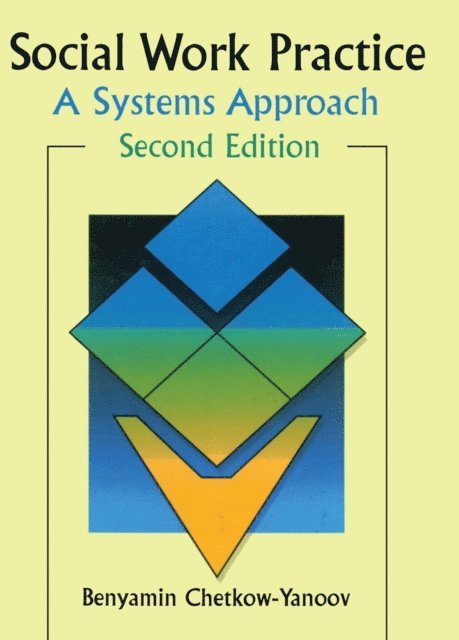
Replete with numerous diagrams, charts, tables, and exercises, the second edition of Social Work Practice: A Systems Approach brings alive the systems model of social work practice. Learning systems analysis will lead you to a more dynamic view of reality. With this book as a guide, you are sure to give your social work practice the overhaul it needs. This user-friendly text will allow you to integrate micro and macro modes of intervention, sensitize your practice, enhance your conflict resolution skills, and analyze system-environment structures and currents.The basis for popular ecological models in current social work literature, the systems model can be used to understand social change, to plan or direct social change, and to analyze environmental impacts on human growth and behavior. As Social Work Practice: A Systems Approach explains, the systems model is appropriate for international social work because it is applicable across cultural and societal boundaries. This book provides you with specific system-based intervention steps, descriptions of problem situations, and an understanding of practice theory for your social work practice. A key resource for educators, students, and practitioners, it discusses:creating an effective network of social services the implications of ecological theory for social work practice eco-mapping systems-oriented concepts in the social sciences and social work the individual person as a system managing social change and conflict processes gleaning effective strategies from existing practice modelsWith its outline of a one-semester master's level course in systems analysis and its discussion of the 20th-century paradigm shift from reductionism to wholeness, Social Work Practice: A Systems Approach will be a great asset to social workers both within and beyond the classroom. Those in other helping professions, such as education, psychology, and organization development, will also find this book vital to understanding the changes experienced during the last 30 years. You will discover how many systems-based professional social work roles and strategies are compatible with existing models.
721 kr
Skickas inom 10-15 vardagar
Social Work Approaches to Conflict Resolution helps readers understand the nature and causes of conflict and offers suggestions for coping with conflict effectively. It is based on two assumptions: that conflict is a basic part of the life of normal human beings, groups, organizations, communities, and nations, and that resolving conflict is part of the ongoing interventions of all social workers. A practical text for theory-practicum courses for MSW and doctoral students, it is filled with information also useful to therapists, group workers, community workers, administrators, scholars in the social sciences, practitioners in other helping professions, and trainers in the emerging field of conflict resolution itself. Deliberately linking conflict resolution and systems analysis, Social Work Approaches to Conflict Resolution tackles a number of related themes to help you see the connections between topics not normally presented together in social work literature. You’ll see how unmet needs may cause conflict to evolve and escalate and learn about the connections between strongly held feelings and the destructive relations that have developed between diverse ethnic peoples in many parts of our planet. Author Benyamin Chetkow-Yanoov draws on his own background of being a minority as well as his experience in Arab-Jewish reconciliation in Israel as he offers readers thorough explanations of:a systems model for analyzing conflict problem-solving versus resolving conflict how value clashes and victimization are some of the basic causes of conflict escalation 9 professional roles required for resolving conflicts the effectiveness of volunteers in conflict resolution teaching conflict resolution skills to various audiences trends in the evolution of voluntary conflict resolution effortsYou can apply much of what you learn in Social Work Approaches to Conflict Resolution not only to your professional life but also to your personal relationships and experiences. Also, since victimized people and groups are major contributors to the perpetuation and escalation of conflict, the book suggests 10 steps for helping victims free themselves from repeated conflict-generating behaviors.
721 kr
Skickas inom 10-15 vardagar
Replete with numerous diagrams, charts, tables, and exercises, the second edition of Social Work Practice: A Systems Approach brings alive the systems model of social work practice. Learning systems analysis will lead you to a more dynamic view of reality. With this book as a guide, you are sure to give your social work practice the overhaul it needs. This user-friendly text will allow you to integrate micro and macro modes of intervention, sensitize your practice, enhance your conflict resolution skills, and analyze system-environment structures and currents.The basis for popular ecological models in current social work literature, the systems model can be used to understand social change, to plan or direct social change, and to analyze environmental impacts on human growth and behavior. As Social Work Practice: A Systems Approach explains, the systems model is appropriate for international social work because it is applicable across cultural and societal boundaries. This book provides you with specific system-based intervention steps, descriptions of problem situations, and an understanding of practice theory for your social work practice. A key resource for educators, students, and practitioners, it discusses:creating an effective network of social services the implications of ecological theory for social work practice eco-mapping systems-oriented concepts in the social sciences and social work the individual person as a system managing social change and conflict processes gleaning effective strategies from existing practice modelsWith its outline of a one-semester master's level course in systems analysis and its discussion of the 20th-century paradigm shift from reductionism to wholeness, Social Work Practice: A Systems Approach will be a great asset to social workers both within and beyond the classroom. Those in other helping professions, such as education, psychology, and organization development, will also find this book vital to understanding the changes experienced during the last 30 years. You will discover how many systems-based professional social work roles and strategies are compatible with existing models.
2 096 kr
Skickas inom 10-15 vardagar
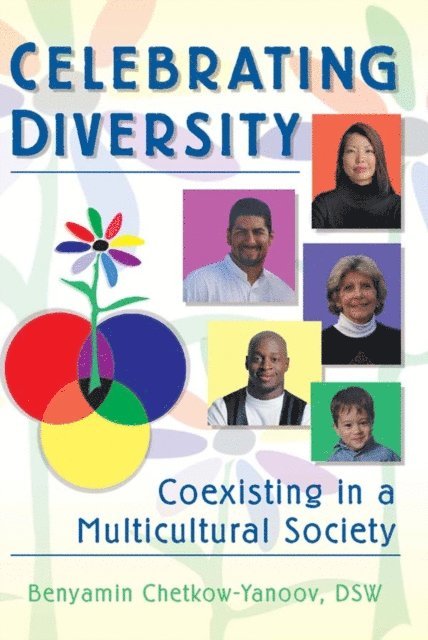
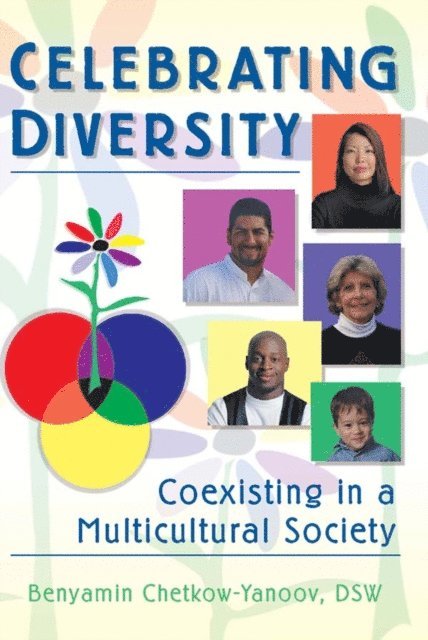
Celebrating Diversity: Coexisting in a Multicultural Society, offers pragmatic ways to replace conflictive behaviors between diverse peoples with coexistence alternatives. Coexistence-partnership values and skills help us to outgrow ways of the past--competition, suspicion, manipulation, isolation, victimization. These skills enhance our own lives as well as those of future generations.In Celebrating Diversity, author Benyamin Chetkow-Yanoov asserts that the increasing religious-ethnic-linguistic pluralisms of the twentieth century requires that we cease lumping people different from ourselves into an “other” category. He identifies classical elements of a coexistence model and suggests various strategies and tactics for implementing coexistence in modern societies. Among the many insights you will find are:the definition of coexistence an analysis of past patterns of majority-minority group relations, such as segregation, tolerance, and integration models of majority-minority relations, participation, and coexistence appropriate for the twenty-first century illustrations of the coexistence model through examples of places where it is flourishing action steps for leaders and citizens to put the idea of coexistence into practice a range of research findings that help us determine what is effective in promoting coexistenceIn the pages of Celebrating Diversity, you can learn social skills for preventing conflict escalation, for finding areas of common interest, and for working cooperatively. As more of us become informed about alternatives to violence, hopefully we can find ways to bring peace to areas of unrest, such as Algeria, Ireland, Israel, Nigeria, Rwanda, Serbia, or the former Soviet Union.
721 kr
Skickas inom 10-15 vardagar
Celebrating Diversity: Coexisting in a Multicultural Society, offers pragmatic ways to replace conflictive behaviors between diverse peoples with coexistence alternatives. Coexistence-partnership values and skills help us to outgrow ways of the past--competition, suspicion, manipulation, isolation, victimization. These skills enhance our own lives as well as those of future generations.In Celebrating Diversity, author Benyamin Chetkow-Yanoov asserts that the increasing religious-ethnic-linguistic pluralisms of the twentieth century requires that we cease lumping people different from ourselves into an “other” category. He identifies classical elements of a coexistence model and suggests various strategies and tactics for implementing coexistence in modern societies. Among the many insights you will find are:the definition of coexistence an analysis of past patterns of majority-minority group relations, such as segregation, tolerance, and integration models of majority-minority relations, participation, and coexistence appropriate for the twenty-first century illustrations of the coexistence model through examples of places where it is flourishing action steps for leaders and citizens to put the idea of coexistence into practice a range of research findings that help us determine what is effective in promoting coexistenceIn the pages of Celebrating Diversity, you can learn social skills for preventing conflict escalation, for finding areas of common interest, and for working cooperatively. As more of us become informed about alternatives to violence, hopefully we can find ways to bring peace to areas of unrest, such as Algeria, Ireland, Israel, Nigeria, Rwanda, Serbia, or the former Soviet Union.
1 789 kr
Tillfälligt slut
Social Work Approaches to Conflict Resolution helps readers understand the nature and causes of conflict and offers suggestions for coping with conflict effectively. It is based on two assumptions: that conflict is a basic part of the life of normal human beings, groups, organizations, communities, and nations, and that resolving conflict is part of the ongoing interventions of all social workers. A practical text for theory-practicum courses for MSW and doctoral students, it is filled with information also useful to therapists, group workers, community workers, administrators, scholars in the social sciences, practitioners in other helping professions, and trainers in the emerging field of conflict resolution itself. Deliberately linking conflict resolution and systems analysis, Social Work Approaches to Conflict Resolution tackles a number of related themes to help you see the connections between topics not normally presented together in social work literature. You’ll see how unmet needs may cause conflict to evolve and escalate and learn about the connections between strongly held feelings and the destructive relations that have developed between diverse ethnic peoples in many parts of our planet. Author Benyamin Chetkow-Yanoov draws on his own background of being a minority as well as his experience in Arab-Jewish reconciliation in Israel as he offers readers thorough explanations of:a systems model for analyzing conflict problem-solving versus resolving conflict how value clashes and victimization are some of the basic causes of conflict escalation 9 professional roles required for resolving conflicts the effectiveness of volunteers in conflict resolution teaching conflict resolution skills to various audiences trends in the evolution of voluntary conflict resolution effortsYou can apply much of what you learn in Social Work Approaches to Conflict Resolution not only to your professional life but also to your personal relationships and experiences. Also, since victimized people and groups are major contributors to the perpetuation and escalation of conflict, the book suggests 10 steps for helping victims free themselves from repeated conflict-generating behaviors.