B. M. Jain - Böcker
Visar alla böcker från författaren B. M. Jain. Handla med fri frakt och snabb leverans.
8 produkter
8 produkter
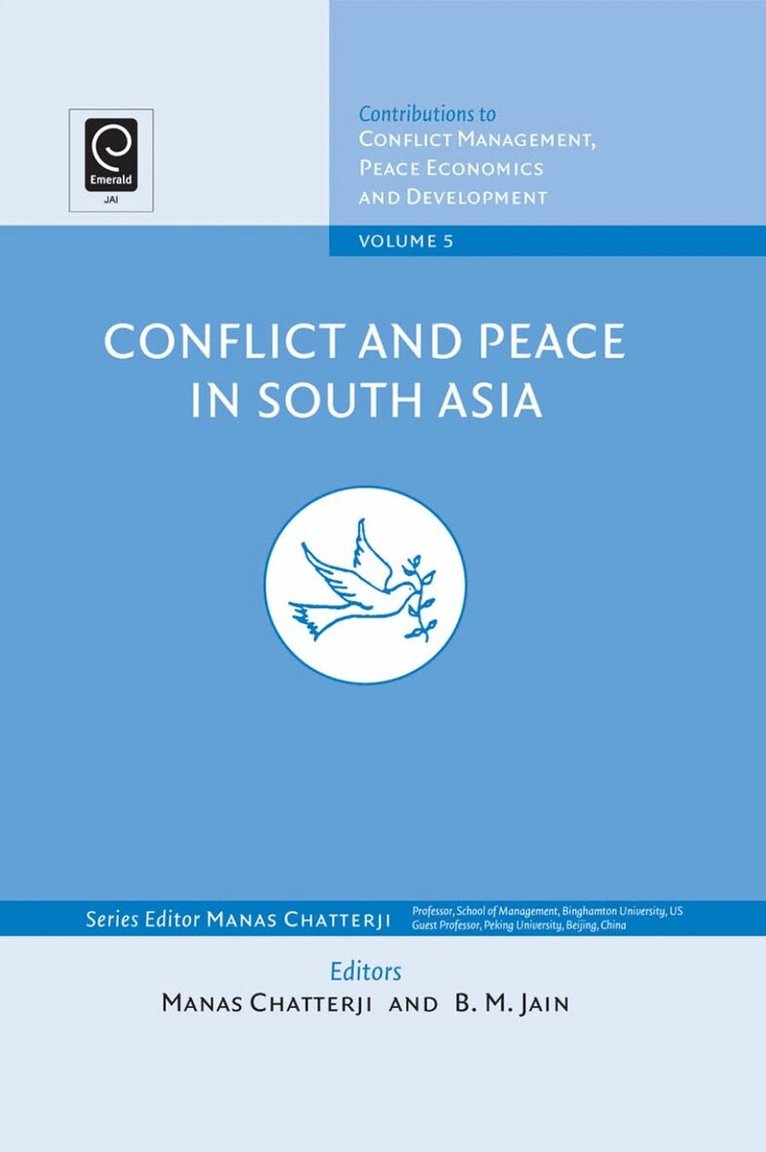
Del 5 - Contributions to Conflict Management, Peace Economics and Development
Conflict and Peace in South Asia
Inbunden, Engelska, 2008
1 547 kr
Skickas inom 7-10 vardagar
South Asia is a distinct geographical entity comprised of seven countries - India, Pakistan, Bangladesh, Nepal, Bhutan, Sri Lanka and Maldives (situated in the Indian Ocean). The region, as discussed in the contributions to this volume, is turning out to be the most dangerous place in the world, representing a breeding ground of bloody terror and radical extremism exemplified by the assassination of Benazir Bhutto, of Pakistan, in December 2007.India and Pakistan have been involved in a never-ending conflict over Kashmir since the sub-continent was divided in 1947, and have been involved in numerous wars and superpower games. The situation has now become alarming since both countries possess nuclear arms, religious extremism has spread, and there is increased internal ethnic fighting (particularly in Pakistan). Pakistan, often described as a failed state, is experimenting with democracy with serious internal and external results. Bangladesh, oscillating between brief periods of democracy and military dictatorship, is becoming a center for religious extremism, and poses serious problems for India due to illegal immigration. In Nepal, the monarchy has been abolished and a left-wing Maoist government has taken hold. For the last twenty years, Sri Lanka has been involved in a bloody civil war. Even Bhutan and Maldives experience security and internal problems. The chapters in this book look at these countries in a historical context, from inter-regional and international perspectives. Conflict and peace in South Asia connect with a diverse array of factors, ranging from poverty, nuclear proliferation, heavy military expenditure at the expense of development and social goods, militancy, insurgency, illegal migration, environmental degradation, resource depletion, child labor, gender discrimination, and so on. Globalization has increased the income of the region's wealthy class segments and promoted inter-regional inequality. All these factors are interrelated. Accordingly, this volume includes papers that link socio-economic factors, resource constraints, and international trade to human security. Although most of the papers are case studies for individual countries, an attempt has been made in other papers to show how the quantitative methods of Peace Science can be used to analyze the region's situation and make predictions for the future.
1 572 kr
Skickas inom 10-15 vardagar
This book examines India as a rising global power by reevaluating its foreign policy and relations from the Nehru period to the present through an analytical framework constructed from Indian foreign policy and the processes of globalization and regionalization. Global Power describes the economic, scientific, technological, and nuclear gains that have been made by India, reaffirming its status as a major actor on the international scene.The book presents a fundamental reappraisal of the ever-changing relationship between India and other major and regional powers, paying special attention to its relationships with China and Pakistan. It seeks to shed light on Indian foreign policy's goals as they relate to both national and international interests, all the while keeping within the context of India's multiethnic, mulitcultural, multilingual society.
1 245 kr
Skickas inom 10-15 vardagar
China's Soft Power Diplomacy: Myth or Reality? examines the Chinese version of soft power both in conceptual and operational terms, and explores its myriad implications for India, in particular, and South Asia in general. The book investigates how the institutionalization of cultural soft power would help China project its image as a benign and responsible stakeholder in order to reshape the current international system with its notion of “harmonious world order,” based on Chinese characteristics.This book traces the origin of China’s engagement with South Asian states from historical, political, economic, and security perspectives in order to better understand the dynamics of its South Asia policy. It illuminates the core reasons to explain why China’s soft power initiatives in South Asia are least appealing and convincing to India while they are welcomed by smaller nations of the region. More pertinently, the book addresses complexities and nuances of China’s soft power instruments given the psycho-cultural and geopsychological peculiarities of the South Asian region. For this, it focuses on how the Sino-Pakistan axis constitutes a potential challenge to India’s leadership role and influence in South Asia.
502 kr
Skickas inom 10-15 vardagar
China's Soft Power Diplomacy: Myth or Reality? examines the Chinese version of soft power both in conceptual and operational terms, and explores its myriad implications for India, in particular, and South Asia in general. The book investigates how the institutionalization of cultural soft power would help China project its image as a benign and responsible stakeholder in order to reshape the current international system with its notion of “harmonious world order,” based on Chinese characteristics.This book traces the origin of China’s engagement with South Asian states from historical, political, economic, and security perspectives in order to better understand the dynamics of its South Asia policy. It illuminates the core reasons to explain why China’s soft power initiatives in South Asia are least appealing and convincing to India while they are welcomed by smaller nations of the region. More pertinently, the book addresses complexities and nuances of China’s soft power instruments given the psycho-cultural and geopsychological peculiarities of the South Asian region. For this, it focuses on how the Sino-Pakistan axis constitutes a potential challenge to India’s leadership role and influence in South Asia.
1 142 kr
Skickas inom 10-15 vardagar
South Asia Conundrum offers fresh ideas and enlightening narratives about how geopolitical and geostrategic entanglements of extra-regional powers, notably the United States, Russia and China, in South Asia and its extended neighborhood have transformed the Af-Pak region into a theater of unending conflict and political instability. The book addresses and illuminates the impending challenges and evaluates policy options before the Trump administration and US allies in dealing with the Afghan imbroglio. The book argues how the emerging strategic alliance among Russia, Iran, China and Pakistan has not only constrained US options in the region but has also constricted the US role and influence in South Asia, Afghanistan, and Central Asia. South Asian Conundrum further illustrates how the China-Pakistan Economic Corridor (CPEC), a part of Beijing’s mega Belt and Road Initiative (BRI), constitutes a direct challenge to economic and security interests of India and the United States in the region. The scope of the book is not exclusively limited to South Asia. Its geostrategic and geo-economic ramifications are much larger and deeper in global and regional contexts, involving the Greater Middle East Asia, the triangular Russian-Chinese and Iranian strategic partnership, and the long term fallout of CPEC and China’s BRI on global political and economic architecture.
Geopsychology Theory of International Relations in the 21st Century
Escaping the Ignorance Trap
Inbunden, Engelska, 2021
1 209 kr
Skickas inom 10-15 vardagar
This book introduces an innovative theoretical construct of geopsychology to navigate the complex dynamics of international politics in the 21st century. It explains how geopsychology is different from mainstream international relations theories in terms of primary actors, human behavior, spatial application, instruments, and key issues. It argues that peace and stability in the troubled parts of the world warrants an imperative need for understanding psychological dispositions of non-state actors and authoritarian regimes. In The Geopsychology Theory of International Relations in the 21st Century: Escaping the Ignorance Trap, B.M.Jain unfolds that neither a global hegemon nor a cohort of powers could weaken their resolve and break their morale, as proven in the cases of Iraq, Afghanistan, and North Korea. Importantly, the regional case studies —India and Pakistan in South Asia; North Korea and China in Northeast Asia; and the U.S. involvement in the Middle East — reveal howthe psyche and thought processes of national and regional actors have been the driving force in triggering interstate conflicts and civil wars. The book brilliantly illuminates how America became a conscious victim of the ignorance trap in Asia’s volatile regions. This must book offers easy solutions to complex conflicts to induce a peaceful change in world politics.
142 kr
Skickas inom 5-8 vardagar
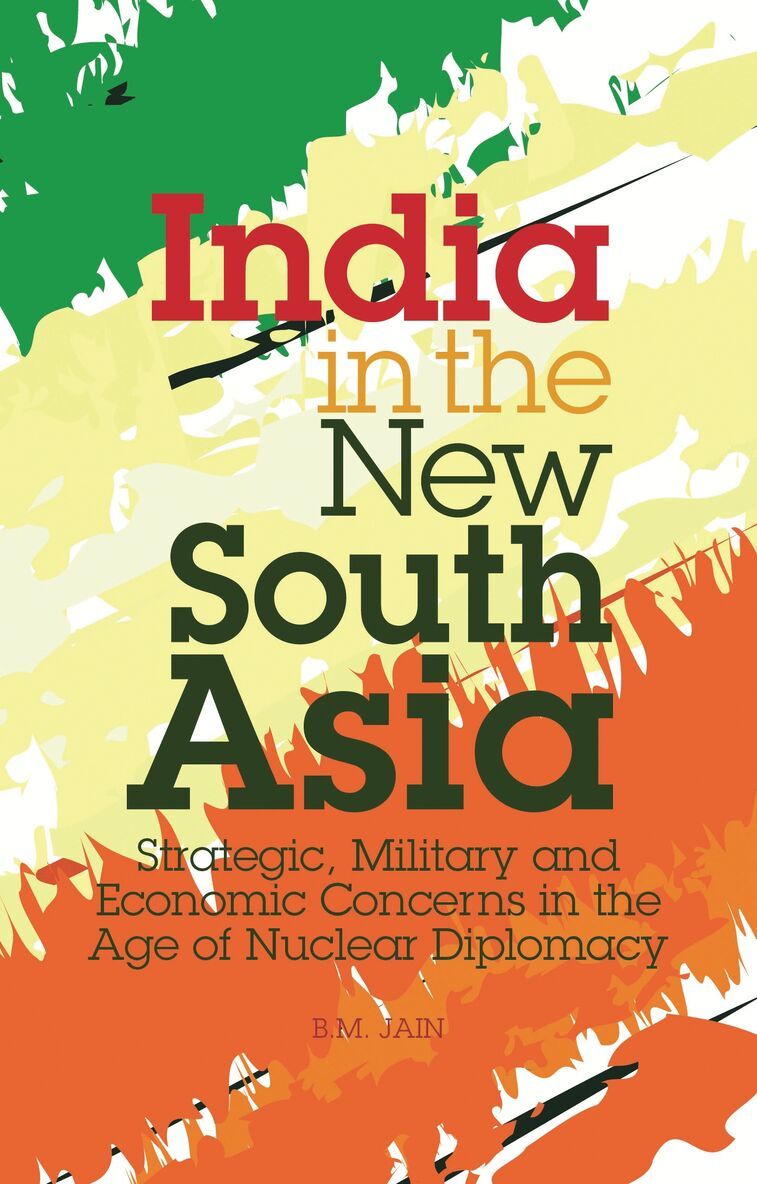
India in the New South Asia
Strategic, Military and Economic Concerns in the Age of Nuclear Diplomacy
Inbunden, Engelska, 2010
1 703 kr
Skickas inom 10-15 vardagar
In recent years, South Asia has become a flashpoint of conflict between the nuclear powers of India and Pakistan over the interconnected problem of Kashmir and cross-border terrorism. B.M. Jain here re-evaluates India's security, strategic and nuclear policy in the new South Asia of the post 9/11 era. He also provides a reappraisal of the regional security implications of India's turbulent relationships with Pakistan, Nepal, and Bangladesh. Furthermore, he examines the strategic engagement of America, Russia and China with South Asian states. This book will be invaluable for public policy-makers, researchers, and undergraduate and graduate students of South Asian studies.