Baohong Zhang – författare
2 472 kr
Skickas inom 10-15 vardagar
CRISPRized Horticultural Crops: Genome Modified Plants and Microbes in Food and Agriculture summarizes applications of CRISPR/Cas systems and its advanced variants e.g., CRISPR/Cpf1, base editing and prime editing, for precise editing of horticultural crops. The book discusses vector transformations methods, epi-genome, deep learning, synthetic biology, and precision breeding for improving yield and quality related attributes in horticultural crops. With coverage of the relevant technologies and their applications, the book also includes bioinformatics and large-scale databases and their potential application in fruits, vegetables and ornamental plants and sections on regulatory concerns related to CRISPR edited crops.
Horticultural crops, including fruit, vegetable and ornamental plants are an important component of agriculture production systems and play an important role in sustaining human life.�
Reviews CRISPR for editing horticultural crops Discusses vector transformation methods, epigenome, deep learning, synthetic biology and precision breeding Includes bioinformatics and large-scale databases Contributes engineering approaches for crop improvement programs3 521 kr
Läs direkt efter köp
2 375 kr
Kommande
2 386 kr
Skickas inom 10-15 vardagar
2 758 kr
Läs direkt efter köp
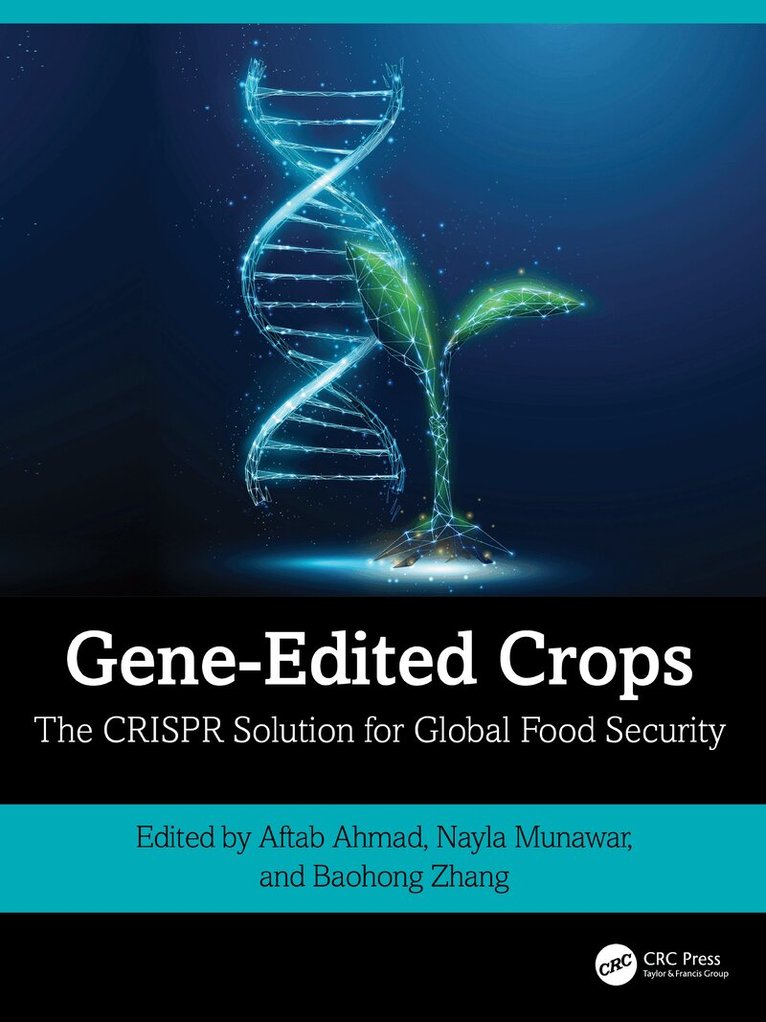
CRISPR-based genome editing has revolutionized the precise genetic improvement of agriculturally important crops, offering unprecedented precision and efficiency in crop improvement. This powerful technology holds immense potential to reshape the future of food security, enabling scientists and agriculturalists to develop resilient, high yield crops resistant to diseases, pests, and environmental stresses. Gene-Edited Crops: The CRISPR Solution for Global Food Security offers a comprehensive guide to the latest research, advancements, and real-world applications of CRISPR in crop genetic improvement for sustainable agriculture and food security.
Through in-depth chapters, this book provides an accessible yet rigorous exploration of CRISPR technology, CRISPR reagents and their potential delivery methods, recent developments in CRISPR, and its transformative role in agriculture and food security. With a focus on practical implementation and future potential, this book examines the science behind genome editing and the strategic pathways to address key challenges in crop development—from enhancing nutritional profiles to improving environmental adaptability.
Features include:
Comprehensive overview: An introduction to the fundamentals of CRISPR technology and its application in crop science. Computational tools and CRISPR reagents: Bioinformatic tools for designing precise gRNA, CRISPR reagents and their effective delivery methods. Recent developments in CRISPR: Emerging developments in CRISPR for precise gene editing in plants such as base editing, prime editing, Fanzor, and multiplex gene editing. Real-world applications: Application of CRISPR for developing future crops, including projects targeting enhanced disease resistance, drought tolerance, and improved nutritional content. Regulatory landscape: Insightful discussion on the evolving global regulatory framework governing gene-edited crops, including the transformative role of artificial intelligence in navigating these regulations. Future directions: Exploration of ongoing advances and the outlook for CRISPR technology in addressing food security.With detailed examples, data, and resources, this book serves as an essential reference for scientists, agriculturalists, and policymakers invested in the future of food security. It also doubles as an educational resource for advanced courses in genetics, plant sciences, and agricultural biotechnology, making it invaluable to both seasoned researchers and those newly interested in the potential of CRISPR.
2 782 kr
Läs direkt efter köp
CRISPR-based genome editing has revolutionized the precise genetic improvement of agriculturally important crops, offering unprecedented precision and efficiency in crop improvement. This powerful technology holds immense potential to reshape the future of food security, enabling scientists and agriculturalists to develop resilient, high yield crops resistant to diseases, pests, and environmental stresses. Gene-Edited Crops: The CRISPR Solution for Global Food Security offers a comprehensive guide to the latest research, advancements, and real-world applications of CRISPR in crop genetic improvement for sustainable agriculture and food security.
Through in-depth chapters, this book provides an accessible yet rigorous exploration of CRISPR technology, CRISPR reagents and their potential delivery methods, recent developments in CRISPR, and its transformative role in agriculture and food security. With a focus on practical implementation and future potential, this book examines the science behind genome editing and the strategic pathways to address key challenges in crop development—from enhancing nutritional profiles to improving environmental adaptability.
Features include:
Comprehensive overview: An introduction to the fundamentals of CRISPR technology and its application in crop science. Computational tools and CRISPR reagents: Bioinformatic tools for designing precise gRNA, CRISPR reagents and their effective delivery methods. Recent developments in CRISPR: Emerging developments in CRISPR for precise gene editing in plants such as base editing, prime editing, Fanzor, and multiplex gene editing. Real-world applications: Application of CRISPR for developing future crops, including projects targeting enhanced disease resistance, drought tolerance, and improved nutritional content. Regulatory landscape: Insightful discussion on the evolving global regulatory framework governing gene-edited crops, including the transformative role of artificial intelligence in navigating these regulations. Future directions: Exploration of ongoing advances and the outlook for CRISPR technology in addressing food security.With detailed examples, data, and resources, this book serves as an essential reference for scientists, agriculturalists, and policymakers invested in the future of food security. It also doubles as an educational resource for advanced courses in genetics, plant sciences, and agricultural biotechnology, making it invaluable to both seasoned researchers and those newly interested in the potential of CRISPR.
1 901 kr
Skickas inom 10-15 vardagar
1 722 kr
Läs direkt efter köp
1 344 kr
Skickas inom 10-15 vardagar
1 225 kr
Skickas inom 10-15 vardagar
1 625 kr
Skickas inom 5-8 vardagar
1 727 kr
Skickas inom 10-15 vardagar
1 519 kr
Läs direkt efter köp
1 243 kr
Skickas inom 10-15 vardagar
1 619 kr
Skickas inom 10-15 vardagar
1 977 kr
Läs direkt efter köp
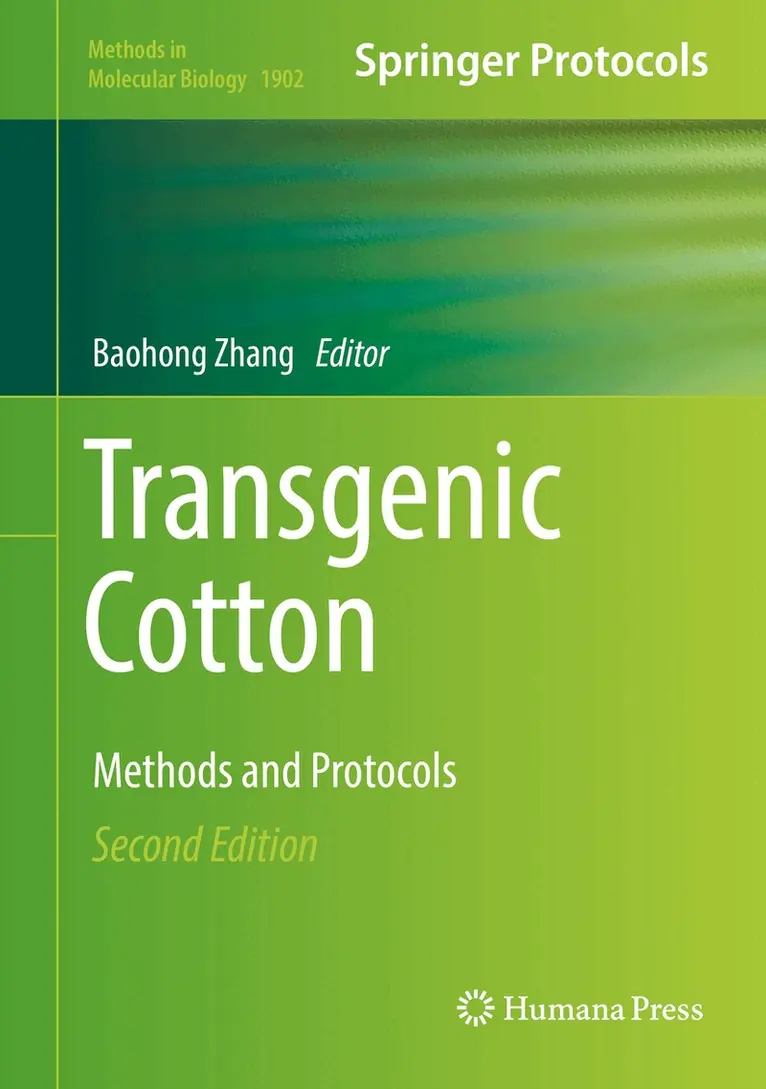
This second edition provides a comprehensive collection of the cutting-edge methods for creating and monitoring transgenic cotton and its application on agricultural and basic research. Chapters detail current status and perspectives of transgenic cotton, principle and methods for making transgenic cotton, creating gene knockout lines, foreign gene copy and expression in transgenic plants, improvements to cotton using transgenic technology, and monitoring the potential impact of transgenic cotton on environment. Written in the highly successful Methods in Molecular Biology series format, chapters include introductions to their respective topics, lists of the necessary materials and reagents, step-by-step, readily reproducible laboratory protocols, and tips on troubleshooting and avoiding known pitfalls
Authoritative and cutting-edge, Transgenic Cotton: Methods and Protocols 2nd aims to be a resource for scientists as well as graduate students who work on transgenic plants, plant genetics, molecular biology, and agricultural sciences.
1 678 kr
Skickas inom 10-15 vardagar
1 565 kr
Läs direkt efter köp
1 089 kr
Skickas inom 10-15 vardagar
1 379 kr
Läs direkt efter köp
Cotton is the most important textile and cash crop and is widely cultivated in more than 70 countries, including the United States, China, and India. Because its long life cycle and complicated genetic background, it is hard to improve cotton using traditional breeding techniques although it has made much progress in the last several decades. Currently, transgenic techniques have become a powerful tool to improve cotton and transgenic cotton is among the first commercially genetically modified crops. Transgenic Cotton: Methods and Protocols provides a comprehensive collection of methods for creating and monitoring transgenic cotton and its application on agricultural and basic research. Divided into five convenient sections, topics covered include the current status and perspectives of transgenic cotton, the principle and methods for making transgenic cotton, the methods for detecting foreign gene copy and expression in transgenic plants, the improvement of cotton using transgenic technology, and finally the methods for monitoring the potential impact of transgenic cotton on environment, including gene flow. Written in the successful Methods in Molecular Biology™ series format, chapters include introductions to their respective topics, lists of the necessary materials and reagents, step-by-step, readily reproducible protocols, and notes on troubleshooting and avoiding known pitfalls.
Authoritative and easily accessible, Transgenic Cotton: Methods and Protocols will serve as an excellent resource for scientists as well as graduate students who work on transgenic plants, plant genetics, molecular biology and agricultural sciences.