Barbara Levy Simon - Böcker
Visar alla böcker från författaren Barbara Levy Simon. Handla med fri frakt och snabb leverans.
3 produkter
3 produkter
812 kr
Skickas inom 3-6 vardagar
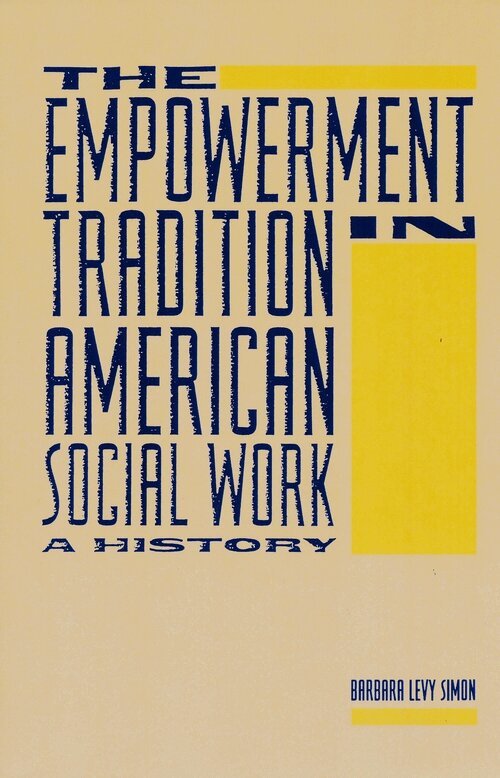
Barbara Levy Simon argues that empowerment is only the latest term for a point of view that has been at the heart of social work since the 1890s. She presents the history of this tradition from 1893 to the present and explores the social movements, ideas, and beliefs that have been most influential in shaping its development. The empowerment perspective within social work practice seeks to help clients draw on personal, interpersonal and political strengths that enable them to gain greater control - both individually and collectively - over their environment and to attain their aspirations. Simon argues that the empowerment tradition developed among a diverse group of social work professionals who rejected the paternalistic approach to practice and shared a common commitment to enabling marginalized and impoverished people to help themselves, to claim their share of social, economic and political resources.She demonstrates that in every historical period the empowerment approach to practice included five basic processes: constructing collaborative partnerships with clients; emphasizing the strengths of clients rather than their incapacities; focusing on both individuals and their social and physical environments; recognizing the rights, responsibilities, and needs of clients and client groups; and directing professional energies toward helping historically disempowered groups and their members.
2 420 kr
Skickas inom 3-6 vardagar
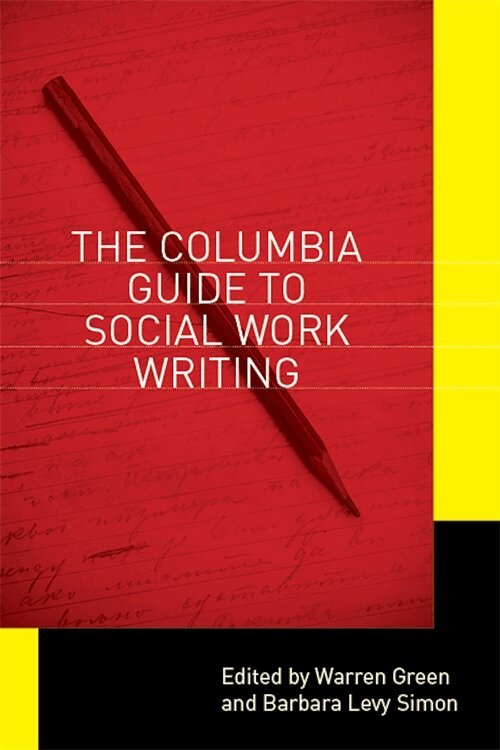
Social work practitioners write for a variety of publications, and they are expected to show fluency in a number of related fields. Whether the target is a course instructor, scholarly journal, fellowship organization, or general news outlet, social workers must be clear, persuasive, and comprehensive in their writing, especially on provocative subjects. This first-of-its-kind guide features top scholars and educators providing a much-needed introduction to social work writing and scholarship. Foregrounding the process of social work writing, the coeditors particularly emphasize how to think about and approach one's subject in a productive manner. The guide begins with an overview of social work writing from the 1880s to the present, and then follows with ideal strategies for academic paper writing, social work journal writing, and social work research writing. A section on applied professional writing addresses student composition in field education, writing for and about clinical practice, the effective communication of policy information to diverse audiences, program and proposal development, advocacy, and administrative writing.The concluding section focuses on specific fields of practice, including writing on child and family welfare, contemporary social issues, aging, and intervention in global contexts. Grounding their essays in systematic observations, induction and deduction, and a wealth of real-world examples, the contributors describe the conceptualization, development, and presentation of social work writing in ways that better secure its power and relevance.
323 kr
Skickas inom 7-10 vardagar
Social work practitioners write for a variety of publications, and they are expected to show fluency in a number of related fields. Whether the target is a course instructor, scholarly journal, fellowship organization, or general news outlet, social workers must be clear, persuasive, and comprehensive in their writing, especially on provocative subjects. This first-of-its-kind guide features top scholars and educators providing a much-needed introduction to social work writing and scholarship. Foregrounding the process of social work writing, the coeditors particularly emphasize how to think about and approach one's subject in a productive manner. The guide begins with an overview of social work writing from the 1880s to the present, and then follows with ideal strategies for academic paper writing, social work journal writing, and social work research writing. A section on applied professional writing addresses student composition in field education, writing for and about clinical practice, the effective communication of policy information to diverse audiences, program and proposal development, advocacy, and administrative writing.The concluding section focuses on specific fields of practice, including writing on child and family welfare, contemporary social issues, aging, and intervention in global contexts. Grounding their essays in systematic observations, induction and deduction, and a wealth of real-world examples, the contributors describe the conceptualization, development, and presentation of social work writing in ways that better secure its power and relevance.