Barbara MacGilchrist - Böcker
2 318 kr
Tillfälligt slut
`I have rarely been so enthusiastic about a book. Reviewers are supposed to highlight some imperfections - I am at a loss. Recommend this book to all you meet' - Mervyn Flecknoe, Improving Schools
`This book would be an invaluable read for all who work in schools including LEA advisors, inspectors and consultants. It contains a chapter on teachers' learning and has some excellent questions for discussion at the end of each chapter that could usefully stimulate ideas for staff development sessions. It would be great if this book were read and taken seriously by those who make policy as well as those who try to put it into practice' - Escalate
`The book is easy to use, clear, well organized, full of practical examples and equally practical questions. It could be a signpost to the future - if the days of educational diktat are really almost over' - Michael Duffy, Times Educational Supplement, Friday Magazine
`This Second Edition of The Intelligent School offers a concise and accessible insight into the key aspects of educational leadership. In my view, it ought to be read by anyone who is keen to develop their understanding of theoretical frameworks expertly illustrated through practical examples' - Neil Saunders, Primary Phase Inspector - Hampshire LEA ,(Doctoral Student - The University of Hull)
`This is an excellent book. I will use its insights and the wealth of practical questions it offers to help with my present politically driven imperative - the transformation of London's secondary schools. If I have this book at my elbow and make sure it's well thumbed, there is every chance that we can create 411 intelligent schools across London.
The new insights in The Intelligent School are a testament to the extraordinary proficiency of these three authors. As the waiter in the restaurant says when serving the meal "Enjoy"' - Tim Brighouse, Times Educational Supplement
Barbara MacGilchrist, Kate Myers and Jane Reed have written a masterpiece. The First Edition of the Intelligent School in 1997 was an outstanding book and it is no surprise that a Second Edition has followed relatively quickly to share more good news for practitioners, policymakers, researchers and scholars. The First Edition shaped my thinking more than most in the late 1990's and I cited it in scores of presentations in different countries around the world. It was a perfect complement to our work on the self-managing school.
In this Second Edition, the concept of the Intelligent School is expanded and the different kinds of intelligences are carefully explained and illustrated. The authors are able to draw on more than five years of implementation in the field and further and broader work in the research and development centres with which they are associated. They offer the best synthesis of the international literature on school effectiveness and school improvement that I have seen. They have performed a great service in making this literature accessible to the profession. I recommended the First Edition as essential reading for all the work in schools. Those who did not do so should certainly acquire the second, but it is important that policymakers and academics do the same.
`This book will quickly gain recognition as the leader among an increasing number of books that provide hope that all students in every setting can achieve a high quality education. It is one of the truly outstanding features of this book that it also conveys an unbridled spirit of optimism' - Brian Caldwell, Professor & Dean, Faculty of Education, University of Melbourne
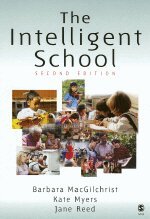
In writing The Intelligent School, Second Edition, the authors offer a practical resource to schools to help them maximise their improvement efforts. The aim is to help schools to be intelligent organizations; to be the type of school that can synthesise different kinds of knowledge, experience and ideas in order to be confident about current achievements, and to be able to decide what to do next.
This Second Edition has been fully revised and updated particularly in terms of new research evidence about how to improve the quality of learning and teaching in classrooms. The authors set out fresh thinking about the nine intelligences and provide a new framework for school improvement which includes the exploration of spiritual, ethical and emotional intelligence. The book also includes examples of Intelligent Schools in action.
948 kr
Skickas inom 3-6 vardagar
`I have rarely been so enthusiastic about a book. Reviewers are supposed to highlight some imperfections - I am at a loss. Recommend this book to all you meet' - Mervyn Flecknoe, Improving Schools
`This book would be an invaluable read for all who work in schools including LEA advisors, inspectors and consultants. It contains a chapter on teachers' learning and has some excellent questions for discussion at the end of each chapter that could usefully stimulate ideas for staff development sessions. It would be great if this book were read and taken seriously by those who make policy as well as those who try to put it into practice' - Escalate
`The book is easy to use, clear, well organized, full of practical examples and equally practical questions. It could be a signpost to the future - if the days of educational diktat are really almost over' - Michael Duffy, Times Educational Supplement, Friday Magazine
`This Second Edition of The Intelligent School offers a concise and accessible insight into the key aspects of educational leadership. In my view, it ought to be read by anyone who is keen to develop their understanding of theoretical frameworks expertly illustrated through practical examples' - Neil Saunders, Primary Phase Inspector - Hampshire LEA ,(Doctoral Student - The University of Hull)
`This is an excellent book. I will use its insights and the wealth of practical questions it offers to help with my present politically driven imperative - the transformation of London's secondary schools. If I have this book at my elbow and make sure it's well thumbed, there is every chance that we can create 411 intelligent schools across London.
The new insights in The Intelligent School are a testament to the extraordinary proficiency of these three authors. As the waiter in the restaurant says when serving the meal "Enjoy"' - Tim Brighouse, Times Educational Supplement
Barbara MacGilchrist, Kate Myers and Jane Reed have written a masterpiece. The First Edition of the Intelligent School in 1997 was an outstanding book and it is no surprise that a Second Edition has followed relatively quickly to share more good news for practitioners, policymakers, researchers and scholars. The First Edition shaped my thinking more than most in the late 1990's and I cited it in scores of presentations in different countries around the world. It was a perfect complement to our work on the self-managing school.
In this Second Edition, the concept of the Intelligent School is expanded and the different kinds of intelligences are carefully explained and illustrated. The authors are able to draw on more than five years of implementation in the field and further and broader work in the research and development centres with which they are associated. They offer the best synthesis of the international literature on school effectiveness and school improvement that I have seen. They have performed a great service in making this literature accessible to the profession. I recommended the First Edition as essential reading for all the work in schools. Those who did not do so should certainly acquire the second, but it is important that policymakers and academics do the same.
`This book will quickly gain recognition as the leader among an increasing number of books that provide hope that all students in every setting can achieve a high quality education. It is one of the truly outstanding features of this book that it also conveys an unbridled spirit of optimism' - Brian Caldwell, Professor & Dean, Faculty of Education, University of Melbourne
In writing The Intelligent School, Second Edition, the authors offer a practical resource to schools to help them maximise their improvement efforts. The aim is to help schools to be intelligent organizations; to be the type of school that can synthesise different kinds of knowledge, experience and ideas in order to be confident about current achievements, and to be able to decide what to do next.
This Second Edition has been fully revised and updated particularly in terms of new research evidence about how to improve the quality of learning and teaching in classrooms. The authors set out fresh thinking about the nine intelligences and provide a new framework for school improvement which includes the exploration of spiritual, ethical and emotional intelligence. The book also includes examples of Intelligent Schools in action.
2 290 kr
Skickas inom 11-20 vardagar
`Rigorous, realistic, accessible and eye-opening - this book ought to be at the well-thumbed heart of any primary school where building children's "learning power" is a genuine priority' - Guy Claxton, Professor of the Learning Sciences, University of Bristol
This book shows how a group of primary schools transformed their learning and teaching. The authors share the practical strategies the schools used for supporting and enhancing
-children's learning
-teachers' learning
-the schools' capacity for learning.
They show how the focus on learning led to significant improvements in children's motivation, behaviour, engagement in learning and learning outcomes.
This book reminds us that there is more to education than a narrow concentration on target setting and league tables. Based on an action research project in which five schools focused on developing children's learning and thinking skills, it tells how the schools committed themselves to inclusive education and the provision of a broad curriculum. Through this commitment, the schools enabled young people to develop their confidence, their self esteem and the attitudes needed to become lifelong learners.
The authors describe what worked and draw out the main lessons for: children teachers; support staff; headteachers; parents; external consultants.
This book is for school leaders at all levels and for practising teachers. It will also be useful to student teachers, those who work with schools in an advisory capacity and those involved with school improvement, educational leadership and developing learning and teaching in the classroom.
973 kr
Skickas inom 3-6 vardagar
`Rigorous, realistic, accessible and eye-opening - this book ought to be at the well-thumbed heart of any primary school where building children's "learning power" is a genuine priority' - Guy Claxton, Professor of the Learning Sciences, University of Bristol
This book shows how a group of primary schools transformed their learning and teaching. The authors share the practical strategies the schools used for supporting and enhancing
-children's learning
-teachers' learning
-the schools' capacity for learning.
They show how the focus on learning led to significant improvements in children's motivation, behaviour, engagement in learning and learning outcomes.
This book reminds us that there is more to education than a narrow concentration on target setting and league tables. Based on an action research project in which five schools focused on developing children's learning and thinking skills, it tells how the schools committed themselves to inclusive education and the provision of a broad curriculum. Through this commitment, the schools enabled young people to develop their confidence, their self esteem and the attitudes needed to become lifelong learners.
The authors describe what worked and draw out the main lessons for: children teachers; support staff; headteachers; parents; external consultants.
This book is for school leaders at all levels and for practising teachers. It will also be useful to student teachers, those who work with schools in an advisory capacity and those involved with school improvement, educational leadership and developing learning and teaching in the classroom.
999 kr
Skickas inom 3-6 vardagar
Development plans have become a feature of almost every school in the UK and most policy-makers and practitioners assume that by having such a plan a school will become more effective.
But do they really make a difference? What impact does a development plan have on the management and organisation of the school, on the professional development of teachers and, most importantly, on pupils' learning in the classroom? Can the development planning process be used as a school improvement strategy or would schools be better investing their time and energy in other ways?