Barbara Manthe – författare
Visar alla böcker från författaren Barbara Manthe. Handla med fri frakt och snabb leverans.
3 produkter
3 produkter
Inbunden, Tyska, 2026
346 kr
Skickas inom 3-6 vardagar
E-bok
PDF, Engelska, 2017251 kr
Läs direkt efter köp
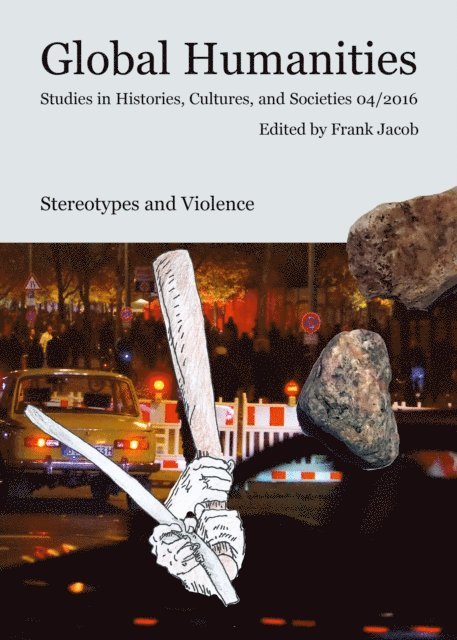
Stereotypes are dangerous, especially when they are used by demagogues. Slogans, which remind the historian of darker times in human history, however, reappear again in a growing number. As companions of the rise of right wing forces in Europe they make up ground in more and more regions and gain momentum in the political debate. It consequently seems to be more than important to focus on and closer analyze the interrelationship between stereo types and violence in modern societies.The fourth volume of Global Humanities tries to achieve such a broader analysis and provides reading in the fields of history, political science, gender and media studies. The authors show and emphasize in which ways the two above named factors are interacting with each other and influencing the popular opinion in modern nation states. Topics that are covered include Anti-Italian riots in Zurich at the end of the 19th century, a discussion of the interrelationship of racism and violence in Germany since the 1980s, and an analysis of gender based violence in Serbia. In addition, the persistence of stereo types in entertainment is closely studied by taking a look on Sinti and Roma depictions in current European films.
Del 75 - Beiträge zur Rechtsgeschichte des 20. Jahrhunderts
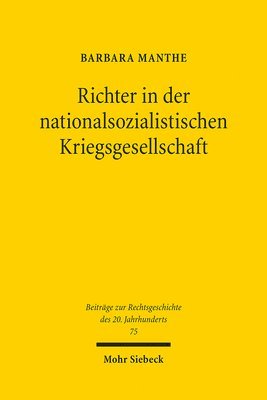
Richter in der nationalsozialistischen Kriegsgesellschaft
Beruflicher und privater Alltag von Richtern des Oberlandesgerichtsbezirks Köln, 1939-1945
Häftad, Tyska, 2013
1 624 kr
Tillfälligt slut
Der berufliche und private Alltag von Richtern des Kölner Oberlandesgerichtsbezirks zwischen 1939 und 1945 steht im Zentrum dieser alltagsgeschichtlichen Studie. Barbara Manthe untersucht, wie die Justizbeamten im Bombenkrieg ihren Arbeitsalltag organisierten, und fragt, inwiefern die Richter an den Amts- und Landgerichten nationalsozialistische Vorstellungen von "Volksgemeinschaft" umsetzten. Die Autorin beleuchtet Kooperationen und Konflikte einzelner Richter mit anderen Akteuren des Regimes und analysiert erstmals die Tätigkeit von Richtern des Kölner OLG-Bezirks im besetzten Polen. Die Untersuchung, was Bombenkrieg und Mangelwirtschaft für die privaten Lebensverhältnisse der Richter bedeuteten, wirft Licht auf den bislang kaum erforschten Alltag des Bürgertums im Zweiten Weltkrieg.