Barbiers Sjef Barbiers – författare
Visar alla böcker från författaren Barbiers Sjef Barbiers. Handla med fri frakt och snabb leverans.
2 produkter
2 produkter
E-bok
PDF, Engelska, 20021 714 kr
Läs direkt efter köp
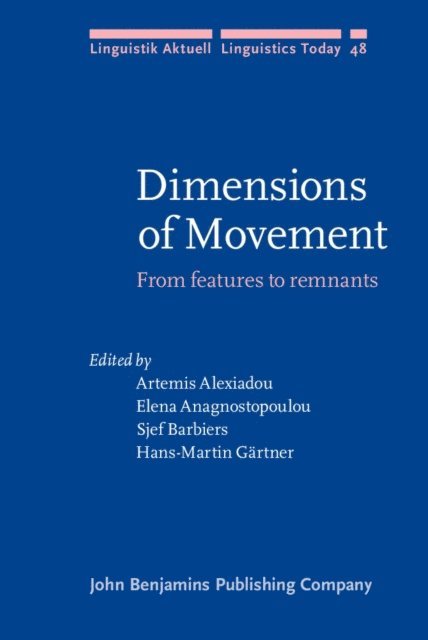
This volume presents a collection of papers of recent generative research into the properties of phrasal and feature movement, which explore these key syntactic phenomena from different angles and across languages. The papers advance or build on models of movement which capitalize either on generalized feature movement or on generalized remnant movement. Both these approaches attempt to develop a restrictive theory of movement aiming at a simplification of the operations of the computational system. Despite the fact that they are so different technically, generalized feature movement and generalized remnant movement both push the theory of movement to the same direction in two important respects: (a) Elimination of head movement. (b) Elimination of covert movement. The book is of primary interest to researchers and students in theoretical linguistics and syntactic theory.
E-bok
PDF, Engelska, 20021 588 kr
Läs direkt efter köp
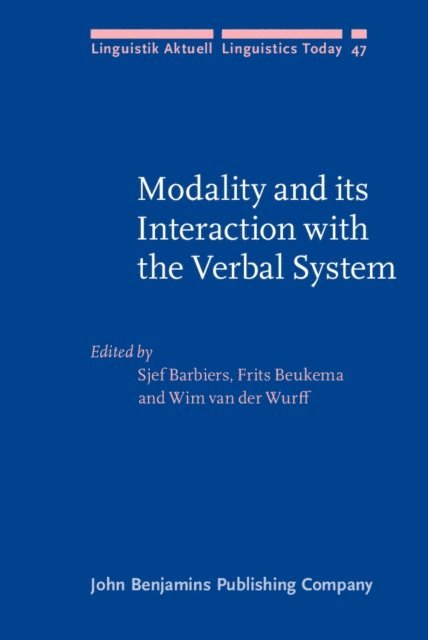
This book provides a broad overview of the issues relevant for the study of syntax of modals and their interaction with the verbal system. A large number of novel observations are offered from a variety of languages, including Dutch, (Modern and Middle) English, German, Lele, Macedonian, Middle Dutch and Slovene. The wealth of data, the critical evaluation of existing syntactic analyses of modality and the alternative analyses proposed make the book interesting for both for descriptively and for theoretically oriented syntacticians. Major concerns addressed are: the distinction between epistemic and root modality (where the arguments pro and contra the assumption of a corresponding difference in syntactic structure are evaluated, refined, and supplemented by arguments for syntactic distinction between necessity and possibility modals and by consideration of the influence of the modal’s complement on the interpretation), the interaction between modality and clausal phenomena (in particular negation, but also imperatives, aspect and Aktionsart), and the acquisition of modality (addressing cross-linguistic differences in the possibility for root infinitives to express modal interpretations and the late acquisition of epistemic interpretations as compared with non-epistemic interpretations).