Basharat Mushtaq – författare
2 125 kr
Läs direkt efter köp
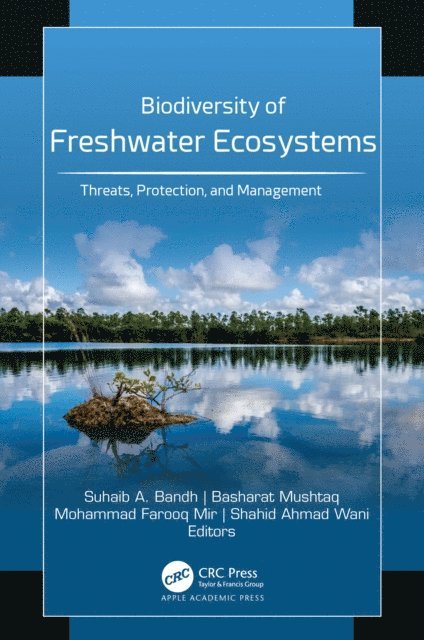
This new volume examines the ecological importance, threats, protection, and management of the biodiversity of freshwater ecosystems, such as lakes, ponds, rivers, streams, reservoirs, pools, and wetlands. As populations have been increasing exponentially, humans are using freshwater ecosystems severely, resulting in habitat destruction and breakdown. Environmental contamination, climate change, the introduction of harmful and invasive organisms, unplanned dredging and de-weeding processes, disposal of sewer systems in freshwater bodies, and badly planned water diversions are the leading causes of habitat loss in freshwaters. These impacts have led to significant decreases in the numbers and productivity of many freshwater species and decreased biodiversity in freshwater.
This book presents a selection of primary research and review papers on several freshwater aquatic biodiversity studies, which involve evaluating plants, macroinvertebrates, macrophytes, benthic zones, and fish diversity in freshwater ecosystems. It provides an abundance of new information on freshwater biodiversity distribution, status, and patterns.
Key features:
Discusses the importance, threats, and management of biodiversity of freshwater ecosystems Provides detailed coverage of modern and updated techniques used in the evaluation and conservation of freshwater biodiversity Looks at the impact of pesticides pollution on freshwater environs, and on aquatic and terrestrial life Reviews how global climate change affects freshwater biodiversityBiodiversity of Freshwater Ecosystems: Threats, Protection, and Management promotes the enhancement and strengthening of freshwater protection and its unique biodiversity for scientists, policymakers, scholars, researchers, NGOs, and the public, providing necessary background knowledge and practical tools to help manage aquatic ecosystems and their biodiversity in a holistic manner.
2 125 kr
Läs direkt efter köp
This new volume examines the ecological importance, threats, protection, and management of the biodiversity of freshwater ecosystems, such as lakes, ponds, rivers, streams, reservoirs, pools, and wetlands. As populations have been increasing exponentially, humans are using freshwater ecosystems severely, resulting in habitat destruction and breakdown. Environmental contamination, climate change, the introduction of harmful and invasive organisms, unplanned dredging and de-weeding processes, disposal of sewer systems in freshwater bodies, and badly planned water diversions are the leading causes of habitat loss in freshwaters. These impacts have led to significant decreases in the numbers and productivity of many freshwater species and decreased biodiversity in freshwater.
This book presents a selection of primary research and review papers on several freshwater aquatic biodiversity studies, which involve evaluating plants, macroinvertebrates, macrophytes, benthic zones, and fish diversity in freshwater ecosystems. It provides an abundance of new information on freshwater biodiversity distribution, status, and patterns.
Key features:
Discusses the importance, threats, and management of biodiversity of freshwater ecosystems Provides detailed coverage of modern and updated techniques used in the evaluation and conservation of freshwater biodiversity Looks at the impact of pesticides pollution on freshwater environs, and on aquatic and terrestrial life Reviews how global climate change affects freshwater biodiversityBiodiversity of Freshwater Ecosystems: Threats, Protection, and Management promotes the enhancement and strengthening of freshwater protection and its unique biodiversity for scientists, policymakers, scholars, researchers, NGOs, and the public, providing necessary background knowledge and practical tools to help manage aquatic ecosystems and their biodiversity in a holistic manner.
1 845 kr
Skickas inom 10-15 vardagar
1 846 kr
Skickas inom 10-15 vardagar
2 283 kr
Läs direkt efter köp
As global populations surge, the availability of clean water continues to decline, necessitating a paradigm shift toward pollution mitigation and sustainable water management. The indiscriminate disposal of untreated wastewater is no longer a viable option, underscoring the critical need for advanced treatment technologies. Wastewater Treatment Technology provides a comprehensive introduction to the core principles of wastewater treatment, coupled with the engineering design of unit processes essential for the sustainable management of municipal wastewater. The book systematically explores key aspects, including wastewater treatment methodologies, drinking water purification, water quality standards, sludge management, and treatment plant design. Each concept is presented with a strong theoretical foundation, ensuring clarity and coherence in technical applications. Additionally, the text integrates recent advancements in wastewater treatment technologies, reflecting the evolving landscape of the field.Developed from a course taught by the authors over several years, this book is tailored for undergraduate and postgraduate students with a background in environmental science, water resource management, and environmental engineering. It offers a robust grounding in fundamental principles while equipping readers with the expertise to design and optimize unit processes in municipal wastewater treatment systems. Industry professionals will also find it an invaluable reference for practical applications. Beyond academia, this book serves as a crucial resource for researchers and policymakers engaged in wastewater management. It provides scientific methodologies and analytical frameworks necessary for developing viable and sustainable strategies aligned with global environmental goals. Addressing a critical gap in wastewater treatment literature, this text offers a well-structured and comprehensive compilation essential for students, researchers, and decision-makers striving to achieve the UN Sustainable Development Goals (SDGs) through innovative and efficient wastewater solutions.
1 846 kr
Skickas inom 10-15 vardagar
966 kr
Skickas inom 10-15 vardagar
773 kr
Läs direkt efter köp
In the current age of science and technology, our lives have become dominated by countless scientific and technological innovations without which the earth would be a much poorer place. Life as we know would become absolutely bleak and boring without the inventions and advances being made all over the globe. In fact, scientific inventions, discoveries and innovations have ushered in a dramatic revolution in virtually every sphere of life. But at the same time, the skewed use of technology is at loggerheads with the environment. We, and our environment, now face a number of critical challenges and it is in response to this that we wrote this book to raise awareness for environmental issues and related management aspects.
With a primary focus on Environmental Management – the rational reconciliation of man and nature, which involves the judicious exploitation and utilization of natural resources without disturbing the ecosystem’s balance – it will thus help toimprove the relationship between man and environment. Moreover, it offers a wealth of ready-to-use material for advanced undergraduate and graduate students of Environment and Water Management. The book systematically addresses a range of key aspects, e.g. scientific principles, methods and ideas, as well as life-long learning skills for students. Further, it provides a solid foundation for applying scientific approaches to environmental problems.
700 kr
Skickas inom 10-15 vardagar