Behnaz Farahi - Böcker
Visar alla böcker från författaren Behnaz Farahi. Handla med fri frakt och snabb leverans.
2 produkter
2 produkter
239 kr
Tillfälligt slut
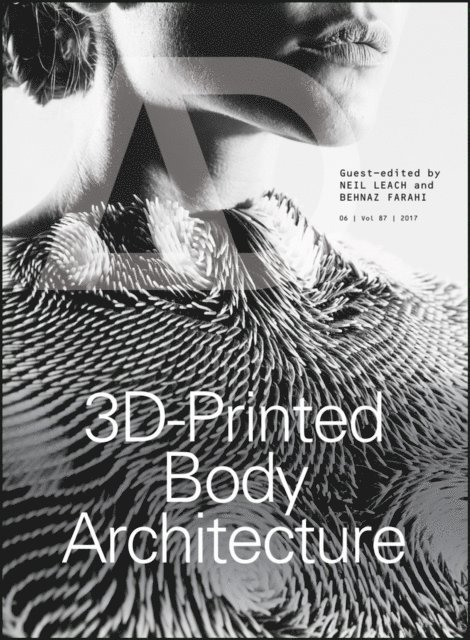
Some architects dream of 3D-printing houses. Some even fantasise about 3D-printing entire cities. But what is the real potential of 3D printing for architects? This issue focuses on another strand of 3D-printing practice emerging among architects operating at a much smaller scale that is potentially more significant. Several architects have been working with the fashion industry to produce some exquisitely designed 3D-printed wearables. Other architects have been 3D-printing food, jewellery and other items at the scale of the human body. But what is the significance of this work? And how do these 3D-printed body-scale items relate to the discipline of architecture? Are they merely a distraction from the real business of the architect? Or do they point towards a new form of proto-architecture – like furniture, espresso makers and pavilions before them – that tests out architectural ideas and explores tectonic properties at a smaller scale? Or does this work constitute an entirely new arena of design? In other words, is 3D printing at the human scale to be seen as a new genre of 'body architecture'? This issue contains some of the most exciting work in this field today, and seeks to chart and analyse its significance.Contributors include: Paola Antonelli/MoMA, Francis Bitonti, Niccolo Casas, Behnaz Farahi, Madeline Gannon, Eric Goldemberg/MONAD Studio, Kyle von Hasseln/3D Systems Culinary Lab, Rem D Koolhaas, Julia Kӧrner, Neil Leach, Steven Ma/Xuberance, Neri Oxman/MIT Media Lab, Ronald Rael and Virginia San Fratello, Gilles Retsin, Jessica Rosenkrantz/Nervous System, and Patrik Schumacher/Zaha Hadid Architects.
647 kr
Skickas inom 3-6 vardagar
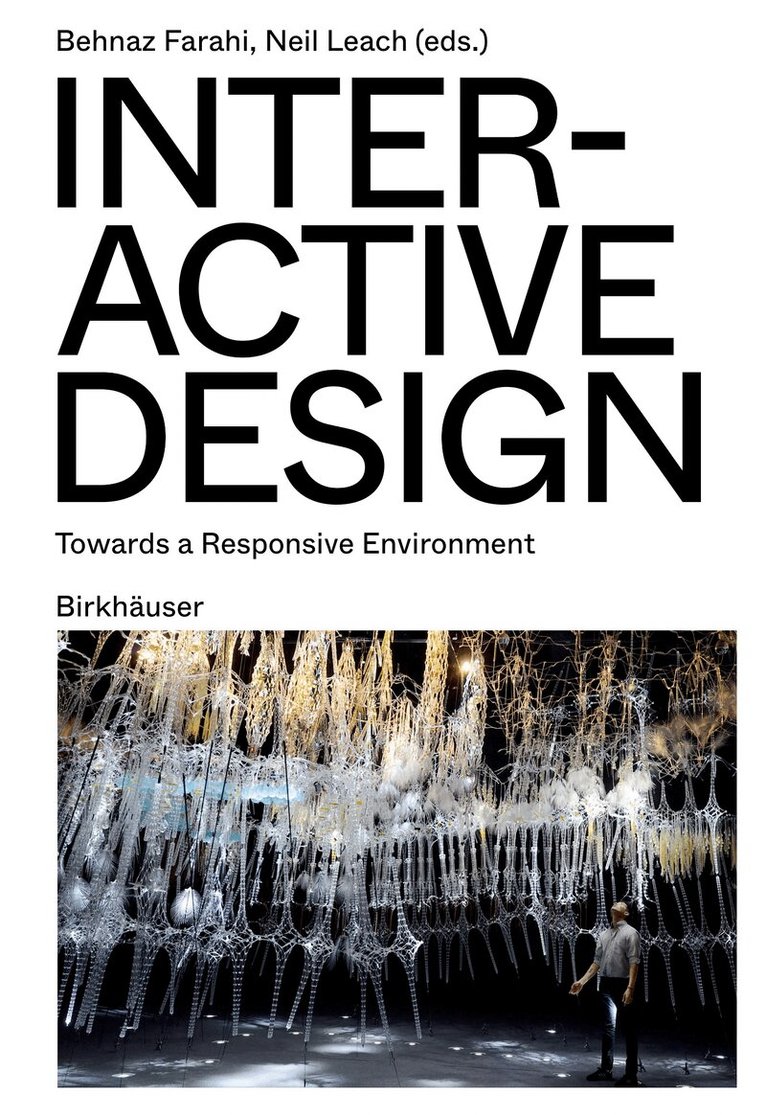
Designer:innen und Vordenker:innen auf dem Gebiet des interaktiven Designs beschreiben Modelle für eine reaktionsfähige Umwelt der Zukunft. Interaktives Design ist in den letzten Jahren mit einer Reihe von inspirierenden Projekten, die ein neues Feld der Forschung und des Designs eröffnet haben, geradezu explodiert. Dieses Buch bringt einige der bedeutendsten Designer:innen und Vordenker:innen auf dem Gebiet des interaktiven Designs zusammen, die mit theoretischen Artikeln unterschiedliche Aspekte der Entwicklung beleuchten und diese anhand von aktuellen Praktiken und Projekten beschreiben. Mit zahlreichen Abbildungen ergänzt, bietet uns das Buch einen Überblick über die Entstehung von interaktivem Design und Architektur auf Basis der Theorie der Kybernetik. Gleichzeitig werden Modelle der Interaktivität vorgestellt, die von dynamischen und formverändernden Materialien über Wearables und Architektur bis zu transdisziplinären und alternativen Designmethoden reichen. Entwicklungsgeschichte des interaktiven Designs Überblick über den Stand der Technik und ihre Möglichkeiten Modelle der Interaktivität in Theorie und Praxis