Ben Wisner - Böcker
Visar alla böcker från författaren Ben Wisner. Handla med fri frakt och snabb leverans.
16 produkter
16 produkter
2 290 kr
Skickas inom 10-15 vardagar
The term 'natural disaster' is often used to refer to natural events such as earthquakes, hurricanes or floods. However, the phrase 'natural disaster' suggests an uncritical acceptance of a deeply engrained ideological and cultural myth. At Risk questions this myth and argues that extreme natural events are not disasters until a vulnerable group of people is exposed.The updated new edition confronts a further ten years of ever more expensive and deadly disasters and discusses disaster not as an aberration, but as a signal failure of mainstream 'development'. Two analytical models are provided as tools for understanding vulnerability. One links remote and distant 'root causes' to 'unsafe conditions' in a 'progression of vulnerability'. The other uses the concepts of 'access' and 'livelihood' to understand why some households are more vulnerable than others. Examining key natural events and incorporating strategies to create a safer world, this revised edition is an important resource for those involved in the fields of environment and development studies.
725 kr
Skickas inom 10-15 vardagar
The term 'natural disaster' is often used to refer to natural events such as earthquakes, hurricanes or floods. However, the phrase 'natural disaster' suggests an uncritical acceptance of a deeply engrained ideological and cultural myth. At Risk questions this myth and argues that extreme natural events are not disasters until a vulnerable group of people is exposed.The updated new edition confronts a further ten years of ever more expensive and deadly disasters and discusses disaster not as an aberration, but as a signal failure of mainstream 'development'. Two analytical models are provided as tools for understanding vulnerability. One links remote and distant 'root causes' to 'unsafe conditions' in a 'progression of vulnerability'. The other uses the concepts of 'access' and 'livelihood' to understand why some households are more vulnerable than others. Examining key natural events and incorporating strategies to create a safer world, this revised edition is an important resource for those involved in the fields of environment and development studies.
1 078 kr
Skickas inom 10-15 vardagar
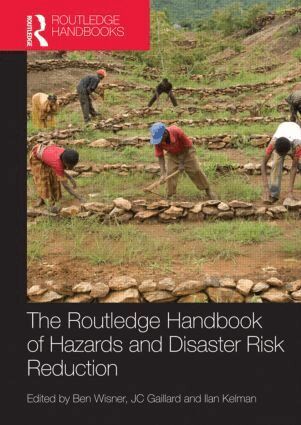
The Handbook provides a comprehensive statement and reference point for hazard and disaster research, policy making, and practice in an international and multi-disciplinary context. It offers critical reviews and appraisals of current state of the art and future development of conceptual, theoretical and practical approaches as well as empirical knowledge and available tools.Organized into five inter-related sections, this Handbook contains sixty-five contributions from leading scholars. Section one situates hazards and disasters in their broad political, cultural, economic, and environmental context. Section two contains treatments of potentially damaging natural events/phenomena organized by major earth system. Section three critically reviews progress in responding to disasters including warning, relief and recovery. Section four addresses mitigation of potential loss and prevention of disasters under two sub-headings: governance, advocacy and self-help, and communication and participation. Section five ends with a concluding chapter by the editors.The engaging international contributions reflect upon the politics and policy of how we think about and practice applied hazard research and disaster risk reduction. This Handbook provides a wealth of interdisciplinary information and will appeal to students and practitioners interested in Geography, Environment Studies and Development Studies.
3 664 kr
Skickas inom 10-15 vardagar
The Handbook provides a comprehensive statement and reference point for hazard and disaster research, policy making, and practice in an international and multi-disciplinary context. It offers critical reviews and appraisals of current state of the art and future development of conceptual, theoretical and practical approaches as well as empirical knowledge and available tools.Organized into five inter-related sections, this Handbook contains sixty-five contributions from leading scholars. Section one situates hazards and disasters in their broad political, cultural, economic, and environmental context. Section two contains treatments of potentially damaging natural events/phenomena organized by major earth system. Section three critically reviews progress in responding to disasters including warning, relief and recovery. Section four addresses mitigation of potential loss and prevention of disasters under two sub-headings: governance, advocacy and self-help, and communication and participation. Section five ends with a concluding chapter by the editors.The engaging international contributions reflect upon the politics and policy of how we think about and practice applied hazard research and disaster risk reduction. This Handbook provides a wealth of interdisciplinary information and will appeal to students and practitioners interested in Geography, Environment Studies and Development Studies.
Disaster Risk
2015
21 229 kr
Skickas inom 10-15 vardagar
Especially in an era of rapid global environmental change, questions and issues about and around natural hazards and disasters are dizzying in their complexity—and urgency. Answering the need for an authoritative reference work to make sense of this fast-moving area, and its vast and multidisciplinary corpus of scholarly literature, Disaster Risk is a new title from the acclaimed Routledge series, Critical Concepts in the Environment. Edited by a trio of expert researchers, this new collection of major works embraces a wide variety of methodological traditions to bring together in four volumes the foundational and the very best cutting-edge scholarship. The collection enables users to access—and to make sense of—the most important research and practice. It provides a synoptic view of all the key issues, current debates, and controversies.Disaster Risk is fully indexed and includes comprehensive introductions, newly written by the editors, which place the collected materials in their historical and intellectual context. It is an essential reference collection and is destined to be valued by scholars and students—as well as policy-makers and practitioners—as a vital one-stop research and pedagogic resource.œ œ œ Disaster Risk is edited by three leading scholars in the field: Ben Wisner, formerly Director of International Studies at California State University at Long Beach, with a long career before that in research and teaching. He is presently engaged in full-time research and writing and has recently completed a four-year project for the United Nations University on defining and managing urban social vulnerability to disasters in six megacities (Johannesburg, Tokyo, Manila, Mumbai, Mexico City, and Los Angeles). The other co-editors of this Routledge Major Works collection are J. C. Gaillard of the University of Auckland, New Zealand; and Ilan Kelman, based at the Center for International Climate and Environmental Research, Oslo, Norway.
Disaster Management
International Lessons in Risk Reduction, Response and Recovery
Häftad, Engelska, 2014
725 kr
Skickas inom 10-15 vardagar
There is a perennial gap between theory and practice, between academia and active professionals in the field of disaster management. This gap means that valuable lessons are not learned and people die or suffer as a result. This book opens a dialogue between theory and practice. It offers vital lessons to practitioners from scholarship on natural hazards, disaster risk management and reduction and developments studies, opening up new insights in accessible language with practical applications. It also offers to academics the insights of the enormous experience practitioners have accumulated, highlighting gaps in research and challenging assumptions and theories against the reality of experience. Disaster Management covers issues in all phases of the disaster cycle: preparedness, prevention, response and recovery. It also addresses cross-cutting issues including political, economic and social factors that influence differential vulnerability, and key areas of practice such as vulnerability mapping, early warning, infrastructure protection, emergency management, reconstruction, health care and education, and gender issues. The team of international authors combine their years of experience in research and the field to offer vital lessons for practitioners, academics and students alike.
2 088 kr
Skickas inom 10-15 vardagar
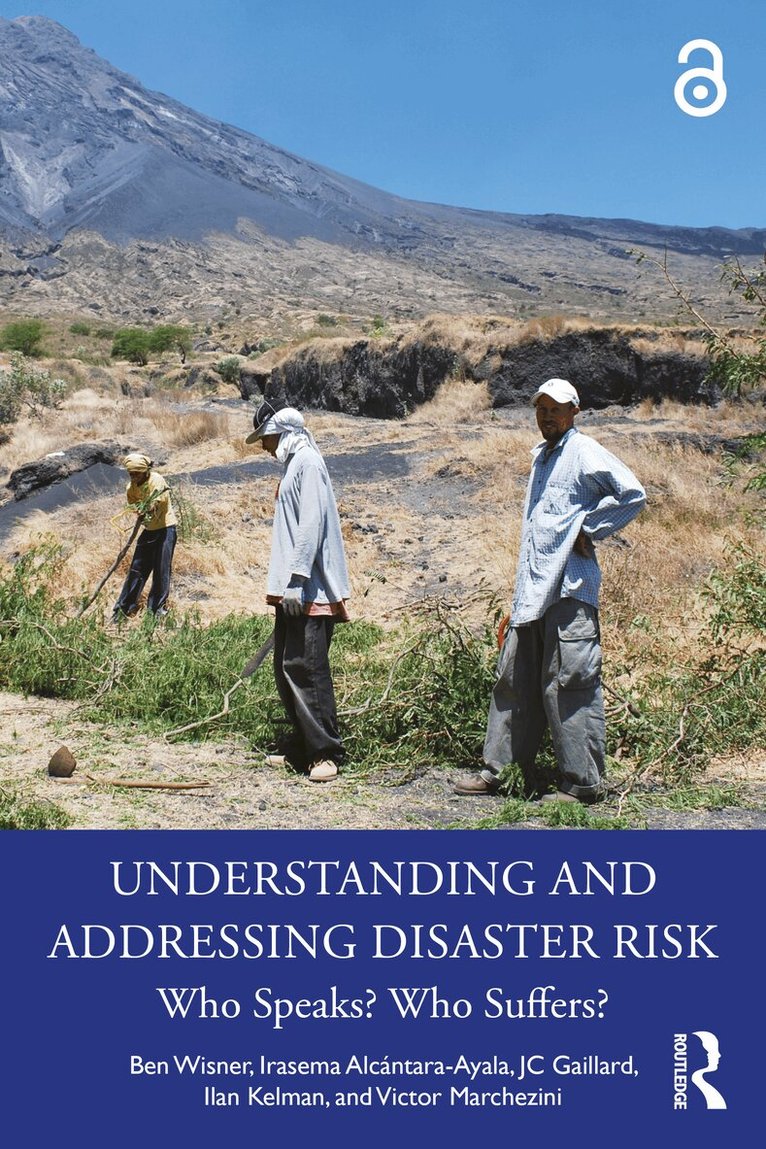
In Understanding and Addressing Disaster Risk, the authors explain how people modify the environment and exert power over each other in ways that make nature potentially harmful and put people in harm’s way. Opportunities and challenges faced by those engaging with disaster risk are explored.Across 11 chapters, the authors show that disasters are not natural, are not events, and do not happen quickly. Instead, they are the result of chronic societal processes emerging from the creation and perpetuation of vulnerabilities and limitations on people’s abilities to respond to hazards. The book also explores the environmental component of disaster risk through the lens of different natural elements and phenomena, including biological-ecological and water-weather-climate processes as well as geological and outer space dynamics. The authors explain the mutual influence of the different components of disasters in creating disaster risk across diverse regions of the world. They critique attempts to reduce disaster risk through top-down, siloed assumptions, attitudes, and values. The value of people’s knowledge of hazards – often ignored or dismissed by authorities – is a central theme. This book is original because of how it re-interprets and advances understanding of the disaster process through the study of such societal processes of vulnerability, risk creation, and power imbalances. It is also unique in diving further into “root causes” of disaster in order to place them within local histories and colonial legacies as well as contemporary, typically misdirected, agendas while upending previous “solutions” which have been shown to do more harm than good.Understanding and Addressing Disaster Risk is useful for and useable by decision-makers, policy makers, researchers, and students to shatter the vicious cycle of repeating known mistakes which compound detrimental outcomes.The Open Access version of this book, available at www.taylorfrancis.com, has been made available under a Creative Commons Attribution-Non Commercial-No Derivatives (CC-BY-NC-ND) 4.0 International license.
576 kr
Skickas inom 10-15 vardagar
In Understanding and Addressing Disaster Risk, the authors explain how people modify the environment and exert power over each other in ways that make nature potentially harmful and put people in harm’s way. Opportunities and challenges faced by those engaging with disaster risk are explored.Across 11 chapters, the authors show that disasters are not natural, are not events, and do not happen quickly. Instead, they are the result of chronic societal processes emerging from the creation and perpetuation of vulnerabilities and limitations on people’s abilities to respond to hazards. The book also explores the environmental component of disaster risk through the lens of different natural elements and phenomena, including biological-ecological and water-weather-climate processes as well as geological and outer space dynamics. The authors explain the mutual influence of the different components of disasters in creating disaster risk across diverse regions of the world. They critique attempts to reduce disaster risk through top-down, siloed assumptions, attitudes, and values. The value of people’s knowledge of hazards – often ignored or dismissed by authorities – is a central theme. This book is original because of how it re-interprets and advances understanding of the disaster process through the study of such societal processes of vulnerability, risk creation, and power imbalances. It is also unique in diving further into “root causes” of disaster in order to place them within local histories and colonial legacies as well as contemporary, typically misdirected, agendas while upending previous “solutions” which have been shown to do more harm than good.Understanding and Addressing Disaster Risk is useful for and useable by decision-makers, policy makers, researchers, and students to shatter the vicious cycle of repeating known mistakes which compound detrimental outcomes.The Open Access version of this book, available at www.taylorfrancis.com, has been made available under a Creative Commons Attribution-Non Commercial-No Derivatives (CC-BY-NC-ND) 4.0 International license.
Reflecting on Ben Wisner’s Contributions to Scholarship and Scholars
The Benschrift
Inbunden, Engelska, 2025
2 088 kr
Skickas inom 10-15 vardagar
This book is a festschrift in tribute to Ben Wisner’s contributions to disaster studies and adjacent fields of scholarship such as political ecology, development and sustainability.This festschrift for Ben, and so The Benschrift, revitalises, promotes and critiques a selection of six foundational articles that span Ben’s 50-year career. Each article is reproduced integrally and followed by a commentary by an expert in the field and a response from Ben. As a result, this book not only introduces a lifetime’s work to the latest generation of researchers; it also contributes a meaningful dialogue across decades of scholarship, expressing contemporary reflections alongside the understanding of how to engage with and improve past research. Two fundamental truths stand out: the value of local knowledge and the necessity of seeking root causes and radical solutions.This book is an essential read for students, researchers, policy makers and practitioners interested in the development and evolution of disaster scholarship, political ecology, development and sustainability studies.
Reflecting on Ben Wisner’s Contributions to Scholarship and Scholars
The Benschrift
Häftad, Engelska, 2025
576 kr
Skickas inom 10-15 vardagar
This book is a festschrift in tribute to Ben Wisner’s contributions to disaster studies and adjacent fields of scholarship such as political ecology, development and sustainability.This festschrift for Ben, and so The Benschrift, revitalises, promotes and critiques a selection of six foundational articles that span Ben’s 50-year career. Each article is reproduced integrally and followed by a commentary by an expert in the field and a response from Ben. As a result, this book not only introduces a lifetime’s work to the latest generation of researchers; it also contributes a meaningful dialogue across decades of scholarship, expressing contemporary reflections alongside the understanding of how to engage with and improve past research. Two fundamental truths stand out: the value of local knowledge and the necessity of seeking root causes and radical solutions.This book is an essential read for students, researchers, policy makers and practitioners interested in the development and evolution of disaster scholarship, political ecology, development and sustainability studies.
1 900 kr
Kommande
Power and Need in Africa (1988) examines the mechanisms for giving the poor of Africa the means to develop their own future – a renaissance which has as its constituent elements environmental sustainability, women’s emancipation and social justice.
671 kr
Skickas inom 10-15 vardagar
Published with ProVention Consortium, UNDP and UN-Habitat 'This excellent book is essential reading for those concerned with urban risk and its reduction in Africa, the most rapidly urbanizing region of the world.' Professor Jo Beall, Development Studies Institute, London School of Economics 'At last a book that recognizes the impacts of disasters on Africa's 350 million urban dwellers, including the many disasters that get overlooked and go unrecorded. But also a book that, through careful case studies, shows what creates disaster risk and what local measures can be taken to address it.' David Satterthwaite, International Institute for Environment and Development (IIED).'This innovative volume combines the latest conceptualisations of urban disaster risk and vulnerability with case studies from across the African continent on how existing and innovative information can inform efforts to address the problems. Coverage ranges from the major catastrophes of news headlines to small, everyday disasters with which poor urban residents have to cope in their survival strategies. Written by international authorities and local specialists, this extremely useful book should find a place in the hands of academics and practitioners alike.' Professor David Simon, Department of Geography, Royal Holloway, University of LondonThis is a one-of-a-kind book packed with original research and offering an innovative way of thinking about the reduction of risk in rapidly urbanizing cities across the globe. It is a must-have for professionals, researchers and policy makers. The book addresses four inter-related themes critical for urban risk reduction: environment; livehood; urban governance and the generation of urban risks. Its focus is on Africa, the most rapidly urbanizing world region, but it illustrates global processes. Part one reviews development, urbanization and disaster risk in Africa as a whole, identifies state-of-the-art practices and policies for building urban resilience and provides a tool kit for urban risk reduction. It also presents a powerful conceptual framework to analyse and compare disaster risk and resilience in different cities and communities. Part two presents detailed case studies from Algeria, Ghana, Senegal, Kenya, Tanzania and South Africa illustrating vulnerability to hazards ranging from earthquake to shack fire, environmental health hazards, traffic hazards and flooding. Part three looks to the future and outlines a vision for a safer urban Africa based on achieving gains in human security through inclusive governance and investment in the creative capacities of Africa's urban dwellers.With foreword by Anna Tibaijuka, Executive Director, UN-HABITAT
1 366 kr
Tillfälligt slut
'The big, era-defining questions and, at last, the subtle, tenable answers, teased out without clich or compromise. A vital volume at a critical moment.' Dr Augustus Casely-Hayford, Director, Africa '05'This book dispels the myth of a uniformly hopeless, hungry continent. It shows just how extraordinarily diverse Africa is and how much it has changed in the last 20 years.Full of fresh thinking on problems that face Africa and new African approaches to development.' Richard Dowden, Director, Royal African SocietyThis ground-breaking book, with a foreword by former President of Ireland (199-997) and UN Human Rights Commissioner (1997 2002) Mary Robinson, uniquely distils the complex issues surrounding Africa at the beginning of the 21st century. African and Western scholars provide a fascinating 'map' for the reader to navigate between issues such as urban and rural livelihoods, the potential of fresh water fishing, health, the HIV/AIDS crisis, conflict and efforts at peacemaking. Also included are critical assessments of Africa's role in the global economy, the growth of regional economic cooperation within Africa, the influence of ethnicity on the continent's politics, the evolution of its political institutions, and the impact of Africa's legal systems on its development. A substantial introductory essay by the editors measures the distance Africa has travelled and the lessons it has learned since Africa in Crisis, the classic Earthscan book, was published in 1985.Ben Wisner is visiting research fellow at DESTIN, London School of Economics and at Benfield Hazard Research Centre, University College London, and visiting professor of environmental studies, Oberlin College, USA. Camilla Toulmin is Director of the International Institute for Environment and Development. Rutendo Chitiga is a freelance writer and editor, and has a postgraduate degree in environment and development.
594 kr
Skickas inom 10-15 vardagar
'The big, era-defining questions and, at last, the subtle, tenable answers, teased out without clich or compromise. A vital volume at a critical moment.' Dr Augustus Casely-Hayford, Director, Africa '05'This book dispels the myth of a uniformly hopeless, hungry continent. It shows just how extraordinarily diverse Africa is and how much it has changed in the last 20 years.Full of fresh thinking on problems that face Africa and new African approaches to development.' Richard Dowden, Director, Royal African SocietyThis ground-breaking book, with a foreword by former President of Ireland (199-997) and UN Human Rights Commissioner (1997 2002) Mary Robinson, uniquely distils the complex issues surrounding Africa at the beginning of the 21st century. African and Western scholars provide a fascinating 'map' for the reader to navigate between issues such as urban and rural livelihoods, the potential of fresh water fishing, health, the HIV/AIDS crisis, conflict and efforts at peacemaking. Also included are critical assessments of Africa's role in the global economy, the growth of regional economic cooperation within Africa, the influence of ethnicity on the continent's politics, the evolution of its political institutions, and the impact of Africa's legal systems on its development. A substantial introductory essay by the editors measures the distance Africa has travelled and the lessons it has learned since Africa in Crisis, the classic Earthscan book, was published in 1985.Ben Wisner is visiting research fellow at DESTIN, London School of Economics and at Benfield Hazard Research Centre, University College London, and visiting professor of environmental studies, Oberlin College, USA. Camilla Toulmin is Director of the International Institute for Environment and Development. Rutendo Chitiga is a freelance writer and editor, and has a postgraduate degree in environment and development.
2 088 kr
Skickas inom 10-15 vardagar
Published with ProVention Consortium, UNDP and UN-Habitat 'This excellent book is essential reading for those concerned with urban risk and its reduction in Africa, the most rapidly urbanizing region of the world.' Professor Jo Beall, Development Studies Institute, London School of Economics 'At last a book that recognizes the impacts of disasters on Africa's 350 million urban dwellers, including the many disasters that get overlooked and go unrecorded. But also a book that, through careful case studies, shows what creates disaster risk and what local measures can be taken to address it.' David Satterthwaite, International Institute for Environment and Development (IIED).'This innovative volume combines the latest conceptualisations of urban disaster risk and vulnerability with case studies from across the African continent on how existing and innovative information can inform efforts to address the problems. Coverage ranges from the major catastrophes of news headlines to small, everyday disasters with which poor urban residents have to cope in their survival strategies. Written by international authorities and local specialists, this extremely useful book should find a place in the hands of academics and practitioners alike.' Professor David Simon, Department of Geography, Royal Holloway, University of LondonThis is a one-of-a-kind book packed with original research and offering an innovative way of thinking about the reduction of risk in rapidly urbanizing cities across the globe. It is a must-have for professionals, researchers and policy makers. The book addresses four inter-related themes critical for urban risk reduction: environment; livehood; urban governance and the generation of urban risks. Its focus is on Africa, the most rapidly urbanizing world region, but it illustrates global processes. Part one reviews development, urbanization and disaster risk in Africa as a whole, identifies state-of-the-art practices and policies for building urban resilience and provides a tool kit for urban risk reduction. It also presents a powerful conceptual framework to analyse and compare disaster risk and resilience in different cities and communities. Part two presents detailed case studies from Algeria, Ghana, Senegal, Kenya, Tanzania and South Africa illustrating vulnerability to hazards ranging from earthquake to shack fire, environmental health hazards, traffic hazards and flooding. Part three looks to the future and outlines a vision for a safer urban Africa based on achieving gains in human security through inclusive governance and investment in the creative capacities of Africa's urban dwellers.With foreword by Anna Tibaijuka, Executive Director, UN-HABITAT
Disaster Management
International Lessons in Risk Reduction, Response and Recovery
Inbunden, Engelska, 2013
2 088 kr
Skickas inom 10-15 vardagar
There is a perennial gap between theory and practice, between academia and active professionals in the field of disaster management. This gap means that valuable lessons are not learned and people die or suffer as a result. This book opens a dialogue between theory and practice. It offers vital lessons to practitioners from scholarship on natural hazards, disaster risk management and reduction and developments studies, opening up new insights in accessible language with practical applications. It also offers to academics the insights of the enormous experience practitioners have accumulated, highlighting gaps in research and challenging assumptions and theories against the reality of experience. Disaster Management covers issues in all phases of the disaster cycle: preparedness, prevention, response and recovery. It also addresses cross-cutting issues including political, economic and social factors that influence differential vulnerability, and key areas of practice such as vulnerability mapping, early warning, infrastructure protection, emergency management, reconstruction, health care and education, and gender issues. The team of international authors combine their years of experience in research and the field to offer vital lessons for practitioners, academics and students alike.