Benjamin S. Orlove – författare
Visar alla böcker från författaren Benjamin S. Orlove. Handla med fri frakt och snabb leverans.
6 produkter
6 produkter
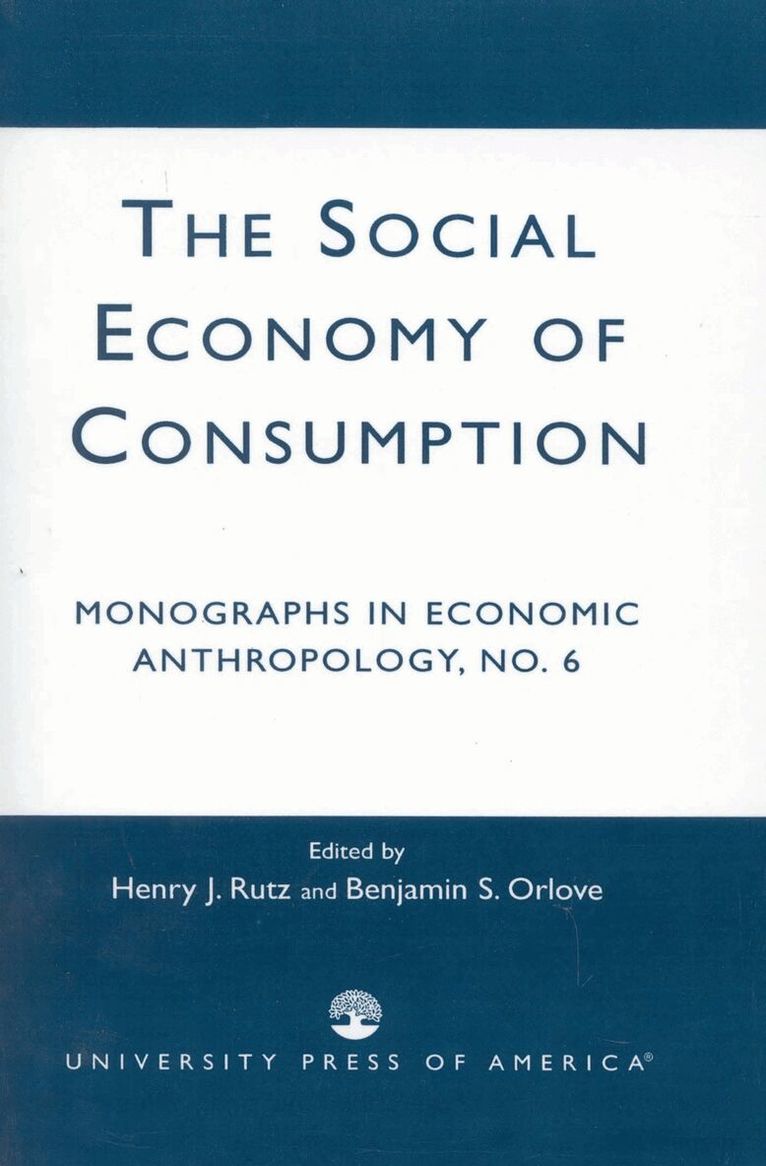
Häftad, Engelska, 1989
902 kr
Skickas inom 10-15 vardagar
To find more information about Rowman and Littlefield titles, please visit www.rowmanlittlefield.com.
E-bok
PDF, Engelska, 2021682 kr
Läs direkt efter köp
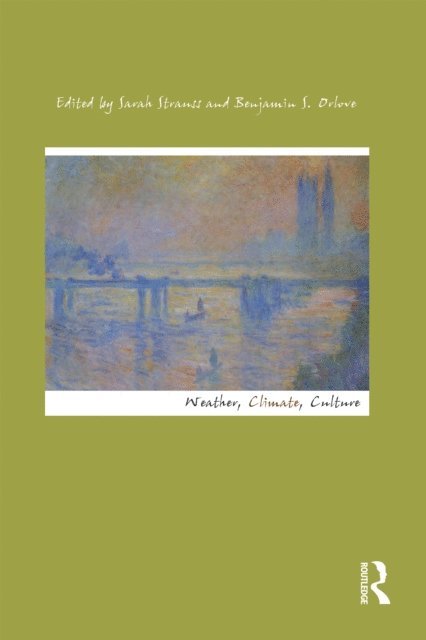
Throughout history, the weather has been both feared and revered for its powerful influence over living creatures. Not only does it control our moods, activities, and fashions, but it has also played a crucial role in broader issues of cultural identity, concepts of time, and economic development. In fact, the weather has become so ingrained in our everyday routines that many of us forget just how profoundly this omnipotent force shapes culture. With the continuing rise in global warming and consequential change in weather patterns, our awareness and understanding of this topic has never been so important. This fascinating book is the first to explore our close relationship with the weather. From folklore to visual representations, agricultural and health practices, and unusual weather events, Weather, Climate, Culture demonstrates that the way we discuss and interpret meteorological phenomena concerns not only the events in question but, more complexly, the cultural, political, and historical framework in which we discuss them. Why is it politically safe to discuss current weather conditions, but highly controversial to discuss long-term climate change? Why are the British renowned for talking about the weather and why, in the eighteenth century, was this regarded as genteel? How can accounts of cultural or moral change be associated with narratives of changing climate and vice-versa?Drawing on a wide range of case studies from around the world, this pioneering book provides an original and lively perspective on a subject that continues to have an incalculable impact on the way we live. It will serve as a landmark text for years to come.
E-bok
Engelska, 2021682 kr
Läs direkt efter köp
Throughout history, the weather has been both feared and revered for its powerful influence over living creatures. Not only does it control our moods, activities, and fashions, but it has also played a crucial role in broader issues of cultural identity, concepts of time, and economic development. In fact, the weather has become so ingrained in our everyday routines that many of us forget just how profoundly this omnipotent force shapes culture. With the continuing rise in global warming and consequential change in weather patterns, our awareness and understanding of this topic has never been so important. This fascinating book is the first to explore our close relationship with the weather. From folklore to visual representations, agricultural and health practices, and unusual weather events, Weather, Climate, Culture demonstrates that the way we discuss and interpret meteorological phenomena concerns not only the events in question but, more complexly, the cultural, political, and historical framework in which we discuss them. Why is it politically safe to discuss current weather conditions, but highly controversial to discuss long-term climate change? Why are the British renowned for talking about the weather and why, in the eighteenth century, was this regarded as genteel? How can accounts of cultural or moral change be associated with narratives of changing climate and vice-versa?Drawing on a wide range of case studies from around the world, this pioneering book provides an original and lively perspective on a subject that continues to have an incalculable impact on the way we live. It will serve as a landmark text for years to come.
E-bok
PDF, Engelska, 2014756 kr
Läs direkt efter köp
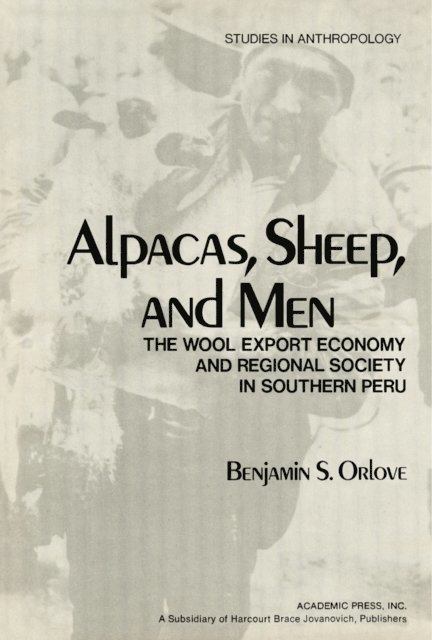
Alpacas, Sheep, and Men: The Wool Export Economy and Regional Society in Southern Peru investigates the response of the Sicuani region in southern Peru to the wool export economy and its consequent integration into the nation-state in the late nineteenth century. The book traces the economic and political conflicts engendered by the export economy, such as those between landlords and peasants in the countryside and landlords versus traders in town. It also examines how these conflicts shaped the metamorphosis of a closed, isolated, localized society into an open one and its incorporation into national politics as well as global economics. Comprised of 11 chapters, this book begins with a review of the theories of modernization and dependency, followed by a discussion on the development of the world market for wool and the component elements of the wool economy of the entire southern Peru. Subsequent chapters focus on the regional society in more detail, with emphasis on the concept of region and the economic activities of different sectors; variation in forms of land tenure and labor relations in two provinces; the relations among herders, peasants, and artisans; and regional politics. The three major groups of artisans and workers in the region who use wool are considered, namely, urban furriers, textile mill workers, and rural weavers. The book concludes with an analysis of the fundamental importance of the wool export economy in the Sicuani region using the sectorial model. This monograph should be of interest to students and anthropologists.
Inbunden, Engelska, 2003
2 158 kr
Skickas inom 10-15 vardagar
Throughout history, the weather has been both feared and revered for its powerful influence over living creatures. Not only does it control our moods, activities, and fashions, but it has also played a crucial role in broader issues of cultural identity, concepts of time, and economic development. In fact, the weather has become so ingrained in our everyday routines that many of us forget just how profoundly this omnipotent force shapes culture. With the continuing rise in global warming and consequential change in weather patterns, our awareness and understanding of this topic has never been so important. This fascinating book is the first to explore our close relationship with the weather. From folklore to visual representations, agricultural and health practices, and unusual weather events, Weather, Climate, Culture demonstrates that the way we discuss and interpret meteorological phenomena concerns not only the events in question but, more complexly, the cultural, political, and historical framework in which we discuss them. Why is it politically safe to discuss current weather conditions, but highly controversial to discuss long-term climate change? Why are the British renowned for talking about the weather and why, in the eighteenth century, was this regarded as genteel? How can accounts of cultural or moral change be associated with narratives of changing climate and vice-versa?Drawing on a wide range of case studies from around the world, this pioneering book provides an original and lively perspective on a subject that continues to have an incalculable impact on the way we live. It will serve as a landmark text for years to come.
Häftad, Engelska, 2003
590 kr
Skickas inom 10-15 vardagar
Throughout history, the weather has been both feared and revered for its powerful influence over living creatures. Not only does it control our moods, activities, and fashions, but it has also played a crucial role in broader issues of cultural identity, concepts of time, and economic development. In fact, the weather has become so ingrained in our everyday routines that many of us forget just how profoundly this omnipotent force shapes culture. With the continuing rise in global warming and consequential change in weather patterns, our awareness and understanding of this topic has never been so important. This fascinating book is the first to explore our close relationship with the weather. From folklore to visual representations, agricultural and health practices, and unusual weather events, Weather, Climate, Culture demonstrates that the way we discuss and interpret meteorological phenomena concerns not only the events in question but, more complexly, the cultural, political, and historical framework in which we discuss them. Why is it politically safe to discuss current weather conditions, but highly controversial to discuss long-term climate change? Why are the British renowned for talking about the weather and why, in the eighteenth century, was this regarded as genteel? How can accounts of cultural or moral change be associated with narratives of changing climate and vice-versa?Drawing on a wide range of case studies from around the world, this pioneering book provides an original and lively perspective on a subject that continues to have an incalculable impact on the way we live. It will serve as a landmark text for years to come.