E. A. Hammel – författare
Visar alla böcker från författaren E. A. Hammel. Handla med fri frakt och snabb leverans.
7 produkter
7 produkter
E-bok
PDF, Engelska, 2013979 kr
Läs direkt efter köp
Principles of Tzeltal Plant Classification: An Introduction to the Botanical Ethnography of a Mayan-Speaking People of Highland Chiapas covers the underlying classificatory principles used by the Tzeltal to order the vast array of organisms of the plant world. The book describes the setting of the research, both from a botanical and ethnographic view; the general outline of Tzeltal plant classification and nomenclature; and the methods used to collect data. The text also discusses the rich ethnolinguistic terminology used by the Tzeltal in describing and discussing the structure of plants, referred to as ethnophytography; and the cultural significance of plants to the Tzeltal in agriculture, food types, house building, and other areas of material culture where plants and plant products are of major importance. The individual description of all known Tzeltal plant classes is also encompassed in detail. Botanists and ethnobotanists will find the book invaluable.
E-bok
PDF, Engelska, 2013756 kr
Läs direkt efter köp
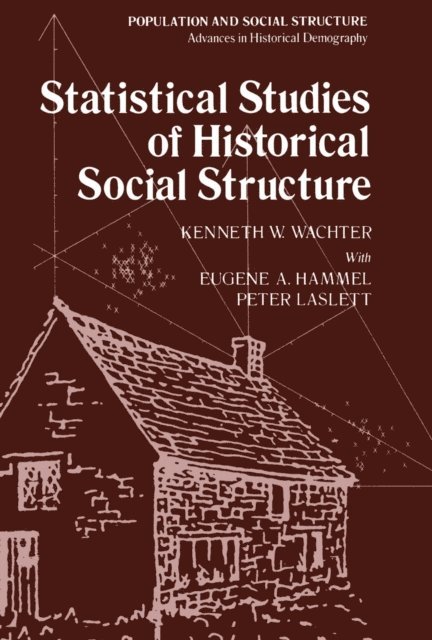
Statistical Studies of Historical Social Structure articulates and applies concepts from statistics into historical investigations of pre-industrial English households. The book provides statistical reports on household composition and demographic influences and uses simulation in the study of problems in historical structure. Chapters are devoted to computer simulation experiments; presentation and analysis of English household composition data; correlation of English patriline extinction with social mobility; and how age distribution affects English social structure. Statisticians, historians, demographers, researchers, and students will find the book interesting.
E-bok
PDF, Engelska, 2014735 kr
Läs direkt efter köp
The Emergence of Symbols: Cognition and Communication in Infancy provides information pertinent to the nature and origin of symbols, the interdependence of language and thought, and the parallels between phylogeny and ontogeny. This book clarifies some of the conceptual and methodological issues involved in the search for prerequisites to language. Organized into seven chapters, this book begins with an overview of the distinction between homology and analogy in the study of linguistic and nonlinguistic developments. This text then explains the conceptual and operational definitions for such controversial terms as intention, convention, and symbolic behavior. Other chapters consider the limits and advantages of the correlational method as applied in the research. This book discusses as well the structure and content of early symbol use, both in language and in play. The final chapter examines the processes that underlie imitation and tool use, as they contribute to the child''s analysis of his culture. This book is a valuable resource for neural biologists, psychologists, and social scientists.
E-bok
PDF, Engelska, 2014756 kr
Läs direkt efter köp
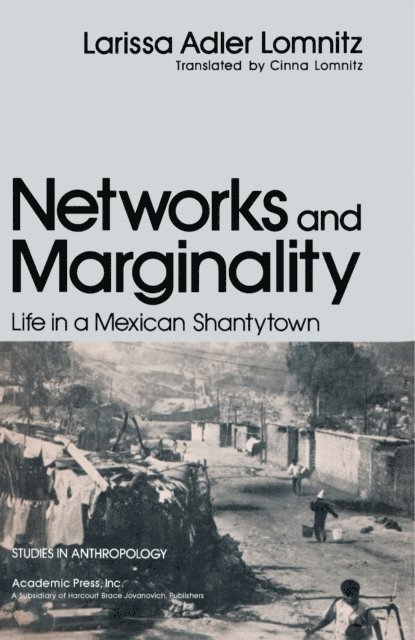
Networks and Marginality: Life in a Mexican Shantytown describes the life and survival of economically marginal or poor people in Cerrada del Cóndor, a shantytown of about 200 houses in the southern part of Mexico City. The field work is carried out between 1969 and 1971 using combined anthropological and quantitative methods. This book is composed of 10 chapters and begins with an overview of the theoretical concepts essential for an adequate comprehension of the later chapters, followed by a summary of the development and evolution of Mexico City as they relate to Cerrada del Cóndor. Considerable chapters examine the migration process, the economy, the family and kinship patterns, and the reciprocity networks and associated mechanisms of survival value in the shantytown. The remaining chapters discuss some of the relevant theoretical points raised by the findings, including the reciprocity, the confianza concept, and the importance of informal economic exchange in complex urban societies. This book will prove useful to economists, anthropologists, social scientists, and researchers.
E-bok
PDF, Engelska, 2014756 kr
Läs direkt efter köp
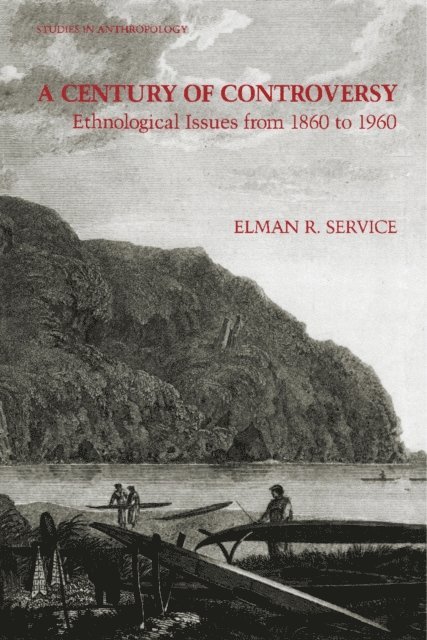
A Century of Controversy: Ethnological Issues from 1860 to 1960 is an assessment of the history of ethnology in terms of its intellectual progress, with emphasis on the controversial issues that were broached between 1860 and 1960. Two related philosophical or theoretical poses that characterized the prominent ethnological thinkers of this period, and earlier, are related to this phenomenon. One was the prevalent positivism, the other the belief in human progress as a form of social, cultural, and mental evolution. Comprised of 19 chapters, this volume begins by looking at several eminent scholars dealing more closely with the subject of ethnology, including Henry Maine and John F. McLennan in Great Britain; Johann J. Bachofen in Switzerland; and Fustel de Coulanges in France. In particular, the chapter examines the disagreement among Maine, Bachofen, McLennan, and Fustel de Coulanges as to the nature of the earliest society and its form of marriage; the nature of the evolutionary transformations of society (especially from primitive society to civilization); and the actual meaning and function of kinship terminology. The next two chapters describe the positive, useful discoveries as well as the mistakes and weaknesses of Lewis H. Morgan''s work, with particular reference to his classificatory kinship nomenclature. Subsequent sections focus on controversies surrounding kinship terminology; social structure; the origins of government; the economic life of primitive peoples; and society and culture. This book will be of interest to scholars of anthropology, archaeology, and ethnology.
E-bok
PDF, Engelska, 2014756 kr
Läs direkt efter köp
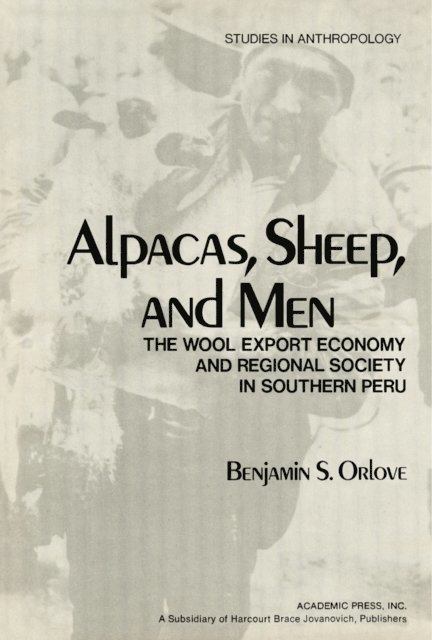
Alpacas, Sheep, and Men: The Wool Export Economy and Regional Society in Southern Peru investigates the response of the Sicuani region in southern Peru to the wool export economy and its consequent integration into the nation-state in the late nineteenth century. The book traces the economic and political conflicts engendered by the export economy, such as those between landlords and peasants in the countryside and landlords versus traders in town. It also examines how these conflicts shaped the metamorphosis of a closed, isolated, localized society into an open one and its incorporation into national politics as well as global economics. Comprised of 11 chapters, this book begins with a review of the theories of modernization and dependency, followed by a discussion on the development of the world market for wool and the component elements of the wool economy of the entire southern Peru. Subsequent chapters focus on the regional society in more detail, with emphasis on the concept of region and the economic activities of different sectors; variation in forms of land tenure and labor relations in two provinces; the relations among herders, peasants, and artisans; and regional politics. The three major groups of artisans and workers in the region who use wool are considered, namely, urban furriers, textile mill workers, and rural weavers. The book concludes with an analysis of the fundamental importance of the wool export economy in the Sicuani region using the sectorial model. This monograph should be of interest to students and anthropologists.
E-bok
PDF, Engelska, 2013779 kr
Läs direkt efter köp
Ritual Brotherhood in Renaissance Florence investigates the meaning of fraternity in terms of the ritual relations created in religious brotherhoods or confraternities during that period. The book focuses on the sociability of the confraternity as revealed in the patterns of membership and in forms of ceremony. Florence''s confraternities serve as a vehicle for examining the relationship between ritual behavior and social organization. The text discusses the ways in which Florentines use forms of ritual to define, protect, and alter their relations with one another. The book reviews the social relations in Renaissance Florence through the structure of social relations, the politics of amity or enmity, and social relations in relation to economic exchange. Social organization and ritual actions include confraternal organization, membership, symbolic fraternity, and the rites of community. The book explores the company of San Paolo in the fifteenth century where the confraternity offers an introduction to the nature of citywide community, its republican institutions, and its civic values. The book also examines traditional confraternities in crisis, the nature of the disruptions that leads to the emergence of new confraternal organizations and values. In the sixteenth-century, confraternities reveal major departures in ideology, ritual, and social organization. They have also introduced the principles of hierarchy into confraternal membership, as well as a new ethic of obedience. The book will prove delightful reading for sociologists, historians studying Florentine society, and researchers interested in the history of religious brotherhood and confraternities.