Benoît Henriet - Böcker
Visar alla böcker från författaren Benoît Henriet. Handla med fri frakt och snabb leverans.
4 produkter
4 produkter
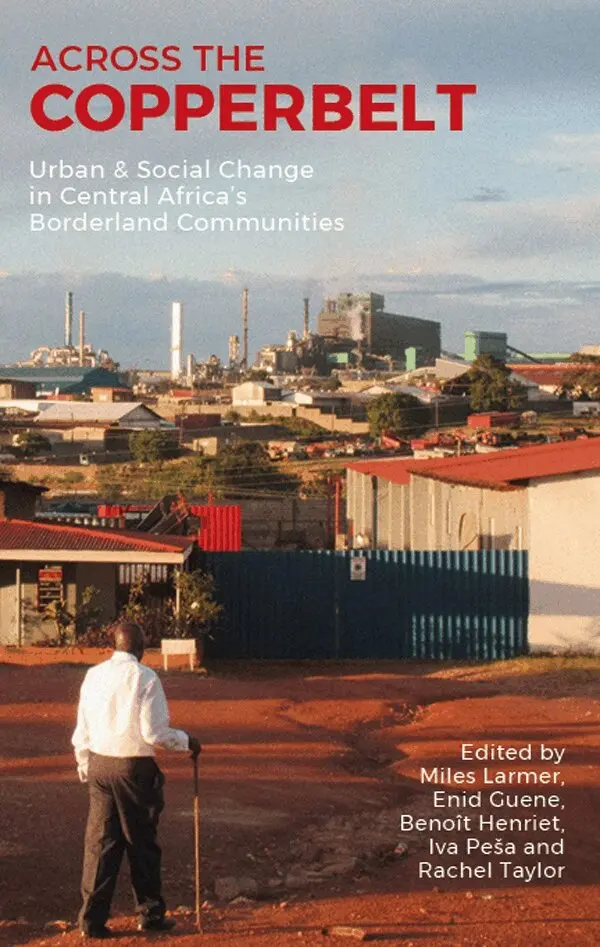
Across the Copperbelt
Urban & Social Change in Central Africa's Borderland Communities
Häftad, Engelska, 2021
377 kr
Skickas inom 7-10 vardagar
The first comparative historical analysis - local, national and transnational - of the cross-border Central African copperbelt; a key work in studies of labour, urbanisation and African studies.The Central African Copperbelt, encompassing the mining communities of Katanga (DR Congo) and Zambia, has been central to the study of modernisation and rapid social and political change in urban Africa. This volume expands upon earlier studies of industrial mining, male-dominated formal labour organisation and political change by examining both sides of the border from pre-colonial history to the present and encompassing a wide range of economic, social and cultural identities and activities. Bringing together scholars from a range of disciplines, the contributors explore copperbelt communities' sense of identity - expressed in comic strips and football matches, their precarious and inventive ways of living, their involvement in church and education, and the processes and impact of urbanisation and development, environmental degradation and changing gender relations. A major contribution to borderland studies, in showing how the meaning and relevance of the border to the copperbelt's mixed and mobile population has changed constantly over time, the book's engagement with communities at the nexus of social, economic and political change makes it a key study for those working in global urban development.This book is available under the Creative Commons license CC-BY-NC. It is based on research that is part of a project that has received funding from the European Research Council (ERC) under the European Union's Horizon 2020 research and innovation program (grant agreement no: 681657): 'Comparing the Copperbelt: Political Culture and Knowledge Production in Central Africa'.
1 204 kr
Skickas inom 5-8 vardagar
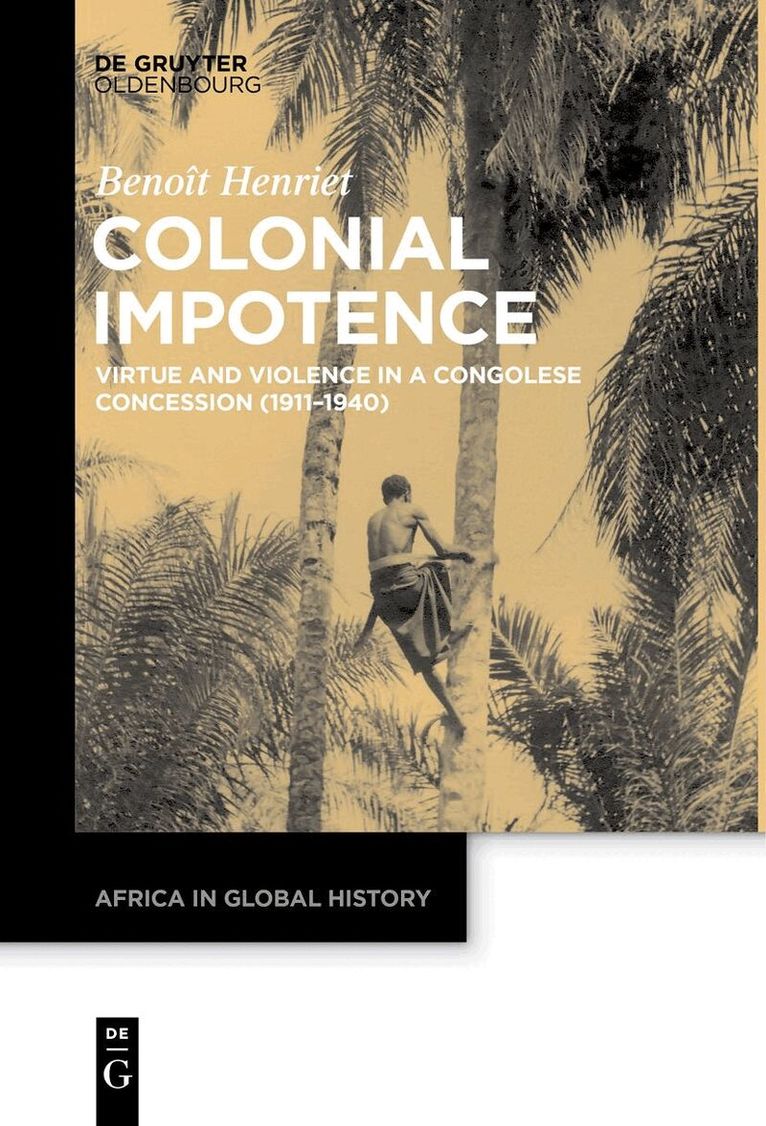
In Colonial Impotence, Benoît Henriet studies the violent contradictions of colonial rule from the standpoint of the Leverville concession, Belgian Congo’s largest palm oil exploitation. Leverville was imagined as a benevolent tropical utopia, whose Congolese workers would be "civilized" through a paternalist machinery. However, the concession was marred by inefficiency, endemic corruption and intrinsic brutality. Colonial agents in the field could be seen as impotent, for they were both unable and unwilling to perform as expected. This book offers a new take on the joint experience of colonialism and capitalism in Southwest Congo, and sheds light on their impact on local environments, bodies, societies and cosmogonies.
Del 3 - Africa in Global History
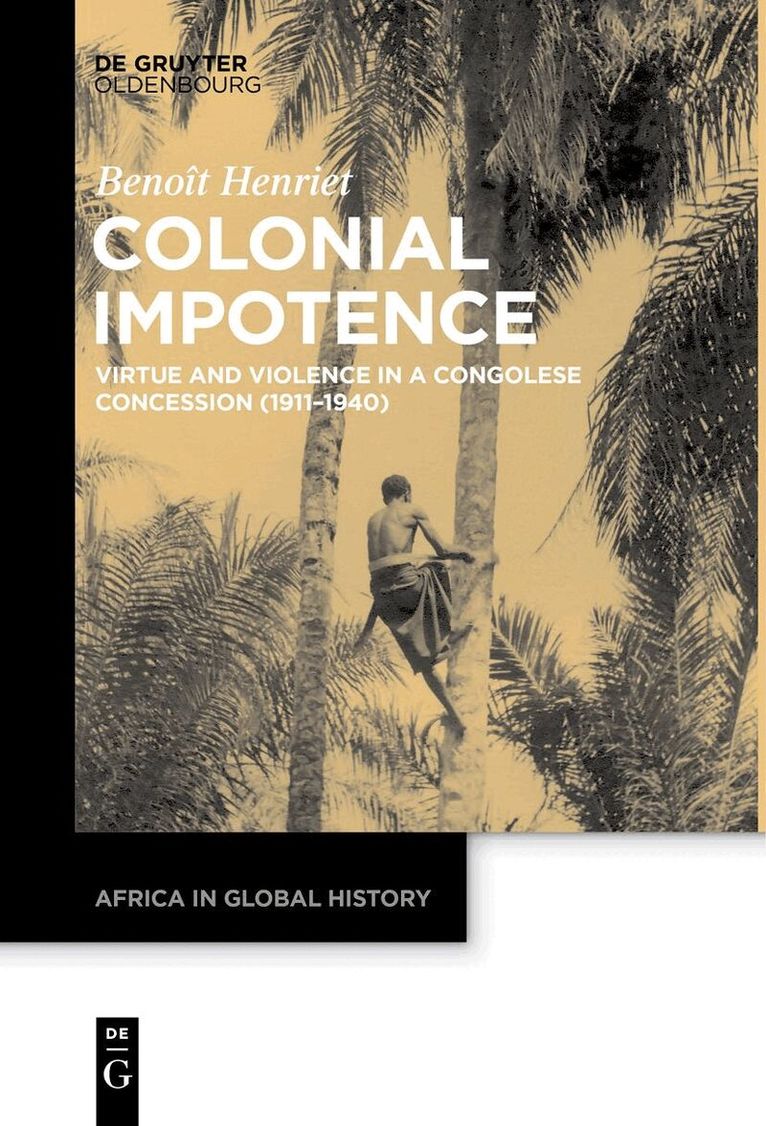
Colonial Impotence
Virtue and Violence in a Congolese Concession (1911–1940)
Häftad, Engelska, 2023
274 kr
Skickas inom 5-8 vardagar
In Colonial Impotence, Benoît Henriet studies the violent contradictions of colonial rule from the standpoint of the Leverville concession, Belgian Congo’s largest palm oil exploitation. Leverville was imagined as a benevolent tropical utopia, whose Congolese workers would be "civilized" through a paternalist machinery. However, the concession was marred by inefficiency, endemic corruption and intrinsic brutality. Colonial agents in the field could be seen as impotent, for they were both unable and unwilling to perform as expected. This book offers a new take on the joint experience of colonialism and capitalism in Southwest Congo, and sheds light on their impact on local environments, bodies, societies and cosmogonies.
877 kr
Skickas inom 5-8 vardagar
A multidisciplinary study of power in Central Africa.Central Africa has long been a fertile ground for engendering new concepts and innovative research, exerting significant influence on African studies and beyond. This edited volume offers groundbreaking, multidisciplinary reflections on power in Central Africa, from the Atlantic slave trade era to the present. By bringing together emerging and leading scholars, Textures of Power builds on the rich epistemic legacies of (Central) African studies, and opens new research avenues across history, anthropology, and cultural and political studies. It offers fresh perspectives on colonial and postcolonial power structures, drawing on new findings while critically engaging with earlier theoretical frameworks.Employing the concept of “texture” as a red thread, the book showcases the central importance of power as an analytical tool in the humanities and the social sciences. It fosters dialogues between emotions and technology, colonialism and its aftermath, and between non-humans and the invisible world. Drawing on stories about women, social rebellions, digital technologies, slavery, languages, forest management, charms, care and bio-medicine, urban life, radio, music, witchcraft, homosexuality, and environmental pollution, this volume emphasizes bottom-up, long-term and emic approaches as well as local theories about power.This work will appeal to students and scholars in African studies, colonial and postcolonial studies, and those interested in Africa’s longue durée history. Beyond its spatial focus, it will also be relevant to those studying power dynamics, cultural studies, queer and gender studies, and environmental humanities.