Benyamin Schwarz – författare
788 kr
Skickas inom 10-15 vardagar
2 117 kr
Skickas inom 10-15 vardagar
772 kr
Skickas inom 10-15 vardagar
796 kr
Skickas inom 10-15 vardagar
2 809 kr
Skickas inom 10-15 vardagar
932 kr
Skickas inom 10-15 vardagar
2 893 kr
Skickas inom 10-15 vardagar
1 378 kr
Skickas inom 10-15 vardagar
886 kr
Läs direkt efter köp
Make housing for the elderly comfortable, efficient, and appropriate to their special needs!Today people are living longer lives than ever before, and elderly people need to live in settings that reflect their individual capabilities. They need safe and appropriate homes, appliances, and furnishings that they will not lose the ability to use and enjoy in the years of decline. Housing Choices and Well-Being of Older Adults: Proper Fit addresses the challenge of matching the attributes of residential settings for older adults with the competence of the people who live in them. This book views housing for the elderly as a special case in terms of the person-environment paradigm. It highlights the recurring themes that give housing for the elderly a measure of order and predictability.Care providers, consultants for retirement communities, researchers in the fields of aging and environment or gerontology, university libraries, and members of housing associations for the elderly will benefit from the timely and vital information in this book. Easy-to-understand charts and tables make the information even more accessible.Housing Choices and Well-Being of Older Adults discusses:
the state of theory development in environmental gerontology housing needs of the elderly quality issues in this type of setting design and development issues kitchen, bathroom, and bedroom applications for elderly people in various states of health home safety issues and much more!and the issues surrounding continued aging and its implications for:
supportive environmental, health, and psychosocial services the economic and financial concerns of aging adults housing management and community issuesUse what you''ll find in Housing Choices and Well-being of Older Adults to ensure that the elderly people in your life are comfortable in an environment that is safe and appropriate.
886 kr
Läs direkt efter köp
Make housing for the elderly comfortable, efficient, and appropriate to their special needs!Today people are living longer lives than ever before, and elderly people need to live in settings that reflect their individual capabilities. They need safe and appropriate homes, appliances, and furnishings that they will not lose the ability to use and enjoy in the years of decline. Housing Choices and Well-Being of Older Adults: Proper Fit addresses the challenge of matching the attributes of residential settings for older adults with the competence of the people who live in them. This book views housing for the elderly as a special case in terms of the person-environment paradigm. It highlights the recurring themes that give housing for the elderly a measure of order and predictability.Care providers, consultants for retirement communities, researchers in the fields of aging and environment or gerontology, university libraries, and members of housing associations for the elderly will benefit from the timely and vital information in this book. Easy-to-understand charts and tables make the information even more accessible.Housing Choices and Well-Being of Older Adults discusses:
the state of theory development in environmental gerontology housing needs of the elderly quality issues in this type of setting design and development issues kitchen, bathroom, and bedroom applications for elderly people in various states of health home safety issues and much more!and the issues surrounding continued aging and its implications for:
supportive environmental, health, and psychosocial services the economic and financial concerns of aging adults housing management and community issuesUse what you''ll find in Housing Choices and Well-being of Older Adults to ensure that the elderly people in your life are comfortable in an environment that is safe and appropriate.
886 kr
Läs direkt efter köp
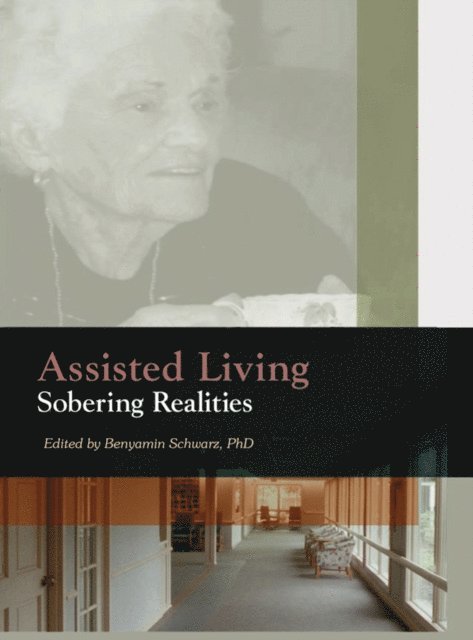
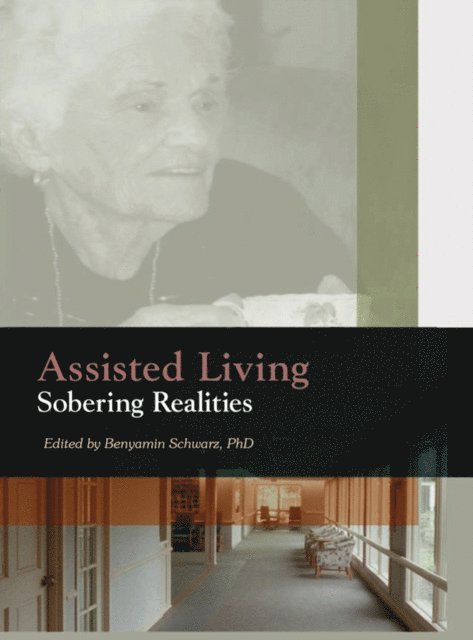
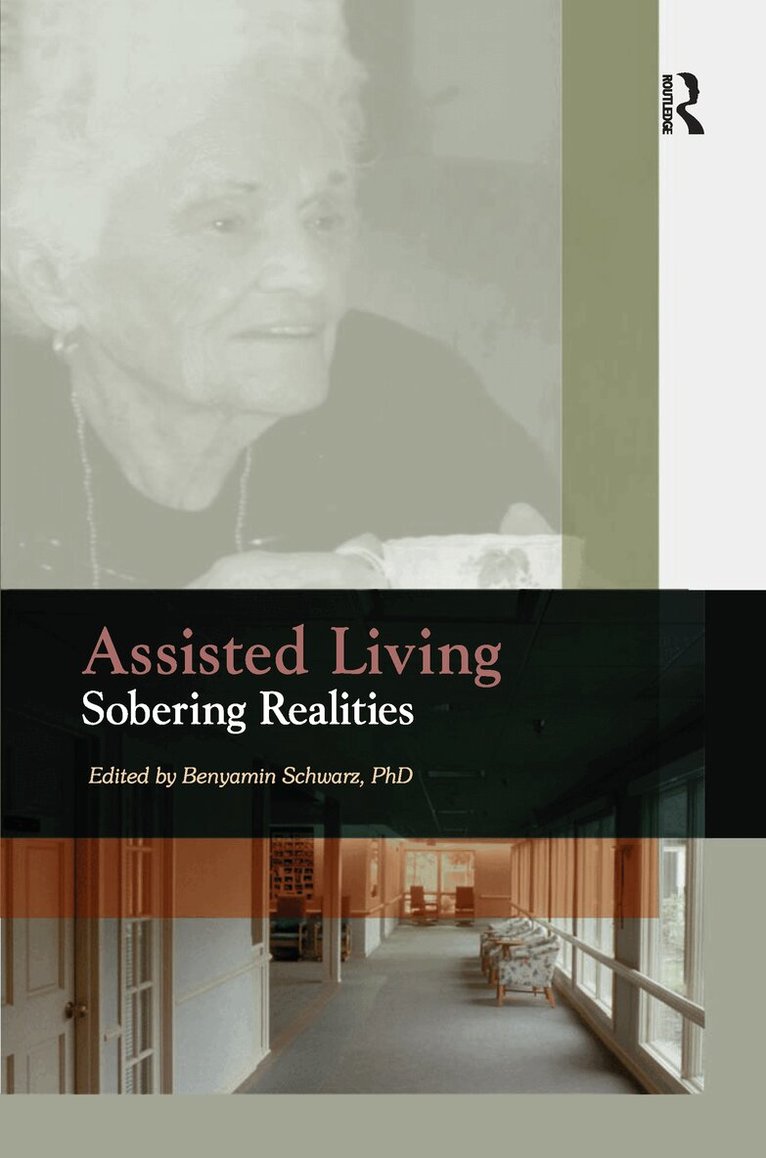
Learn how to make elder housing more homelike!Taking an incisive look at assisted living for the elderly, Assisted Living: Sobering Realities is an important book for the professionals who work with aging Americans and their families. This vital book provides a multidisciplinary overview of the world of assisted living for older Americans. With unique insight and a keen clinical perspective, Assisted Living examines a variety of topics: the dilemma of aging in place, the realities of end-of-life care, and the ins and outs of residential care supply. Easy-to-read graphs and charts make the data user-friendly.This book delivers current information on:
the housing needs of elderly renters, with case studies of 109 residents in two facilities the need for improved housing and services for low-income elderly, providing an overview of how successful facilities take a comprehensive approach in linking low-income elders with community-based services the advantages and disadvantages of residential care facilities research about aging in place from providers and residents’ perspectives the unmet needs of the elderly who qualify for housing assistance how visitation patterns affect the overall satisfaction and quality of life of assisted living residents886 kr
Läs direkt efter köp
Learn how to make elder housing more homelike!Taking an incisive look at assisted living for the elderly, Assisted Living: Sobering Realities is an important book for the professionals who work with aging Americans and their families. This vital book provides a multidisciplinary overview of the world of assisted living for older Americans. With unique insight and a keen clinical perspective, Assisted Living examines a variety of topics: the dilemma of aging in place, the realities of end-of-life care, and the ins and outs of residential care supply. Easy-to-read graphs and charts make the data user-friendly.This book delivers current information on:
the housing needs of elderly renters, with case studies of 109 residents in two facilities the need for improved housing and services for low-income elderly, providing an overview of how successful facilities take a comprehensive approach in linking low-income elders with community-based services the advantages and disadvantages of residential care facilities research about aging in place from providers and residents’ perspectives the unmet needs of the elderly who qualify for housing assistance how visitation patterns affect the overall satisfaction and quality of life of assisted living residents1 587 kr
Läs direkt efter köp
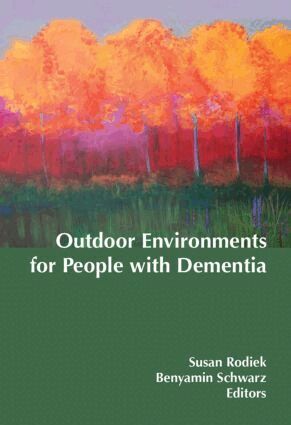
Learn how gardens and parks can be beneficial to residents Mounting evidence reveals that nature and outdoor environments provide individuals with dementia greater enjoyment in life, lower stress levels, and positive changes to physical well-being. Outdoor Environments for People with Dementia explores how fulfilling the fundamental genetically based need of human relationships with nature can improve the health and well-being of people with dementia. Top experts analyze current research and comprehensively examine how the design processes of gardens and parks can be closely connected to effective interventions. Evaluation tools for those with dementia are discussed, including studies of the impact of plants and outdoor activities on this population. Outdoor Environments for People with Dementia discusses in detail practical approaches that can significantly improve the quality of life for dementia victims. Research is discussed revealing important aspects and issues needing to be addressed when creating better outdoor environments that are effective in helping residents of long term care facilities and residential care homes. The text is extensively referenced and provides several tables, figures, and photographs to clearly illustrate concepts. Topics discussed in Outdoor Environments for People with Dementia include:
the impact of outdoor wandering parks and therapeutic gardens on people with dementia empirical studies on how access to and participation in nature-related activities can benefit people with dementia interventions to restore people with dementia having directed-attention fatigue evaluation tools for gardens for people with dementia research-based design recommendations for future gardens theories and empirical studies about healing gardens training staff to increase their knowledge about horticulture and encouraging them to involve residents in outdoor activities general guidelines for developing an outdoor space examination of the attributes for the superior outdoor space found in Grand Rapids, Michigan, with design recommendations for the futureOutdoor Environments for People with Dementia is a valuable resource for scholars, policymakers, legislators, architects and urban planners, lending institutions, developers, landscape architects, and the lay public in general who have an interest in the subjectpersonal, professional, or civic.
1 587 kr
Läs direkt efter köp
Learn how gardens and parks can be beneficial to residents Mounting evidence reveals that nature and outdoor environments provide individuals with dementia greater enjoyment in life, lower stress levels, and positive changes to physical well-being. Outdoor Environments for People with Dementia explores how fulfilling the fundamental genetically based need of human relationships with nature can improve the health and well-being of people with dementia. Top experts analyze current research and comprehensively examine how the design processes of gardens and parks can be closely connected to effective interventions. Evaluation tools for those with dementia are discussed, including studies of the impact of plants and outdoor activities on this population. Outdoor Environments for People with Dementia discusses in detail practical approaches that can significantly improve the quality of life for dementia victims. Research is discussed revealing important aspects and issues needing to be addressed when creating better outdoor environments that are effective in helping residents of long term care facilities and residential care homes. The text is extensively referenced and provides several tables, figures, and photographs to clearly illustrate concepts. Topics discussed in Outdoor Environments for People with Dementia include:
the impact of outdoor wandering parks and therapeutic gardens on people with dementia empirical studies on how access to and participation in nature-related activities can benefit people with dementia interventions to restore people with dementia having directed-attention fatigue evaluation tools for gardens for people with dementia research-based design recommendations for future gardens theories and empirical studies about healing gardens training staff to increase their knowledge about horticulture and encouraging them to involve residents in outdoor activities general guidelines for developing an outdoor space examination of the attributes for the superior outdoor space found in Grand Rapids, Michigan, with design recommendations for the futureOutdoor Environments for People with Dementia is a valuable resource for scholars, policymakers, legislators, architects and urban planners, lending institutions, developers, landscape architects, and the lay public in general who have an interest in the subjectpersonal, professional, or civic.
802 kr
Läs direkt efter köp
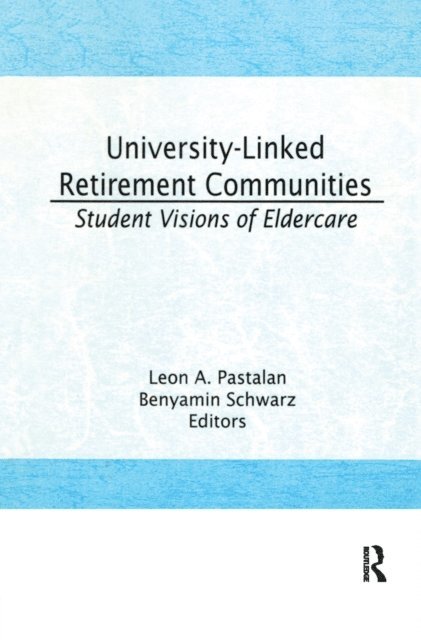
University-Linked Retirement Communities focuses on the special attributes of a retirement community designed as an integral part of a university. It discusses the theoretical and practical aspects of such a retirement community, which provides a rich and varied context for older people to be exposed to new ideas and learning opportunities for personal growth. The book centers on the premise that knowledge of basic principles of human behavior helps clarify understanding of the relationship between environment and behavior. Grounded in current research in the field of environment and aging, the book helps readers consider how the environment lends different aesthetic experiences and activity patterns to people of different backgrounds and capabilities. Some of the major environment and design issues chapters address are:
person-environment fit privacy personal space wayfinding barrier-free design healthcare personal growth site developmentUniversity-Linked Retirement Communities was developed from a two-term course offered at the University of Michigan College of Architecture and Urban Planning that dealt with aging and the environment. The book is divided into two parts. Chapters in the first section discuss a variety of issues, including the meaning of “community,” a day in the life of an elderly person living in a retirement community, site evaluation for a theoretical retirement community, and reviews of different physical components for a retirement community. The second section contains four student presentations of designs for a retirement community and comments on the projects from a design jury.This book is a valuable source of information for a variety of readers. University-Linked Retirement Communities is of interest to potential users of eldercare services and their families; service providers; designers, architects, policymakers, and developers dealing with the elderly; and educators and students of architecture, environmental design, and other fields who are involved in housing and care options for senior adults.802 kr
Läs direkt efter köp
University-Linked Retirement Communities focuses on the special attributes of a retirement community designed as an integral part of a university. It discusses the theoretical and practical aspects of such a retirement community, which provides a rich and varied context for older people to be exposed to new ideas and learning opportunities for personal growth. The book centers on the premise that knowledge of basic principles of human behavior helps clarify understanding of the relationship between environment and behavior. Grounded in current research in the field of environment and aging, the book helps readers consider how the environment lends different aesthetic experiences and activity patterns to people of different backgrounds and capabilities. Some of the major environment and design issues chapters address are:
person-environment fit privacy personal space wayfinding barrier-free design healthcare personal growth site developmentUniversity-Linked Retirement Communities was developed from a two-term course offered at the University of Michigan College of Architecture and Urban Planning that dealt with aging and the environment. The book is divided into two parts. Chapters in the first section discuss a variety of issues, including the meaning of “community,” a day in the life of an elderly person living in a retirement community, site evaluation for a theoretical retirement community, and reviews of different physical components for a retirement community. The second section contains four student presentations of designs for a retirement community and comments on the projects from a design jury.This book is a valuable source of information for a variety of readers. University-Linked Retirement Communities is of interest to potential users of eldercare services and their families; service providers; designers, architects, policymakers, and developers dealing with the elderly; and educators and students of architecture, environmental design, and other fields who are involved in housing and care options for senior adults.1 071 kr
Läs direkt efter köp
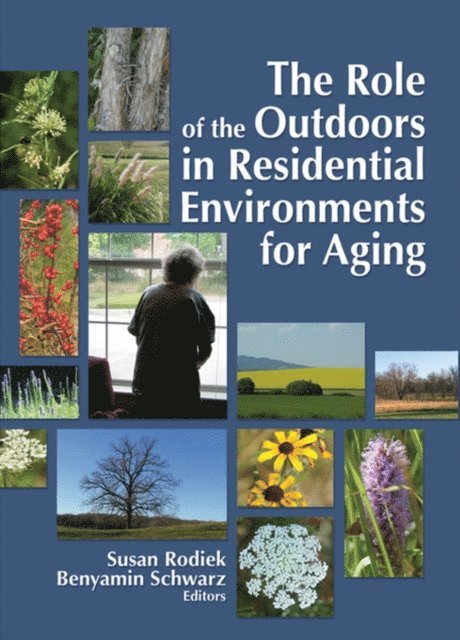
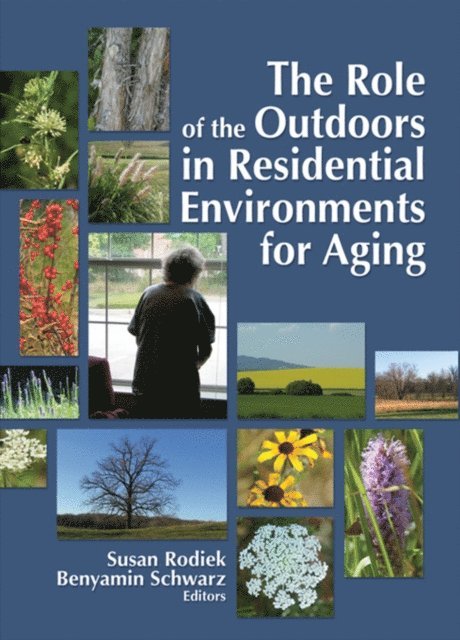
Discover the physical and mental benefits of outdoor spaces for the elderlyThe Role of the Outdoors in Residential Environments for Aging presents new insights on the positive role nature and the outdoors can play in the lives of older adults, whether they live in the community, in an assisted-living environment, or in a skilled nursing
1 071 kr
Läs direkt efter köp
Discover the physical and mental benefits of outdoor spaces for the elderlyThe Role of the Outdoors in Residential Environments for Aging presents new insights on the positive role nature and the outdoors can play in the lives of older adults, whether they live in the community, in an assisted-living environment, or in a skilled nursing
796 kr
Skickas inom 10-15 vardagar
915 kr
Läs direkt efter köp
Environmental gerontology – the research on aging and environment – evolved during the late 1960s, when the domain became a relevant topic due to societal concerns with the problems of housing for elderly people. The field proliferated during the 1970s and 1980s, and remains viable and active today on an international scale. However, in recent times, the viability of the field and its future has been brought into question.
In this volume, international experts across diverse areas reflect on the current progress of their respective disciplines, illustrating research-grounded benefits emerging from their work, and suggesting new agenda that can guide progress in the future. The contributors address a wide range of issues, including: evaluation of existing paradigms and new theories that might advance both research and training; issues and applications in methods, measures, and empirically-generated research agenda; innovative approaches to environmental transformations in home, community, and long-term care settings; and understudied populations and issues in environmental gerontology.
This book was originally published as a special issue of the Journal of Housing for the Elderly.
923 kr
Läs direkt efter köp
Environmental gerontology – the research on aging and environment – evolved during the late 1960s, when the domain became a relevant topic due to societal concerns with the problems of housing for elderly people. The field proliferated during the 1970s and 1980s, and remains viable and active today on an international scale. However, in recent times, the viability of the field and its future has been brought into question.
In this volume, international experts across diverse areas reflect on the current progress of their respective disciplines, illustrating research-grounded benefits emerging from their work, and suggesting new agenda that can guide progress in the future. The contributors address a wide range of issues, including: evaluation of existing paradigms and new theories that might advance both research and training; issues and applications in methods, measures, and empirically-generated research agenda; innovative approaches to environmental transformations in home, community, and long-term care settings; and understudied populations and issues in environmental gerontology.
This book was originally published as a special issue of the Journal of Housing for the Elderly.
700 kr
Skickas inom 10-15 vardagar
1 842 kr
Tillfälligt slut
1 899 kr
Tillfälligt slut