Bernadette Whelan - Böcker
Visar alla böcker från författaren . Handla med fri frakt och snabb leverans.
4 produkter
4 produkter
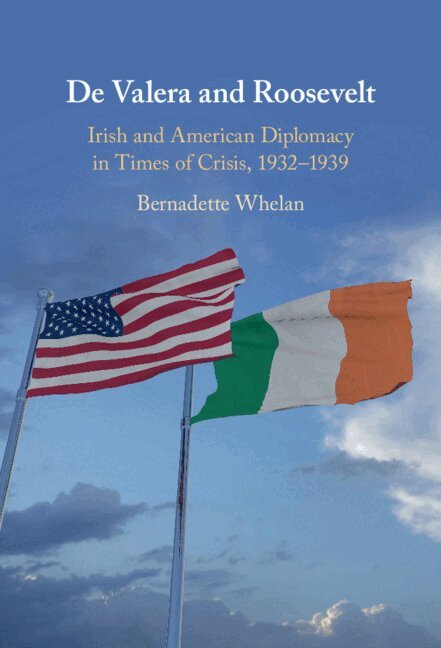
De Valera and Roosevelt
Irish and American Diplomacy in Times of Crisis, 1932-1939
Inbunden, Engelska, 2020
1 133 kr
Skickas inom 7-10 vardagar
How did Irish and American diplomacy operate in Washington DC and Dublin during the 1930s era of economic depression, rising fascism and Nazism? How did the Anglo-American relationship affect American-Irish diplomatic relations? Why and how did Éamon de Valera and Franklin D. Roosevelt move their countries towards neutrality in 1939? This first comprehensive history of American and Irish diplomacy during the 1930s focuses on formal and informal diplomacy, examining all aspects of diplomatic life to explain the relationship between the two administrations from 1932 to 1939. Bernadette Whelan reveals how diplomats worked on behalf of their governments to implement Franklin D. Roosevelt and Éamon de Valera's foreign policies - particularly when Éamon de Valera believed in the existence of a 'special' transatlantic relationship but Franklin D. Roosevelt increasingly favoured a strong relationship with Britain. Drawing on a wide range of under-used sources, this is a major new contribution to the history of American and Irish diplomacy and revises our understanding of the importance of Ireland to a US administration.
364 kr
Skickas inom 5-8 vardagar
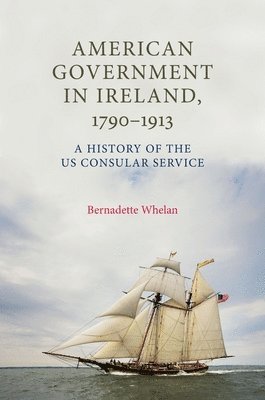
This book reconstructs American consular activity in Ireland from 1790 to 1913 and elucidates the interconnectedness of America’s foreign interests, Irish nationalism and British imperialism. Its originality lies in that it is based on an interrogation of American, British and Irish archives, and covers over one hundred years of American, Irish and British relations through the post of the American consular official while also uncovering the consul’s role in seminal events such as the War of 1812, the 1845-51 Irish famine, the American Civil War, Fenianism and mass Irish emigration. It is a history of the men who filled posts as consuls, vice consuls, deputy consuls and consular agents. It reveals their identities, how they interpreted and implemented US foreign policy, their outsider perspective on events in both Ireland and America and their contribution to the expanding transatlantic relationship.The work intersects diaspora studies, emigration history and diplomatic relations as well as illuminating the respective Irish-American, Anglo-Irish and Anglo-American relationships.
Del 2 - Reappraisals in Irish History
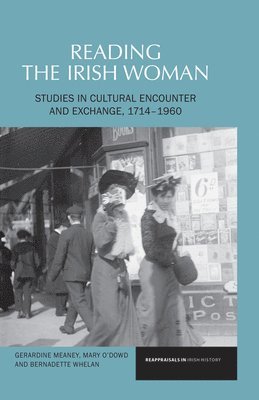
Reading the Irish Woman
Studies in Cultural Encounters and Exchange, 1714–1960
Inbunden, Engelska, 2013
675 kr
Skickas inom 7-10 vardagar
An Open Access edition of this book is available on the Liverpool University Press website and the OAPEN library.The theme of this book is cultural encounter and exchange in Irish women’s lives. Using three case studies: the Enlightenment, emigration and modernism, it analyses reading and popular and consumer culture as sites of negotiation of gender roles. It traces how the circulation of ideas, fantasies and aspirations which have shaped women’s lives in actuality and in imagination and argues that there were many different ways of being a woman. Attention to women’s cultural consumption and production shows that one individual may in one day identify with representations of heroines of romantic fiction, patriots, philanthropists, literary ladies, film stars, career women, popular singers, advertising models and foreign missionaries. The processes of cultural consumption, production and exchange provide evidence of women’s agency, aspirations and activities within and far beyond the domestic sphere.
Del 13 - Documents on Irish Foreign Policy
Documents on Irish Foreign Policy, v. 13: 1965-1969
Inbunden, Engelska, 2022
657 kr
Skickas
The thirteenth volume in the Documents on Irish Foreign Policy (DIFP) series runs from April 1965 to July 1969. It covers the Fianna Fáil governments of Seán Lemass (April 1965 to November 1966) and Jack Lynch (November 1966 to July 1969) in which Frank Aiken was Minister for External Affairs.The four years and three months covered by DIFP XIII saw significant changes in the international context in which Ireland conducted its foreign policy. In 1965 the hope of the Department of External Affairs was that Ireland would enter the European Economic Community (EEC) before 1970. EEC entry would take place alongside that of Britain, an Anglo-Irish Free Trade Area (AIFTA) having come into operation in 1966, cementing trade between Ireland and its principal trading partner. Overall, the United Nations would remain the benchmark of global Irish foreign policy. Peacekeeping, advocating nuclear non-proliferation and ensuring the proper financing of the United Nations as well as promoting decolonisation and the universality of the United Nations system within the bipolar world of the Cold War remained central to 1960s Irish foreign policy.These assumptions were thrown out of balance by the continuing refusal of France to facilitate the expansion of the EEC and EEC membership remained out of reach for Ireland. Dublin’s fragile relations with Belfast were destabilised with the emergence of new social and political forces in Northern Ireland and the recurrence of sectarian violence. The Department of External Affairs proved initially unable to respond comprehensively to this new environment in Northern Ireland, which was the precursor to the outbreak of the Troubles in 1969. Improved economic and political relations with London were affected by local and international economic difficulties and also as a consequence of events in Northern Ireland. At the United Nations, superpower politics constrained Irish attempts to follow up the success of the 1968 Nuclear Non- Proliferation Treaty with a major policy initiative on the financing of international peacekeeping missions.