Bernhard May – författare
Visar alla böcker från författaren Bernhard May. Handla med fri frakt och snabb leverans.
6 produkter
6 produkter
Del 50 - Schriften Des Forschungsinstituts Der Deutschen Gesellschaft
Reagan Und Die Entwicklungsländer
Die Auslandshilfepolitik Im Amerikanischen Regierungssystem
Inbunden, Tyska, 1987
1 391 kr
Skickas inom 5-8 vardagar
Del 57 - Schriften Des Forschungsinstituts Der Deutschen Gesellschaft
Japans neue Entwicklungspolitik
Inbunden, Tyska, 1989
1 391 kr
Skickas inom 5-8 vardagar
E-bok
PDF, Tyska, 20151 452 kr
Läs direkt efter köp
Das Untersuchungsfeld der vorliegenden Studie mußte in mehrfacher Hinsicht eingegrenzt werden. Deshalb liegt der Schwerpunkt der Untersuchung auf der Beschreibung und Analyse der Auslandshilfepolitik der Reagan-Administration. Zwar wird im 2. Kapitel und im 4. Kapitel ein kurzer historischer Uberblick erarbeitet, doch kann eine Längsschnittanalyse der amerikanischen Auslandshilfepolitik nicht erwartet werden. Das Ziel der Studie war, die Auslandshilfepolitik der Reagan-Administration im Rahmen des amerikanischen Regierungs- und Gesellschaftssystems zu analysieren, so daß eine Untersuchung der Auswirkungen dieser neuen Politik für einzelne Entwicklungsländer ebenfalls nicht erwartet werden kann. Trotz dieser Einschränkungen war es aus Gründen des Umfanges der Untersuchung nicht möglich, alle Aspekte der Auslandshilfepolitik der Reagan-Administration ausführlich zu beschreiben und zu analysieren.
E-bok
PDF, Tyska, 20151 452 kr
Läs direkt efter köp
E-bok
PDF, Engelska, 2013687 kr
Läs direkt efter köp
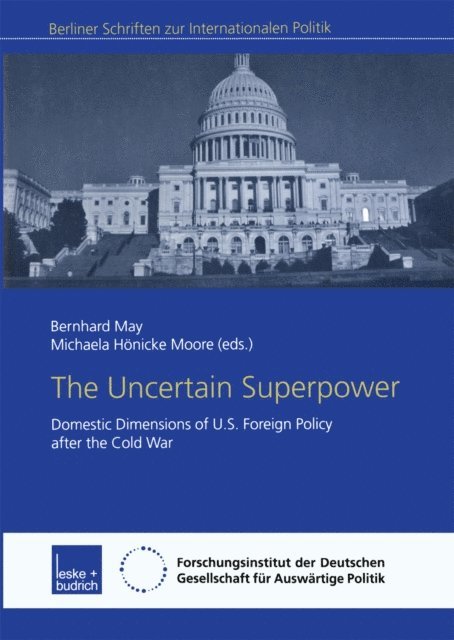
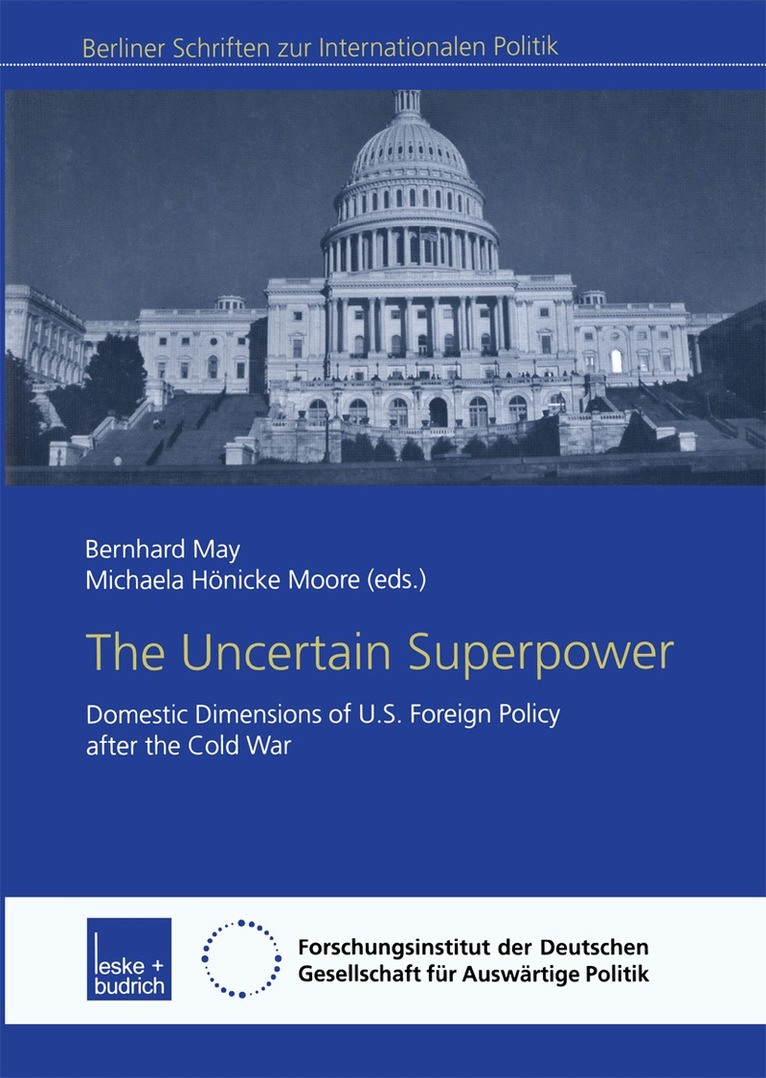
the republican party, especially within those groups that supported President Bush. There was a strong backlash in Europe against this more unilateralist and more isolationist foreign policy of the Bush administration. Transatlantic re lations went through a difficult phase in the Spring of 2001, each side criti cizing the other for doing the wrong thing and for damaging transatlantic re lations. In Europe, President Bush was not seen as a world leader, but rather as the governor from Texas. Europeans criticized the Bush administration for not accepting the role as the only remaining superpower and for not accepting the global responsibility linked to being a global power. Transatlantic rela tions were at a low point in June of 2001 when President Bush came to Europe the first time. All of that changed overnight with the terror attacks of September 11, 200 I. Millions of Europeans demonstrated their solidarity with the American people. In Berlin, for example, approximately 200,000 people took part in a demonstration in front of the Brandenburg Gate on September 14 to show their solidarity with the American people. International terrorism was the new common challenge. For several months it seemed like the old trans atlantic quarrels would be forgotten. There was a new spirit in transatlantic relations, a new commitment to fight common enemies and protect common values. The question was, how long would it last.
Häftad, Engelska, 2003
549 kr
Skickas inom 10-15 vardagar
the republican party, especially within those groups that supported President Bush. There was a strong backlash in Europe against this more unilateralist and more isolationist foreign policy of the Bush administration. Transatlantic re lations went through a difficult phase in the Spring of 2001, each side criti cizing the other for doing the wrong thing and for damaging transatlantic re lations. In Europe, President Bush was not seen as a world leader, but rather as the governor from Texas. Europeans criticized the Bush administration for not accepting the role as the only remaining superpower and for not accepting the global responsibility linked to being a global power. Transatlantic rela tions were at a low point in June of 2001 when President Bush came to Europe the first time. All of that changed overnight with the terror attacks of September 11, 200 I. Millions of Europeans demonstrated their solidarity with the American people. In Berlin, for example, approximately 200,000 people took part in a demonstration in front of the Brandenburg Gate on September 14 to show their solidarity with the American people. International terrorism was the new common challenge. For several months it seemed like the old trans atlantic quarrels would be forgotten. There was a new spirit in transatlantic relations, a new commitment to fight common enemies and protect common values. The question was, how long would it last.