Bertram M. Gordon – författare
Visar alla böcker från författaren . Handla med fri frakt och snabb leverans.
3 produkter
3 produkter
Inbunden, Engelska, 1998
1 147 kr
Skickas inom 10-15 vardagar
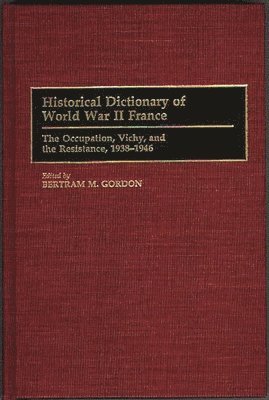
The most comprehensive reference work in its field, this book covers a broad range of topics—military, political, economic, social, painting, literature, music, cinema, dance, theater, sports, and daily life—related to France and her empire during World War II. Starting with the 1938 Munich Crisis and continuing through the 1940 defeat, Occupation, Vichy, Resistance, Liberation, and the establishment of the post-Liberation Provisional Government, the work also addresses such legacies of the wartime experience as the role of former President Fran^D,cois Mitterrand and the trial of former Vichy official Maurice Papon.Designed to be the reference of first recourse for those interested in World War II France, the book's focus on Occupation, Vichy, and the French Resistance will familiarize the reader with the most recent historical interpretations of French life during a troubled and dramatic period. The work will also introduce the reader to many of the controversies concerning collaboration and resistance, which have stirred postwar French public discourse to the present day. The book is also a bibliographic guide for those who would like to know more about the period.
Häftad, Engelska, 2015
153 kr
Kommande
This special issue offers a broad range of social and cultural insights into the history of French gastronomy. At a moment when French cuisine no longer dominates the world of fine dining, the history of French food has drawn increasing attention in the academic world. The contributors address topics spanning the seventeenth to the twentieth centuries, such as coffee’s relationship to slavery and exoticism; the promotion of terroir to an aspiring middle class; the contrast between the romanticized images of Parisian shop girls and their efforts to survive on street food in the early twentieth century; the "standard meal" imagined by nineteenth-century nutritionists and the divergent reality of meager lunches for the working class; and the inequitable experience of wartime deprivation. The articles in this issue both model how the study of the culture of food can ground our understanding of France’s place in the world and illuminate questions of nationalism, global networks, gender, race, ethnicity, and class.Contributors: Martin Bruegel, Bertram M. Gordon, Julia Landweber, Philippe Meyzie, Kenneth MourÉ, Erica J. Peters, Patricia A. Tilburg
Inbunden, Engelska, 2018
620 kr
Skickas inom 10-15 vardagar
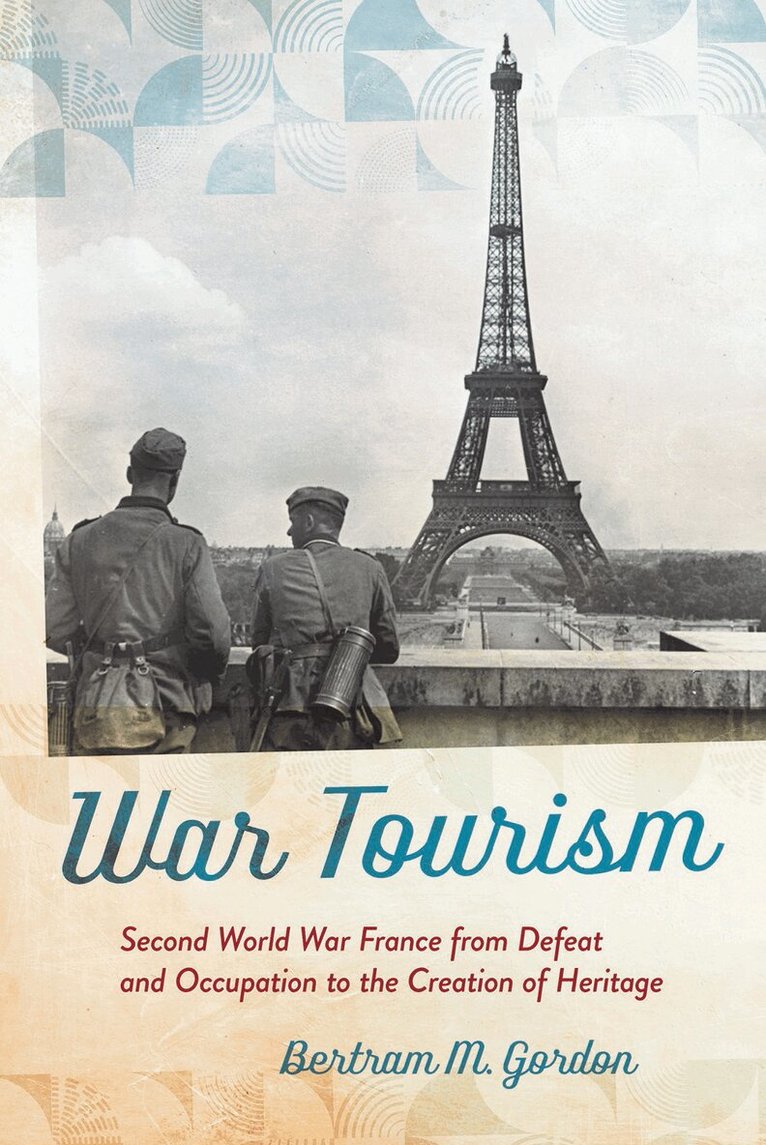
As German troops entered Paris following their victory in June 1940, the American journalist William L. Shirer observed that they carried cameras and behaved as "naïve tourists." One of the first things Hitler did after his victory was to tour occupied Paris, where he was famously photographed in front of the Eiffel Tower.Focusing on tourism by German personnel, military and civil, and French civilians during the war, as well as war-related memory tourism since, War Tourism addresses the fundamental linkages between the two. As Bertram M. Gordon shows, Germans toured occupied France by the thousands in groups organized by their army and guided by suggestions in magazines such as Der Deutsche Wegleiter fr Paris [The German Guide for Paris]. Despite the hardships imposed by war and occupation, many French civilians continued to take holidays. Facilitated by the Popular Front legislation of 1936, this solidified the practice of workers' vacations, leading to a postwar surge in tourism.After the end of the war, the phenomenon of memory tourism transformed sites such as the Maginot Line fortresses. The influx of tourists with links either directly or indirectly to the war took hold and continues to play a significant economic role in Normandy and elsewhere. As France moved from wartime to a postwar era of reconciliation and European Union, memory tourism has held strong and exerts significant influence across the country.