Betina Hsieh – författare
Visar alla böcker från författaren Betina Hsieh. Handla med fri frakt och snabb leverans.
5 produkter
5 produkter
Inbunden, Engelska, 2021
2 197 kr
Skickas inom 10-15 vardagar
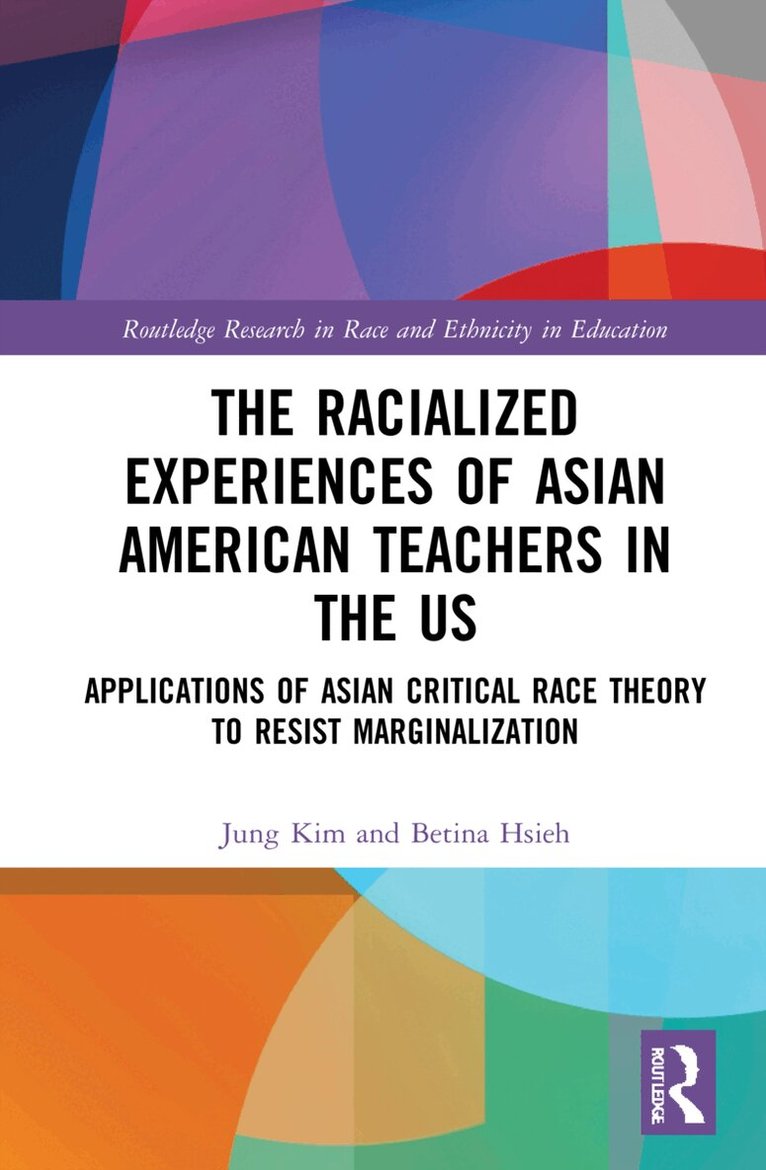
Drawing on in-depth interviews, this text examines how Asian American teachers in the US have adapted, persisted, and resisted racial stereotyping and systematic marginalization throughout their educational and professional pathways.Utilizing critical perspectives combined with tenets of Asian Critical Race Theory, Kim and Hsieh structure their findings through chapters focused on issues relating to anti-essentialism, intersectionality, and the broader social and historical positioning of Asians in the US. Applying a critical theoretical lens to the study of Asian American teachers demonstrates the importance of this framework in understanding educators’ experiences during schooling, training, and teaching, and in doing so, the book highlights the need to ensure visibility for a community so often overlooked as a "model minority", and yet one of the fastest growing racial groups in the US.This text will benefit researchers, academics, and educators with an interest in the sociology of education, multicultural education, and teachers and teacher education more broadly. Those specifically interested in Asian American history and the study of race and ethics within Asian studies will also benefit from this book.
Häftad, Engelska, 2023
567 kr
Skickas inom 10-15 vardagar
Drawing on in-depth interviews, this text examines how Asian American teachers in the US have adapted, persisted, and resisted racial stereotyping and systematic marginalization throughout their educational and professional pathways.Utilizing critical perspectives combined with tenets of Asian Critical Race Theory, Kim and Hsieh structure their findings through chapters focused on issues relating to anti-essentialism, intersectionality, and the broader social and historical positioning of Asians in the US. Applying a critical theoretical lens to the study of Asian American teachers demonstrates the importance of this framework in understanding educators’ experiences during schooling, training, and teaching, and in doing so, the book highlights the need to ensure visibility for a community so often overlooked as a "model minority", and yet one of the fastest growing racial groups in the US.This text will benefit researchers, academics, and educators with an interest in the sociology of education, multicultural education, and teachers and teacher education more broadly. Those specifically interested in Asian American history and the study of race and ethics within Asian studies will also benefit from this book.
Inbunden, Engelska, 2026
2 182 kr
Kommande
The first quarter of the 21st century has witnessed numerous reform efforts related to schooling and education. At the same time, across the world, many education systems are facing unprecedented challenges related to teachers, from rising teacher attrition and burnout to recruitment difficulties —symptoms of a world that is changing and evolving: a world in transition.This book asks: How have teachers’ experiences and environments evolved alongside educational reform? How have expectations of teachers changed? and what are the consequences of such change? Through studies spanning 10 countries across multiple continents, it examines how societal and political transitions are transforming teachers' daily lives and professional identities. By centering teachers' lived experiences within their national contexts, it reveals striking parallels in global educational transformation despite unique contexts of change. These perspectives, individually and collectively, allow us to understand the recent transformations and educational reform efforts, to meet teachers impacted by these changes, and to see how transitions impact teachers’ experience of the profession internationally.Combining original empirical research and comparative analysis, this book offers timely insights for researchers and students interested in international and comparative education, foundations of education, teacher education, education policy, and educational leadership.
Häftad, Engelska, 2025
461 kr
Skickas inom 5-8 vardagar
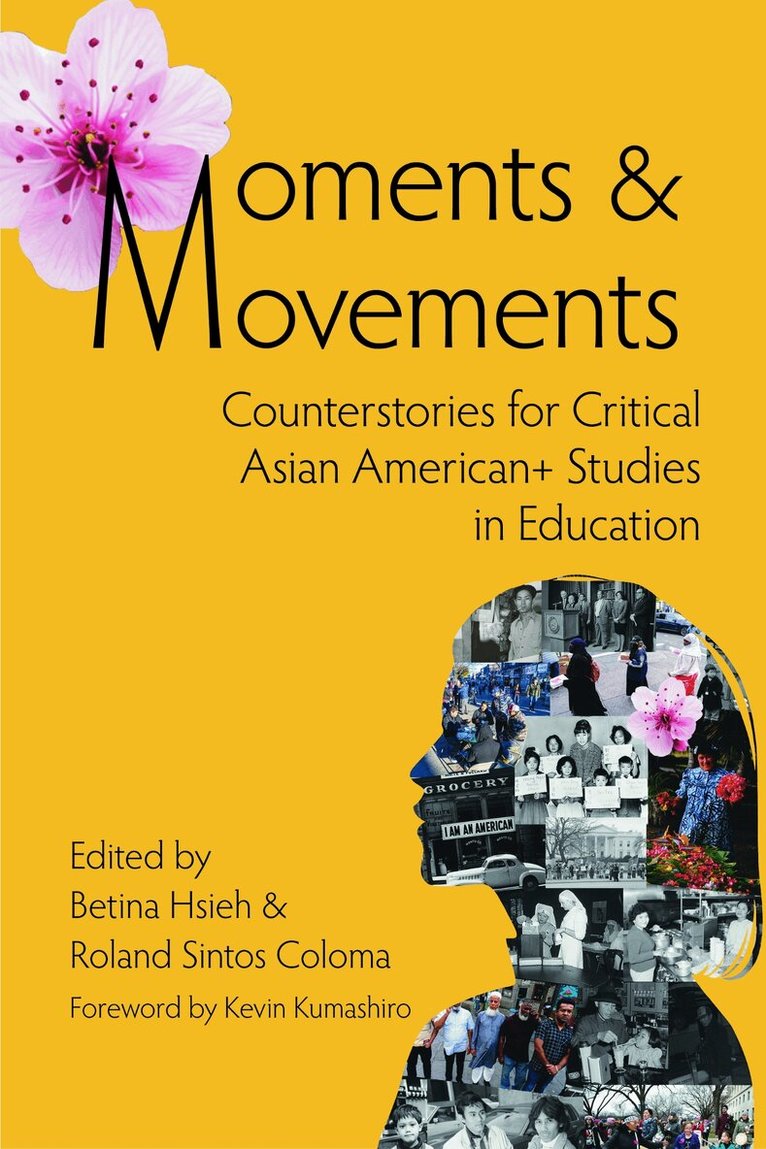
Moments & Movements: Counterstories for Critical Asian American Studies in Education is a collection of counterstories born from community and shared commitments to challenge the ways diverse diasporas and experiences of people from the Asian continent and the Pacific Ocean are largely made invisible, silenced, and erased. By defying reductionist narratives, the collection highlights stories built upon generations of struggle, resistance, advocacy, and joy, that impart wisdom for the current moment and for Asian American movements in the future, particularly movements based in education. The book's topics, located at the nexus of multiple and interconnected fields, such as education, race/ethnic studies, policy and community studies, have broad appeal to a cross-section of university academics; P-12 teachers and leaders; and community educators and activists. Using the framing of Critical Asian American Studies, the chapters in this volume emphasize criticality as central to the work of educators committed to more just futures. The plus ( ) symbol in "Asian American " highlights the volume's efforts at diverse inclusion and openness to various groups under a broad umbrella geographic category, including voices of various Pasifika, Arab and Middle Eastern communities, without eliding their distinct histories, cultures, politics, and experiences or erasing the tensions within and across the broader category of Asian American studies. The book is organized thematically into four sections that reflect key moments in an ongoing movement. This organization acknowledges that readers may be at different points in their journeys towards developing more critical perspectives or knowledge of Asian American, Arab/Middle Eastern American, and Pasifika peoples' experiences in education. The first section, "The Moment We Begin", focuses on foundational beginnings, telling stories of how the authors made important first steps in creating the change they wished to see in their educational spheres. The second section, "Building an Inclusive Movement", examines how educators sustain and deepen their work within and outside of classrooms. The third section, "Extending the Movement", then looks at Critical Asian American Studies outside of classrooms and schools by attending to educational leadership, families and teacher identities, policy arenas, and educational, cultural, and community activism. Finally, in the fourth section, "Envisioning New Worlds", chapters attend to what justice-focused, future-oriented movements might look like for Critical Asian American Studies. All too often, critical community-grounded work can feel daunting. This collection pushes beyond prescribed borders that separate our communities and separate us into our own educational spheres (e.g. P-12, higher education, teacher education) and roles (professor, teacher, principal, student). As one of the few edited collections with such diverse perspectives, this collection provides multiple paths forward in Asian American, Arab/Middle Eastern American, and Pasifika Studies, inspires with its counterstories of struggle and success, and challenges readers to consider their own next steps. Perfect for courses such as: Asian Americans in Education; Critical Studies in Education; Multicultural Education/Sociocultural Foundations in Education; Ethnic Studies/Asian American Studies; Social Justice in Education; Critical Pedagogy and Education; Urban Education; Race, Ethnicity, and Education; Introduction to Education; School and Society
Häftad, Engelska, 2026
594 kr
Kommande
How do we create lasting systemic change in institutions designed to reproduce the status quo? Some might answer this question with responses related to mission, vision, resource allocation and investment, and talent. However, the path to creating sustainable changes in educational institutions is often obstructed by policy, institutional inertia, and ingrained systemic barriers. Work is sometimes reduced to a checkbox exercise aimed at compliance, rather than genuine transformation, leading to benefits only for groups traditionally supported by the established structures. For those striving for change, a sense of powerlessness can dominate, as structural constraints limit their agency and dilute their impact. Recognizing these realities, there can be no simple recipe or single formula that guarantees lasting change, particularly transformational change that shifts paradigms in ways that advance equity and inclusion. Instead of a formula, Systems Transformation for Equity in Education: Principles for Organizational Change introduces 6 key principles of organizational change. In order to engage in complex systems transformation for equity, we must: 1. Know the contexts that surround systems change; 2. Develop cohesive project plans and find appropriate funding for these plans; 3. Understand the centrality of leadership; 4. Work collectively towards equity through relationality, respect, and mutuality; 5. Reflect upon success and challenges; and 6. Ensure the institutionalization of systems transformation. The book is structured first to provide a broad overview of each principle, then to illustrate each using a case study of program change. Chapter One focuses on the principle of knowing the complex contexts that surround systems change. In this chapter, the book introduces the origins, objectives, complexities, diverse stakeholders and outcomes of the case study as well as contextual factors that should be considered in launching systems transformation. Chapter Two focuses on ensuring alignment in the design, development and enactment of transformative projects, including establishing an initial vision, using data to inform decision making and finding appropriate funding sources. Chapter Three focuses on the principle that Leadership matters in systems transformation for equity. This chapter highlights the importance of identifying a leadership team, providing clear team members' roles, and dividing tasks wisely. Chapter Four focuses on cultivating consensus and moving forward collectively in diverse stakeholder groups with competing priorities. Chapter Five focuses on the importance of reflecting upon success to expand the impact of systems transformation, adapting programs to stay responsive to changing contexts, and on navigating unanticipated challenges to initiative-based work. Chapter Six focuses on expanding impact and identifying ways to ensure the institutionalization of systems transformation. It addresses some key factors such as documenting and communicating the successes and challenges of the project, disseminating evaluation findings; creating a plan for when the grant funding ends, accessing new funding; identifying continuing and new stakeholders; developing ongoing products; developing collective language; and ensuring institutional buy-in. The final chapter tells the story of lessons learned from this process and what has happened to the focal program in the 2 years following the end of the grant funding, particularly given changing socio-political contexts. Perfect for courses such as: Principles of Organizational Change; Equity and Organizational Change; Foundations of Organization Change; Educational Leadership; Race, Equity, and Leading Educational Change; Education Policy Implementation