Binghe Wang – författare
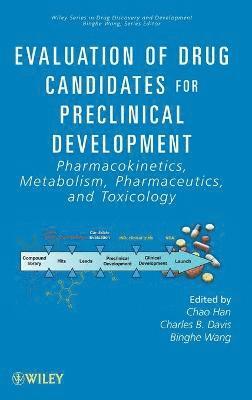
Evaluation of Drug Candidates for Preclinical Development
Pharmacokinetics, Metabolism, Pharmaceutics, and Toxicology
1 542 kr
Skickas inom 5-8 vardagar
1 588 kr
Läs direkt efter köp
1 745 kr
Läs direkt efter köp
Emphasizes the integration of major areas of drug discovery and their importance in candidate evaluation
It is believed that selecting the "right" drug candidate for development is the key to success. In the last decade, pharmaceutical R&D departments have integrated pharmacokinetics and drug metabolism, pharmaceutics, and toxicology into early drug discovery to improve the assessment of potential drug compounds. Now, Evaluation of Drug Candidates for Preclinical Development provides a complete view and understanding of why absorption-distribution-metabolism-excretion-toxicology (ADMET) plays a pivotal role in drug discovery and development.
Encompassing the three major interrelated areas in which optimization and evaluation of drug developability is most criticalpharmacokinetics and drug metabolism, pharmaceutics, and safety assessmentthis unique resource encourages integrated thinking in drug discovery. The contributors to this volume:
Cover drug transporters, cytochrome P-450 and drug-drug interactions, plasma protein binding, stability, drug formulation, preclinical safety assessment, toxicology, and toxicokinetics
Address developability issues that challenge pharma companies, moving beyond isolated experimental results
Reveal connections between the key scientific areas that are critical for successful drug discovery and development
Inspire forward-thinking strategies and decision-making processes in preclinical evaluation to maximize the potential of drug candidates to progress through development efficiently and meet the increasing demands of the marketplace
Evaluation of Drug Candidates for Preclinical Development serves as an introductory reference for those new to the pharmaceutical industry and drug discovery in particular. It is especially well suited for scientists and management teams in small- to mid-sized pharmaceutical companies, as well as academic researchers and graduate students concerned with the practical aspects related to the evaluation of drug developability.
Chemosensors
Principles, Strategies, and Applications
1 997 kr
Skickas inom 11-20 vardagar
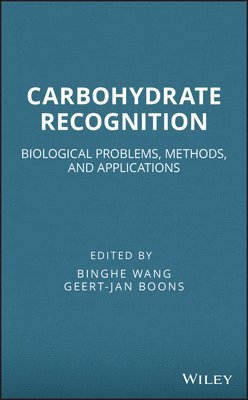
Carbohydrate Recognition
Biological Problems, Methods, and Applications
1 872 kr
Skickas inom 5-8 vardagar
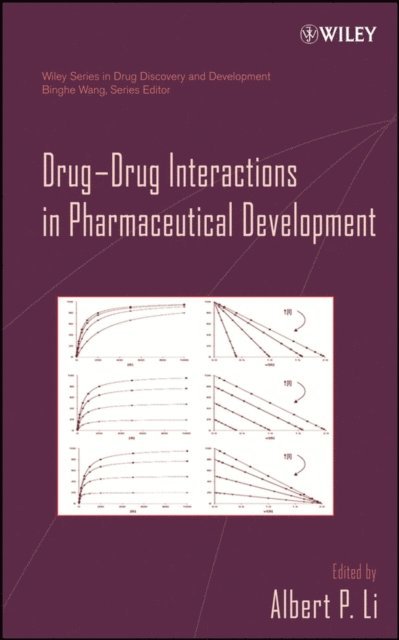
Drug-Drug Interactions in Pharmaceutical Development
1 392 kr
Skickas inom 5-8 vardagar
2 461 kr
Skickas inom 10-15 vardagar
2 061 kr
Läs direkt efter köp
2 061 kr
Läs direkt efter köp
2 244 kr
Läs direkt efter köp
A thorough, accessible, and general overview of chemosensors
Providing a comprehensive overview of chemosensorsorganic molecules designed to bind and sense small molecules or metal ionsand their applications, Chemosensors: Principles, Strategies, and Applications is an accessible one-stop resource for analysts, clinicians, and graduate students studying advanced chemistry and chemosensing.
Chemosensors function on a molecular level, generating a signal upon binding. The book reviews their synthesis, design, and applications for detecting biological and organic molecules as well as metal ions. The text highlights applications in drug discovery and catalyses that have not been well covered elsewhere.
Covering such topics as molecular recognition, detection methods, design strategies, and important biological issues, the book is broken into four sections that examine intermolecular interactions, strategies in sensor design, detection methods, and case studies in metal, saccharide, and amino acid sensing.
An indispensable source of information for chemical and biomedical experts using sensors, Chemosensors includes case studies to make the material both accessible and understandable to chemists of all backgrounds.
2 244 kr
Läs direkt efter köp
A thorough, accessible, and general overview of chemosensors
Providing a comprehensive overview of chemosensorsorganic molecules designed to bind and sense small molecules or metal ionsand their applications, Chemosensors: Principles, Strategies, and Applications is an accessible one-stop resource for analysts, clinicians, and graduate students studying advanced chemistry and chemosensing.
Chemosensors function on a molecular level, generating a signal upon binding. The book reviews their synthesis, design, and applications for detecting biological and organic molecules as well as metal ions. The text highlights applications in drug discovery and catalyses that have not been well covered elsewhere.
Covering such topics as molecular recognition, detection methods, design strategies, and important biological issues, the book is broken into four sections that examine intermolecular interactions, strategies in sensor design, detection methods, and case studies in metal, saccharide, and amino acid sensing.
An indispensable source of information for chemical and biomedical experts using sensors, Chemosensors includes case studies to make the material both accessible and understandable to chemists of all backgrounds.
2 030 kr
Läs direkt efter köp
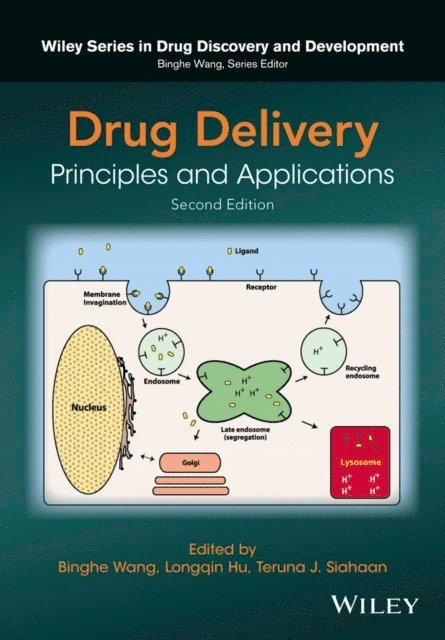
Following its successful predecessor, this book covers the fundamentals, delivery routes and vehicles, and practical applications of drug delivery. In the 2nd edition, almost all chapters from the previous are retained and updated and several new chapters added to make a more complete resource and reference.
• Helps readers understand progress in drug delivery research and applications• Updates and expands coverage to reflect advances in materials for delivery vehicles, drug delivery approaches, and therapeutics• Covers recent developments including transdermal and mucosal delivery, lymphatic system delivery, theranostics• Adds new chapters on nanoparticles, controlled drug release systems, theranostics, protein and peptide drugs, and biologics delivery
2 012 kr
Läs direkt efter köp
Following its successful predecessor, this book covers the fundamentals, delivery routes and vehicles, and practical applications of drug delivery. In the 2nd edition, almost all chapters from the previous are retained and updated and several new chapters added to make a more complete resource and reference.
• Helps readers understand progress in drug delivery research and applications• Updates and expands coverage to reflect advances in materials for delivery vehicles, drug delivery approaches, and therapeutics• Covers recent developments including transdermal and mucosal delivery, lymphatic system delivery, theranostics• Adds new chapters on nanoparticles, controlled drug release systems, theranostics, protein and peptide drugs, and biologics delivery
1 809 kr
Skickas inom 11-20 vardagar
2 539 kr
Skickas inom 5-8 vardagar
2 915 kr
Läs direkt efter köp
An insightful reference for the latest physiological and therapeutic studies of carbon monoxide
In Carbon Monoxide in Drug Discovery: Basics, Pharmacology, and Therapeutic Potential, a team of distinguished authors delivers foundational knowledge, the latest research, and remaining challenges regarding the physiological roles and therapeutic efficacy of carbon monoxide (CO). The editors have included a broad selection of resources from leading experts in the field that discuss the background and physiological roles of CO, a variety of delivery forms including CO prodrugs using benign carriers, CO sensing, therapeutic applications, and clinical trials.
Organized by topic to allow each chapter to be read individually, the book covers a wide range of topics, from physiological and patho-physiological mechanisms at the molecular level to clinical applications for multiple disease processes.
The editors of Carbon Monoxide in Drug Discovery have created a compelling argument for shifting the accepted understanding of CO from poison to bioactive molecule with enormous clinical benefits. Readers will also benefit from:
A thorough introduction to the background and physiological actions of carbon monoxide, including endogenous CO production in sickness and in health Comprehensive explorations of CO delivery forms, including non-carrier formulations, metal-carbonyl complexes, and organic CO donors Practical discussions of carbon monoxide sensing and scavenging, including fluorescent probes for intracellular carbon monoxide detection In-depth examinations of the therapeutic applications of CO, including CO in solid organ transplantationPerfect for professors, graduate students, and postdocs in the fields of biology, pharmacology, immunology, medicinal chemistry, toxicology, and drug delivery, Carbon Monoxide in Drug Discovery: Basics, Pharmacology, and Therapeutic Potential is also an invaluable resource for industrial scientists in these areas.
2 915 kr
Läs direkt efter köp
An insightful reference for the latest physiological and therapeutic studies of carbon monoxide
In Carbon Monoxide in Drug Discovery: Basics, Pharmacology, and Therapeutic Potential, a team of distinguished authors delivers foundational knowledge, the latest research, and remaining challenges regarding the physiological roles and therapeutic efficacy of carbon monoxide (CO). The editors have included a broad selection of resources from leading experts in the field that discuss the background and physiological roles of CO, a variety of delivery forms including CO prodrugs using benign carriers, CO sensing, therapeutic applications, and clinical trials.
Organized by topic to allow each chapter to be read individually, the book covers a wide range of topics, from physiological and patho-physiological mechanisms at the molecular level to clinical applications for multiple disease processes.
The editors of Carbon Monoxide in Drug Discovery have created a compelling argument for shifting the accepted understanding of CO from poison to bioactive molecule with enormous clinical benefits. Readers will also benefit from:
A thorough introduction to the background and physiological actions of carbon monoxide, including endogenous CO production in sickness and in health Comprehensive explorations of CO delivery forms, including non-carrier formulations, metal-carbonyl complexes, and organic CO donors Practical discussions of carbon monoxide sensing and scavenging, including fluorescent probes for intracellular carbon monoxide detection In-depth examinations of the therapeutic applications of CO, including CO in solid organ transplantationPerfect for professors, graduate students, and postdocs in the fields of biology, pharmacology, immunology, medicinal chemistry, toxicology, and drug delivery, Carbon Monoxide in Drug Discovery: Basics, Pharmacology, and Therapeutic Potential is also an invaluable resource for industrial scientists in these areas.