Bjørn Møller - Böcker
Visar alla böcker från författaren Bjørn Møller. Handla med fri frakt och snabb leverans.
10 produkter
10 produkter
803 kr
Skickas inom 10-15 vardagar
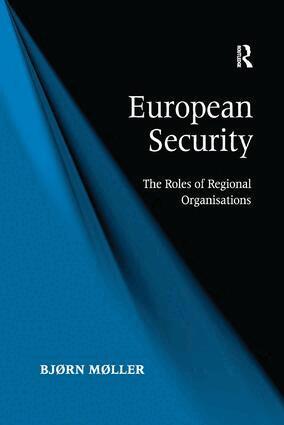
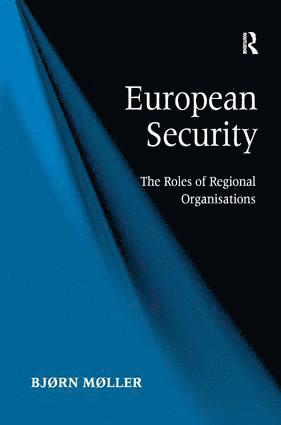
Europe has undergone quite profound changes since the end of the Cold War. Having been a highly militarised, conflict-ridden and war-ridden region, the core of Europe today constitutes a security community where armed conflicts among the constituent states has become inconceivable. This comprehensive book offers a theoretically founded and thoroughly documented analysis of European security, with a special emphasis on the role played by the United Nations and the various regional and sub-regional organisations, especially the North Atlantic Treaty Organisation, the Organisation for Security and Cooperation in Europe, the Council of Europe and the European Union. When it comes to explaining peace in Europe opinions differ widely. Some argue that it was only because the West refused to give in to Soviet threats that the latter eventually gave up; or that the 'long peace' in Europe was due to the combination of a bipolar alliance structure, pitting the North Atlantic Treaty Organisation (NATO) against the Warsaw Pact, with the presence of nuclear weapons on both sides. Others point instead to the extraordinarily dense network of international institutions and organisations in Europe, offering a wide panoply of fora in which to handle disputes peacefully; or to the web of interdependence in economic and other affairs, tying together all states in Europe in relations which militate strongly against war. Still others believe that the external peace between the states in Europe is simply a reflection of a convergence of cultures, democracies with marked economies that are open towards the world market. These questions are the focal point of this book, which concentrates on security, albeit not in the sense of being a treatise on military matters, but security obtainable by much more indirect and non-military means. It will be required reading for all students and scholars of European security and the organisations which underpin it.
1 627 kr
Skickas inom 10-15 vardagar
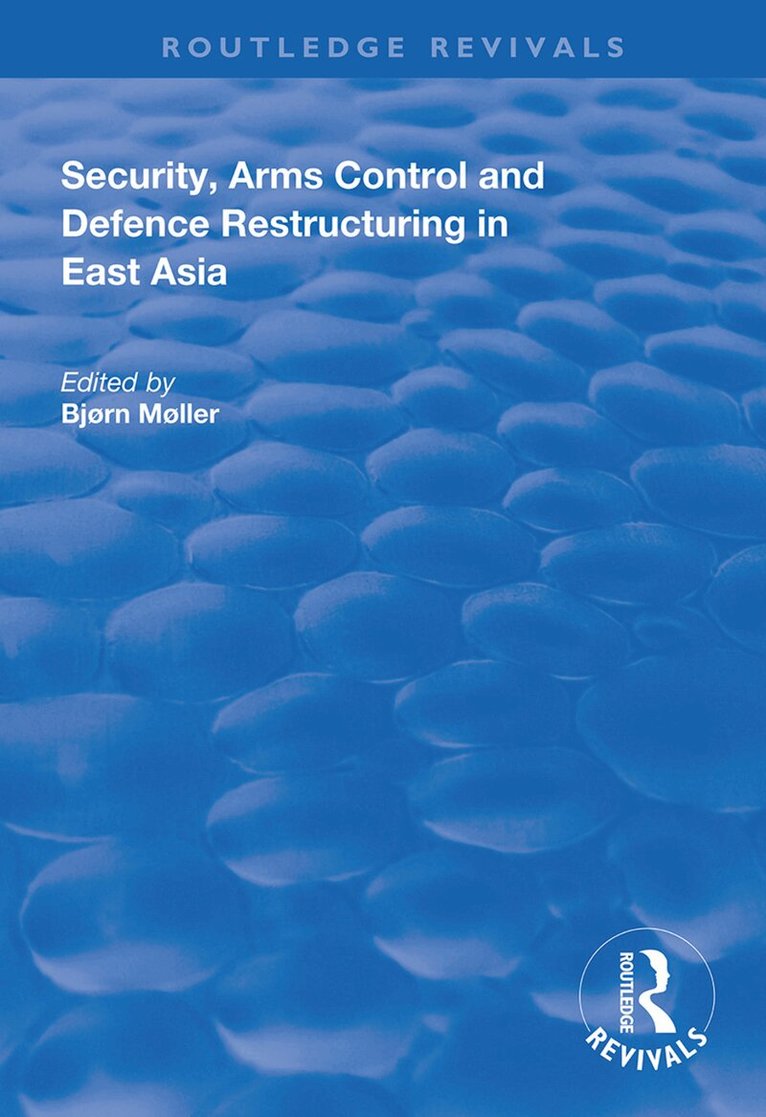
First published in 1998, this volume examines East Asia, especially Northeast Asia, which has been a region of considerable political security of importance for several key reasons. It features several great and medium powers: China, Japan and Russia, as well as North and South Korea. Even though no arms race is yet discernible among these states (with the partial exception of the two Koreas), it is conceivable that one might commence. If it did, the level of militarization could become quite alarming, if only because of the tremendous and rapidly growing economic potential of the regional states. Even though relations among regional sates (except the two Koreas) are currently peaceful, the region features several unresolved issues (e.g. concerning territory) and a historical legacy of enmity between several states. To prevent such conflicts of interest from erupting into armed conflict is of the utmost importance. A stabilizing factor is that the military potentials in the region are still predominantly defensively oriented, i.e. most states lack the requisite power projection or invasion capabilities to inflict serious harm on each other. However, this might change in the not-so-distant future. Hence the importance of confidence-building measures; of an institutionalization of regional relations; and of a strengthening of commitments to defensive military strategies and postures.
493 kr
Skickas inom 10-15 vardagar
First published in 1998, this volume examines East Asia, especially Northeast Asia, which has been a region of considerable political security of importance for several key reasons. It features several great and medium powers: China, Japan and Russia, as well as North and South Korea. Even though no arms race is yet discernible among these states (with the partial exception of the two Koreas), it is conceivable that one might commence. If it did, the level of militarization could become quite alarming, if only because of the tremendous and rapidly growing economic potential of the regional states. Even though relations among regional sates (except the two Koreas) are currently peaceful, the region features several unresolved issues (e.g. concerning territory) and a historical legacy of enmity between several states. To prevent such conflicts of interest from erupting into armed conflict is of the utmost importance. A stabilizing factor is that the military potentials in the region are still predominantly defensively oriented, i.e. most states lack the requisite power projection or invasion capabilities to inflict serious harm on each other. However, this might change in the not-so-distant future. Hence the importance of confidence-building measures; of an institutionalization of regional relations; and of a strengthening of commitments to defensive military strategies and postures.
1 425 kr
Skickas inom 10-15 vardagar
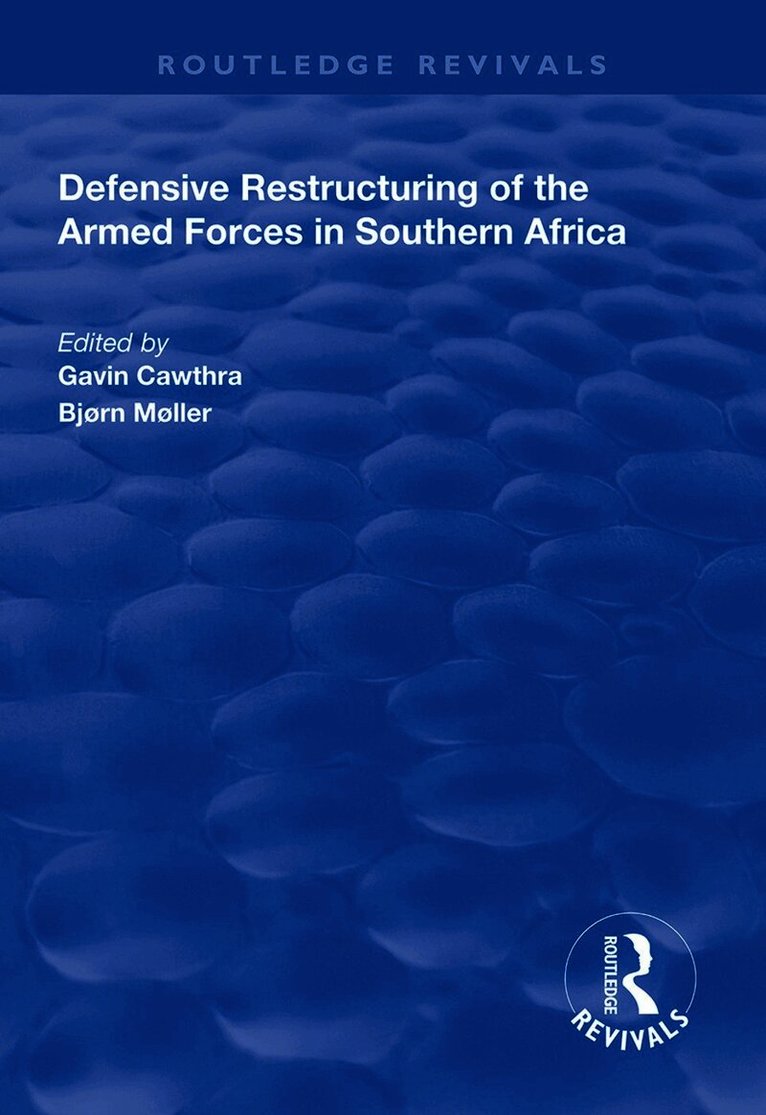
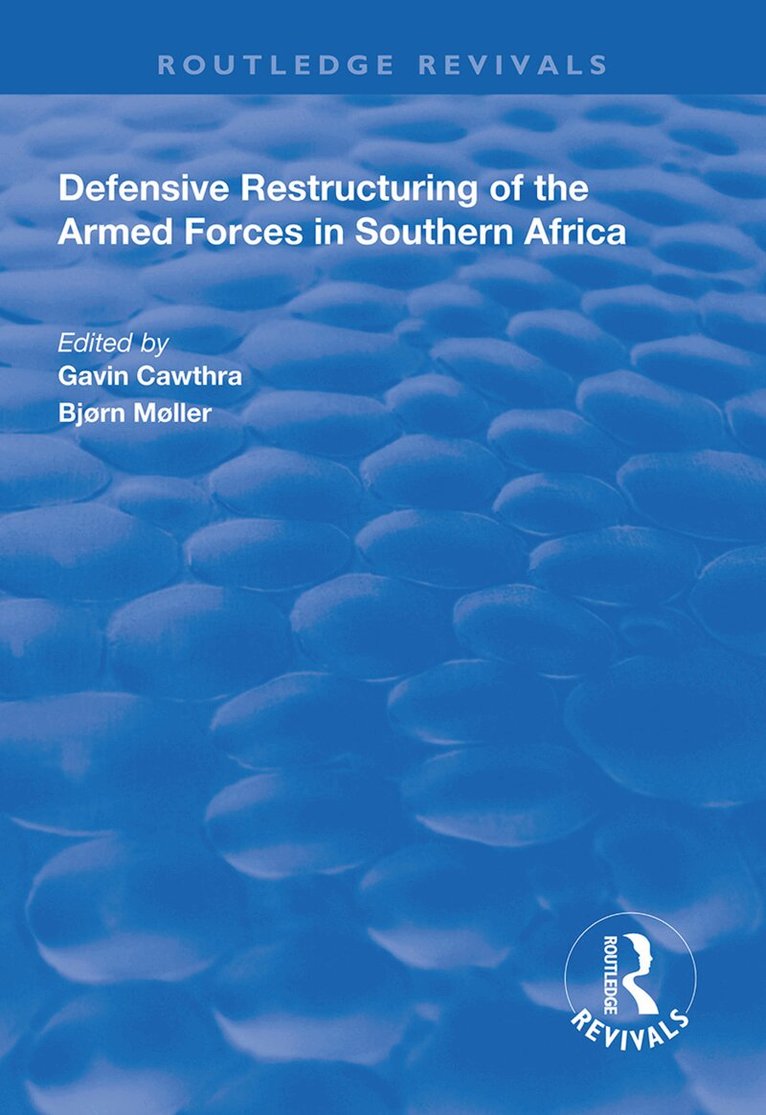
Published in 1997, the work explores the reorientation of security policies and the accompanying restructuring of the armed forces going on in Southern Africa under entirely new circumstances: Democracy has come to South Africa, the civil wars in Angola and Mozambique have ended, and the region is establishing a regional framework for cooperation. While covering the entire region, a special focus is placed on South Africa which is predestined to play a leading role, but which is struggling with the legacy of the apartheid regime and its repeated aggressions against neighbouring states. A defensive restructuring of the South African of the South African military is an element in the building of mutual trust. The implications of such defensive restructuring to a non-offensive defence are described in detail. In addition to the analytical contribution, the work also contains central documents and a bibliography.
358 kr
Skickas inom 10-15 vardagar
Published in 1997, the work explores the reorientation of security policies and the accompanying restructuring of the armed forces going on in Southern Africa under entirely new circumstances: Democracy has come to South Africa, the civil wars in Angola and Mozambique have ended, and the region is establishing a regional framework for cooperation. While covering the entire region, a special focus is placed on South Africa which is predestined to play a leading role, but which is struggling with the legacy of the apartheid regime and its repeated aggressions against neighbouring states. A defensive restructuring of the South African of the South African military is an element in the building of mutual trust. The implications of such defensive restructuring to a non-offensive defence are described in detail. In addition to the analytical contribution, the work also contains central documents and a bibliography.
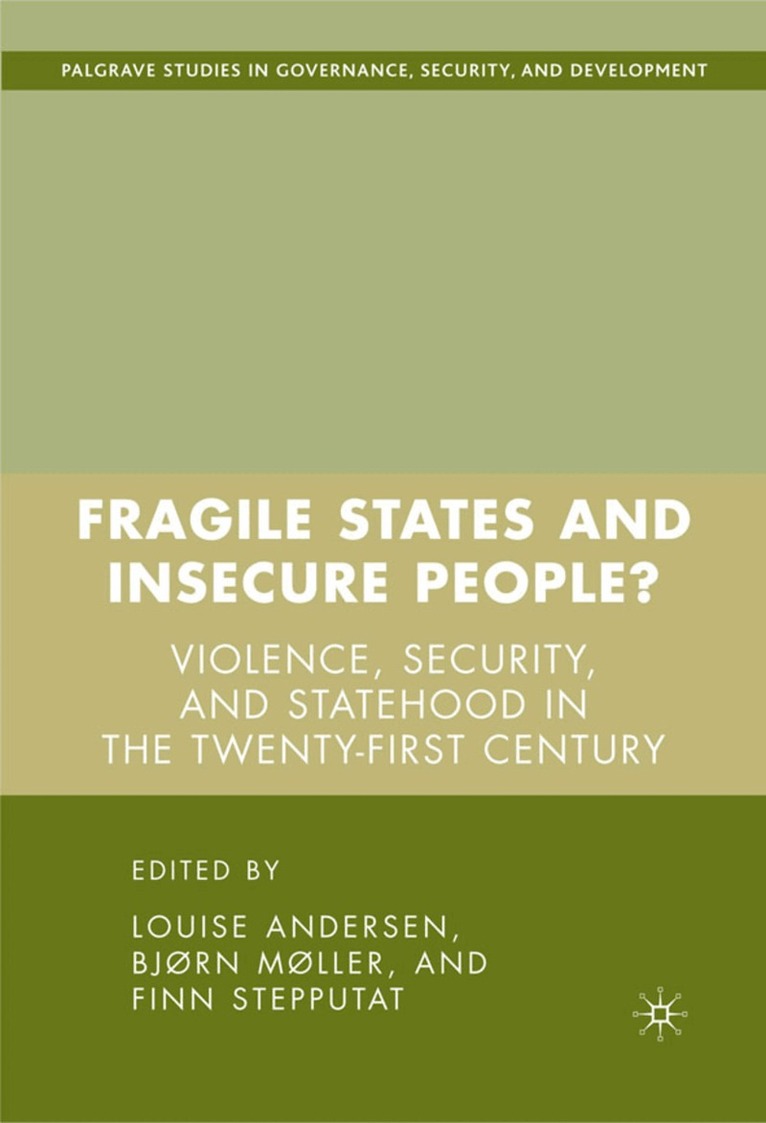
Fragile States and Insecure People?
Violence, Security, and Statehood in the Twenty-First Century
Inbunden, Engelska, 2007
534 kr
Skickas inom 10-15 vardagar
This book provides a unique account of the pursuit of security at the edge of the global order. It sheds light on reform of state police and armed forces, and analyses the alternative security structures that emerge in the absence of the state. This book remains open-minded as to which 'model' for security is better.
2 302 kr
Skickas inom 10-15 vardagar
Europe has undergone quite profound changes since the end of the Cold War. Having been a highly militarised, conflict-ridden and war-ridden region, the core of Europe today constitutes a security community where armed conflicts among the constituent states has become inconceivable. This comprehensive book offers a theoretically founded and thoroughly documented analysis of European security, with a special emphasis on the role played by the United Nations and the various regional and sub-regional organisations, especially the North Atlantic Treaty Organisation, the Organisation for Security and Cooperation in Europe, the Council of Europe and the European Union. When it comes to explaining peace in Europe opinions differ widely. Some argue that it was only because the West refused to give in to Soviet threats that the latter eventually gave up; or that the 'long peace' in Europe was due to the combination of a bipolar alliance structure, pitting the North Atlantic Treaty Organisation (NATO) against the Warsaw Pact, with the presence of nuclear weapons on both sides. Others point instead to the extraordinarily dense network of international institutions and organisations in Europe, offering a wide panoply of fora in which to handle disputes peacefully; or to the web of interdependence in economic and other affairs, tying together all states in Europe in relations which militate strongly against war. Still others believe that the external peace between the states in Europe is simply a reflection of a convergence of cultures, democracies with marked economies that are open towards the world market. These questions are the focal point of this book, which concentrates on security, albeit not in the sense of being a treatise on military matters, but security obtainable by much more indirect and non-military means. It will be required reading for all students and scholars of European security and the organisations which underpin it.
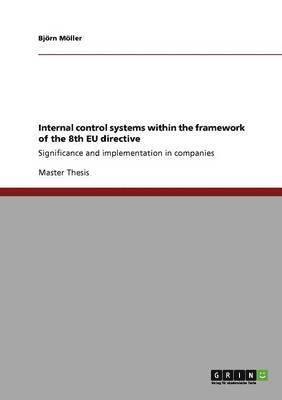
Internal control systems within the framework of the 8th EU directive
Significance and implementation in companies
Häftad, Engelska, 2010
827 kr
Skickas inom 3-6 vardagar
585 kr
Skickas inom 3-6 vardagar
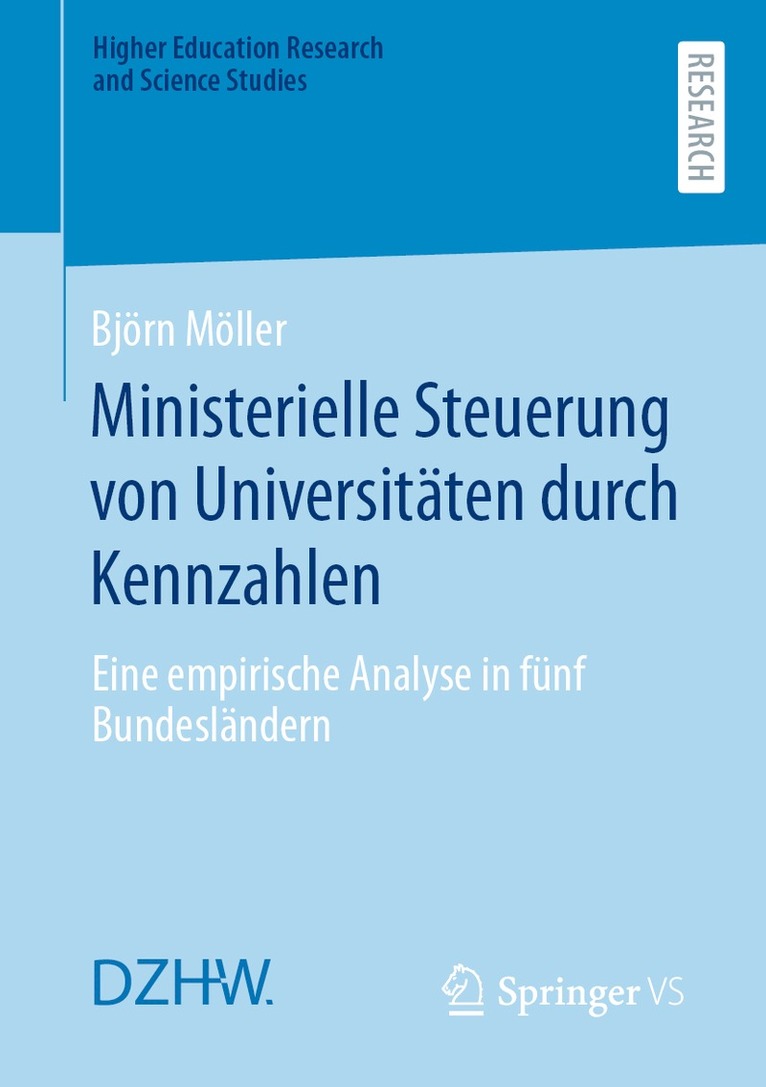
Ministerielle Steuerung von Universitäten durch Kennzahlen
Eine empirische Analyse in fünf Bundesländern
Häftad, Tyska, 2023
725 kr
Skickas inom 7-10 vardagar
Ausgangspunkt der Dissertation ist der Wandel des Verhältnisses zwischen Staat und Universitäten unter dem Paradigmenwechsel des New Public Managements.