Board on Natural Disasters – författare
Visar alla böcker från författaren Board on Natural Disasters. Handla med fri frakt och snabb leverans.
5 produkter
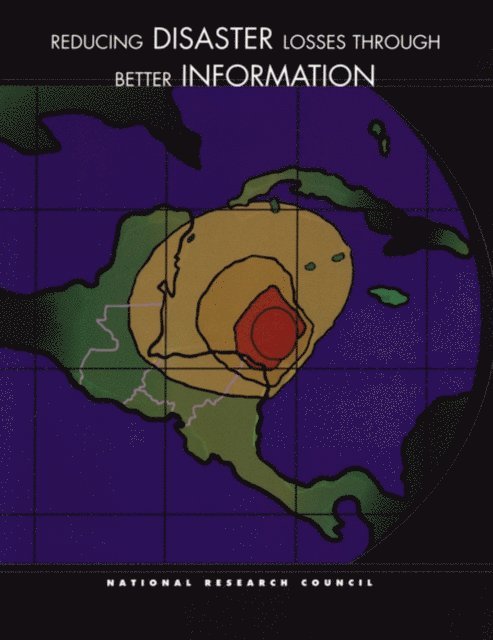
Reducing Disaster Losses Through Better Information
Av Board on Natural Disasters, Environment and Resources Commission on Geosciences m. fl.
E-bok, 1999
589 kr
Lägg i varukorg
Losses of life and property from natural disasters in the United States-and throughout the world-have been enormous and the potential for substantially greater future losses looms. It is clearly in the public interest to reduce these impacts and to encourage the development of communities that are …
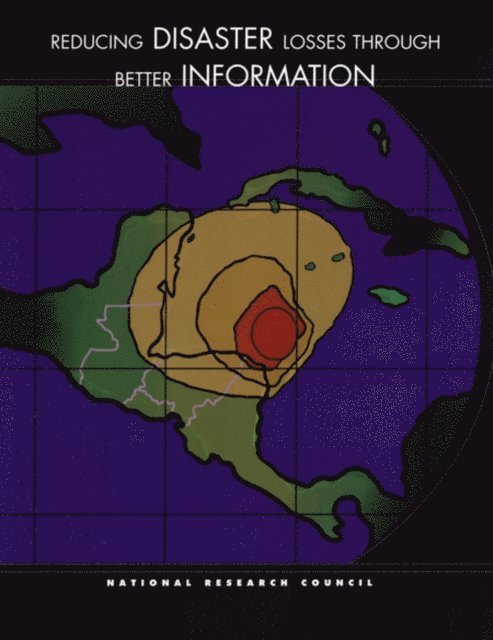
Reducing Disaster Losses Through Better Information
Av Board on Natural Disasters, Environment and Resources Commission on Geosciences m. fl.
E-bok, 1999
286 kr
Lägg i varukorg
Losses of life and property from natural disasters in the United States-and throughout the world-have been enormous and the potential for substantially greater future losses looms. It is clearly in the public interest to reduce these impacts and to encourage the development of communities that are …
Hurricane Hugo, Puerto Rico, the Virgin Islands, and Charleston, South Carolina, September 17-22, 1989
Av Committee on Natural Disasters, Board on Natural Disasters m. fl.
E-bok, 1994
1031 kr
Lägg i varukorg
This volume provides an account of the 1989 Hurricane Hugo for historical purposes, evaluates the physical phenomena involved and the performance of structures and systems, and identifies and recommends cases where an in-depth study would improve our ability to analyze and forecast such failures.
Hurricane Hugo, Puerto Rico, the Virgin Islands, and Charleston, South Carolina, September 17-22, 1989
Av National Research Council, Division on Engineering and Physical Sciences m. fl.
Häftad, 1994
1681 kr
Tillfälligt slut
This volume provides an account of the 1989 Hurricane Hugo for historical purposes, evaluates the physical phenomena involved and the performance of structures and systems, and identifies and recommends cases where an in-depth study would improve our ability to analyze and forecast such failures.
Reducing Disaster Losses Through Better Information
Av National Research Council, Division on Earth and Life Studies m. fl.
Häftad, 1999
1299 kr
Tillfälligt slut
Losses of life and property from natural disasters in the United States-and throughout the world-have been enormous and the potential for substantially greater future losses looms. It is clearly in the public interest to reduce these impacts and to encourage the development of communities that are …