Bojana Mladenovic - Böcker
Visar alla böcker från författaren Bojana Mladenovic. Handla med fri frakt och snabb leverans.
3 produkter
3 produkter
223 kr
Skickas inom 7-10 vardagar
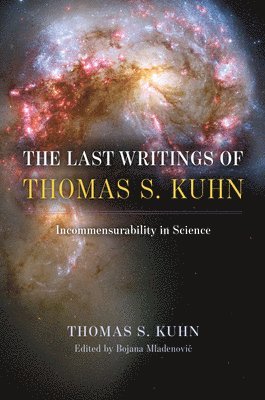
A must-read follow-up to The Structure of Scientific Revolutions, one of the most important books of the twentieth century. This book contains the text of Thomas S. Kuhn’s unfinished book, The Plurality of Worlds: An Evolutionary Theory of Scientific Development, which Kuhn himself described as a return to the central claims of The Structure of Scientific Revolutions and the problems that it raised but did not resolve. The Plurality of Worlds is preceded by two related texts that Kuhn publicly delivered but never published in English: his paper “Scientific Knowledge as Historical Product” and his Shearman Memorial Lectures, “The Presence of Past Science.” An introduction by the editor describes the origins and structure of The Plurality of Worlds and sheds light on its central philosophical problems. Kuhn’s aims in his last writings are bold. He sets out to develop an empirically grounded theory of meaning that would allow him to make sense of both the possibility of historical understanding and the inevitability of incommensurability between past and present science. In his view, incommensurability is fully compatible with a robust notion of the real world that science investigates, the rationality of scientific change, and the idea that scientific development is progressive.
156 kr
Skickas inom 7-10 vardagar
A must-read follow-up to The Structure of Scientific Revolutions, one of the most important books of the twentieth century. This book contains the text of Thomas S. Kuhn’s unfinished book, The Plurality of Worlds: An Evolutionary Theory of Scientific Development, which Kuhn himself described as a return to the central claims of The Structure of Scientific Revolutions and the problems that it raised but did not resolve. The Plurality of Worlds is preceded by two related texts that Kuhn publicly delivered but never published in English: his paper “Scientific Knowledge as Historical Product” and his Shearman Memorial Lectures, “The Presence of Past Science.” An introduction by the editor describes the origins and structure of The Plurality of Worlds and sheds light on its central philosophical problems. Kuhn’s aims in his last writings are bold. He sets out to develop an empirically grounded theory of meaning that would allow him to make sense of both the possibility of historical understanding and the inevitability of incommensurability between past and present science. In his view, incommensurability is fully compatible with a robust notion of the real world that science investigates, the rationality of scientific change, and the idea that scientific development is progressive.
518 kr
Skickas inom 7-10 vardagar
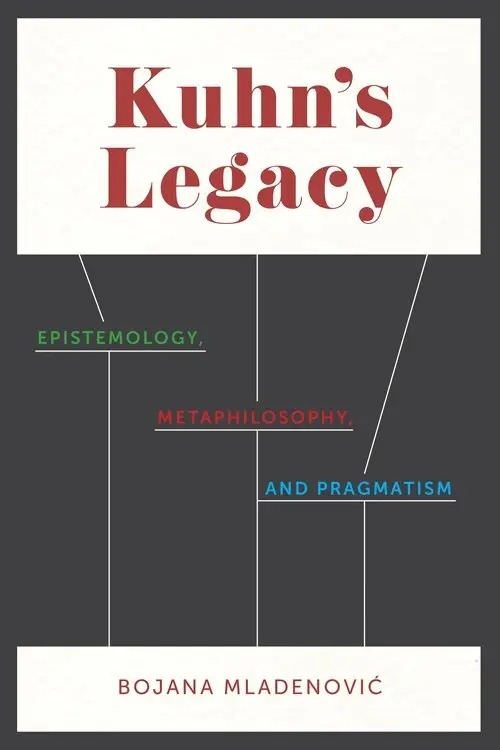
Thomas Kuhn's The Structure of Scientific Revolutions is one of the most important books of the twentieth century. Its influence reaches far beyond the philosophy of science, and its key terms, such as "paradigm shift," "normal science," and "incommensurability," are now used in both academic and public discourse without any reference to Kuhn. However, Kuhn's philosophy is still often misunderstood and underappreciated. In Kuhn's Legacy, Bojana Mladenovic offers a novel analysis of Kuhn's central philosophical project, focusing on his post-Structure writings. Mladenovic argues that Kuhn's historicism was always coupled with a firm and consistent antirelativism but only in his mature writings did he begin to develop a systematic account of scientific rationality. She reconstructs and develops this account, arguing that Kuhn sees the rationality of science as collective. At the purely formal level, Kuhn's conception of scientific rationality prohibits obviously irrational beliefs and choices and requires reason-responsiveness as well as the uninterrupted pursuit of inquiry.At the substantive, historicized level, it rests on a distinctly pragmatist mode of justification compatible with a notion of contingent but robust scientific progress. Mladenovic argues that both Kuhn's epistemology and his metaphilosophy are a creative and fruitful continuation of the tradition of American pragmatism. Kuhn's Legacy demonstrates the vitality of Kuhn's philosophical project and its importance for the study of the philosophy and history of science today.