Thomas S. Kuhn - Böcker
Visar alla böcker från författaren Thomas S. Kuhn. Handla med fri frakt och snabb leverans.
13 produkter
13 produkter
201 kr
Skickas inom 7-10 vardagar
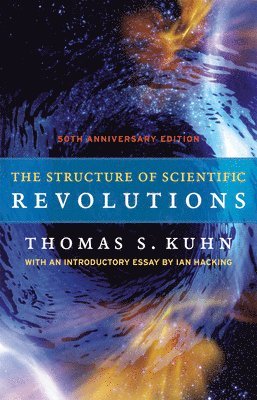
A good book may have the power to change the way we see the world, but a great book actually becomes part of our daily consciousness, pervading our thinking to the point that we take it for granted, and we forget how provocative and challenging its ideas once were-and still are. "The Structure of Scientific Revolutions" is that kind of book. When it was first published in 1962, it was a landmark event in the history and philosophy of science. And fifty years later, it still has many lessons to teach. With "The Structure of Scientific Revolutions", Kuhn challenged long-standing linear notions of scientific progress, arguing that transformative ideas don't arise from the day-to-day, gradual process of experimentation and data accumulation, but that revolutions in science, those breakthrough moments that disrupt accepted thinking and offer unanticipated ideas, occur outside of "normal science," as he called it. Though Kuhn was writing when physics ruled the sciences, his ideas on how scientific revolutions bring order to the anomalies that amass over time in research experiments are still instructive in our biotech age.This new edition of Kuhn's essential work in the history of science includes an insightful introductory essay by Ian Hacking that clarifies terms popularized by Kuhn, including paradigm and incommensurability, and applies Kuhn's ideas to the science of today. Usefully keyed to the separate sections of the book, Hacking's essay provides important background information as well as a contemporary context. Newly designed, with an expanded index, this edition will be eagerly welcomed by the next generation of readers seeking to understand the history of our perspectives on science.
Road since Structure
Philosophical Essays, 1970-1993, with an Autobiographical Interview
Häftad, Engelska, 2002
277 kr
Skickas inom 7-10 vardagar
Thomas Kuhn will undoubtedly be remembered primarily for The Structure of Scientific Revolutions, a book that introduced one of the most influential conceptions of scientific progress to emerge during the twentieth century. The Road since Structure, assembled with Kuhn's input before his death in 1996, follows the development of his thought through the later years of his life: collected here are several essays extending and rethinking the perspectives of Structure as well as an extensive and remarkable autobiographical interview in which Kuhn discusses the course of his life and philosophy.
372 kr
Skickas inom 7-10 vardagar
"A masterly assessment of the way the idea of quanta of radiation became part of 20th-century physics. . . . The book not only deals with a topic of importance and interest to all scientists, but is also a polished literary work, described (accurately) by one of its original reviewers as a scientific detective story."—John Gribbin, New Scientist"Every scientist should have this book."—Paul Davies, New Scientist
420 kr
Skickas inom 7-10 vardagar
A good book may have the power to change the way we see the world, but a great book actually becomes part of our daily consciousness, pervading our thinking to the point that we take it for granted, and we forget how provocative and challenging its ideas once were - and still are. "The Structure of Scientific Revolutions" is that kind of book. When it was first published in 1962, it was a landmark event in the history and philosophy of science. And fifty years later, it still has many lessons to teach. With "The Structure of Scientific Revolutions", Kuhn challenged long-standing linear notions of scientific progress, arguing that transformative ideas don't arise from the day-to-day, gradual process of experimentation and data accumulation, but that revolutions in science, those breakthrough moments that disrupt accepted thinking and offer unanticipated ideas, occur outside of "normal science," as he called it. Though Kuhn was writing when physics ruled the sciences, his ideas on how scientific revolutions bring order to the anomalies that amass over time in research experiments are still instructive in our biotech age.This new edition of Kuhn's essential work in the history of science includes an insightful introductory essay by Ian Hacking that clarifies terms popularized by Kuhn, including paradigm and incommensurability, and applies Kuhn's ideas to the science of today. Usefully keyed to the separate sections of the book, Hacking's essay provides important background information as well as a contemporary context. Newly designed, with an expanded index, this edition will be eagerly welcomed by the next generation of readers seeking to understand the history of our perspectives on science.
225 kr
Skickas inom 7-10 vardagar
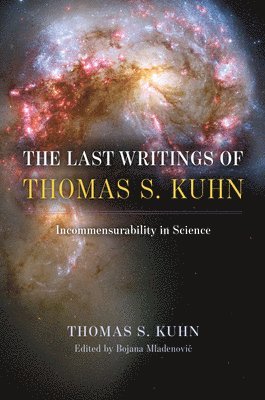
A must-read follow-up to The Structure of Scientific Revolutions, one of the most important books of the twentieth century. This book contains the text of Thomas S. Kuhn’s unfinished book, The Plurality of Worlds: An Evolutionary Theory of Scientific Development, which Kuhn himself described as a return to the central claims of The Structure of Scientific Revolutions and the problems that it raised but did not resolve. The Plurality of Worlds is preceded by two related texts that Kuhn publicly delivered but never published in English: his paper “Scientific Knowledge as Historical Product” and his Shearman Memorial Lectures, “The Presence of Past Science.” An introduction by the editor describes the origins and structure of The Plurality of Worlds and sheds light on its central philosophical problems. Kuhn’s aims in his last writings are bold. He sets out to develop an empirically grounded theory of meaning that would allow him to make sense of both the possibility of historical understanding and the inevitability of incommensurability between past and present science. In his view, incommensurability is fully compatible with a robust notion of the real world that science investigates, the rationality of scientific change, and the idea that scientific development is progressive.
158 kr
Skickas inom 7-10 vardagar
A must-read follow-up to The Structure of Scientific Revolutions, one of the most important books of the twentieth century. This book contains the text of Thomas S. Kuhn’s unfinished book, The Plurality of Worlds: An Evolutionary Theory of Scientific Development, which Kuhn himself described as a return to the central claims of The Structure of Scientific Revolutions and the problems that it raised but did not resolve. The Plurality of Worlds is preceded by two related texts that Kuhn publicly delivered but never published in English: his paper “Scientific Knowledge as Historical Product” and his Shearman Memorial Lectures, “The Presence of Past Science.” An introduction by the editor describes the origins and structure of The Plurality of Worlds and sheds light on its central philosophical problems. Kuhn’s aims in his last writings are bold. He sets out to develop an empirically grounded theory of meaning that would allow him to make sense of both the possibility of historical understanding and the inevitability of incommensurability between past and present science. In his view, incommensurability is fully compatible with a robust notion of the real world that science investigates, the rationality of scientific change, and the idea that scientific development is progressive.
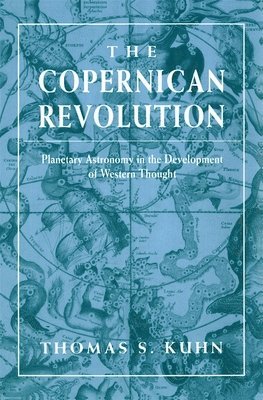
Copernican Revolution
Planetary Astronomy in the Development of Western Thought
Häftad, Engelska, 1992
309 kr
Skickas inom 10-15 vardagar
For scientist and layman alike this book provides vivid evidence that the Copernican Revolution has by no means lost its significance today. Few episodes in the development of scientific theory show so clearly how the solution to a highly technical problem can alter our basic thought processes and attitudes. Understanding the processes which underlay the Revolution gives us a perspective, in this scientific age, from which to evaluate our own beliefs more intelligently. With a constant keen awareness of the inseparable mixture of its technical, philosophical, and humanistic elements, Thomas S. Kuhn displays the full scope of the Copernican Revolution as simultaneously an episode in the internal development of astronomy, a critical turning point in the evolution of scientific thought, and a crisis in Western man’s concept of his relation to the universe and to God.The book begins with a description of the first scientific cosmology developed by the Greeks. Mr. Kuhn thus prepares the way for a continuing analysis of the relation between theory and observation and belief. He describes the many functions—astronomical, scientific, and nonscientific—of the Greek concept of the universe, concentrating especially on the religious implications. He then treats the intellectual, social, and economic developments which nurtured Copernicus’ break with traditional astronomy. Although many of these developments, including scholastic criticism of Aristotle’s theory of motion and the Renaissance revival of Neoplatonism, lie entirely outside of astronomy, they increased the flexibility of the astronomer’s imagination. That new flexibility is apparent in the work of Copernicus, whose De Revolutionibus Orbium Coelestium (On the Revolutions of the Heavenly Spheres) is discussed in detail both for its own significance and as a representative scientific innovation.With a final analysis of Copernicus’ life work—its reception and its contribution to a new scientific concept of the universe—Mr. Kuhn illuminates both the researches that finally made the heliocentric arrangement work, and the achievements in physics and metaphysics that made the planetary earth an integral part of Newtonian science. These are the developments that once again provided man with a coherent and self-consistent conception of the universe and of his own place in it.This is a book for any reader interested in the evolution of ideas and, in particular, in the curious interplay of hypothesis and experiment which is the essence of modern science. Says James Bryant Conant in his Foreword: “Professor Kuhn’s handling of the subject merits attention, for…he points the way to the road which must be followed if science is to be assimilated into the culture of our times.”
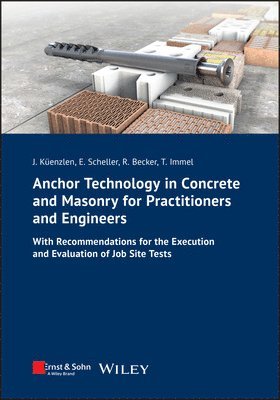
Anchor Technology in Concrete and Masonry for Practitioners and Engineers
With Recommendations for the Execution and Evaluation of Job Site Tests
Häftad, Tyska, 2024
1 018 kr
Skickas inom 5-8 vardagar
Anchors are everyday items in construction. However, the ever more complex world of building has led to anchor technology being investigated in more and more scientific detail during the course of product development. New anchor systems take into account the increasing diversity of base materials and the required economic efficiency. The scientific studies result in sometimes highly complex engineering design methods that are specified in numerous codes of practice, e.g. EN 1992-4 “Eurocode 2 – Design of concrete structures – Part 4: Design of fastenings for use in concrete”. As a result, it is no longer possible to design an anchor with a simple, quick and easily grasped manual calculation. However, the experience of the authors over the past 20 years shows that in order to gain the acceptance of users, there is an urgent need to translate academic anchor theory into manageable anchor practice for real building sites. It is exactly that gap that this book intends to fill. The focus is on the practical use of anchors and answering practical questions such as: “Which anchor do I need for my fastening task and what do I have to consider?” To answer this question, the authors guide the reader through the seemingly vast number of anchor systems and provide advice for everyday building situations. The theory regarding the structural behaviour is only explained, and then only briefly, when it helps to solve the fastening task and understand the solution to that task. For clarity, the reader is merely referred to the existing codes of practice and other specialist publications that provide summaries. All authors have been working for many years with a focus on anchors and fastenings, some of them in anchor testing laboratory or as trainers. They are members of various working groups and committees in concrete and masonry structures.
Anchor Technology in Concrete and Masonry for Practitioners and Engineers: With Recommendations for the Execution and Evaluation of Job Site Tests (incl. eBook as PDF)
Häftad, Tyska, 2024
1 596 kr
Skickas inom 3-6 vardagar
Anchors are everyday items in construction. However, the ever more complex world of building has led to anchor technology being investigated in more and more scientific detail during the course of product development. New anchor systems take into account the increasing diversity of base materials and the required economic efficiency. The scientific studies result in sometimes highly complex engineering design methods that are specified in numerous codes of practice, e.g. EN 1992-4 ?Eurocode 2 ? Design of concrete structures ? Part 4: Design of fastenings for use in concrete?. As a result, it is no longer possible to design an anchor with a simple, quick and easily grasped manual calculation.However, the experience of the authors over the past 20 years shows that in order to gain the acceptance of users, there is an urgent need to translate academic anchor theory into manageable anchor practice for real building sites.It is exactly that gap that this book intends to fill. The focus is on the practical use of anchors and answering practical questions such as: "Which anchor do I need for my fastening task and what do I have to consider?" To answer this question, the authors guide the reader through the seemingly vast number of anchor systems and provide advice for everyday building situations. The theory regarding the structural behaviour is only explained, and then only briefly, when it helps to solve the fastening task and understand the solution to that task. For clarity, the reader is merely referred to the existing codes of practice and other specialist publications that provide summaries.(Package: Print Book + ePDF)
Befestigung und Abdichtung von Fenstern und Türen
Aktuelle Regelungen, Praxisbeispiele, bauphysikalische Gesichtspunkte
Inbunden, Tyska, 2022
692 kr
Skickas inom 5-8 vardagar
Das Fenster hat sich in den vergangenen drei Jahrzehnten von der einfach verglasten Rahmenkonstruktion zu einem mit Dämmkern versehenen dreifachverglasten energieeffizienten Bauelement entwickelt und somit auch die Anforderungen an die Montage erhöht: moderne Baustoffe mit besseren Wärmedämmeigenschaften und zunehmender Porosität, Fensterprofile mit immer größeren Bautiefen, Zunahme der Glasgewichte durch größere Scheiben und Mehrfachverglasung, neue Normen. Das Fenster ist wesentlicher Teil einer funktionalen Gebäudehülle, die dem Schallschutz, Feuchteschutz und Wärmeschutz Rechnung tragen muss. Erfahrungswerte allein reichen für diese neuen (Befestigungs-) Situationen in der Praxis häufig nicht mehr aus. Dieses Buch enthält detaillierte Erläuterungen über die Anforderungen und die Ausführung von Fensterbefestigungen in verschiedenen Verankerungsgründen und für die Ausbildung der Anschlussfugen. Die aktuell geltenden Regelwerke werden vorgestellt. Ergänzend ist der allgemeine Kontext des derzeit geltenden Baurechts dargestellt, wobei die immer wieder auftauchenden Fragen kurz und prägnant aus Sicht eines Juristen beantwortet werden.Vor allem in der Altbausanierung können Entscheidungen über die Montage oftmals nur vor Ort getroffen werden. Es zeigt sich, dass es keine "Patentrezepte" gibt. Das Buch liefert mit detaillierten Praxisbeispielen und umfangreichen Hintergrundinformationen hilfreiche Argumente für die konstruktive Diskussion zur Lösung von Befestigungs- und Abdichtungsaufgaben bei der Fenster- und Türenmontage.Das Buch ist eine nützliche Hilfestellung bei der individuellen Planung und Ausführung von Bauprojekten und zeigt auf, warum es immer öfter erforderlich ist, bereits in der Planungsphase die Randbedingungen zu betrachten, welche in der Bauphase die sichere und dauerhafte Montage der Fenster gewährleisten können. Dabei schöpfen die Autoren aus ihrem reichen Erfahrungsschatz aus der täglichen Planungs- und Ausführungspraxis sowie aus Versuchen und der Produktentwicklung.
Del 25 - suhrkamp taschenbücher wissenschaft
Die Struktur wissenschaftlicher Revolutionen
Häftad, Tyska
207 kr
Skickas inom 3-6 vardagar
620 kr
Skickas inom 10-15 vardagar
Die Geschichte der kopernikanischen Revolution wurde bereits oft geschrieben, doch meines Wissens nicht unter dem Blickwinkel und in dem Umfang, die hier beabsichtigt sind. Vielerlei Einzelereignisse verbergen sich hinter dem Schlagwort von der Wende oder Revolution. Ihr Kern war eine Umwandlung der mathematischen Astronomie, doch brachte sie auch begriff liche Änderungen in der Kosmologie, Physik, Philosophie und Religion mit sich. Einzelaspekte der kopernikanischen Revolution wurden wiederholt untersucht, und ohne die daraus entstandenen Abhandlungen hätte dieses Buch nicht geschrieben werden können. Die Vielfalt der Umwälzungen übersteigt die Fähigkeiten des einzelnen Gelehrten, der die ursprünglichen Quellen studiert. Sowohl spezialisierte Untersuchungen als auch die darauf aufbauenden vereinfachenden Darstellungen verfehlen jedoch notwendiger weise einen der wichtigsten und faszinierendsten Züge der Revolution - ein Charakteristikum, das aus der Vielfalt der Umwälzung selbst entspringt. Wegen dieser Vielfalt bietet die kopernikanische Wende eine ideale Gelegenheit zu sehen, wie und mit welchem Ergebnis Vorstellungen aus vielen verschiedenen Gebieten sich zu einem einzigen Gedankengebäude zusammenfügen. Kopernikus selbst war ein Spezialist, ein mathematischer Astronom, der an der Korrektur esoterischer Methoden zur Berechnung von Planetenpositionen interessiert war. Oft war die Richtung seiner For schung jedoch durch Entwicklungen bestimmt, die mit der Astronomie nichts zu tun hatten. Darunter befanden sich die veränderte Darstellung des Falles von Steinen im Mittelalter, die Wiederbelebung mystischer, antiker Anschau ungen in der Renaissance, die die Sonne als das Abbild Gottes betrachteten, und die Atlantikreisen, die den Horizont des Menschender Renaissance erweiterten.
203 kr
Skickas
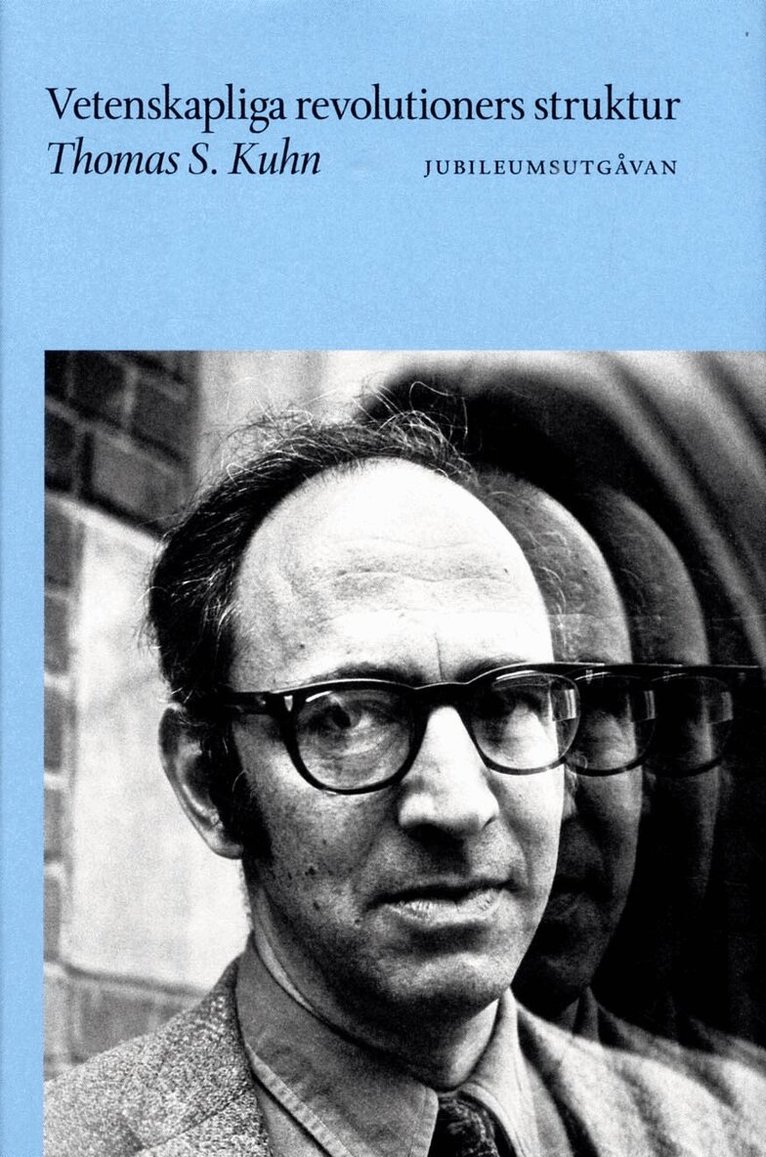
Ingen bok har haft större inflytande på vår förståelse av den vetenskapliga utvecklingen än Thomas S. Kuhns Vetenskapliga revolutioners struktur (1962), men det är också en bok som ändrade vår syn på oss själva, och till exempel gav oss begreppet paradigm. Denna utgåva inleds med en essä av vetenskapsfilosofen Ian Hacking, som diskuterar bokens aktualitet och går igenom nyckelbegrepp som paradigm, kris, revolution och anomali. Ny översättning av Jim Jakobsson.