Bot Kees de Bot – författare
Visar alla böcker från författaren Bot Kees de Bot. Handla med fri frakt och snabb leverans.
5 produkter
5 produkter
E-bok
PDF, Engelska, 19971 305 kr
Läs direkt efter köp
This volume, containing fourteen invited papers on foreign-language policy, starts off with a brief history of foreign-language teaching policy in the Netherlands. This historical outline is followed by four contributions of authors who once developed the Dutch National Action Programme (NAP) on Foreign Languages under the directorship of Theo van Els. The second section consists of five contributions written by experts from Germany, Israel, Finland and the United States, who reflect on the language policies adopted in their countries and on the international impact of the ideas developed in the NAP. The final section of the book presents four contributions from Dutch authors, all focussing on language policy issues related to the respective roles of Dutch as a second language, and of ethnic-minority languages in the Netherlands.The contributions to this volume were written by friends and colleagues of Theo van Els, in recognition of his considerable contributions to that area of applied linguistics which has captured his fascination for many years: foreign-language teaching policy.
E-bok
PDF, Engelska, 19911 384 kr
Läs direkt efter köp
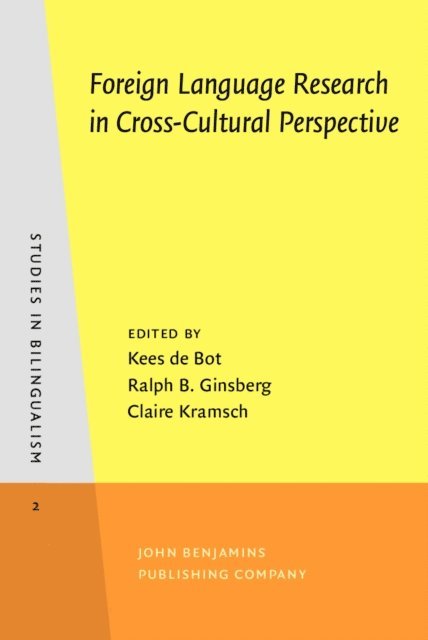
This volume focuses on priorities for research in language pedagogy. The aim is to give an up-to-date overview of current thinking about important research issues such as the viability of large scale comparisons, the quantitative/qualitative research controversy, new trends in language testing and evaluation, and the role of different learning environments. In their discussions of these issues researchers from the US and from different countries in Europe show to what extent the priorities differ on both sides of the Atlantic Ocean.
E-bok
PDF, Engelska, 20111 258 kr
Läs direkt efter köp
Dynamic systems theory, a general theory of change and development, offers a new way to study first and second language development and requires a new set of tools for analysis of empirical data. After a brief introduction to the theory, this book, co-authored by several leading scholars in the field, concentrates on tools and techniques recently developed to analyze language data from a dynamic perspective. The chapters deal with the general thoughts and reasoning behind coding data, analyzing variability, discovering interacting variables and modeling. The accompanying How to sections give step-by-step instructions to using macros to speed up the coding, creating a dedicated lexical profile, making min-max graphs, testing for significance in single case studies by running simulations, and modeling. Example files and data sets are available on the accompanying website (http://dx.doi.org/10.1075/lllt.29.website). Although the focus is on second language development, the tools are applicable to a wide range of phenomena in applied linguistics.
E-bok
PDF, Engelska, 20101 054 kr
Läs direkt efter köp
Gestures are prevalent in communication and tightly linked to language and speech. As such they can shed important light on issues of language development across the lifespan. This volume, originally published as a Special Issue of Gesture Volume 8:2 (2008), brings together studies from different disciplines that examine language development in children and adults from varying perspectives. It provides a review of common theoretical and empirical themes, and the contributions address topics such as gesture use in prelinguistic infants, the relationship between gestures and lexical development in typically and atypically developing children and in second language learners, what gestures reveal about discourse, and how all languages that adult second language speakers know can influence each other. The papers exemplify a vibrant new field of study with relevance for multiple disciplines.
E-bok
PDF, Engelska, 20091 258 kr
Läs direkt efter köp
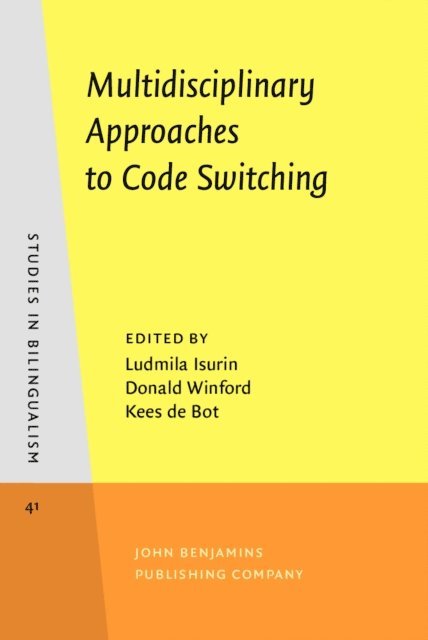
The volume presents a selection of contributions by leading scholars in the field of code-switching. In the past the phenomenon of code-switching was studied within different subfields of linguistics and they all took their own perspectives on code-switching without taking into account findings from other subdisciplines. This book raises a question of a much broader multidisciplinary approach to studying the phenomenon of code-switching; calls for integration of disciplines; and illustrates how frameworks from one subfield can be applied to models in another. The volume includes survey chapters, empirical studies, contributions that use empirical data to test new hypotheses about code-switching, or suggest new approaches and models for the study of code-switching, and chapters that discuss principles and constraints of code-switching, and code-switching vs. transfer. The book is easily accessible to anyone who is interested in the phenomenon of code-switching in bilinguals.