Lowie Wander Lowie – författare
Visar alla böcker från författaren Lowie Wander Lowie. Handla med fri frakt och snabb leverans.
3 produkter
3 produkter
E-bok
Engelska, 20251 651 kr
Läs direkt efter köp
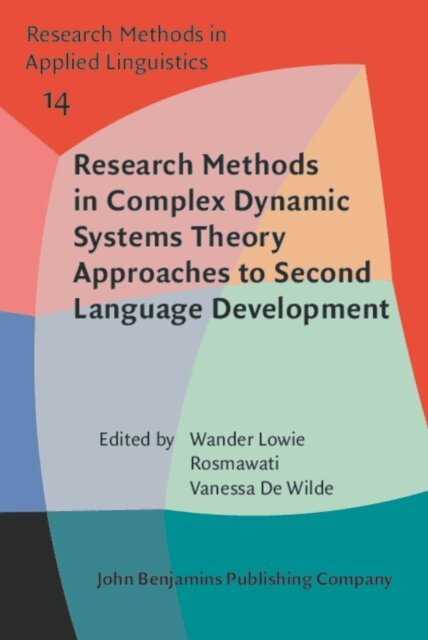
This edited volume is a timely and significant contribution to second language development research from a Complex Dynamic Systems Theory (CDST) perspective. The book addresses the growing need for consistent and practical methodologies for CDST research. Each chapter presents an innovative method or approach, illustrating its use in concrete applications to empirical studies and highlighting its value in capturing the dynamic, time-sensitive, and interconnected nature of L2 development. The volume emphasizes a shift from static outcomes to developmental processes, offering tools to explore intra-learner variability, network analysis, dynamic modeling, and more. By bridging theory and practice, it equips researchers with methodological guidance to investigate the process of second language development. Building on and extending previous volumes on CDST research methods by Verspoor et al. (2011) and Hiver and Al-Hoorie (2019), this book serves as a crucial reference for future CDST-informed research in Applied Linguistics.
E-bok
PDF, Engelska, 20111 195 kr
Läs direkt efter köp
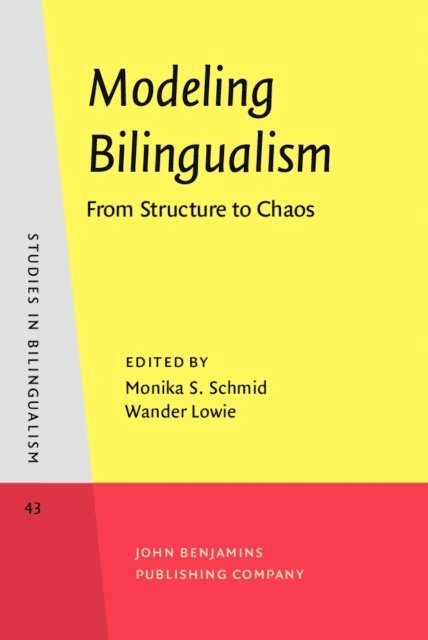
This volume presents an overview of changes in paradigms, perspectives and contexts of research into bilingual development over the past two decades. During this time, the focus of perspective has changed. In the early 1990s, most investigations still proceeded from models that assumed modular components, hierarchical relationships and linear processes, and investigated what were perceived to be the ‘typical’ contexts of bilingual development (sequential, usually instructed bilingualism, where the second language would remain the weaker one and the speakers investigated were typically young adults). More recently it has been proposed that such models may not be complex enough to accommodate bilingual development in all its facets and settings (bimodal bilingualism, attrition, aging). This change has recently culminated in applications of chaos theory to Applied Linguistics, and in the widening range of situations of language acquisition, learning and deterioration which have been investigated.
E-bok
PDF, Engelska, 20111 258 kr
Läs direkt efter köp
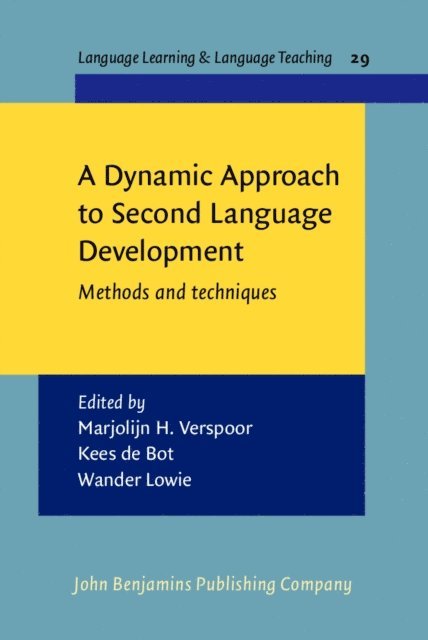
Dynamic systems theory, a general theory of change and development, offers a new way to study first and second language development and requires a new set of tools for analysis of empirical data. After a brief introduction to the theory, this book, co-authored by several leading scholars in the field, concentrates on tools and techniques recently developed to analyze language data from a dynamic perspective. The chapters deal with the general thoughts and reasoning behind coding data, analyzing variability, discovering interacting variables and modeling. The accompanying How to sections give step-by-step instructions to using macros to speed up the coding, creating a dedicated lexical profile, making min-max graphs, testing for significance in single case studies by running simulations, and modeling. Example files and data sets are available on the accompanying website (http://dx.doi.org/10.1075/lllt.29.website). Although the focus is on second language development, the tools are applicable to a wide range of phenomena in applied linguistics.