Brad J. Kallenberg – författare
Visar alla böcker från författaren Brad J. Kallenberg. Handla med fri frakt och snabb leverans.
18 produkter
18 produkter
Häftad, Engelska, 2013
384 kr
Skickas inom 5-8 vardagar
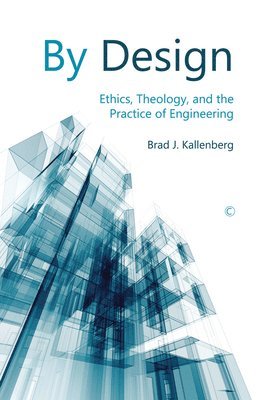
Both engineering and human living take place in a messy world, one chock full of unknowns and contingencies.
Inbunden, Engelska, 2001
860 kr
Skickas inom 5-8 vardagar
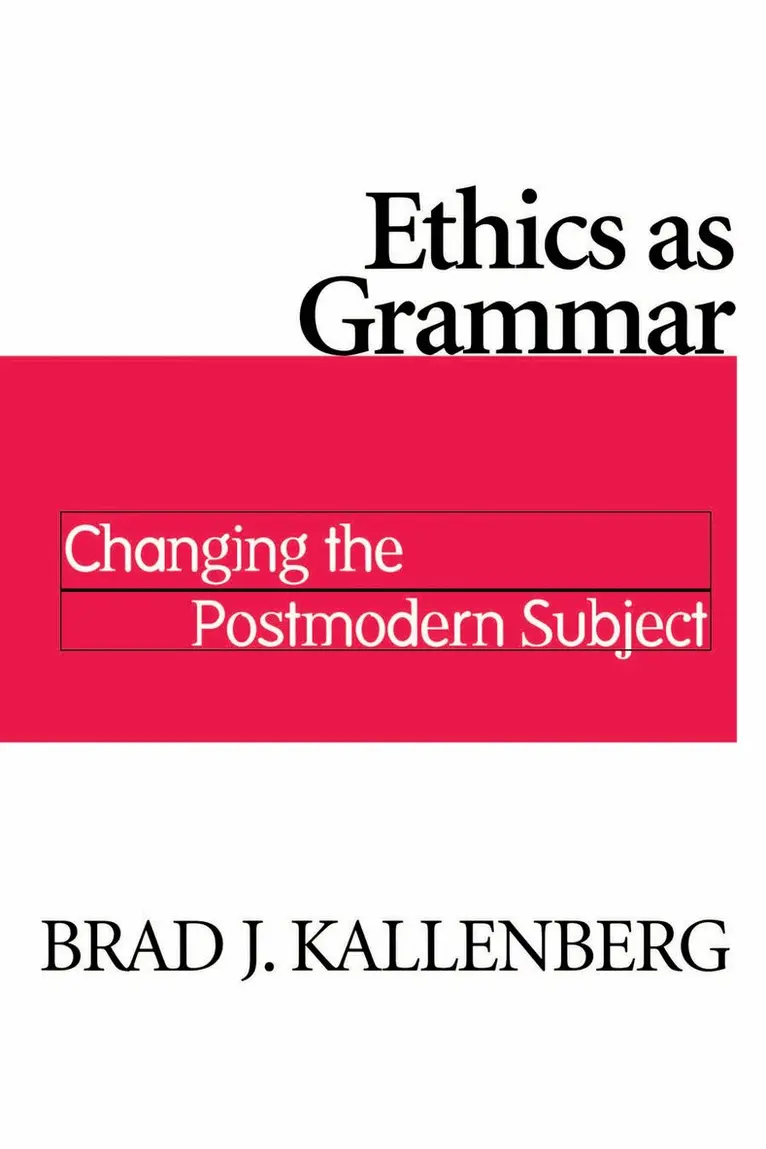
Wittgenstein, one of the most influential, and yet widely misunderstood, philosophers of our age, confronted his readers with aporias—linguistic puzzles—as a means of countering modern philosophical confusions over the nature of language without replicating the same confusions in his own writings. In Ethics as Grammar, Brad Kallenberg uses the writings of theological ethicist Stanley Hauerwas as a foil for demonstrating how Wittgenstein's method can become concrete within the Christian tradition. Kallenberg shows that the aesthetic, political, and grammatical strands epitomizing Hauerwas's thought are the result of his learning to do Christian ethics by thinking through Wittgenstein.Kallenberg argues that Wittgenstein's pedagogical strategy cultivates certain skills of judgment in his readers by making them struggle to move past the aporias and acquire the fluency of language's deeper grammar. Theologians, says Kallenberg, are well suited to this task of "going on" because the gift of Christianity supplies them with the requisite resources for reading Wittgenstein. Kallenberg uses Hauerwas to make this case—showing that Wittgenstein's aporetic philosophy has engaged Hauerwas in a lifelong conversation that has cured him of many philosophical confusions. Yet, because Hauerwas comes to the conversation as a Christian believer, he is able to surmount Wittgenstein's aporias with the assistance of theological convictions that he possesses through grace.Ethics as Grammar reveals that Wittgenstein's intention to cultivate concrete skill in real people was akin to Aristotle's emphasis on the close relationship of practical reason and ethics. In this thought-provoking book, Kallenberg demonstrates that Wittgenstein does more than simply offer a vantage point for reassessing Aristotle, he paves the way for ethics to become a distinctively Christian discipline, as exemplified by Stanley Hauerwas.
Häftad, Engelska, 2003
274 kr
Skickas inom 5-8 vardagar
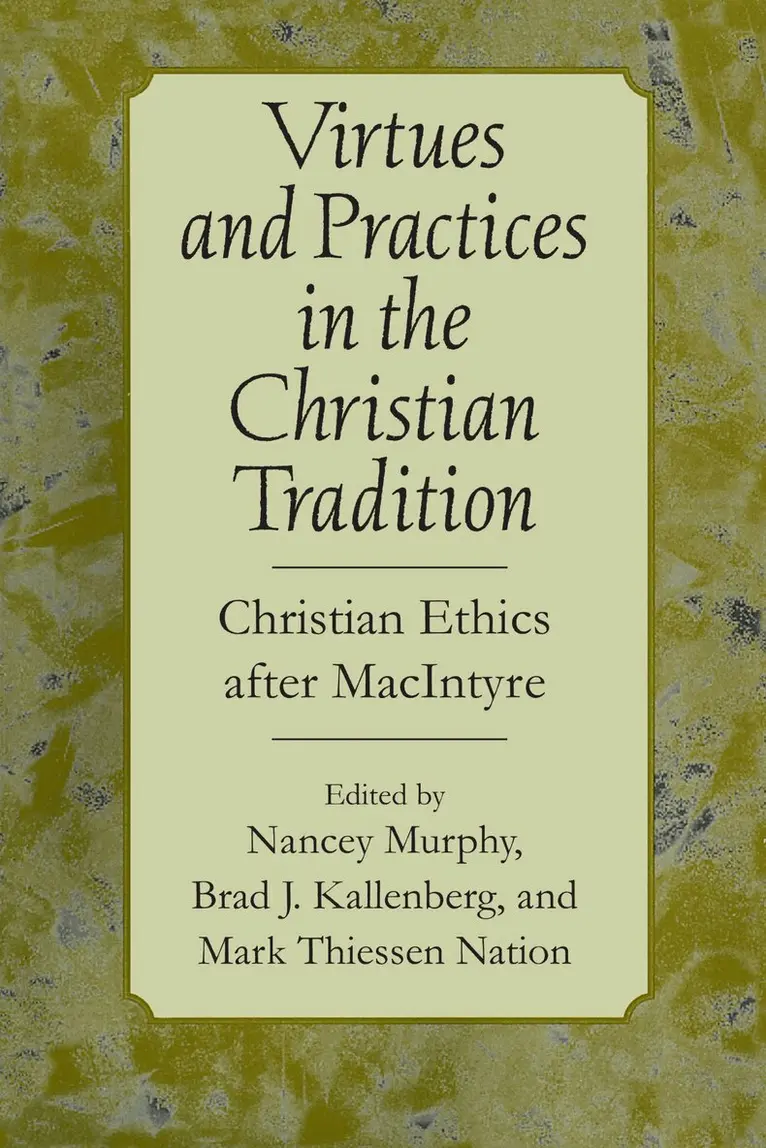
Contributors to Virtues and Practices in the Christian Tradition use Alasdair MacIntyre's work as a methodological guide for doing ethics in the Christian tradition. These essays are grouped in three sections: descriptions of MacIntyre's approach to ethics as developed in After Virtue, reflections on the moral issues that come to the fore when viewing the Christian tradition from a MacIntyrean perspective, and selected essays on family, homosexuality, abortion, pacifism, feminism, business ethics, medical ethics, and economic justice.
E-bok
PDF, Engelska, 2003404 kr
Läs direkt efter köp
Contributors to Virtues and Practices in the Christian Tradition use Alasdair MacIntyre's work as a methodological guide for doing ethics in the Christian tradition. These essays are grouped in three sections: descriptions of MacIntyre's approach to ethics as developed in After Virtue, reflections on the moral issues that come to the fore when viewing the Christian tradition from a MacIntyrean perspective, and selected essays on family, homosexuality, abortion, pacifism, feminism, business ethics, medical ethics, and economic justice.
Häftad, Engelska, 2001
319 kr
Skickas inom 5-8 vardagar
Wittgenstein, one of the most influential, and yet widely misunderstood, philosophers of our age, confronted his readers with aporias—linguistic puzzles—as a means of countering modern philosophical confusions over the nature of language without replicating the same confusions in his own writings. In Ethics as Grammar, Brad Kallenberg uses the writings of theological ethicist Stanley Hauerwas as a foil for demonstrating how Wittgenstein's method can become concrete within the Christian tradition. Kallenberg shows that the aesthetic, political, and grammatical strands epitomizing Hauerwas's thought are the result of his learning to do Christian ethics by thinking through Wittgenstein.Kallenberg argues that Wittgenstein's pedagogical strategy cultivates certain skills of judgment in his readers by making them struggle to move past the aporias and acquire the fluency of language's deeper grammar. Theologians, says Kallenberg, are well suited to this task of "going on" because the gift of Christianity supplies them with the requisite resources for reading Wittgenstein. Kallenberg uses Hauerwas to make this case—showing that Wittgenstein's aporetic philosophy has engaged Hauerwas in a lifelong conversation that has cured him of many philosophical confusions. Yet, because Hauerwas comes to the conversation as a Christian believer, he is able to surmount Wittgenstein's aporias with the assistance of theological convictions that he possesses through grace.Ethics as Grammar reveals that Wittgenstein's intention to cultivate concrete skill in real people was akin to Aristotle's emphasis on the close relationship of practical reason and ethics. In this thought-provoking book, Kallenberg demonstrates that Wittgenstein does more than simply offer a vantage point for reassessing Aristotle, he paves the way for ethics to become a distinctively Christian discipline, as exemplified by Stanley Hauerwas.
E-bok
Engelska, 2001471 kr
Läs direkt efter köp
Wittgenstein, one of the most influential, and yet widely misunderstood, philosophers of our age, confronted his readers with aporias—linguistic puzzles—as a means of countering modern philosophical confusions over the nature of language without replicating the same confusions in his own writings. In Ethics as Grammar, Brad Kallenberg uses the writings of theological ethicist Stanley Hauerwas as a foil for demonstrating how Wittgenstein's method can become concrete within the Christian tradition. Kallenberg shows that the aesthetic, political, and grammatical strands epitomizing Hauerwas's thought are the result of his learning to do Christian ethics by thinking through Wittgenstein.Kallenberg argues that Wittgenstein's pedagogical strategy cultivates certain skills of judgment in his readers by making them struggle to move past the aporias and acquire the fluency of language's deeper grammar. Theologians, says Kallenberg, are well suited to this task of "going on" because the gift of Christianity supplies them with the requisite resources for reading Wittgenstein. Kallenberg uses Hauerwas to make this case—showing that Wittgenstein's aporetic philosophy has engaged Hauerwas in a lifelong conversation that has cured him of many philosophical confusions. Yet, because Hauerwas comes to the conversation as a Christian believer, he is able to surmount Wittgenstein's aporias with the assistance of theological convictions that he possesses through grace.Ethics as Grammar reveals that Wittgenstein's intention to cultivate concrete skill in real people was akin to Aristotle's emphasis on the close relationship of practical reason and ethics. In this thought-provoking book, Kallenberg demonstrates that Wittgenstein does more than simply offer a vantage point for reassessing Aristotle, he paves the way for ethics to become a distinctively Christian discipline, as exemplified by Stanley Hauerwas.
E-bok
PDF, Engelska, 2001454 kr
Läs direkt efter köp
Wittgenstein, one of the most influential, and yet widely misunderstood, philosophers of our age, confronted his readers with aporias—linguistic puzzles—as a means of countering modern philosophical confusions over the nature of language without replicating the same confusions in his own writings. In Ethics as Grammar, Brad Kallenberg uses the writings of theological ethicist Stanley Hauerwas as a foil for demonstrating how Wittgenstein's method can become concrete within the Christian tradition. Kallenberg shows that the aesthetic, political, and grammatical strands epitomizing Hauerwas's thought are the result of his learning to do Christian ethics by thinking through Wittgenstein.Kallenberg argues that Wittgenstein's pedagogical strategy cultivates certain skills of judgment in his readers by making them struggle to move past the aporias and acquire the fluency of language's deeper grammar. Theologians, says Kallenberg, are well suited to this task of "going on" because the gift of Christianity supplies them with the requisite resources for reading Wittgenstein. Kallenberg uses Hauerwas to make this case—showing that Wittgenstein's aporetic philosophy has engaged Hauerwas in a lifelong conversation that has cured him of many philosophical confusions. Yet, because Hauerwas comes to the conversation as a Christian believer, he is able to surmount Wittgenstein's aporias with the assistance of theological convictions that he possesses through grace.Ethics as Grammar reveals that Wittgenstein's intention to cultivate concrete skill in real people was akin to Aristotle's emphasis on the close relationship of practical reason and ethics. In this thought-provoking book, Kallenberg demonstrates that Wittgenstein does more than simply offer a vantage point for reassessing Aristotle, he paves the way for ethics to become a distinctively Christian discipline, as exemplified by Stanley Hauerwas.
Häftad, Engelska, 2025
200 kr
Skickas inom 5-8 vardagar
Inbunden, Engelska, 2025
342 kr
Skickas inom 5-8 vardagar
Inbunden, Engelska, 2011
421 kr
Skickas inom 5-8 vardagar
Inbunden, Engelska, 2013
613 kr
Skickas inom 5-8 vardagar
E-bok
Engelska, 2015589 kr
Läs direkt efter köp
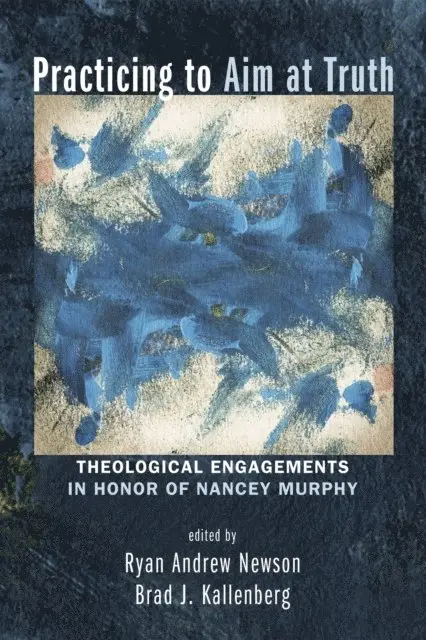
Beginning with her award-winning book Theology in the Age of Scientific Reasoning (1990), Nancey Murphy has used philosophy of science as a way into, and catalyst for, fresh thinking in cosmology, divine action, epistemology, cognitive neuroscience, theological anthropology, philosophy of mind, and Christian virtue ethics. The essays in this book, written by her students and colleagues, creatively honor Murphy by extending a number of her core insights within their respective disciplines. An introduction provides both an account of Murphy''s unique location (an Anabaptist teaching at an evangelical graduate institution) and a summary of her contributions to theology as a philosopher of science whose corpus more than any other epitomizes the paradigm shift in philosophy sometimes called "Anglo-American postmodernity." Subsequently, fourteen essays provide unique engagements with Murphy on subjects including divine action, the interaction between science and theology, epistemology, the nature of humanity, and political theology. In its entirety, Practicing to Aim at Truth provides the first in-depth interaction with and extension of Nancey Murphy''s unique school of thought, providing a resource both for those wishing to extend her research program as well as those wishing to understand it charitably in order to critique it.
Inbunden, Engelska, 2015
511 kr
Skickas inom 5-8 vardagar
Häftad, Engelska, 2011
243 kr
Skickas inom 5-8 vardagar
Häftad, Engelska, 2013
376 kr
Skickas inom 5-8 vardagar
E-bok
Engelska, 2011390 kr
Läs direkt efter köp
Technologies are deeply embedded in the modern West. What would our lives be like without asphalt, glass, gasoline, electricity, window screens, or indoor plumbing? We naturally praise technology when it is useful and bemoan it when it is not. But there is much more to technology than the usefulness of this or that artifact. Unfortunately, we tend not to consider the inherently social and moral character of technology. As a result, we are prone to overlook the effects of technology on our spiritual lives. This book investigates the role technology plays in helping and hampering our Christian practice and witness.
Häftad, Engelska, 2015
341 kr
Skickas inom 5-8 vardagar
E-bok
PDF, Engelska, 2013639 kr
Läs direkt efter köp
Both engineering and human living take place in a messy world, one chock full of unknowns and contingencies. "e;Design reasoning"e; is the way engineers cope with real-world contingency. Because of the messiness, books about engineering design cannot have "e;ideal solutions"e; printed in the back in the same way that mathematics textbooks can. Design reasoning does not produce a single, ideally correct answer to a given problem but rather generates a wide variety of rival solutions that vie against each other for their relative level of "e;satisfactoriness."e; A reasoning process analogous to design is needed in ethics. Since the realm of interpersonal relations is itself a fluid and highly contingent real-world affair, design reasoning offers the promise of a useful paradigm for ethical reasoning. This volume undertakes two tasks. First, it employs design reasoning to illustrate how technological artifacts can be assessed for their inherent moral properties. Second, it uses the design paradigm as a means for bringing engineering ethics into conversation with Christian theology in order to show how each can be for the other a catalyst for the revolutionary task of living by design.