Brendan Bradshaw - Böcker
Visar alla böcker från författaren Brendan Bradshaw. Handla med fri frakt och snabb leverans.
10 produkter
10 produkter
1 754 kr
Skickas inom 10-15 vardagar
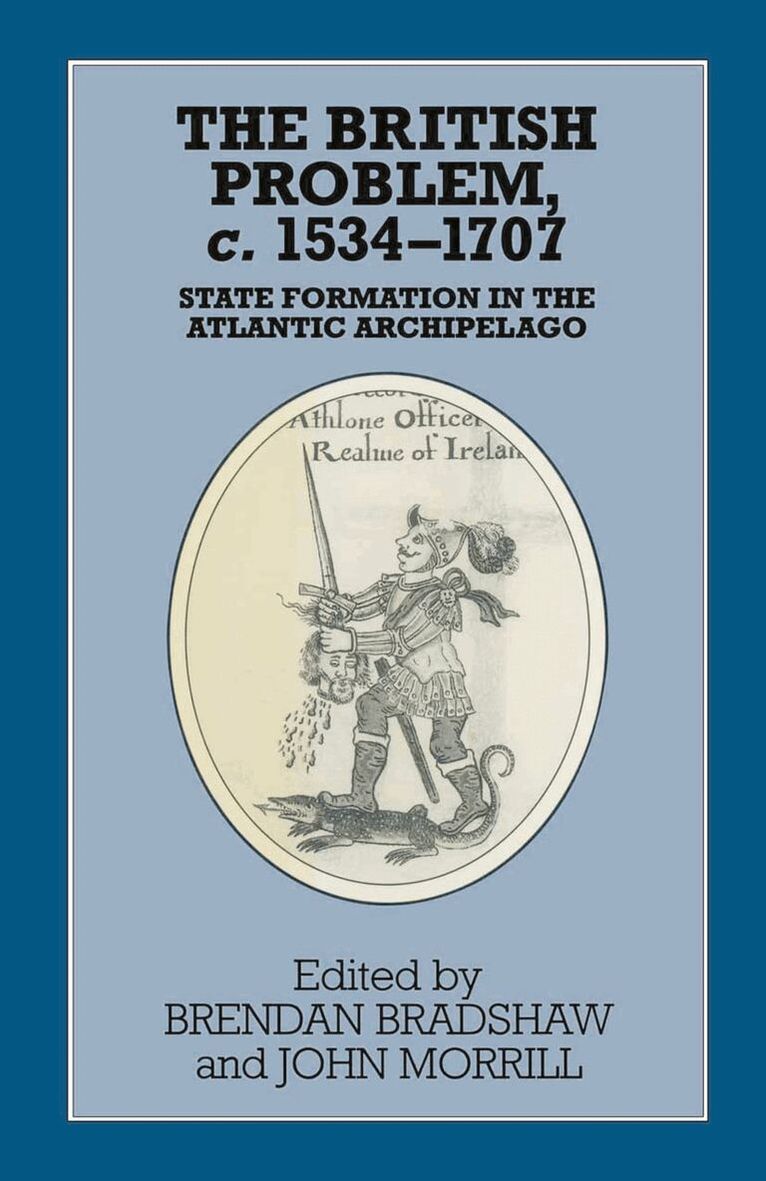
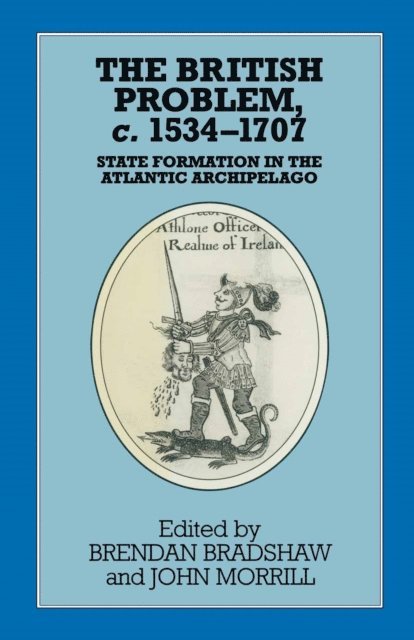
This pioneering book seeks to transcend the limitations of separate English, Irish, Scottish and Welsh histories by taking the archipelago made up of the islands of Britain and Ireland as a single unit of study. There has been little attempt hitherto to study the history of the 'Atlantic archipelago' as a coherent entity, even for the period during which there was a single ruler of both Great Britain and Ireland. This book begins with the onset of the intellectual, religious, political, cultural and dynastic developments that were to bring teh Scottish house of Stewart to the thrones of England (incorporating the ancient principality of Wales), Ireland, (a kingdom created in 1541 as a dependency of the English Crown) and to full control of Scotland itself and of its islands.This is then a story of the creation of a British state system if not a British state. but the book is also a study of how the peoples of the archipelago interacted - as a result of internal migration, military conquest, protestant and Tridentine CAtholic evangelism - and how they were changed as a result. Ten distinguished historians representing the seperate peoples of the islands of Britain and Ireland, and teaching histort in Britain, Ireland and the USA, offer provocative and challenging new approaches to how and why we need to develop the history of each component of the archipelago in the context of the whole and to make 'the British Problem' central to that study.
530 kr
Skickas inom 10-15 vardagar
This pioneering book seeks to transcend the limitations of separate English, Irish, Scottish and Welsh histories by taking the archipelago made up of the islands of Britain and Ireland as a single unit of study. There has been little attempt hitherto to study the history of the 'Atlantic archipelago' as a coherent entity, even for the period during which there was a single ruler of both Great Britain and Ireland. This book begins with the onset of the intellectual, religious, political, cultural and dynastic developments that were to bring teh Scottish house of Stewart to the thrones of England (incorporating the ancient principality of Wales), Ireland, (a kingdom created in 1541 as a dependency of the English Crown) and to full control of Scotland itself and of its islands.This is then a story of the creation of a British state system if not a British state. but the book is also a study of how the peoples of the archipelago interacted - as a result of internal migration, military conquest, protestant and Tridentine CAtholic evangelism - and how they were changed as a result. Ten distinguished historians representing the seperate peoples of the islands of Britain and Ireland, and teaching histort in Britain, Ireland and the USA, offer provocative and challenging new approaches to how and why we need to develop the history of each component of the archipelago in the context of the whole and to make 'the British Problem' central to that study.
534 kr
Skickas inom 7-10 vardagar
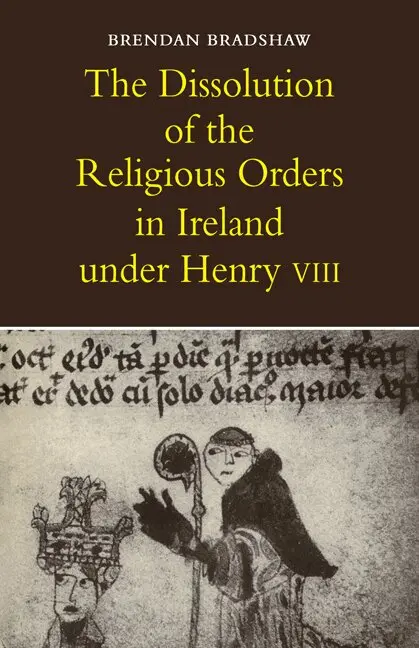
Father Bradshaw examines the dissolution of the religious orders in Ireland as an episode of Irish ecclesiastical and political history, and of the English Reformation. He also analyses its relationship to Henry VIII's Irish policy as a whole and to the beginnings of English colonialism. He discusses in detail the state of the religious orders on the eve of suppression, the extent of opposition to the implementation of the suppression policy in all its stages, the secularisation of monastic lands and the results of dissolution for Irish society and for subsequent Irish history. Despite the sensitive issues involved, Catholic, Protestant and academic historians have shown remarkable unanimity in the interpretation of the episode of the dissolution in Ireland. A thorough knowledge of both primary and secondary sources enables Father Bradshaw to challenge many of the conventional assumptions.
577 kr
Skickas inom 7-10 vardagar
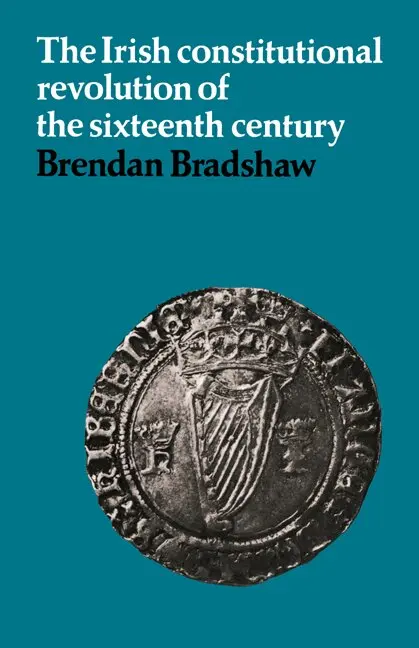
Historiography has highlighted Ireland's sixteenth-century rebellions and ignored its revolution. The transformation of the island's political personality in the course of the middle Tudor period must be the last remarked-upon change in its whole history. Yet it might be claimed to be the most remarkable. It provided Ireland with its first sovereign constitution, gave it for the first time an ideology of nationalism, and proposed a practical political objective which has inspired and eluded a host of political movements ever since: the unification of the island's pluralistic community into a coherent political entity. The reason for the neglect lies partly in another remarkable feature of the revolution itself, the circumstances of its accomplishment. it was engineered by Anglo-Irish politicians, in collaboration with an English head of government in Ireland, and by constitutional means, in particular by parliamentary statute.
560 kr
Skickas inom 7-10 vardagar
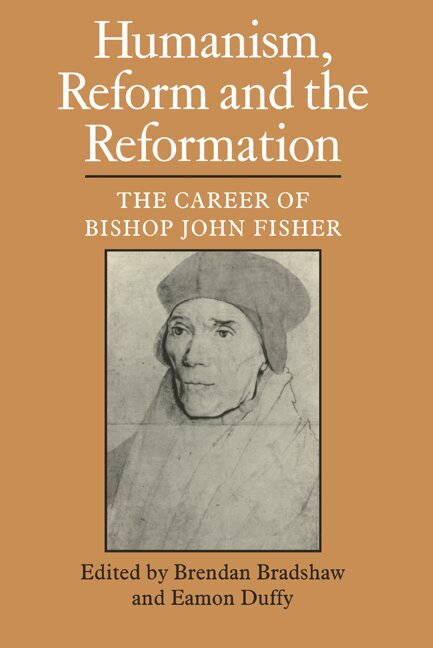
This book assembles ten special studies, each devoted to an aspect of Fisher's multifaceted career or to exploring the intellectual and religious outlook of someone who was at the same time a moderniser, a reformer and an opponent of the Reformation. John Fisher's career provides an illuminating perspective on English religious and intellectual history in a crucial phase of development. As a churchman he became the foremost preacher in England, issuing a call to ecclesiastical reform and personal repentance that echoed the call of Savonarola at Florence. At the same time he provides an early example of the pastoral bishop that was to become the ideal of both the Reformation and the Counter Reformation. Finally in the crisis that paved the way for the English Reformation, he became the leading defender of Queen Catherine against the divorce suit of Henry VIII. He was among the small band who were executed in 1535 as conscientious objectors to the oaths of Succession and Royal Ecclesiastical Supremacy. He has been venerated as a Catholic martyr ever since.
629 kr
Skickas inom 7-10 vardagar
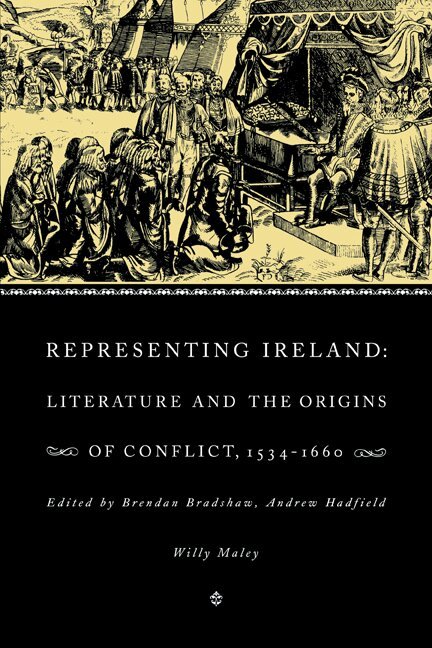
In this volume of essays a group of historians and literary critics debate the representation of early modern Ireland by English Renaissance authors. The contributions deal both with modes of representation - aesthetic, geographic, literary, political, visual - and with the biographies of representative individuals. Thus historical commentary and textual analysis go hand-in-hand with biography and chronology. The essays are interdisciplinary, combining traditional methods of literary and historical enquiry with a range of new theoretical approaches to texts and their authors. There are discussions of the work of major writers including John Bale, Gabriel Harvey, Barnaby Googe, Edmund Spenser, John Milton and Geoffrey Keating in the context of Irish politics from the Reformation to the Restoration.
1 038 kr
Skickas inom 7-10 vardagar
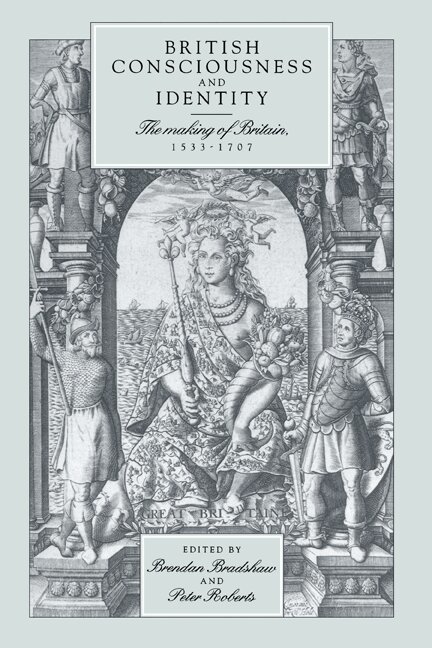
The historical resonances of the concept of 'Britain' for the communities of the Atlantic Archipelago in the early modern period are explored here in terms of the ideological demands made upon it. Various and competing concepts of Britishness are examined, from the Henrician legislation which united Wales with England and which created the kingdom of Ireland, to the Act of Union of the realms of England and Scotland. The chequered history of the consciousness of Britain as a polity which embraced the united kingdoms is discussed in relation to the distinctive national identities of the constituent countries, and the question of the impact of 'Britain' on English policy-making under the Tudor, Stuart and the first Hanoverian monarchs is addressed. The puzzling resistance of the Irish to assimilation in contrast to the docility of the Welsh and - eventually - of the Scots is also explored.
645 kr
Skickas inom 7-10 vardagar
The historical resonances of the concept of 'Britain' for the communities of the Atlantic Archipelago in the early modern period are explored here in terms of the ideological demands made upon it. Various and competing concepts of Britishness are examined, from the Henrician legislation which united Wales with England and which created the kingdom of Ireland, to the Act of Union of the realms of England and Scotland. The chequered history of the consciousness of Britain as a polity which embraced the united kingdoms is discussed in relation to the distinctive national identities of the constituent countries, and the question of the impact of 'Britain' on English policy-making under the Tudor, Stuart and the first Hanoverian monarchs is addressed. The puzzling resistance of the Irish to assimilation in contrast to the docility of the Welsh and - eventually - of the Scots is also explored.
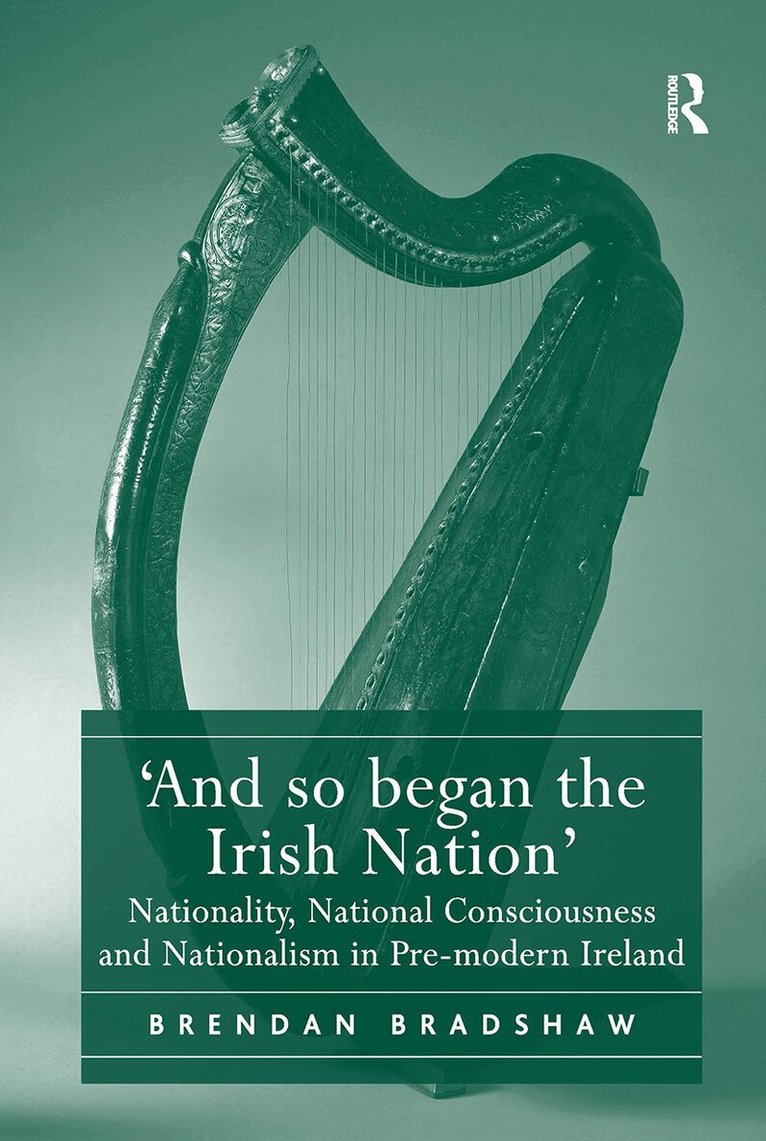
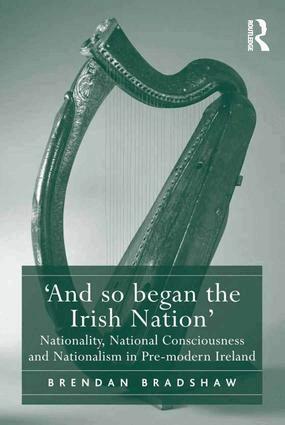
'And so began the Irish Nation'
Nationality, National Consciousness and Nationalism in Pre-modern Ireland
Häftad, Engelska, 2024
598 kr
Skickas inom 10-15 vardagar
Nationalism is a particularly slippery subject to define and understand, particularly when applied to early modern Europe. In this collection of essays, Brendan Bradshaw provides an insight into how concepts of ’nationalism’ and ’national identity’ can be understood and applied to pre-modern Ireland. Drawing upon a selection of his most provocative and pioneering essays, together with three entirely new pieces, the limits and contexts of Irish nationalism are explored and its impact on both early modern society and later generations, examined. The collection reflects especially upon the emergence of national consciousness in Ireland during a calamitous period when the late-medieval, undeveloped sense of a collective identity became suffused with patriotic sentiment and acquired a political edge bound up with notions of national sovereignty and representative self-government. The volume opens with a discussion of the historical methods employed, and an extended introductory essay tracing the history of national consciousness in Ireland from its first beginnings as recorded in the poetry of the early Christian Church to its early-modern flowering, which provides the context for the case studies addressed in the subsequent chapters. These range across a wealth of subjects, including comparisons of Tudor Wales and Ireland, Irish reactions to the ’Westward Enterprise’, the Ulster Rising of 1641, the Elizabethans and the Irish, and the two sieges of Limerick. The volume concludes with a transcription and discussion of ’A Treatise for the Reformation of Ireland, 1554-5’. The result of a lifetime’s study, this volume offers a rich and rewarding journey through a turbulent yet fascinating period of Irish history, not only illuminating political and religious developments within Ireland, but also how these affected events across the British Isles and beyond.
'And so began the Irish Nation'
Nationality, National Consciousness and Nationalism in Pre-modern Ireland
Inbunden, Engelska, 2015
2 153 kr
Skickas inom 10-15 vardagar
Nationalism is a particularly slippery subject to define and understand, particularly when applied to early modern Europe. In this collection of essays, Brendan Bradshaw provides an insight into how concepts of ’nationalism’ and ’national identity’ can be understood and applied to pre-modern Ireland. Drawing upon a selection of his most provocative and pioneering essays, together with three entirely new pieces, the limits and contexts of Irish nationalism are explored and its impact on both early modern society and later generations, examined. The collection reflects especially upon the emergence of national consciousness in Ireland during a calamitous period when the late-medieval, undeveloped sense of a collective identity became suffused with patriotic sentiment and acquired a political edge bound up with notions of national sovereignty and representative self-government. The volume opens with a discussion of the historical methods employed, and an extended introductory essay tracing the history of national consciousness in Ireland from its first beginnings as recorded in the poetry of the early Christian Church to its early-modern flowering, which provides the context for the case studies addressed in the subsequent chapters. These range across a wealth of subjects, including comparisons of Tudor Wales and Ireland, Irish reactions to the ’Westward Enterprise’, the Ulster Rising of 1641, the Elizabethans and the Irish, and the two sieges of Limerick. The volume concludes with a transcription and discussion of ’A Treatise for the Reformation of Ireland, 1554-5’. The result of a lifetime’s study, this volume offers a rich and rewarding journey through a turbulent yet fascinating period of Irish history, not only illuminating political and religious developments within Ireland, but also how these affected events across the British Isles and beyond.