Brett J. Esaki – författare
Visar alla böcker från författaren Brett J. Esaki. Handla med fri frakt och snabb leverans.
3 produkter
3 produkter
Inbunden, Engelska, 2016
1 251 kr
Skickas inom 5-8 vardagar
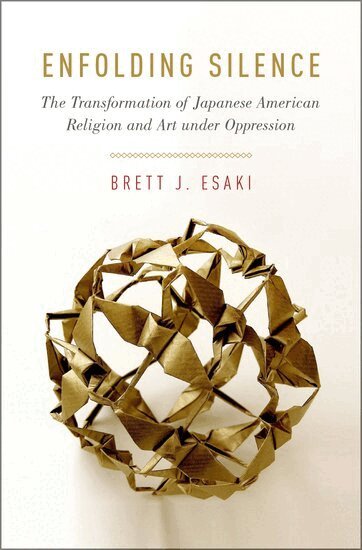
This book demonstrates how Japanese Americans have developed traditions of complex silences to survive historic moments of racial and religious oppression and how they continue to adapt these traditions today. In order to examine Japanese Americans' complex relationship to silence, Brett Esaki offers four case studies of Japanese American art--gardening, origami, jazz, and monument construction--and examines how each artistic practice has responded to a historic moment of oppression. In doing so, he finds that these artistic silences incorporate and convey obfuscated religious ideas from Buddhism, Christianity, Confucianism, Shinto, indigenous religions, and contemporary spirituality. While silence is often thought of as the binary opposite and absence of sound, this book provides a non-binary theory of silence that articulates how multidimensional silences are formed and how they function. Brett Esaki argues that non-binary silences have allowed Japanese Americans to disguise, adapt, and innovate religious resources in order to negotiate racism and oppressive ideologies from both the United States and Japan. Drawing from the fields of religious studies, ethnic studies, theology, anthropology, art, music, history, and psychoanalysis, this book highlights the ways in which silence has been used to communicate the complex emotions of historical survival, religious experience, and artistic inspiration.
E-bok
PDF, Engelska, 20161 048 kr
Läs direkt efter köp
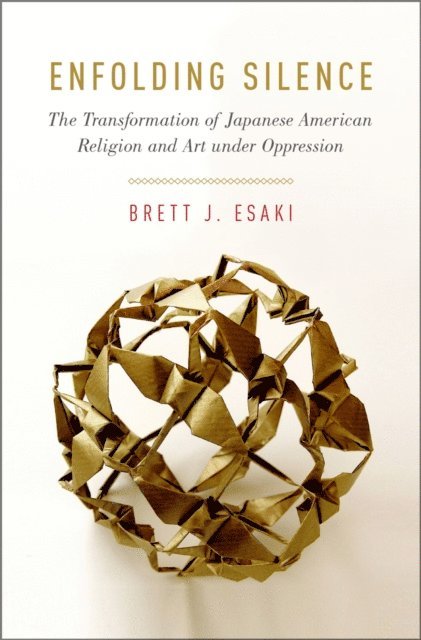
This book demonstrates how Japanese Americans have developed traditions of complex silences to survive historic moments of racial and religious oppression and how they continue to adapt these traditions today. Brett Esaki offers four case studies of Japanese American art-gardening, origami, jazz, and monuments-and examines how each artistic practice has responded to a historic moment of oppression. He finds that these artistic silences incorporate and convey obfuscated and hybridized religious ideas from Buddhism, Christianity, Confucianism, Shinto, indigenous religions, and contemporary spirituality.While silence is often thought of as the binary opposite and absence of sound, Esaki offers a theory of non-binary silence that articulates how multidimensional silences are formed and how they function. He argues that non-binary silences have allowed Japanese Americans to disguise, adapt, and innovate religious resources in order to negotiate racism and oppressive ideologies from both the United States and Japan. Drawing from the fields of religious studies, ethnic studies, theology, anthropology, art, music, history, and psychoanalysis, this book highlights the ways in which silence has been used to communicate the complex emotions of historical survival, religious experience, and artistic inspiration.
E-bok
Engelska, 20161 048 kr
Läs direkt efter köp
This book demonstrates how Japanese Americans have developed traditions of complex silences to survive historic moments of racial and religious oppression and how they continue to adapt these traditions today. Brett Esaki offers four case studies of Japanese American art-gardening, origami, jazz, and monuments-and examines how each artistic practice has responded to a historic moment of oppression. He finds that these artistic silences incorporate and convey obfuscated and hybridized religious ideas from Buddhism, Christianity, Confucianism, Shinto, indigenous religions, and contemporary spirituality.While silence is often thought of as the binary opposite and absence of sound, Esaki offers a theory of non-binary silence that articulates how multidimensional silences are formed and how they function. He argues that non-binary silences have allowed Japanese Americans to disguise, adapt, and innovate religious resources in order to negotiate racism and oppressive ideologies from both the United States and Japan. Drawing from the fields of religious studies, ethnic studies, theology, anthropology, art, music, history, and psychoanalysis, this book highlights the ways in which silence has been used to communicate the complex emotions of historical survival, religious experience, and artistic inspiration.