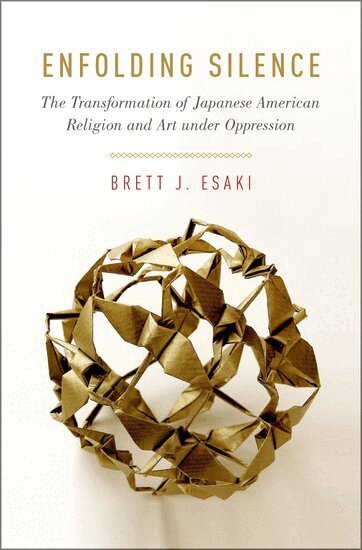
Inbunden, Engelska, 2016
Enfolding Silence
The Transformation of Japanese American Religion and Art under Oppression
Del i serien AAR Academy Series
1894 kr
Beställningsvara. Skickas inom 7-10 vardagar. Fri frakt över 249 kr.
Beskrivning
This book demonstrates how Japanese Americans have developed traditions of complex silences to survive historic moments of racial and religious oppression and how they continue to adapt these traditions today. In order to examine Japanese Americans' complex relationship to silence, Brett Esaki offers four case studies of Japanese American art--gardening, origami, jazz, and monument construction--and examines how each artistic practice has responded to a historic moment of oppression. In doing so, he finds that these artistic silences incorporate and convey obfuscated religious ideas from Buddhism, Christianity, Confucianism, Shinto, indigenous religions, and contemporary spirituality. While silence is often thought of as the binary opposite and absence of sound, this book provides a non-binary theory of silence that articulates how multidimensional silences are formed and how they function. Brett Esaki argues that non-binary silences have allowed Japanese Americans to disguise, adapt, and innovate religious resources in order to negotiate racism and oppressive ideologies from both the United States and Japan. Drawing from the fields of religious studies, ethnic studies, theology, anthropology, art, music, history, and psychoanalysis, this book highlights the ways in which silence has been used to communicate the complex emotions of historical survival, religious experience, and artistic inspiration.
Produktinformation
- Utgivningsdatum: 2016-06-23
- Mått: 157 x 236 x 20 mm
- Vikt: 522 g
- Format: Inbunden
- Språk: Engelska
- Serie: AAR Academy Series
- Antal sidor: 280
- Förlag: OUP USA
- ISBN: 9780190251420
Utforska kategorier
Mer om författaren
Brett J. Esaki is Assistant Professor of American Religions at Georgia State University.
Recensioner i media
Esaki has found a balance between rock solid academic writing and prose that retains life and personality and humanity, essential for exploring the topic he chose. Esaki not only makes an invaluable contribution to scholarship in religious studies and Japanese American studies, he sets a model for how we can approach these beautifully multifaceted presentations of religious resistance, no matter their context.
Betyg & recensioner
0 recensioner
Inga recensioner tillgängliga.