Brick Johnstone – författare
957 kr
Skickas inom 10-15 vardagar
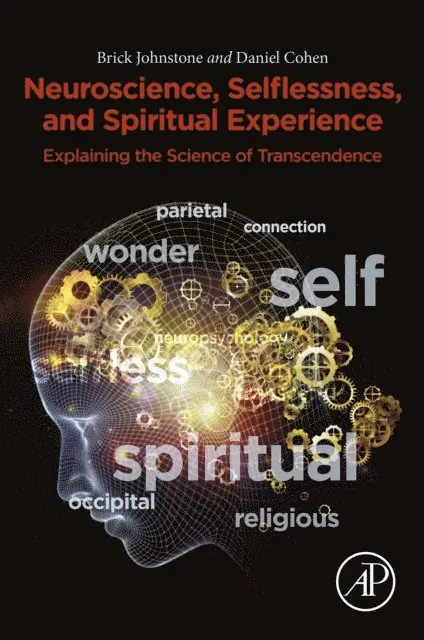
Neuroscience, Selflessness, and Spiritual Transcendence conveys the manner by which selflessness serves as a neuropsychological and religious foundation for spiritually transcendent experiences. The book combines neurological case studies and neuroscience research with religious accounts of transcendence experiences from the perspective of both the neurosciences and the history of religions. Chapters cover the subjective experience of transcendence, an historical summary of different philosophical and religious perspectives, a review of the neuroscience research that describes the manner by which the brain processes and creates a self, and more.
The book presents a model that bridges the divide between neuroscience and religion, presenting a resource that will be critical reading for advanced students and researchers in both fields.
Creates a common focus on selflessness as a reliable construct for use by all disciplines interested in the basis of spiritual experience Links neuroanatomical data with religious texts from multiple faith traditions to describe the necessity of selflessness for spiritual experience and transformation Highlights disorders in neurological functioning that result in disorders of the self1 322 kr
Läs direkt efter köp
843 kr
Läs direkt efter köp
Many contemporary neuropsychology texts focus on neuropathology, the description of specific tests, and the differential diagnosis of central nervous system disorders. However, increasingly sophisticated neuroradiological techniques, managed care factors, and the growth of rehabilitation necessitates that rehabilitation professionals provide more functionally (versus diagnostically) useful evaluations to improve the neuropsychological functioning and community integration of persons with brain injuries or diseases. This book aims to fill this gap and to provide an overview of standard neuropsychological treatment strategies for specific cognitive impairments that are identified on testing. The new edition enhances this goal with three chapters outlining important recommendations, services, and issues for rehabilitation professionals.
Written by a team of experienced scientists and professionals, the volume provides a universal taxonomy of neuropsychological abilities (emphasizing relatively simple terms), with a list of basic rehabilitation strategies to improve impairments identified in general cognitive domains. Specific chapters are included on the neuropsychological remediation of memory, attention, language, visual-spatial skills, and executive function impairments. Each chapter proposes a taxonomy of relatively unitary cognitive constructs (e.g., divided attention, sustained attention, focused attention), lists tests which may be used to assess each cognitive construct, and provides specific rehabilitation strategies to improve or accommodate the identified neuropsychological impairments. The final chapters cover basic resources and issues of which the rehabilitation professional needs to be aware (vocational rehabilitation, disability determination, and guardianship issues).
This new edition provides a wealth of useful information for family members, rehabilitation professionals, and others who work with persons with brain injury in improving the community functioning for those with brain dysfunction. An accompanying website facilitates access to the resources and strategies from the book, allowing the practitioner to cut and paste these recommendations into their clinical reports.
836 kr
Läs direkt efter köp
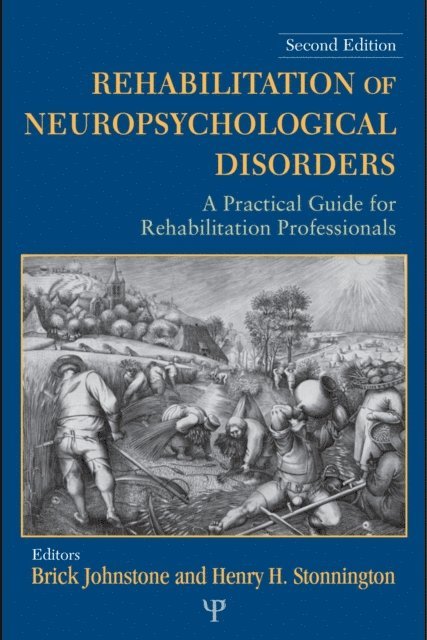
Many contemporary neuropsychology texts focus on neuropathology, the description of specific tests, and the differential diagnosis of central nervous system disorders. However, increasingly sophisticated neuroradiological techniques, managed care factors, and the growth of rehabilitation necessitates that rehabilitation professionals provide more functionally (versus diagnostically) useful evaluations to improve the neuropsychological functioning and community integration of persons with brain injuries or diseases. This book aims to fill this gap and to provide an overview of standard neuropsychological treatment strategies for specific cognitive impairments that are identified on testing. The new edition enhances this goal with three chapters outlining important recommendations, services, and issues for rehabilitation professionals.
Written by a team of experienced scientists and professionals, the volume provides a universal taxonomy of neuropsychological abilities (emphasizing relatively simple terms), with a list of basic rehabilitation strategies to improve impairments identified in general cognitive domains. Specific chapters are included on the neuropsychological remediation of memory, attention, language, visual-spatial skills, and executive function impairments. Each chapter proposes a taxonomy of relatively unitary cognitive constructs (e.g., divided attention, sustained attention, focused attention), lists tests which may be used to assess each cognitive construct, and provides specific rehabilitation strategies to improve or accommodate the identified neuropsychological impairments. The final chapters cover basic resources and issues of which the rehabilitation professional needs to be aware (vocational rehabilitation, disability determination, and guardianship issues).
This new edition provides a wealth of useful information for family members, rehabilitation professionals, and others who work with persons with brain injury in improving the community functioning for those with brain dysfunction. An accompanying website facilitates access to the resources and strategies from the book, allowing the practitioner to cut and paste these recommendations into their clinical reports.
728 kr
Skickas inom 10-15 vardagar
1 482 kr
Tillfälligt slut