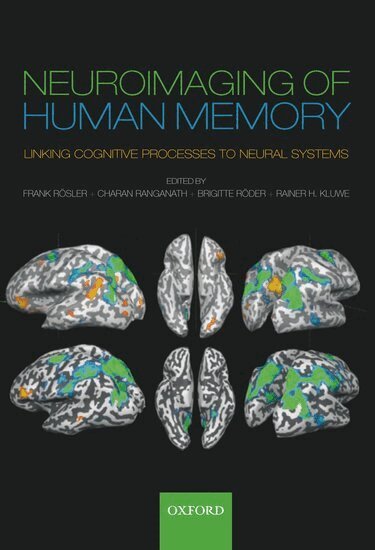
In the past 20 years, neuroimaging has provided us with a wealth of data regarding human memory. However, to what extent can neuroimaging constrain, support or falsify psychological theories of memory? To what degree is research on the biological bases of memory actually guided by psychological theory?In looking at the close interaction between neuroimaging research and psychological theories of human memory, this book presents a state-of-the-art exploration of imaging research on human memory, along with accounts of the significance of these findings with regard to fundamental psychological questions. The book starts with a summary of some of the conceptual problems we face in understanding neuroimaging data. It then looks at the four areas of human memory research that have been most intensively studied with modern brain imaging tools - Learning and consolidation, Working memory control processes and storage, Long-term memory representations, and Retrieval control processes. Throughout, the book shows how brain imaging methods, such as functional magnetic resonance imaging (fMRI) and electroencephalography (EEG), can help us increase our knowledge of how human memory is organized, how memory representations are stored, consolidated and retrieved, and how access to memory contents is controlled. With all chapters written by leading researchers in the field, the book will be essential for all those interested in the psychology and neuroscience of memory.
Die letzten Dekaden des Lebens werden zunehmend aus der verengten Perspektive eines Jugendlichkeitskultes und der Demographiedebatte wahrgenommen und folglich überwiegend negativ konnotiert. Dieser Tendenz setzt der Band die kulturelle Vielfalt des Alter(n)s entgegen: Zwanzig Beiträge aus biologischen, sozialwissenschaftlichen und kulturhistorischen Disziplinen beleuchten das Alter(n) in unterschiedlichsten Kulturen – angefangen bei ur- und frühgeschichtlichen Gemeinschaften über antike Hochkulturen des Mittelmeerraumes bis hin zu den Gesellschaften der Gegenwart. Durch diesen weiten Fokus werden verschiedenartigste historische und soziale Lebenswirklichkeiten alter Menschen präsentiert. Diese schärfen den Blick für die vielfältigen Prozesse, Erfahrungen und Potenziale des Alter(n)s und regen eine Reflexion der aktuellen Altersdiskurse an – die Voraussetzung dafür, Alter(n) anders zu denken. Band zur Tagung „2. Internationales Mainzer Symposium Anthropologie im 21. Jahrhundert zum Thema »Reflexionen zu Alter und Altern in Vergangenheit und Gegenwart. Biologische und kulturelle Perspektiven«“. Das Symposium fand vom 3. bis 5. April 2008 statt.
In the past 20 years, neuroimaging has provided us with a wealth of data regarding human memory. However, to what extent can neuroimaging constrain, support or falsify psychological theories of memory? To what degree is research on the biological bases of memory actually guided by psychological theory?In looking at the close interaction between neuroimaging research and psychological theories of human memory, this book presents a state-of-the-art exploration of imaging research on human memory, along with accounts of the significance of these findings with regard to fundamental psychological questions. The book starts with a summary of some of the conceptual problems we face in understanding neuroimaging data. It then looks at the four areas of human memory research that have been most intensively studied with modern brain imaging tools - Learning and consolidation, Working memory control processes and storage, Long-term memory representations, and Retrieval control processes. Throughout, the book shows how brain imaging methods, such as functional magnetic resonance imaging (fMRI) and electroencephalography (EEG), can help us increase our knowledge of how human memory is organized, how memory representations are stored, consolidated and retrieved, and how access to memory contents is controlled. With all chapters written by leading researchers in the field, the book will be essential for all those interested in the psychology and neuroscience of memory.
Die letzten Dekaden des Lebens werden zunehmend aus der verengten Perspektive eines Jugendlichkeitskultes und der Demographiedebatte wahrgenommen und folglich überwiegend negativ konnotiert. Dieser Tendenz setzt der Band die kulturelle Vielfalt des Alter(n)s entgegen: Zwanzig Beiträge aus biologischen, sozialwissenschaftlichen und kulturhistorischen Disziplinen beleuchten das Alter(n) in unterschiedlichsten Kulturen – angefangen bei ur- und frühgeschichtlichen Gemeinschaften über antike Hochkulturen des Mittelmeerraumes bis hin zu den Gesellschaften der Gegenwart. Durch diesen weiten Fokus werden verschiedenartigste historische und soziale Lebenswirklichkeiten alter Menschen präsentiert. Diese schärfen den Blick für die vielfältigen Prozesse, Erfahrungen und Potenziale des Alter(n)s und regen eine Reflexion der aktuellen Altersdiskurse an – die Voraussetzung dafür, Alter(n) anders zu denken. Band zur Tagung „2. Internationales Mainzer Symposium Anthropologie im 21. Jahrhundert zum Thema »Reflexionen zu Alter und Altern in Vergangenheit und Gegenwart. Biologische und kulturelle Perspektiven«“. Das Symposium fand vom 3. bis 5. April 2008 statt.