Britta C. Jung – författare
Visar alla böcker från författaren Britta C. Jung. Handla med fri frakt och snabb leverans.
4 produkter
4 produkter
E-bok
PDF, Tyska, 2018573 kr
Läs direkt efter köp
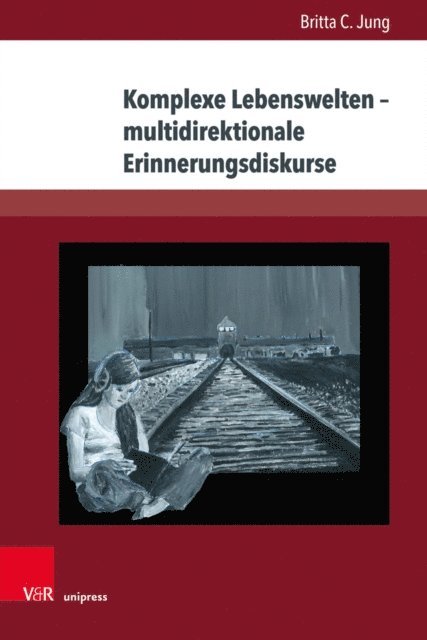
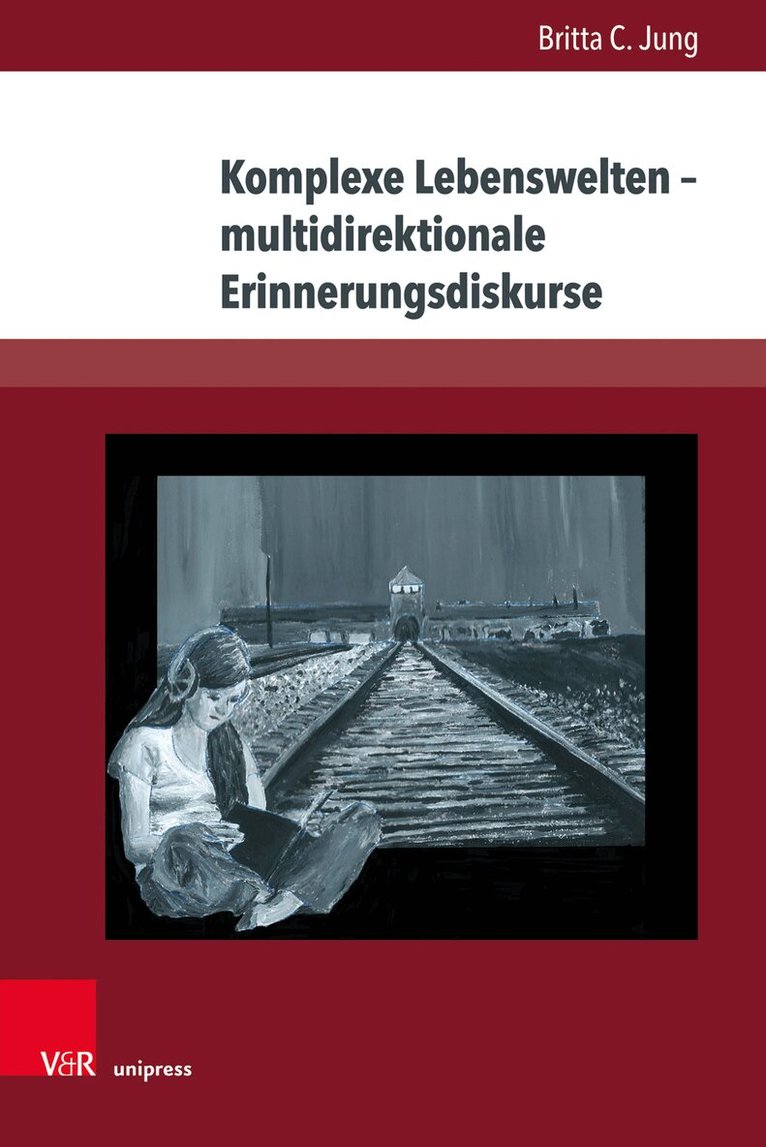
Erinnerung verändert sich – fortwährend. Denn sowohl die persönlichen Erinnerungen eines Individuums wie auch die Erinnerungen einer Gemeinschaft sind ein diskursiver Prozess der Gegenwart, bei dem aus der jeweiligen Gegenwart heraus die Vergangenheit thematisiert und rekonstruiert wird. Die vorliegende Studie untersucht zeitgenössische jugendliterarische Darstellungen des ›Dritten Reichs‹ im Spiegel des postmemorialen Wandels. Die Besonderheit jugendliterarischer Darstellungen liegt zum einen in deren intendierter Leserschaft als dritte und mittlerweile schon vierte Generation im Zentrum des postmemorialen Wandels. Zudem lassen sich jugendliterarische Texte als eine kristallisierte Form (erinnerungs-)kultureller Selbstwahrnehmung und Selbstthematisierung verstehen, die in einem starken Spannungsfeld von erwachsenen und jugendlichen Erinnerungsinteressen, -inhalten und -formen steht und stetig zwischen verschiedenen generationellen Diskursen schwankt. Die Autorin legt die spezifischen Dynamiken des postmemorialen Erinnerns offen und zeigt, wie Jugendbuchautoren die Rolle des ›Dritten Reichs‹ im kulturellen Gedächtnis Deutschlands mithilfe einer transnationalen Perspektive neuverhandeln. Die Analyse spezifischer postmemorialer Darstellungsstrategien erfolgt dabei anhand von vier thematischen Schwerpunkten: Verfolgung und Deportation, Deutscher Alltag und NS-Erziehung, Bombenkrieg und Flucht, sowie Generationskonflikt und Spurensuche.What can we tell and how do we speak with our children about the "Third Reich" today? The author focuses on the remembrance after the end of the era of witnesses, in other words the transition from "memory" to "postmemory". She identifies the specific dynamics of the postmemorial remembrance and depicts how young adult authors, who use a transnational perspective, discuss the role of the "Third Reich" in the cultural memory of Germany. The special thing about young adult literature is that its target readers belong to the third and fourth generation which is centred in the postmemorial transition. The specific postmemorial representation strategies are analysed regarding four key points: persecution and deportation; German daily life and Nazi education; aerial warfare and escape as well as generational conflicts and historical investigations.
889 kr
Läs direkt efter köp
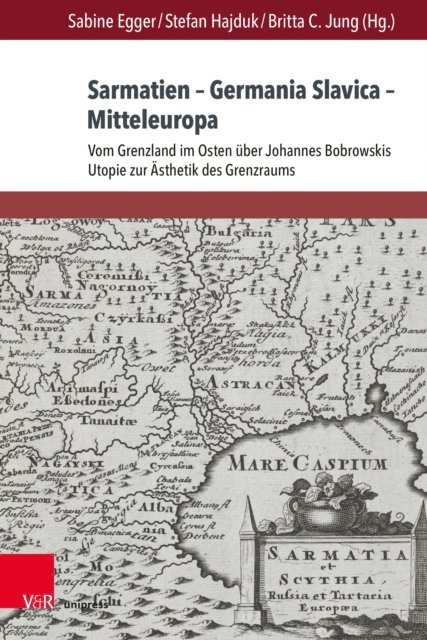
Nach dem Zweiten Weltkrieg entwarf Johannes Bobrowski mit seinem ''Sarmatien'' einen literarischen Raum, der einen überraschend zeitgemäßen Orientierungspunkt für die Diskussion ''östlicher'' europäischer Grenzräume im 20. und 21. Jahrhundert bietet. In der aktuellen Forschung ist eine Infragestellung von Grenzen durch Begriffe wie Liminalität (Turner), dritter Raum (Bhabha) oder Ähnlichkeit (Bhatti) zu beobachten. In den hier versammelten Beiträgen geht es darum, wie Grenzräume in deutschsprachigen literarischen Texten inszeniert, intermedial reflektiert oder dekonstruiert werden, und welche Rolle das innerhalb eines bestimmten Feldes oder Diskurses spielt. Der Vergleich von Werken Musils, Celans, Sebalds oder Trojanows mit Beispielen aus der russischen, kasachischen, polnischen oder tschechischen Literatur (u.a. Babel, Tokarzcuk, Belger) eröffnet komparatistische und interdisziplinäre Perspektiven auf ein über Europa hinausreichendes Panorama literarischer Grenzräume.In the aftermath of WWII, Johannes Bobrowski''s Sarmatia created a poetic borderland space that challenged existing borders in Central and Eastern Europe – and has continued to do so in the 20th and 21st century. Recent scholarship has increasingly begun to question borders by introducing terms such as liminality (Turner), third space (Bhabha), or similarity (Bhatti). Individual chapters in this volume discuss how borderland spaces are staged, intermedially reflected, or deconstructed in German-language literature, and what impact this might have within a particular field or discourse. By comparing works of Musil, Celan, Sebald or Trojanow with Russian, Kazakh, Polish or Czech literature (e.g. Babel, Tokarczuk, Belger), comparative and interdisciplinary perspectives are opened on a vibrant panorama of literary spaces reaching beyond the borders of Europe.»Als wertvollste Leistung des Bandes kann die tiefere Einbindung Bobrowskis und auch des Mitteleuropadiskurses in aktuelle transnationale und interkulturelle Debatten in der Germanistik betrachtet werden.«– aus: Germanistik in Ireland, 16 (2021), S. 247–249 (Yvonne Zivkovic, Universität Graz)»This volume presents a bilingual (German/English) compendium of the diverse and multifaceted depictions of and theoretical deliberations on the topic of borders from the geopolitical to the linguistic. This comprehensive undertaking has a wide sweep covering mostly German-language literary examples from the last 100 years. […] this is a book that can be highly recommended.«– aus: Jahrbuch »Gegenwartsliteratur«, Band 21 (2022), S. 352-354 (Kathleen E. Thorpe, University of the Witwatersrand)»Der Sammelband wird sowohl das Interesse von BOBROWSKI-Expert*innen, Forscher*innen in den Bereichen Geistesgeschichte, deutschsprachiger Kultur und Geschichte Osteuropas erwecken als auch das von Theoretiker*innen literarischer Hybridität und bietet neben detaillierten und nuancierten Textanalysen auch einen äußerst nützlichen Überblick zu relevanten Grenztheorien an.«– aus: Convivium. Germanistisches Jahrbuch Polen (2022), S. 217-220 (Jenny Watson, University of Edinburgh)
Inbunden, Tyska, 2018
715 kr
Skickas inom 11-20 vardagar
Häftad, Engelska, 2022
365 kr
Skickas
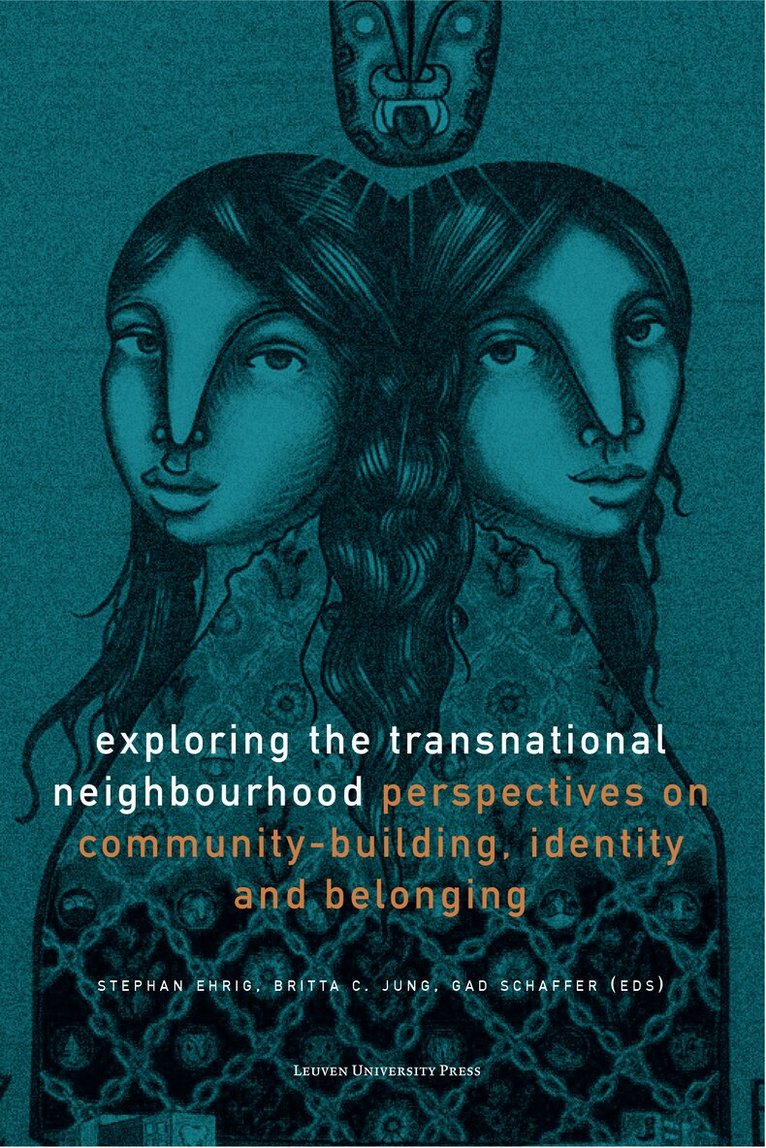
Urban neighbourhoods have come to occupy the public imagination as a litmus test of migration, with some areas hailed as multicultural success stories while others are framed as ghettos. In an attempt to break down this dichotomy, Exploring the Transnational Neighbourhood filters these debates through the lenses of geography, anthropology, and literary and cultural studies. By establishing the interdisciplinary concept of the 'transnational neighbourhood', it presents these localities - whether Clichy-sous-Bois, Belfast, El Segundo Barrio or Williamsburg - as densely packed contact zones where disparate cultures meet in often highly asymmetrical relations, producing a constantly shifting local and cultural knowledge about identity, belonging, and familiarity.Exploring the Transnational Neighbourhood offers a pivotal response to one of the key questions of our time: How do people create a sense of community within an exceedingly globalised context? By focusing on the neighbourhood as a central space of transcultural everyday experience within three different levels of discourse (i.e., the virtual, the physical local, and the transnational-global), the multidisciplinary contributions explore bottom-up practices of community-building alongside cultural, social, economic, and historical barriers. Free ebook available at OAPEN Library, JSTOR, Project Muse, and Open Research LibraryContributors: Christina Horvath (University of Bath), Maria Roca Lizarazu (NUI Galway), Emilio Maceda Rodriguez (Universidad Autonoma de Tlaxcala), Naomi Wells (IMLR, University of London), Anne Fuchs (University College Dublin), Gad Schaffer (Tel-Hai Academic College), Daniela Bohorquez Sheinin (University of Michigan), Anna Marta Marini (Universidad de Alcala), Godela Weiss-Sussex (IMLR, University of London), Britta C. Jung (Maynooth University), Emma Crowley (University of Bristol), Mary Mazzilli (University of Essex)