Brototi Biswas – författare
2 659 kr
Skickas inom 10-15 vardagar
3 160 kr
Läs direkt efter köp
3 160 kr
Läs direkt efter köp
1 616 kr
Skickas inom 10-15 vardagar
1 985 kr
Läs direkt efter köp
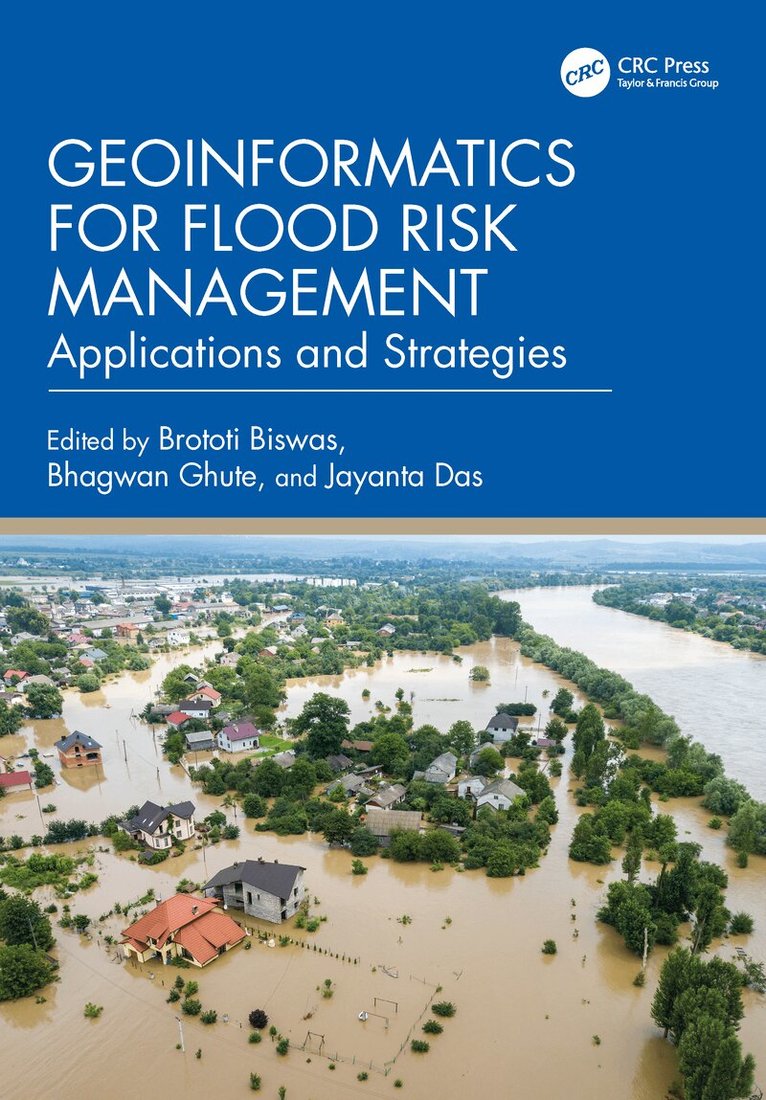
This book examines the nature of flood in different landscapes and the various factors that contribute to flooding in different areas. It identifies flood risk zones in different terrain types and provides valuable insights into the anthropogenic, geographical, hydro-geological, and geomorphological aspects of flood-prone areas to achieve sustainable risk management. The book also explores the impact of avalanches, global warming, and flash floods in different settings where such types of flooding have become more common. In addition, the volume provides case studies to evaluate the impact of flooding in both natural and man-made environments. To better understand and manage floods, the book combines advanced geospatial tools and techniques with indigenous knowledge. Using machine learning and multiple-criteria decision analysis, the book provides an amalgamation of technology and indigenous knowledge to assess flood susceptibility. The book also includes strategies to manage flood risks and case studies that demonstrate best practices in flood risk management. The volume is a valuable resource for researchers, students, and policy makers to understand the causes of floods and their socio-economic impact in different areas.
1 616 kr
Skickas inom 10-15 vardagar
Landslides in the Himalayan Region
Risk Assessment and Mitigation Strategy for Sustainable Management
1 830 kr
Skickas inom 10-15 vardagar
Landslides in the Himalayan Region
Risk Assessment and Mitigation Strategy for Sustainable Management
2 283 kr
Läs direkt efter köp
This book explores a platform for insightful discussions and scientific discourse on various aspects of landslides and their risk management, with insights focused on the Himalayan states at a sub-regional level. A fundamental reference is thus provided for further research not only in landslides but also in associated natural hazards. The book is divided into four major parts, starting from conceptual models in approaching landslide risk, followed by evaluation of risk, management of landslide risk, end-to-end solutions for landslide risk assessment, and a synopsis. Included are topics such as the nature of landslide hazard impact, scale dependency in landslide hazard and risk analysis, and systematic procedures of landslide hazard mapping for risk assessment using spatial prediction models. The book also covers such important aspects as the response of the insurance industry to landslide risk and the role of administrative bodies in landslide risk assessment and sustainable management. Readers gain ample knowledge through case studies regarding the types of landslides in the Himalayan region, which will help them in their future research hypotheses.