Subodh Chandra Pal – författare
Water Resources Monitoring, Management, and Sustainability
Application of Geostatistics and Geospatial Modeling
1 402 kr
Skickas inom 10-15 vardagar
Water Resources Monitoring, Management, and Sustainability: Application of Geostatistics and Geospatial Modeling, Volume 16, a new volume in the Developments in Environmental Science series, introduces a variety of advanced modeling techniques like changing climate and land use/land cover, hydrological models, and machine learning approaches. These techniques are applied to address water resources and environmental monitoring, as well as planning and sustainable management of water resources. Further, the book discusses how to manage water resources at various local, regional, and international levels while incorporating environmental considerations.Finally, it delves into cutting-edge techniques based on open-source software and R statistical programming, Google Earth Engine, and modeling in modern artificial intelligence techniques, with a particular emphasis on recent trends in datamining techniques and robust modeling in water resource crisis-related hazards.
Provides essential information on new methods for managing water resources to minimize the global water crisisIllustrates a geospatial technology approach to datamining techniques, data analysis, modeling, risk assessment and visualization, and management strategies in many elements of natural and societal hazardsIncludes works that address the connection between water, climate change, and the environment1 993 kr
Läs direkt efter köp
1 725 kr
Läs direkt efter köp
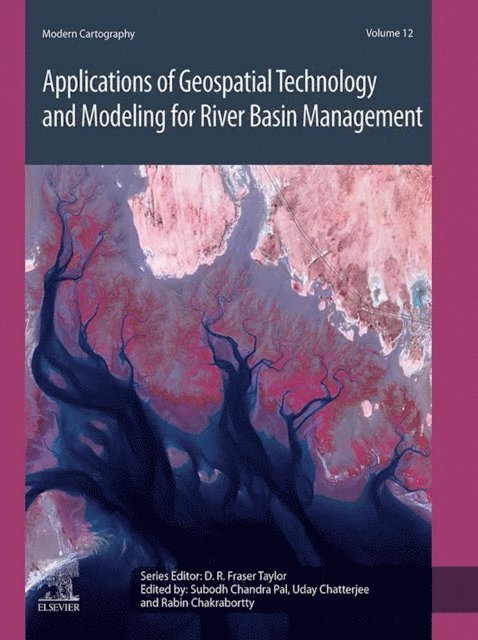
Applications of Geospatial Technology and Modeling for River Basin Management
1 366 kr
Skickas inom 10-15 vardagar
Applications of Geospatial Technology and Modeling for River Basin Management, Volume Twelve covers the use of multi-temporal satellite data for accurate estimations of different watershed features. It includes methods and case studies of the use of geographic information systems (GIS) as a valuable tool for criteria-based spatial analysis to manage natural resources and accurately simulate natural phenomena such as the hydrologic response of a watershed to precipitation and susceptibility to water erosion. The book also provides direction on many types of modelling and mapping techniques in geospatial environments based on river basin management challenges. This book will be a useful guide for academics, researchers, and practitioners involved in the use of geospatial technologies for river basin management, as well as those interested in environmental management and Earth surface geomorphology.
Covers the use of geospatial technologies and modeling for effective management of river basinsIncludes methodology and detailed case studies showing real-world applications at a variety of scalesEmphasizes the importance of integrating geospatial tools in decision-making processes for sustainable water resource management1 619 kr
Skickas inom 10-15 vardagar
1 533 kr
Läs direkt efter köp
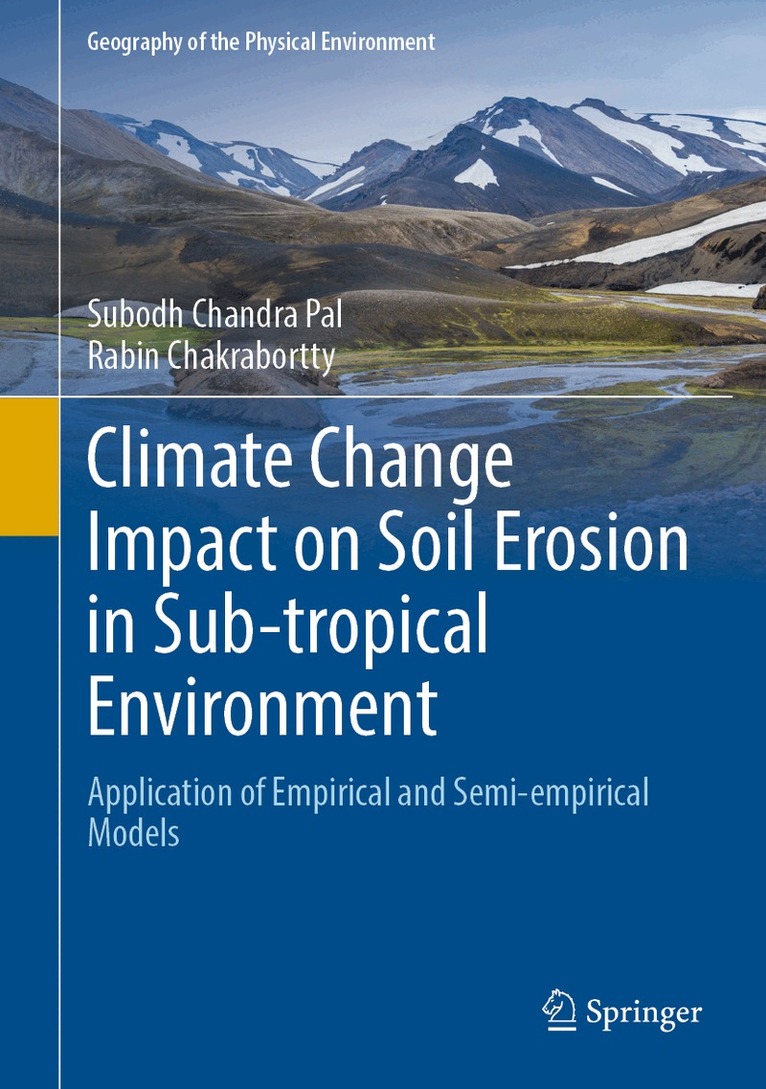
This work focuses on the potential impact of climate change on soil erosion in a monsoon-dominated sub-tropical region. Water-induced soil erosion due to extreme rainfall during the monsoon period is a major problem worldwide, from different environmental and socio-economic perspectives. This study region covered (South Bengal) is one of the fertile agricultural belts that produces a good amount of produce and contributes to the country''s GDP. However, the rate of agricultural output has decreased rapidly in recent times due to a decline in soil fertility.
The monsoon-dominated sub-tropical region has unique characteristics in terms of seasonal temperature fluctuations and the availability of rainfall events. The sub-tropical region is densely populated, with the majority of the population relying on rain-fed agricultural production systems. The declining rate of agricultural production has also established that soil fertility is declining and soil erosion is increasing. Numerous studies show that soil erosion is the major cause of the region''s rapidly increasing trend of land degradation. A homeostatic mechanism cannot replace soil erosion, and a gap arises between soil erosion and regolith formation. Extreme changes in land use and land cover, population growth and the lacking support for traditional agricultural practices and management practices can accelerate the rate of soil erosion and its associated reservoir sedimentation in most countries of the tropical and sub-tropical environment. Quantitative information with maximum possible accuracy through validation regarding soil loss can be an essential part of the appropriate and sustainable soil and water conservation planning. The precise aspects of modern day management strategies are soil erosion susceptibility mapping using empirical and semi-empirical models in a GIS platform or the use of probability statistics.
The main objective of this work is to propose the most suitable developmentstrategies considering the amount of soil erosion for the present and future periods. Extensive field research has been done to identify the support practice factor that the local stakeholders adopt in this region.
1 189 kr
Skickas inom 10-15 vardagar
1 611 kr
Skickas inom 5-8 vardagar
1 985 kr
Läs direkt efter köp
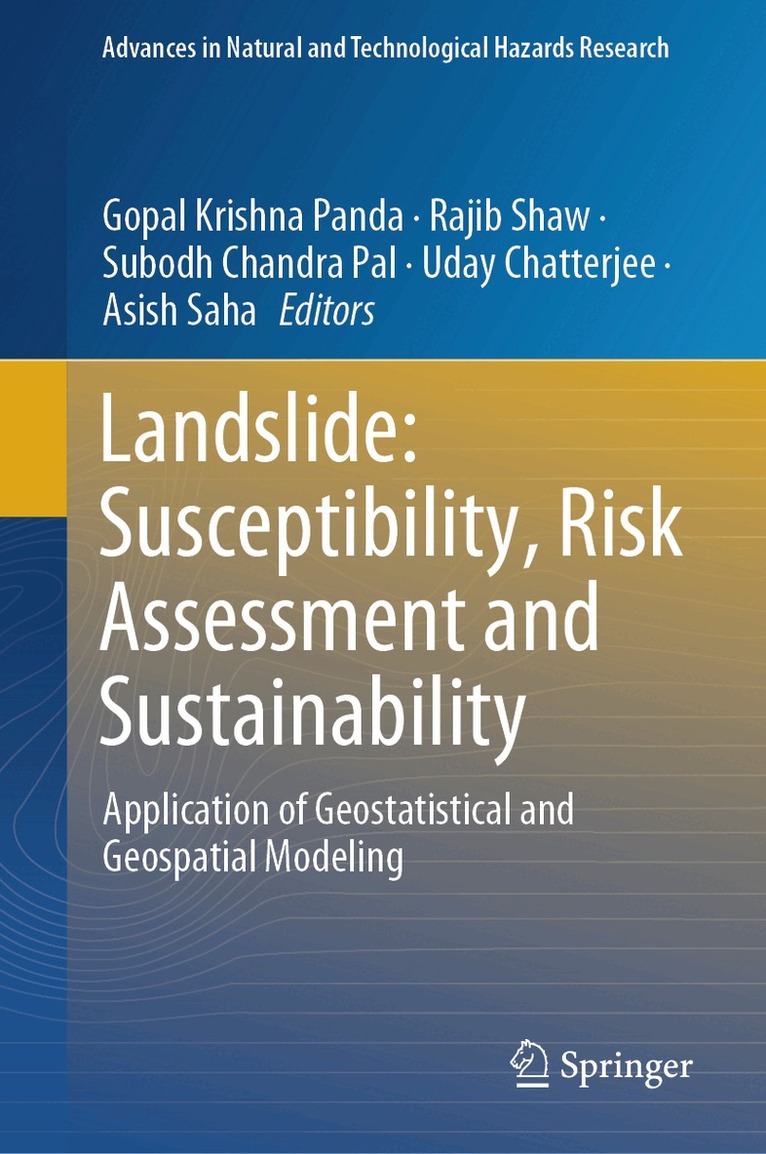
The book illustrates a geospatial and geostatistical approach to data analysis, modeling, risk assessment, and visualization, as well as landslide hazard management in the hilly region. This book investigates cutting-edge methodologies based on open source software and R statistical programming and modeling in current decision-making procedures, with a particular emphasis on recent advances in data mining techniques and robust modeling in torrential rainfall and earthquake induced landslide hazard.
1 619 kr
Skickas inom 10-15 vardagar
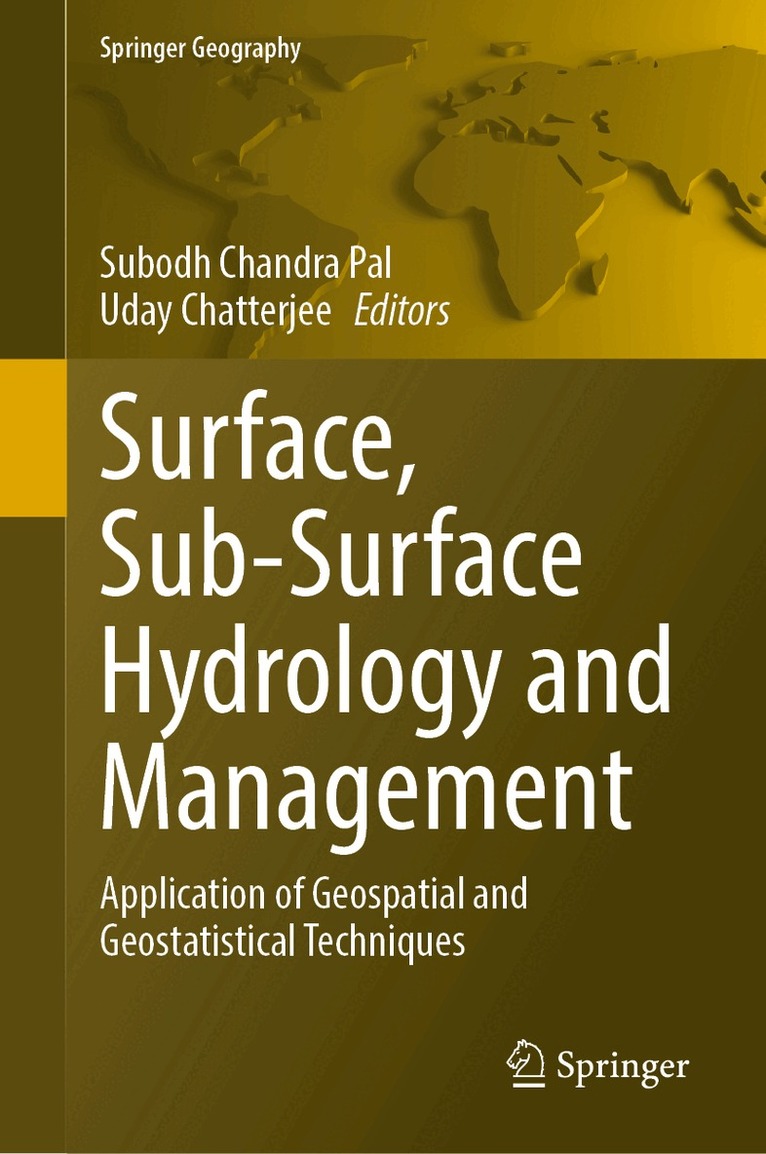
Surface, Sub-Surface Hydrology and Management
Application of Geospatial and Geostatistical Techniques
1 932 kr
Skickas inom 5-8 vardagar
Surface, Sub-Surface Hydrology and Management
Application of Geospatial and Geostatistical Techniques
2 457 kr
Läs direkt efter köp
This book explores the surface and subsurface hydrological conditions and their management in a tropical or sub-tropical setting applying geospatial and geostatistical derived predictive methods. The book is a research of the surface and subsurface hydrological processes as a result of over-exploitation for agricultural production and irrigation, which resulted in a significant drop in water even during pre-monsoon period and a charge up study to control surface and subsurface water scarcity. Recent and expected trends indicate that future water challenges will become more complex. Over-exploitation of groundwater and surface water scarcity are posing an increasing threat to food security and rural livelihood stability. Understanding the features of groundwater and surface water and how they interact with the environment, population, and social aspects is a difficult challenge for researchers, they must provide guidance for sustainable resource management while balancing economic efficiency and ecological health. This book stands out for its focus on using geospatial and geostatistical methods to tackle practical issues. The chapters demonstrate how advanced analytical tools can be used to extract useful insights from complex hydrological datasets, such as mapping surface water flow patterns and delineating groundwater contamination plumes. Additionally, including case studies from various geographic areas offers readers a worldwide view on hydrological challenges and approaches to managing them. This book acts as a catalyst for more research and dialogue in the areas of Environmental Sciences, Geography, Hydrology, Natural Hazards, Geospatial Sciences, Remote Sensing & GIS, Agriculture, Crop-Science, Forestry, Soil Science, Agronomy, Humanistic & Social Sciences, etc., promoting organization in the field of surface and sub-surface hydrology. We aim to advance scientific knowledge and promote sustainable water resource management by combining expertise from various disciplines and highlighting the potential of geospatial and geostatistical techniques.
Surface, Sub-Surface Hydrology and Management
Application of Geospatial and Geostatistical Techniques
1 941 kr
Skickas inom 10-15 vardagar
2 681 kr
Skickas inom 5-8 vardagar
3 351 kr
Läs direkt efter köp
This book offers a geospatial technology approach to data mining techniques, data analysis, modeling, risk assessment, and visualization, as well as management strategies in many elements of river basin risks. This book investigates cutting-edge techniques based on open source software and R statistical programming Google Earth Engine and modeling in modern artificial intelligence techniques, with a particular emphasis on recent trends in data mining techniques and robust modeling in river basin management. It includes significant issues such as geomorphological hazards, climate change, catastrophic natural disasters, meteorological and agricultural drought monitoring, landslides or mudslides (mudflow), floods and flash floods, soil erosion, and land degradation. This book''s contents are of interest to earth and environmental scientists, professionals, and policymakers. The book examines spatial modeling, risk evaluation of a drainage basin in the domain of environmental and social issues, management, and associated research. Due to poorly understood climate change and unclear man-made activity, there are several problems and uncertainties in studying earth''s environmental circumstances, making it exceedingly difficult to analyze and make knowledgeable judgments. Many difficulties, on the other hand, are caused by mismanagement of present and future land, water, and forestry resources. It is also critical to use new technology and methods to improve and reinforce environmental protection. The link between the three devices, namely remote sensing (RS), GIS, and the R programming interface, is acknowledged in this respect. Land conservation measures, soil and water quality control, and new rules should all rely on correct measurements and predictions, and three technologies (RS, GIS, and R) and open access quantitative forecasting methodologies help with climate change and better management regulations. Nonetheless, this book serves as a feasible framework for studying current breakthroughs in geospatial artificial intelligence technologies and their relevance to the planet''s environmental and socioeconomic concerns in a single volume.
2 694 kr
Skickas inom 10-15 vardagar
Climate Change: Conflict and Resilience in the Age of Anthropocene
2 371 kr
Skickas inom 10-15 vardagar
3 046 kr
Läs direkt efter köp
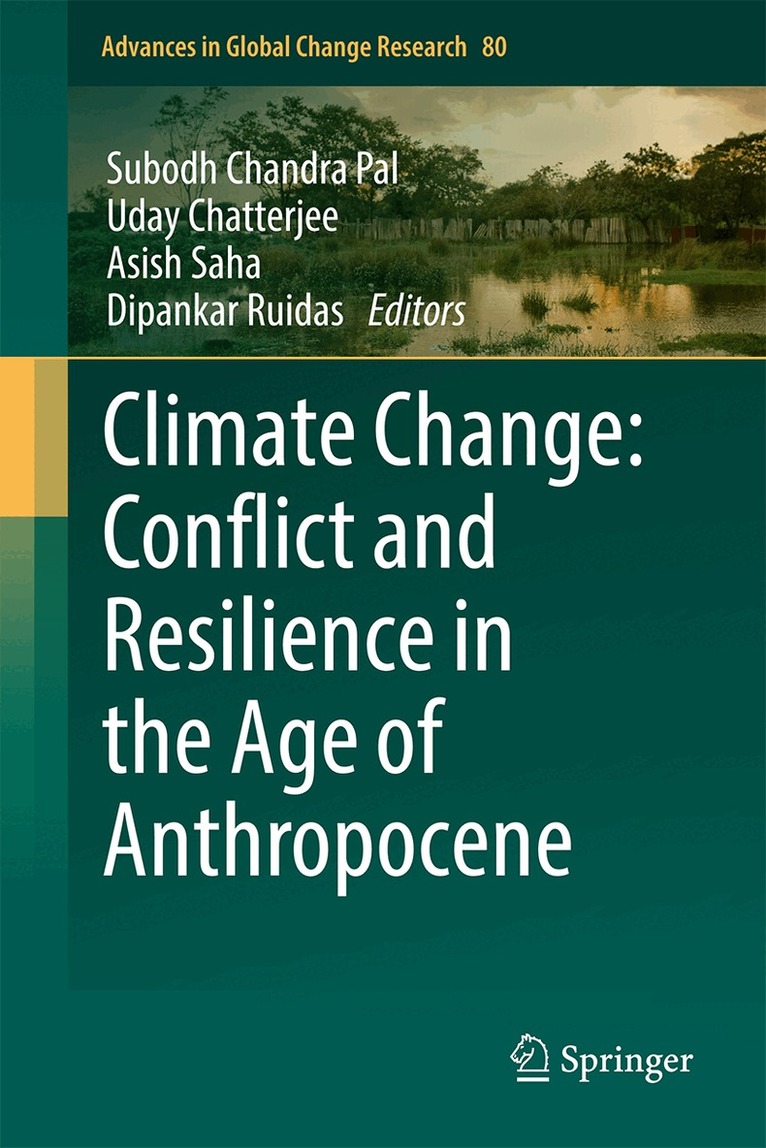
This book illustrates a geospatial technology approach to data mining techniques, data analysis, modelling, risk assessment and visualization and management strategies in many elements of natural and societal hazards. This book delves into cutting-edge techniques based on open-source software and R statistical programming, Google Earth Engine and modelling in modern artificial intelligence techniques, with a particular emphasis on recent trends in data mining techniques and robust modelling in water resource crisis-related hazards. Furthermore, this book also discusses how to manage water resources at various local, regional and international levels while incorporating environmental considerations. This book contains works that address the connection between climate change, extreme events and resilience. These works include those that identify and evaluate policies, quantify the effects of public interventions, climate change on extreme events, describe the decision-making process and its role in modelling for resilience. This book''s subjects be of interest to earth and environmental scientists, professionals and authorities. This book focuses at geospatial modelling and climate change management. A relationship between three technologies, including remote sensing (RS), geographic information systems (GIS) and the R programming environment, is acknowledged as particularly effective in this regard. This book, on the other hand, serves as a practical guide to identify the most recent breakthroughs in geospatial and geostatistical approaches and their application in the field of subsurface water-induced hazards throughout the world.
This book is specifically designed to serve the community of Undergraduates, Postgraduates and Researchers, Policymakers, Environmentalists, Natural Hazards and Disasters Management, NGOs, Corporate Sectors, Social Scientists, and Government Organizations in the fields of Environmental Sciences, Geography, Hydrology, Natural Hazards, Geospatial Sciences, Remote Sensing & GIS, Agriculture, Crop-Science, Forestry, Soil Science, Agronomy, Humanistic & Social Sciences and so on.
Climate Change: Conflict and Resilience in the Age of Anthropocene
2 371 kr
Skickas inom 10-15 vardagar
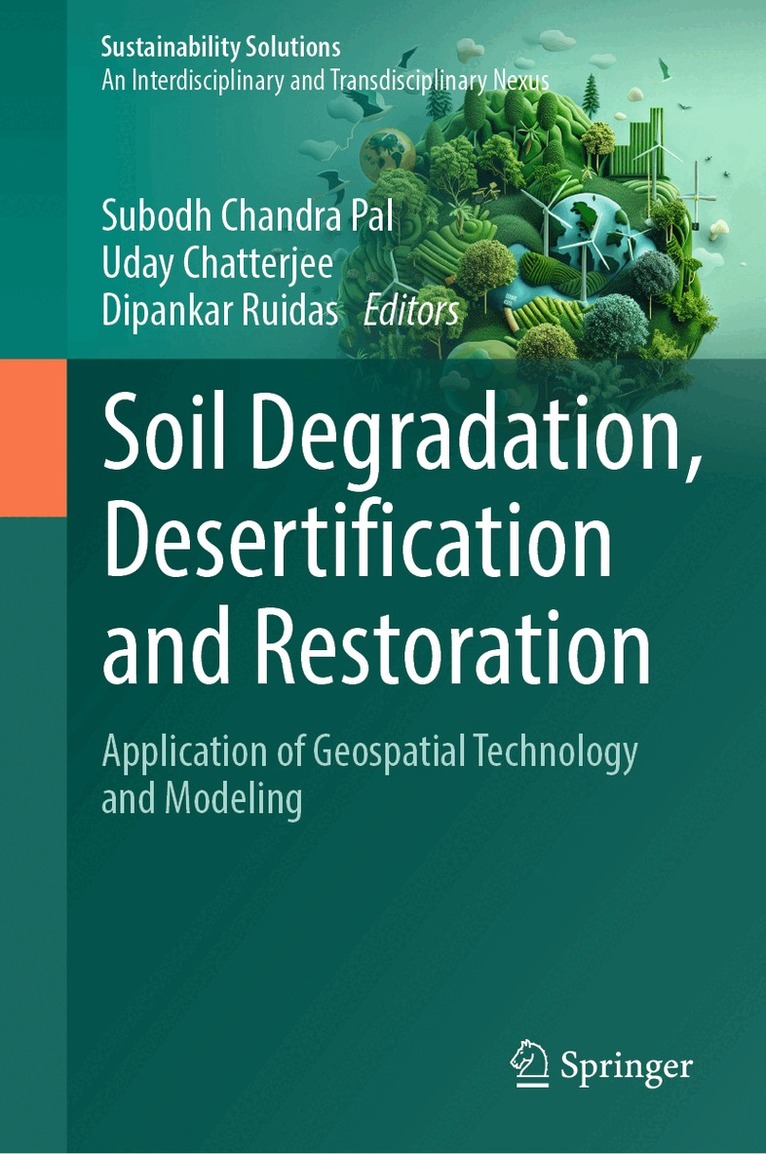
Soil Degradation, Desertification and Restoration
Application of Geospatial Technology and Modeling
2 156 kr
Skickas inom 10-15 vardagar
2 765 kr
Läs direkt efter köp
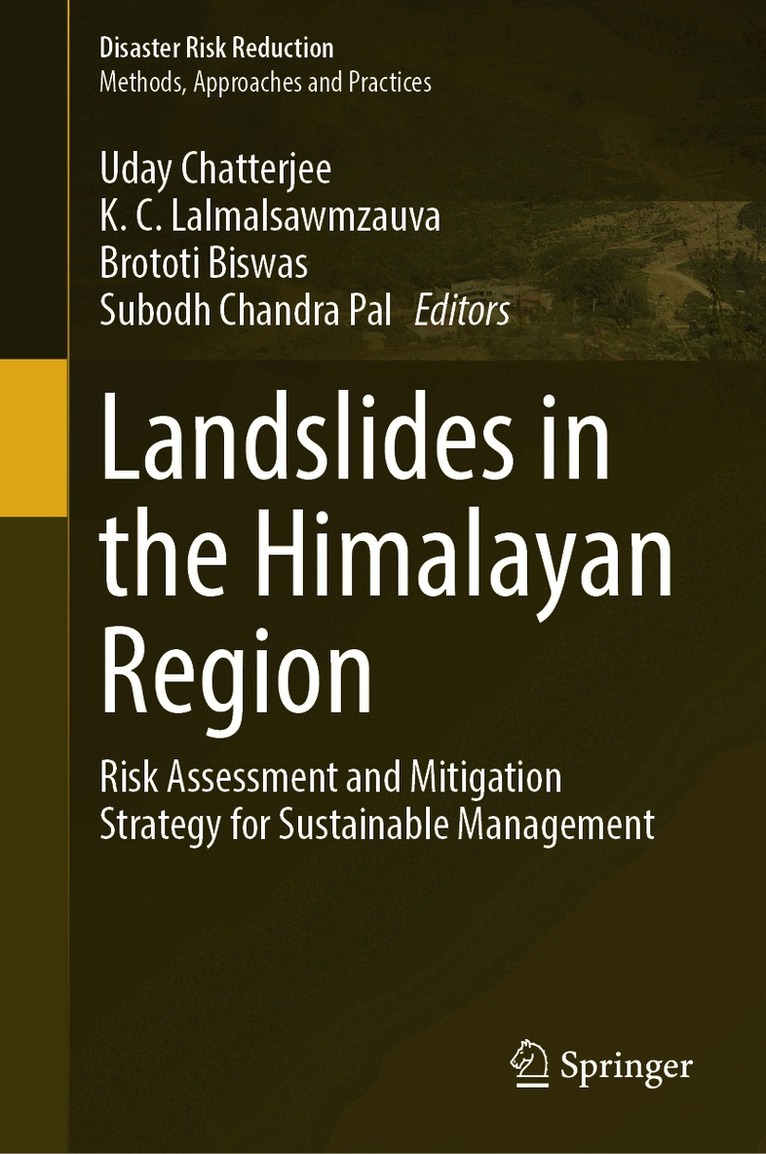
Landslides in the Himalayan Region
Risk Assessment and Mitigation Strategy for Sustainable Management
1 819 kr
Skickas inom 10-15 vardagar
Landslides in the Himalayan Region
Risk Assessment and Mitigation Strategy for Sustainable Management
2 283 kr
Läs direkt efter köp
This book explores a platform for insightful discussions and scientific discourse on various aspects of landslides and their risk management, with insights focused on the Himalayan states at a sub-regional level. A fundamental reference is thus provided for further research not only in landslides but also in associated natural hazards. The book is divided into four major parts, starting from conceptual models in approaching landslide risk, followed by evaluation of risk, management of landslide risk, end-to-end solutions for landslide risk assessment, and a synopsis. Included are topics such as the nature of landslide hazard impact, scale dependency in landslide hazard and risk analysis, and systematic procedures of landslide hazard mapping for risk assessment using spatial prediction models. The book also covers such important aspects as the response of the insurance industry to landslide risk and the role of administrative bodies in landslide risk assessment and sustainable management. Readers gain ample knowledge through case studies regarding the types of landslides in the Himalayan region, which will help them in their future research hypotheses.