Bruce A. Rosenberg - Böcker
Visar alla böcker från författaren Bruce A. Rosenberg. Handla med fri frakt och snabb leverans.
4 produkter
4 produkter
338 kr
Skickas inom 10-15 vardagar
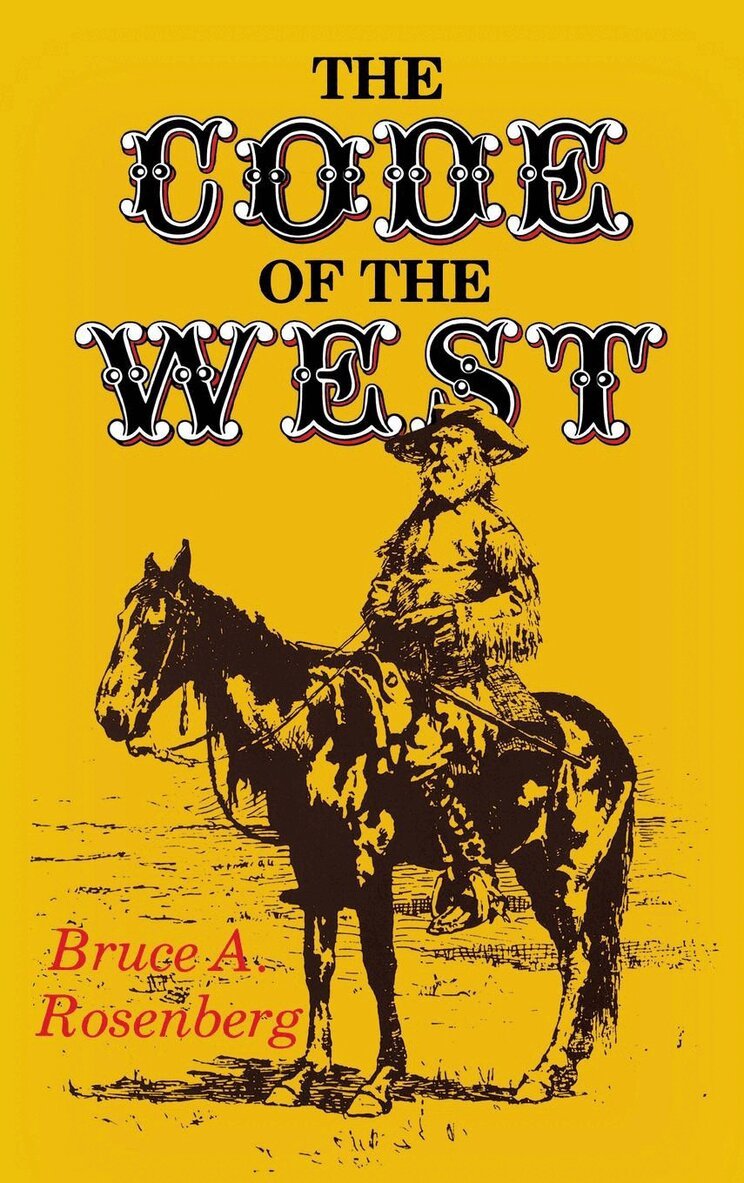
Jesse James, General Custer, and Casey Jones. The Pony Express, The Momon handcart odyssey to Zion. The Forty-Niners pick-and-shovel pilgrimage to Mammon. These are the colorful stuff of Western American folklore, part of an original and vital heritage passed on through songs, tales, and dime novels in the last century, and movies, advertising, and television serials in our own. In The Code of the West folklorist Bruce Rosenberg takes a look at some of the most durable legends of frontier days, explores the origins of their popularity, and deciphers the messages—or code—they communicate. What emerges is a fuller understanding of American culture as a whole, for Rosenberg shows us that American attitudes toward the West have always been linked to the hopes, ideals, and aspirations of the nation.
718 kr
Skickas inom 5-8 vardagar
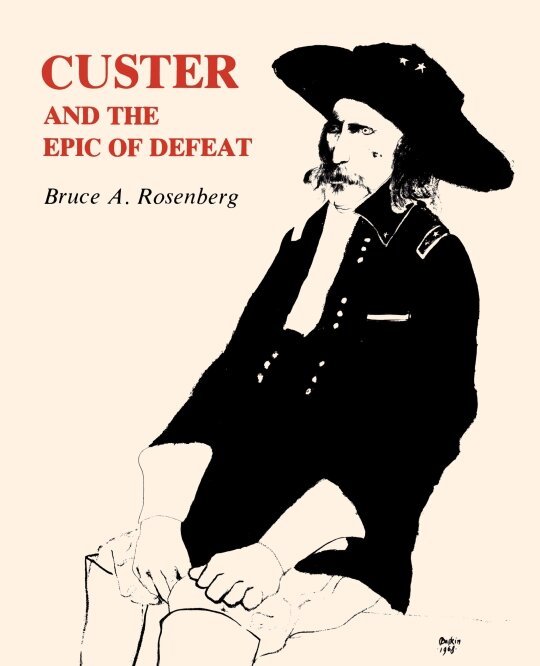
This exploration of the making of a legend compares the actual events surrounding duster's defeat with the imaginative account of the "Last Stand" as it developed in American folklore. The battle of the Little Big Horn is then compared with other great “epics of defeat” in terms of both the similarities of the narratives and the known facts about them. The other epic stories include the Biblical account of Saul and his losing struggle against the Philistines, Leonidas's defense of the pass at Thermopylae, the death of Roland in the Chanson de Roland, the Morte Arthure, and similar stories of great "losers" from Scandinavia, Serbia, England, and the Alamo.The interaction between literary and oral folk versions is explicated both for Custer and for his counterparts in other cultures. Custer's defeat was celebrated by writers of various stripes including dime novelist Frederick Whittaker, poets Longfellow and Whitman, and by painters of all shades of talent. The other epics have also been treated in both high culture and popular culture forms. Certain aspects of the folk variants of the legend of the defeated hero are shown to exist in legends and anecdotes about such other charismatic figures as Presidents Lincoln and Kennedy.Finally, the book reinterprets several epics in the light of these new findings. And it goes on to argue that the legend-making process is one of the fundamental processes of the human imagination—the dramatization of all reality. Custer is thus seen as one with many national heroes whose popularity persists despite all the known facts which seem to deflate them.Custer and the Epic of Defeat is illustrated with realistic as well as fanciful portraits of the heroes discussed, with photographs of several "last stand" sites from the Little Big Horn to Mt. Gilboa, and with battle maps.
1 160 kr
Skickas inom 10-15 vardagar
John Andre was captured in September 1780, outside British lines, and was hanged as a spy. Forty years later, he was still so highly regarded that, in 1821, his body was exhumed and reburied in the Heroes' Corner of Westminster Abbey. This book argues that James Fenimore Cooper's second novel, The Spy, is an examination of the nature and character of clandestinity in which the author investigates the morality of deceit and disguised intentions in normal life as well as in wartime by using the Andre affair as background. A century later, The Spy was undiscovered by British spy novelists. The publication date of The Spy (1821--the year of Andre's reinterment) further suggests that this affair is really the impetus for Cooper's examination of the nature of spying. Cooper is usually acknowledged as the originator of the Western; one of the assertions of this book is that he is also the first spy novelist.
1 160 kr
Skickas inom 10-15 vardagar
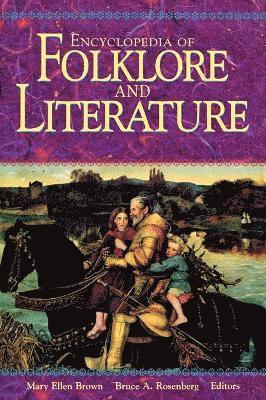
This work is an award winning compendium of authors, concepts, motifs, characters, themes, works, and movements associated with folklore and literature from around the world.Long before the written word existed, humans expressed themselves by telling stories. Handed down through centuries, these stories were woven into the tapestry of everyday life. For close to three centuries, folklore has inspired adaptations to film, operas, ballets, short stories, novels, and poetry. Its no surprise, then, that many folklore scholars consider folklore as original literature—existing before written literature. Most folklorists seem to share the belief that folklore, whether drawn from oral observation or from the written record, is a rich cultural resource that is readily available to creative writers and other artists.The Encyclopedia of Folklore and Literature introduces readers to a selection of authors, characters, themes, works, and movements associated with folklore and literature from around the world. This authoritative work also includes cross-references, an informative introduction, a bibliography, and an index. Students, librarians, and folklore and literary scholars and researchers will welcome this encyclopedia as an essential addition to any reference collection.