Bruce E. Baker - Böcker
Visar alla böcker från författaren Bruce E. Baker. Handla med fri frakt och snabb leverans.
10 produkter
10 produkter
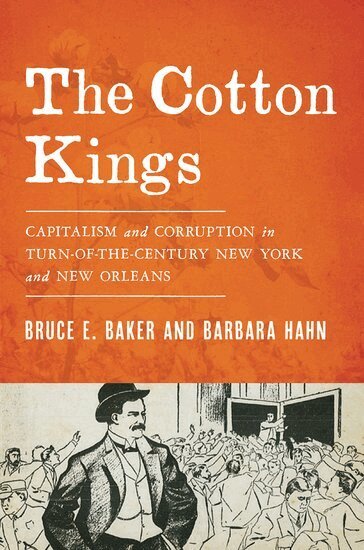
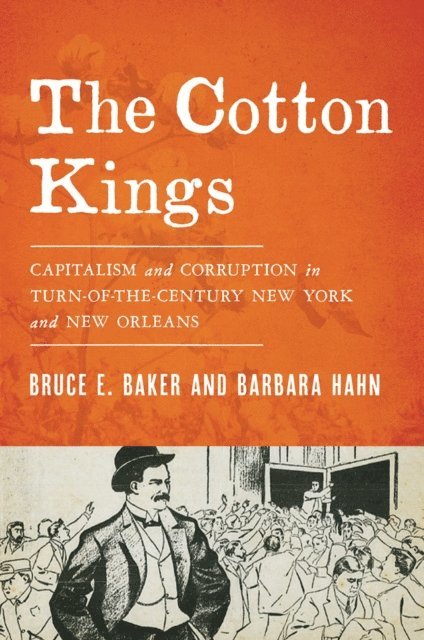
The Cotton Kings
Capitalism and Corruption in Turn-of-the-Century New York and New Orleans
Inbunden, Engelska, 2016
525 kr
Skickas inom 3-6 vardagar
The Cotton Kings relates a rip-roaring drama of competition in the marketplace and reveals the damage markets can cause when they do not work properly. It also explains how they can be fixed through careful regulation. At the turn of the twentieth century, cotton was still the major agricultural product of the American South and an important commodity for world industry. Key to marketing cotton were futures contracts, traded at exchanges in New York and New Orleans. Futures contracts had the potential to hedge risk and reduce price volatility, but only if the markets in which they were traded worked properly. Increasing corruption on the powerful New York Cotton Exchange pushed prices steadily downwards in the 1890s, impoverishing millions of cotton farmers. The U.S. Department of Agriculture tried to solve the problem with better crop predictions and market information, shared equally and simultaneously with all participants, but these efforts failed.To fight the cotton market's corruption, cotton brokers in New Orleans, led by William P. Brown and Frank Hayne, began quietly to assemble resources. They triumphed in the summer of 1903, when they cornered the world market in cotton and raised its price to reflect the reality of increasing demand and struggling supply. The brokers' success pushed up the price of cotton for the next ten years. However, the structural problems of self-regulation by market participants still threatened the cotton trade. More corruption at the New York Cotton Exchange appeared, until eventually political pressure inspired the Cotton Futures Act of 1914, the federal government's first successful regulation of a financial derivative.
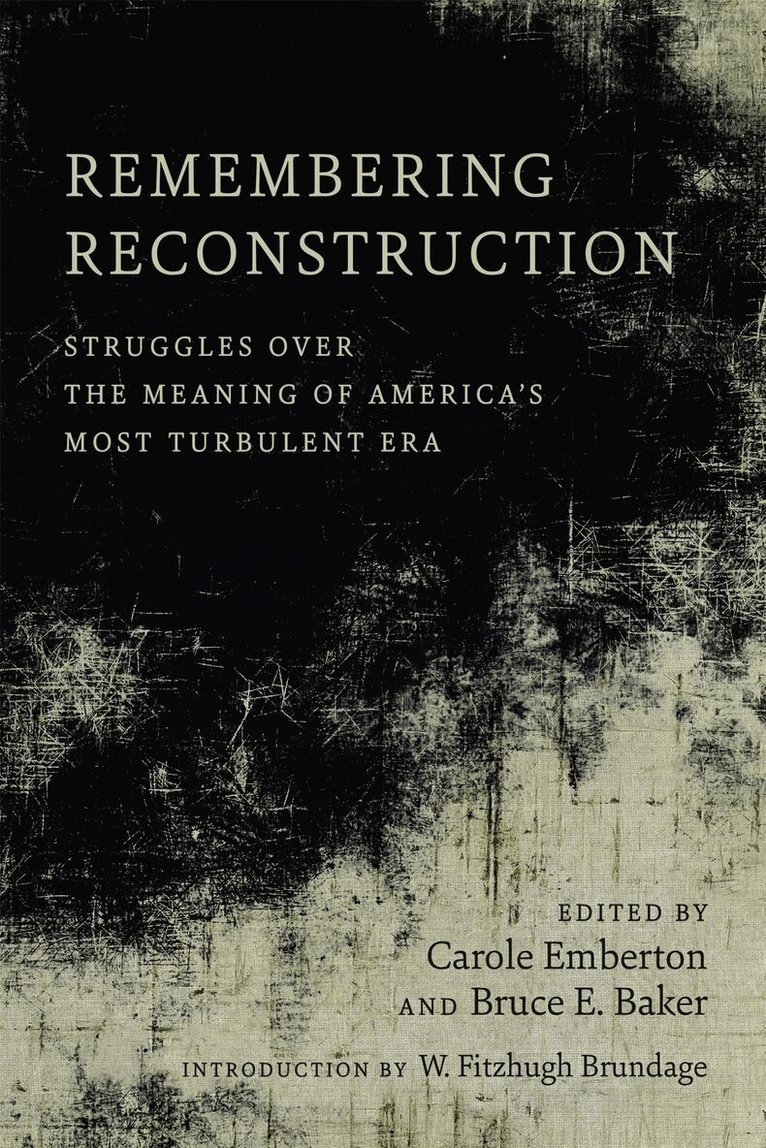
Remembering Reconstruction
Struggles Over the Meaning of America's Most Turbulent Era
Inbunden, Engelska, 2017
553 kr
Skickas inom 7-10 vardagar
Academic studies of the Civil War and historical memory abound, ensuring a deeper understanding of how the war's meaning has shifted over time and the implications of those changes for concepts of race, citizenship, and nationhood. The Reconstruction era, by contrast, has yet to receive similar attention from scholars. Remembering Reconstruction ably fills this void, assembling a prestigious lineup of Reconstruction historians to examine the competing social and historical memories of this pivotal and violent period in American history.Many consider the period from 1863 (beginning with slave emancipation) to 1877 (when the last federal troops were withdrawn from South Carolina and Louisiana) an ""unfinished revolution"" for civil rights, racial-identity formation, and social reform. Despite the cataclysmic aftermath of the war, the memory of Reconstruction in American consciousness and its impact on the country's fraught history of identity, race, and reparation has been largely neglected. The essays in Remembering Reconstruction advance and broaden our perceptions of the complex revisions in the nation's collective memory. Notably, the authors uncover the impetus behind the creation of black counter-memories of Reconstruction and the narrative of the ""tragic era"" that dominated white memory of the period. Furthermore, by questioning how Americans have remembered Reconstruction and how those memories have shaped the nation's social and political history throughout the twentieth century, this volume places memory at the heart of historical inquiry.
450 kr
Skickas inom 10-15 vardagar
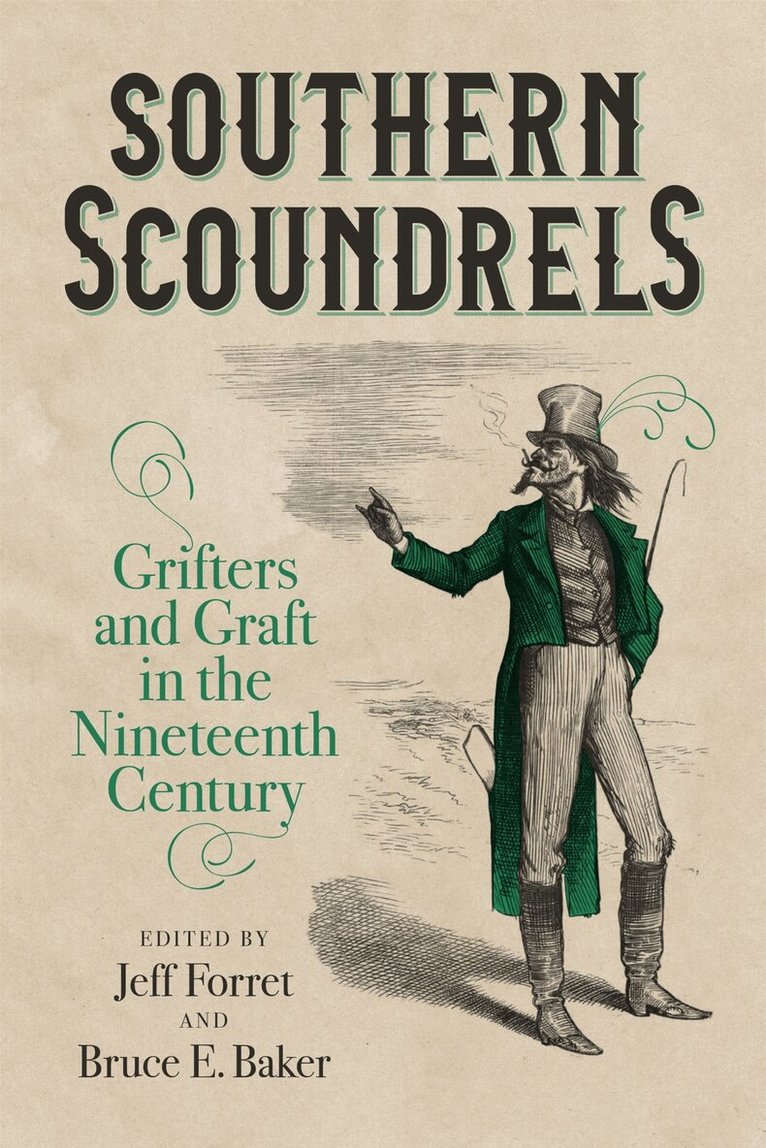
The history of capitalist development in the United States is long, uneven, and overwhelmingly focused on the North. Macroeconomic studies of the South have primarily emphasized the role of the cotton economy in global trading networks. Until now, few in-depth scholarly works have attempted to explain how capitalism in the South took root and functioned in all of its diverse-and duplicitous-forms. Southern Scoundrels explores the lesser-known aspects of the emergence of capitalism in the region: the shady and unscrupulous peddlers, preachers, slave traders, war profiteers, thieves, and marginal men who seized available opportunities to get ahead and, in doing so, left their mark on the southern economy.Eschewing conventional economic theory, this volume features narrative storytelling as engaging and seductive as the cast of shifty characters under examination. Contributors cover the chronological sweep of the nineteenth-century South, from the antebellum era through the tumultuous and chaotic Civil War years, and into Reconstruction and beyond. The geographic scope is equally broad, with essays encompassing the Chesapeake, South Carolina, the Lower Mississippi Valley, Texas, Missouri, and Appalachia. These essays offer a series of social histories on the nineteenth-century southern economy and the changes wrought by capitalist transformation. Tracing that story through the kinds of oily individuals who made it happen, Southern Scoundrels provides fascinating insights into the region's hucksters and its history.
270 kr
Skickas inom 10-15 vardagar
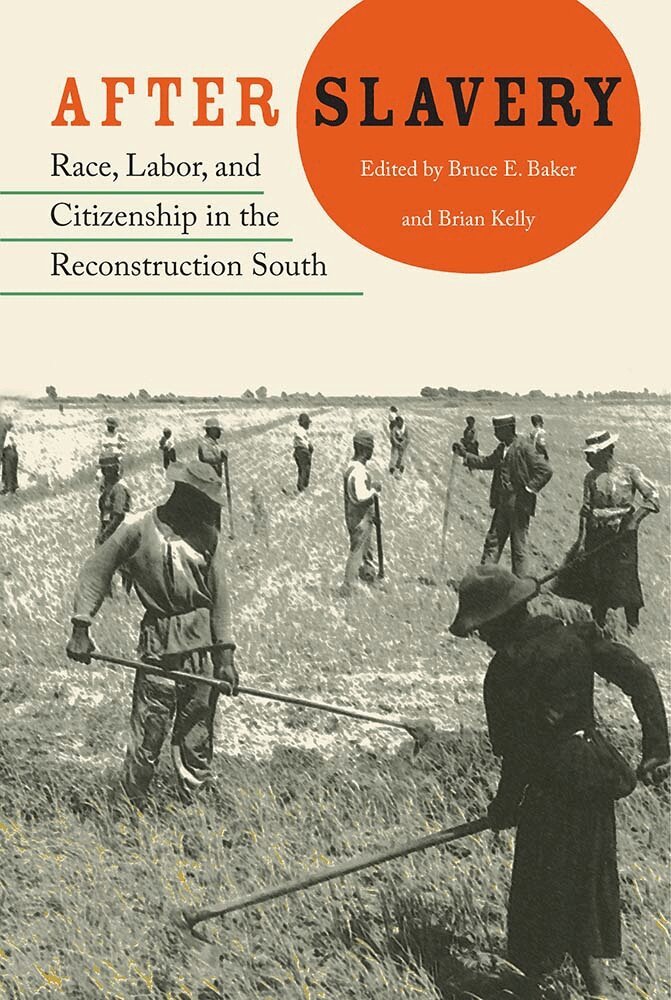
In the popular imagination, freedom for African Americans is often assumed to have been granted and fully realized when Abraham Lincoln issued the Emancipation Proclamation or, at the very least, at the conclusion of the Civil War. In reality, the anxiety felt by newly freed slaves and their allies in the wake of the conflict illustrates a more complicated dynamic: the meaning of freedom was vigorously, often lethally, contested in the aftermath of the war.After Slavery moves beyond broad generalizations concerning black life during Reconstruction in order to address the varied experiences of freed slaves across the South. Urban unrest in New Orleans and Wilmington, North Carolina, loyalty among former slave owners and slaves in Mississippi, armed insurrection along the Georgia coast, and racial violence throughout the region are just some of the topics examined. The essays included here are selected from the best work created for the After Slavery Project, a transatlantic research collaboration. Combined, they offer a diversity of viewpoints on the key issues in Reconstruction historiography and a well-rounded portrait of the era.
519 kr
Skickas inom 10-15 vardagar
A great deal has been written about southern memory centering on the Civil War, particularly the view of the war as a valiant lost cause. In this challenging new book, Bruce Baker looks at a related, and equally important, aspect of southern memory that has been treated by historians only in passing: Reconstruction. ""What Reconstruction Meant"" examines what both white and black South Carolinians thought about the history of Reconstruction and how it shaped the way they lived their lives in the first half of the twentieth century. Baker addresses the dominant white construct of ""the dark days of Reconstruction,"" which was instrumental both in ending Reconstruction and in justifying Jim Crow and the disfranchisement of African Americans in the South, setting the tone for early historians' accounts of Reconstruction. Looking back on the same era, African Americans and their supporters recalled a time of potential and of rights to be regained, inspiring their continuing struggles to change the South. Baker draws on a tremendous range of newspapers, memoirs, correspondence, and published materials, to show the intricate process by which the white-supremacist memory of Reconstruction became important in the 1890s, as segregation and disenfranchisement took hold in the South, and how it began to crumble as the civil rights movement gained momentum. Examining the southern memory of Reconstruction, in all its forms, is an essential element in understanding the society and politics of the twentieth-century South.
266 kr
Skickas inom 7-10 vardagar
A great deal has been written about southern memory centering on the Civil War, particularly the view of the war as a valiant lost cause. In this challenging book Bruce E. Baker looks at a related, and equally important, aspect of southern memory that has been treated by historians only in passing: Reconstruction. He examines what both white and black South Carolinians thought about the history of Reconstruction and how it shaped the way they lived their lives in the first half of the twentieth century. Baker addresses the dominant white construct of 'the dark days of Reconstruction', which was instrumental both in ending Reconstruction and in justifying Jim Crow and the disenfranchisement of African Americans in the South, setting the tone for early historians' accounts of Reconstruction. Looking back on the same era. African Americans and their supporters recalled a time of potential and of rights to be regained, inspiring their continuing struggles to change the South. The author draws on a tremendous range of newspapers, memoirs, correspondence, and published materials to show the intricate process by which the white-supremacist memory of Reconstruction became important in the 1890s as segregation and disenfranchisement took hold in the South, and how it began to crumble as the civil rights movement gained momentum. Examining the southern memory of Reconstruction, in all its forms, is an essential element in understanding the society and politics of the twentieth-century South.
1 177 kr
Skickas inom 10-15 vardagar
Essential Skills for Historians helps undergraduate students make the transition from general university study to a more in-depth study of history, and to gain the skills and techniques they need to conduct an independent research project or embark on a career as a professional historian. The book begins with an examination of the historical discipline and its relevance to contemporary culture. It then guides readers through the steps of developing a research project, using two sample projects that illustrate the connections between core proficiencies such as critical thinking and effective time management, and professional proficiencies such as source criticism and historical interpretation. By following these source projects as they develop, the book also highlights the importance of sound historical practice and a critical understanding of the past in contemporary society. Finally, the book discusses the outcomes of historical research and reveals the wide array of possibilities for careers built upon the skills gained from studying history.Covering key topics such as research strategies, reading sources, effective writing and professional ethics – and with useful features such as glossaries, guidelines for student projects, hands-on exercises, further reading and a companion website containing extra resources – Essential Skills for Historians equips aspiring historians with everything they need to succeed whilst also demonstrating the value of history in the wider world.
365 kr
Skickas inom 10-15 vardagar
Essential Skills for Historians helps undergraduate students make the transition from general university study to a more in-depth study of history, and to gain the skills and techniques they need to conduct an independent research project or embark on a career as a professional historian. The book begins with an examination of the historical discipline and its relevance to contemporary culture. It then guides readers through the steps of developing a research project, using two sample projects that illustrate the connections between core proficiencies such as critical thinking and effective time management, and professional proficiencies such as source criticism and historical interpretation. By following these source projects as they develop, the book also highlights the importance of sound historical practice and a critical understanding of the past in contemporary society. Finally, the book discusses the outcomes of historical research and reveals the wide array of possibilities for careers built upon the skills gained from studying history.Covering key topics such as research strategies, reading sources, effective writing and professional ethics – and with useful features such as glossaries, guidelines for student projects, hands-on exercises, further reading and a companion website containing extra resources – Essential Skills for Historians equips aspiring historians with everything they need to succeed whilst also demonstrating the value of history in the wider world.
330 kr
Skickas inom 10-15 vardagar
In 1904 William Garrott Brown traveled the American South, investigating the region's political, economic, and social conditions. Using the pen name "Stanton," Brown published twenty epistles in the Boston Evening Transcript detailing his observations. The South at Work is a compilation of these newspaper articles, providing a valuable snapshot of the South as it was simultaneously emerging from post-Civil War economic depression and imposing on African Americans the panoply of Jim Crow laws and customs that sought to exclude them from all but the lowest rungs of southern society.A Harvard-educated historian and journalist originally from Alabama, Brown had been commissioned by the Evening Transcript to visit a wide range of locations and to chronicle the region with a greater depth than that of typical travelers' accounts. Some articles featured familiar topics such as a tobacco warehouse in Durham, North Carolina; a textile mill in Columbia, South Carolina; and the vast steel mills at Birmingham. However, Brown also covered atypical enterprises such as citrus farming in Florida, the King Ranch in Texas, and the New Orleans Cotton Exchange. To add perspective, he talked to businessmen and politicians, as well as everyday workers.In addition to describing the importance of diversifying the South's agricultural economy beyond cotton, Brown addressed race relations and the role of politicians such as James K. Vardaman of Mississippi, the growth of African American communities such as Hayti in Durham, and the role universities played in changing the intellectual climate of the South.The editor, Bruce E. Baker, has written an introduction and provided thorough annotations for each of Brown's letters. Baker demonstrates the value of the collection as it touches on racism, moderate progressivism, and accommodation with the political status quo in the South. Baker and Brown's combined work makes The South at Work one of the most detailed and interesting portraits of the region at the beginning of the twentieth century. Publication in book form makes The South at Work conveniently available to students and scholars of modern southern and American history.
970 kr
Skickas inom 10-15 vardagar
This book presents a comprehensive history of lynching and mob violence in North and South Carolina, focusing on seven specific case studies from the region. Lynching marked the violent outer boundaries of race and class relations in the American South between Reconstruction and the civil rights era. Everyday interactions could easily escalate into mob violence, and did so thousands of times. Bruce Baker examines this important aspect of American history by taking seven lynchings in North Carolina and South Carolina and studying them in detail. He succeeds in getting behind the superficial accounts and explanations provided at the time to explain the deeper causes and wider contexts of these events.Many studies of lynching begin only after Reconstruction had ended and African Americans found themselves with little political power. However, this book provides the most thorough study yet written of the Ku Klux Klan's most violent episode - the killing of thirteen black militia members in Union, South Carolina, in 1871 - to argue that this act of mob violence set the conditions in important ways for the entire lynching era.Enmities born in Reconstruction lingered afterwards and lay behind an 1887 lynching in York County, South Carolina. As lynching became an unsurprising part of life in the South, African Americans even found that they could use it themselves, in once case to punish a child's killer and in another to settle a church's factional squabbles. In addition, a variety of forces opposing lynching was rising and by the 1930s their efforts would begin to make a difference.