Bruce R. Powers – författare
Visar alla böcker från författaren Bruce R. Powers. Handla med fri frakt och snabb leverans.
3 produkter
3 produkter
Inbunden, Engelska, 1989
857 kr
Skickas inom 5-8 vardagar
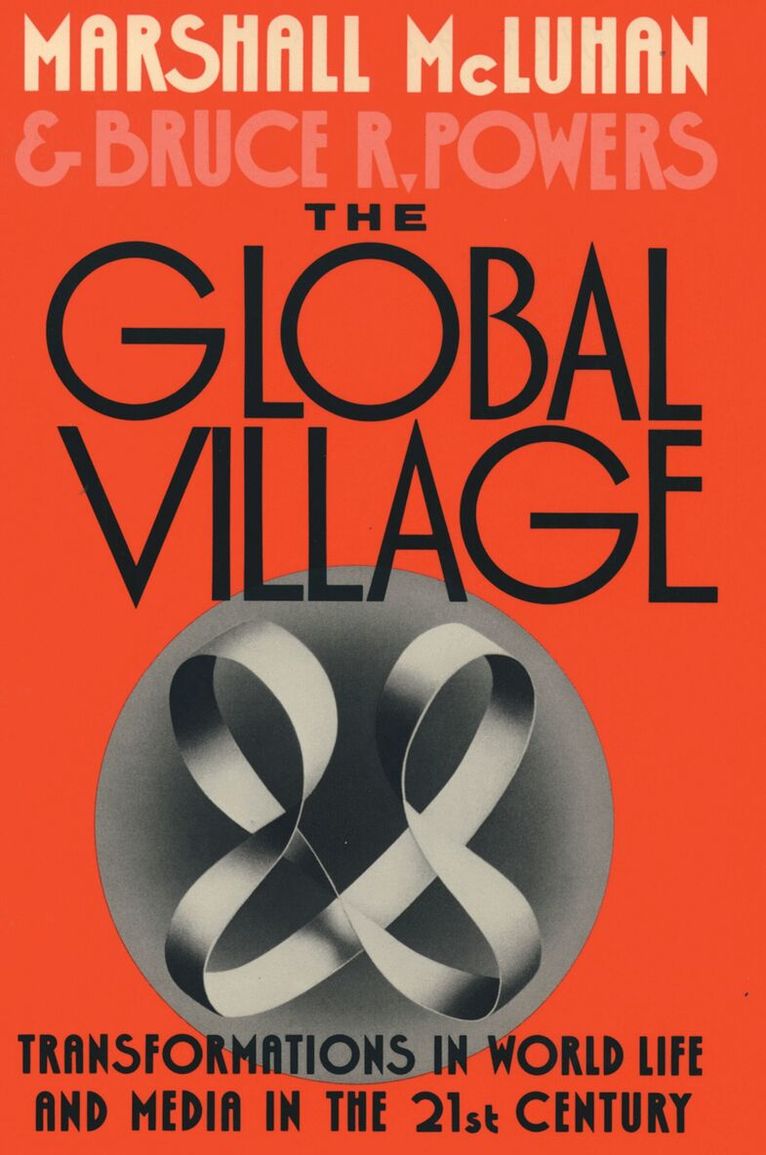
This is Marshall McLuhan's last book, written in collaboration with his longtime friend, Bruce Powers. It updates McLuhan's landmark study, Understanding Media, which was published 25 years ago.^l^l The premise is the distinction between what McLuhan and Powers call Visual Space - or the left-brain, linear, quantitative reasoning tradition of the West beginning with Plato and Aristotle - as against what they call Acoustic Space - right-brain, qualitative, pattern-producing reasoning, the holistic approach of the East. They argue that with the advent of the "global village" - as a result of electronic communications - these two mind sets are "slamming into each other at the speed of light". In their words, "In the last half of the 20th century the East will rush westward and the West will embrace orientalism, all in a desperate attempt to cope with each other, to avoid violence. But the key to peace is to understand both these systems simultaneously".
Häftad, Engelska, 1992
312 kr
Skickas inom 5-8 vardagar
Marshall McLuhan's posthumous The Global Village, co-authored by Bruce Powers, explores the new "laws" of media, "laws" fostering a dramatic collision of viewpoints. The first based on Visual Space - the linear, quantitative mode of perception characteristic of the Western world is preserved by the medium of print. While the second, based on Acoustic Space - the holistic, qualitative reasoning of the East - is being fostered by television, the technologies of the data base, communication satallites, and the globalmedia network.McLuhan and Powers offer the `Tetrad' as a four part structure of analysis for relieving the outcome of this collision. By focusing on four questions - What does this new medium enhance? What does it render obsolete? What does it retrieve that was long ago pushed aside? And what does it produce or become when extended beyond the limits of its potential? - one can postulate the cultural life of an arifact in advance by showing how a total saturated use would produce a reversal of the original intent. For example, money converted into credit cards: the telephone to the omnipresence of teleconferencing; or the high-rise apartment building: enhancing privacy, rendering community obsolete, retrieving the catacombs, and reversing into a slum.McLuhan's insights, his aphorisms, and his legacy as "the man behind the message", make The Global Village excellent reading for anyone interested in the shaping power of communication technology.
E-bok
Spanska, 2020159 kr
Läs direkt efter köp
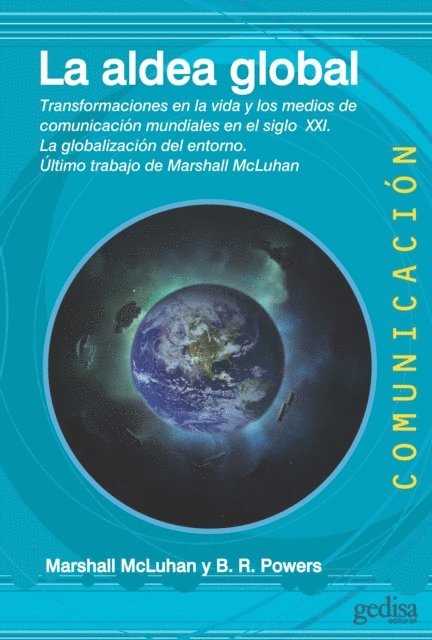
Este libro fue la culminación de los estudios de Marshall McLuhan en relación a la red electrónica universal de finales del s.XX. Cuando McLuhan publicó Understanding Media en 1964, no existían los medios de comunicación tal como los conocemos en la actualidad, ni tal como eran a finales del s.XX. Sin embargo, la tesis de McLuhan sobreque las extensiones tecnológicas de la conciencia humana se adelantaban a nuestra capacidad para las comprender las consecuencias, nunca ha sido tan adecuada. Si el medio es el mensaje, el mensaje se está volviendo casi imposible de descifrar.En La aldea global, McLuhan y Bruce R. Powers proponen un marco conceptual detallado en cuyos términos pueden comprenderse los avances tecnológicos de las tres últimas décadas. Como núcleo desarrollan de su teoría de que los usuarios de la tecnología están condicionados por dos formas distintas de percibir el mundo. Por un lado, está lo que ellos llaman Espacio Visual (la forma de percepción lineal, cuantitativa, característica del mundo occidental); y por el otro, el Espacio Acústico (el razonamiento holístico, cualitativo, de Oriente).Según ellos, los nuevos medios tecnológicos estimulaban el Espacio Acústico y consideraban que la llegada de la globalización no sería gradual y equitativa en todas partes. McLuhan y Powers vuelven en este libro a mostrar que su espíritu visionario con las nuevas tecnologías fue una vez más acertado. Y nos plantean desde el pasado una reflexión interesante sobre los medios actuales.