C. Edmund Bosworth – författare
Visar alla böcker från författaren C. Edmund Bosworth. Handla med fri frakt och snabb leverans.
13 produkter
13 produkter
Inbunden, Engelska, 2001
1 161 kr
Skickas inom 5-8 vardagar
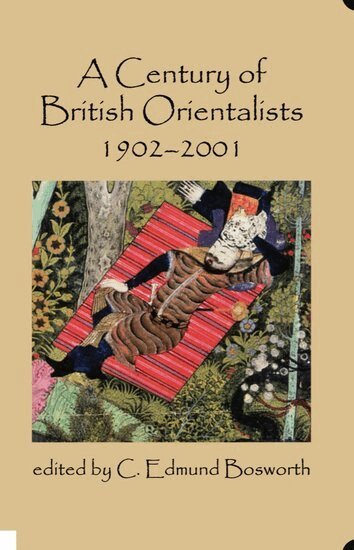
The evolution of Oriental Studies in Britain over the last century is traced in thirteen essays on key figures (twelve of them Fellows of the British Academy). They exemplify the outstanding contribution of British scholars to Oriental scholarship, within the general trend in the West to understand and interpret the civilisations of the East sympathetically.Through the careers and achievements of these influential scholars these essays shed light on studies ranging from Ancient Egyptian and Hebrew, through Arabic, Persian and Turkish, to Indology, Chinese and Japanese.With important changes of methodology and approach to the cultures and religions of Asia, the twentieth century has been an exciting and fruitful period for Oriental Studies in Britain.
Inbunden, Engelska, 2006
2 583 kr
Skickas inom 10-15 vardagar
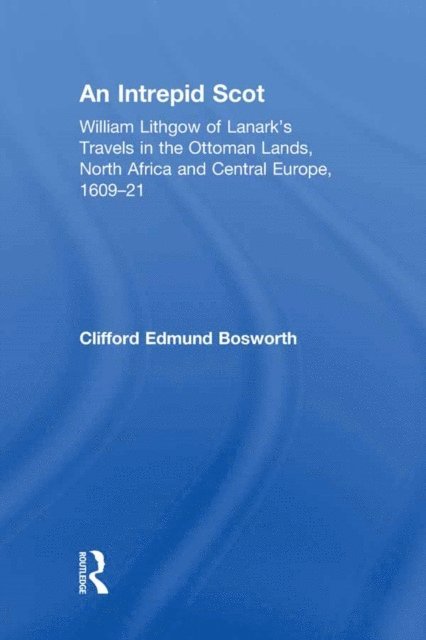
'An Intrepid Scot' makes an important new contribution to the growing literature on the perceptions of the Islamic world and the 'Orient' in early modern Europe, at the same time as illuminating the attitudes of a Protestant from Northern Europe towards the Catholic South. In this book Edmund Bosworth looks at the life and career of William Lithgow, a tough and opinionated Scots Protestant, who had a seemingly insatiable Wanderlust and who managed to survive various misadventures and near-death experiences in the course of his travels. These took him through a dangerously Catholic Southern Europe to a dangerously Muslim Greece and Istanbul en route for his pilgrimage destination of the Holy Land; on another occasion he went through North Africa and returned circuitously via Central and Eastern Europe; but he was stopped in his tracks whilst endeavouring to reach the court of Prester John in Ethiopia, when he fell into the hands of the Spanish Inquisition and narrowly escaped a horrible death. Lithgow was one of several men of his time who journeyed eastwards, some as far as Persia and India, but unlike many others, he has not been the subject of a special study. Bosworth now places him within the context of the present interest in perceptions of the Islamic world and of the 'Orient' and 'Orientals' in early modern Europe. In addition to the entertainment of the travel narrative, the book shows how one Westerner of the time interpreted the alien East for his readers, and how the Ottoman Empire and its apparently unstoppable might both fascinated and struck fear into the hearts of those outside it.
E-bok
PDF, Engelska, 2011481 kr
Läs direkt efter köp
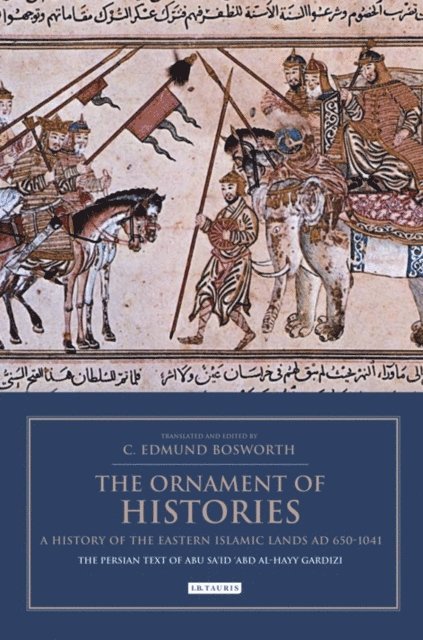
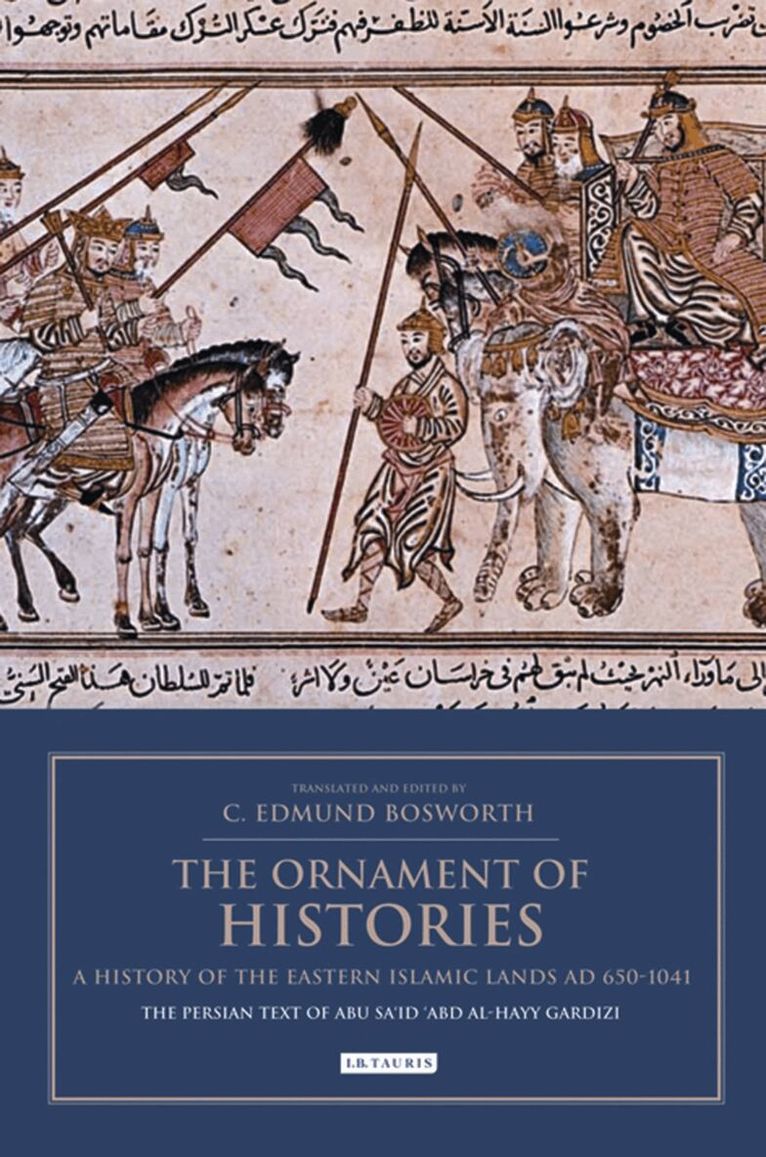
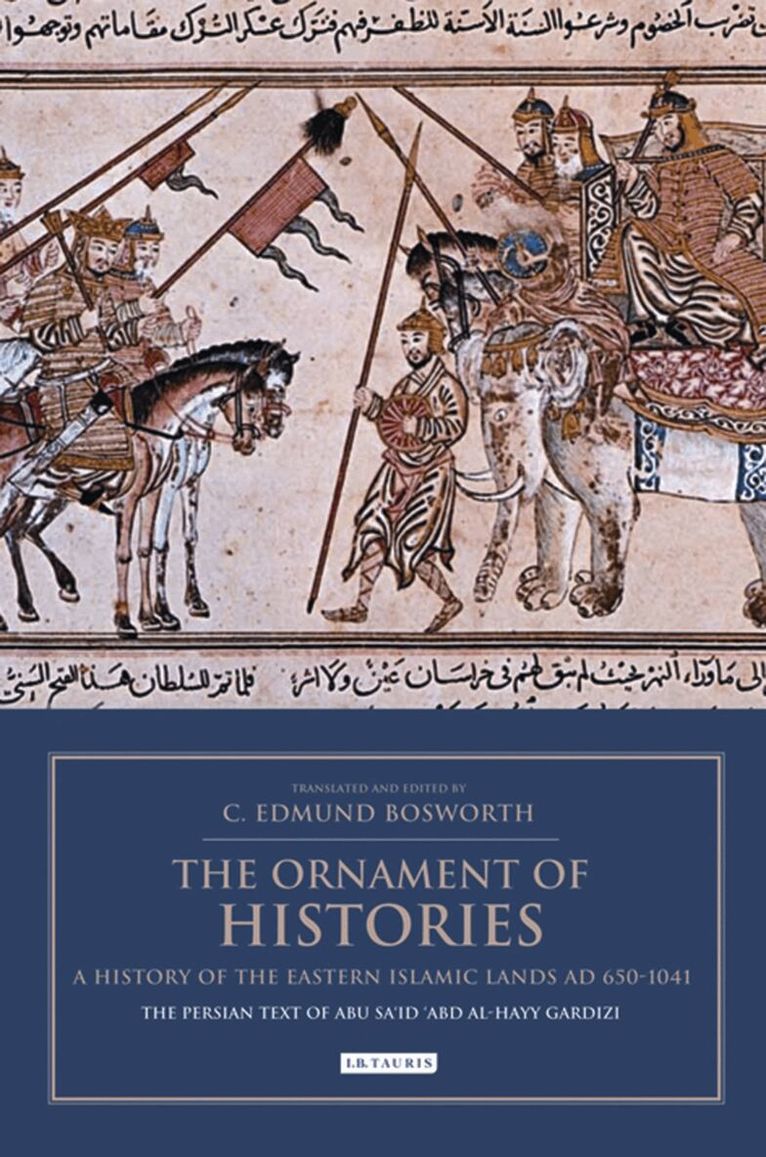
Abu Sa'id 'Abd al-Hayy Gardizi was a Persian author and historian living in the mid-eleventh century at the height of the Turkish Ghazvanid dynasty. His only known work, The Ornament of Histories ('Zayn al-akhbar'), is a hugely ambitious history of the Eastern Islamic lands 650-1041 AD, spanning what is now Eastern Iran, Afghanistan and parts of the Central Asian Republics and Indo-Pakistan subcontinent. Gardizi's text is an extremely rare source of primary information about the rise of Islamic faith, culture and military dominance in these regions, and represents a significant contribution to our understanding of the early Islamic world.Covering the four centuries from the first Arab conquests to his own time, Gardizi's work is a prime source, for some episodes the sole one, for the history of these lands at this time. Thus it is the sole source for events at the end of Sultan Mas'ud's reign, when the Sultan was killed in an army coup, having just lost the whole of the empire's Persian provinces to the incoming Seljuq Turks, and it was the Seljuqs who were now to dominate the central and eastern Islamic lands for a century and a half, almost till the invasion of the Mongols. Writing on the far-eastern fringes of what was then the Eastern Islamic world, in what is now Afghanistan, Gardizi also included important ethnological information on the Turkish tribes of Inner Eurasia and on the religions and philosophies of the Indians. But his prime interest was clearly the Islamic history of his own lands, the eastern Iranian world and its Central Asian and Indian fringes, and here he provides a detailed narrative.This book provides the first translation into a Western language of this history of the formative period of the Eastern Islamic world and gives an explanatory commentary, detailing the historical, geographical and cultural context, and well as the events and colourful characters mentioned in it.
Inbunden, Engelska, 2007
3 394 kr
Skickas inom 10-15 vardagar
This volume brings together a set of key articles, along with a new introduction to contextualize them, on the role of Turkish peoples in the Western Asiatic world up to the 11th century. Such topics as the geographical and environmental original milieux of these peoples in the forest zone and steppelands of Inner Asia, the formation and breakup of tribal confederations within the steppes, and the evolution of tribal structures, are examined as the background for the appearance of Turks within the Islamic caliphate from the 9th century onwards. These came first as military slaves, then as movements of peoples, such as the tribal migrations of the Oghuz, leading to the establishment of the Seljuq sultanate, whilst from within Islamic society, individual Turkish commanders were able at the same time to build up their own military empires such as that of the Ghaznavids. In this way was put in place a Turkish dominance of the northern tier of the Middle East, with attendant changes in demography and land utilisation, which was to last for centuries.
Häftad, Engelska, 2018
771 kr
Skickas inom 10-15 vardagar
'An Intrepid Scot' makes an important new contribution to the growing literature on the perceptions of the Islamic world and the 'Orient' in early modern Europe, at the same time as illuminating the attitudes of a Protestant from Northern Europe towards the Catholic South. In this book Edmund Bosworth looks at the life and career of William Lithgow, a tough and opinionated Scots Protestant, who had a seemingly insatiable Wanderlust and who managed to survive various misadventures and near-death experiences in the course of his travels. These took him through a dangerously Catholic Southern Europe to a dangerously Muslim Greece and Istanbul en route for his pilgrimage destination of the Holy Land; on another occasion he went through North Africa and returned circuitously via Central and Eastern Europe; but he was stopped in his tracks whilst endeavouring to reach the court of Prester John in Ethiopia, when he fell into the hands of the Spanish Inquisition and narrowly escaped a horrible death. Lithgow was one of several men of his time who journeyed eastwards, some as far as Persia and India, but unlike many others, he has not been the subject of a special study. Bosworth now places him within the context of the present interest in perceptions of the Islamic world and of the 'Orient' and 'Orientals' in early modern Europe. In addition to the entertainment of the travel narrative, the book shows how one Westerner of the time interpreted the alien East for his readers, and how the Ottoman Empire and its apparently unstoppable might both fascinated and struck fear into the hearts of those outside it.
E-bok
Engelska, 20173 812 kr
Läs direkt efter köp
This volume brings together a set of key articles, along with a new introduction to contextualize them, on the role of Turkish peoples in the Western Asiatic world up to the 11th century. Such topics as the geographical and environmental original milieux of these peoples in the forest zone and steppelands of Inner Asia, the formation and breakup of tribal confederations within the steppes, and the evolution of tribal structures, are examined as the background for the appearance of Turks within the Islamic caliphate from the 9th century onwards. These came first as military slaves, then as movements of peoples, such as the tribal migrations of the Oghuz, leading to the establishment of the Seljuq sultanate, whilst from within Islamic society, individual Turkish commanders were able at the same time to build up their own military empires such as that of the Ghaznavids. In this way was put in place a Turkish dominance of the northern tier of the Middle East, with attendant changes in demography and land utilisation, which was to last for centuries.
E-bok
PDF, Engelska, 20173 812 kr
Läs direkt efter köp
This volume brings together a set of key articles, along with a new introduction to contextualize them, on the role of Turkish peoples in the Western Asiatic world up to the 11th century. Such topics as the geographical and environmental original milieux of these peoples in the forest zone and steppelands of Inner Asia, the formation and breakup of tribal confederations within the steppes, and the evolution of tribal structures, are examined as the background for the appearance of Turks within the Islamic caliphate from the 9th century onwards. These came first as military slaves, then as movements of peoples, such as the tribal migrations of the Oghuz, leading to the establishment of the Seljuq sultanate, whilst from within Islamic society, individual Turkish commanders were able at the same time to build up their own military empires such as that of the Ghaznavids. In this way was put in place a Turkish dominance of the northern tier of the Middle East, with attendant changes in demography and land utilisation, which was to last for centuries.
E-bok
Engelska, 2017989 kr
Läs direkt efter köp
''An Intrepid Scot'' makes an important new contribution to the growing literature on the perceptions of the Islamic world and the ''Orient'' in early modern Europe, at the same time as illuminating the attitudes of a Protestant from Northern Europe towards the Catholic South. In this book Edmund Bosworth looks at the life and career of William Lithgow, a tough and opinionated Scots Protestant, who had a seemingly insatiable Wanderlust and who managed to survive various misadventures and near-death experiences in the course of his travels. These took him through a dangerously Catholic Southern Europe to a dangerously Muslim Greece and Istanbul en route for his pilgrimage destination of the Holy Land; on another occasion he went through North Africa and returned circuitously via Central and Eastern Europe; but he was stopped in his tracks whilst endeavouring to reach the court of Prester John in Ethiopia, when he fell into the hands of the Spanish Inquisition and narrowly escaped a horrible death. Lithgow was one of several men of his time who journeyed eastwards, some as far as Persia and India, but unlike many others, he has not been the subject of a special study. Bosworth now places him within the context of the present interest in perceptions of the Islamic world and of the ''Orient'' and ''Orientals'' in early modern Europe. In addition to the entertainment of the travel narrative, the book shows how one Westerner of the time interpreted the alien East for his readers, and how the Ottoman Empire and its apparently unstoppable might both fascinated and struck fear into the hearts of those outside it.
E-bok
PDF, Engelska, 2017998 kr
Läs direkt efter köp
''An Intrepid Scot'' makes an important new contribution to the growing literature on the perceptions of the Islamic world and the ''Orient'' in early modern Europe, at the same time as illuminating the attitudes of a Protestant from Northern Europe towards the Catholic South. In this book Edmund Bosworth looks at the life and career of William Lithgow, a tough and opinionated Scots Protestant, who had a seemingly insatiable Wanderlust and who managed to survive various misadventures and near-death experiences in the course of his travels. These took him through a dangerously Catholic Southern Europe to a dangerously Muslim Greece and Istanbul en route for his pilgrimage destination of the Holy Land; on another occasion he went through North Africa and returned circuitously via Central and Eastern Europe; but he was stopped in his tracks whilst endeavouring to reach the court of Prester John in Ethiopia, when he fell into the hands of the Spanish Inquisition and narrowly escaped a horrible death. Lithgow was one of several men of his time who journeyed eastwards, some as far as Persia and India, but unlike many others, he has not been the subject of a special study. Bosworth now places him within the context of the present interest in perceptions of the Islamic world and of the ''Orient'' and ''Orientals'' in early modern Europe. In addition to the entertainment of the travel narrative, the book shows how one Westerner of the time interpreted the alien East for his readers, and how the Ottoman Empire and its apparently unstoppable might both fascinated and struck fear into the hearts of those outside it.
Häftad, Engelska, 2018
457 kr
Skickas inom 10-15 vardagar
Abu Sa'id 'Abd al-Hayy Gardizi was an author and historian living in the mid-eleventh century at the height of the Turkish Ghazvanid dynasty. His only known work, The Ornament of Histories ('Zayn al-akhbir'), is a hugely ambitious history of the Eastern Islamic lands AD 650-1041, spanning what is now Eastern Iran, Afghanistan and parts of the Central Asian Republics and Indo-Pakistan subcontinent. Gardizi's text is an extremely rare source of primary information about the rise of Islamic faith, culture and military dominance in these regions, and represents a significant contribution to our understanding of the early Islamic world. This is the first English translation of the original Persian text, and is accompanied by an introduction and commentary which details the historical, geographical and cultural context.
E-bok
Engelska, 2018481 kr
Läs direkt efter köp
Abu Sa'id 'Abd al-Hayy Gardizi was an author and historian living in the mid-eleventh century at the height of the Turkish Ghazvanid dynasty. His only known work, The Ornament of Histories ('Zayn al-akhbir'), is a hugely ambitious history of the Eastern Islamic lands AD 650-1041, spanning what is now Eastern Iran, Afghanistan and parts of the Central Asian Republics and Indo-Pakistan subcontinent. Gardizi's text is an extremely rare source of primary information about the rise of Islamic faith, culture and military dominance in these regions, and represents a significant contribution to our understanding of the early Islamic world. This is the first English translation of the original Persian text, and is accompanied by an introduction and commentary which details the historical, geographical and cultural context.
Inbunden, Engelska, 2011
1 851 kr
Skickas inom 10-15 vardagar
Abu Sa'id 'Abd al-Hayy Gardizi was an author and historian living in the mid-eleventh century at the height of the Turkish Ghazvanid dynasty. His only known work, "The Ornament of Histories" ("Zayn al-akhbir"), is a hugely ambitious history of the Eastern Islamic lands AD 650-1041, spanning what is now Eastern Iran, Afghanistan and parts of the Central Asian Republics and Indo-Pakistan subcontinent. Gardizi's text is an extremely rare source of primary information about the rise of Islamic faith, culture and military dominance in these regions, and represents a significant contribution to our understanding of the early Islamic world. This is the first English translation of the original Persian text, and is accompanied by an introduction and commentary which details the historical, geographical and cultural context.
E-bok
PDF, Engelska, 20074 555 kr
Läs direkt efter köp
This book contains articles on historic cities of the Islamic world, ranging from West Africa to Malaysia, which over the centuries have been centres of culture and learning and of economic and commercial life, and which have contributed much to the consolidation of Islam as a faith and as a social and political institution. The articles have been taken from the second edition of the Encyclopaedia of Islam, completed in 2004, but in many cases expanded and rewritten. All have been updated to include fresh historical information, with note of contemporary social developments and population statistics. The book thus delineates the urban background of Islam has it has evolved up to the present day, highlighting the role of such great cities as Cairo, Istanbul, Baghdad and Delhi in Islamic history, and also brings them together in a rich panorama illustrating one of mankind's greatest achievements, the living organism of the city.