Calvin B. Kendall - Böcker
Visar alla böcker från författaren Calvin B. Kendall. Handla med fri frakt och snabb leverans.
4 produkter
4 produkter
Del 5 - Cambridge Studies in Anglo-Saxon England
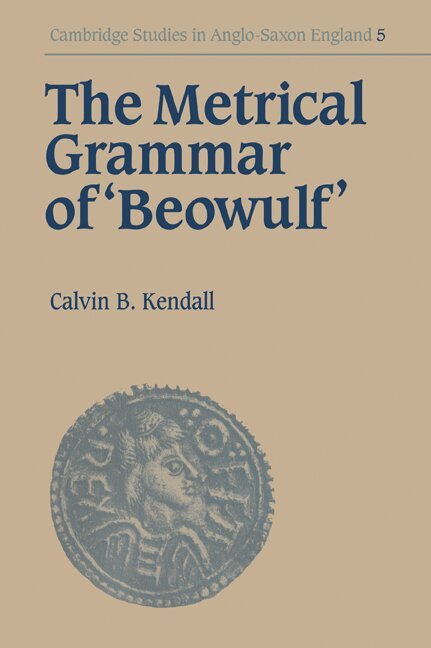
The Metrical Grammar of Beowulf
Häftad, Engelska, 2006
493 kr
Skickas inom 7-10 vardagar
This book argues that the formal art of the Old English epic Beowulf is shaped and determined by the poetic language which the poet inherited from the traditional, oral culture of Anglo-Saxon England. The patterns of metre and alliteration exhibited in the poem were not imposed by the poet on his language, but were part of the language which he spoke, the rules of which constituted his metrical grammar. Professor Kendall investigates the constraints of syntax, metre and alliteration which govern the formal art of Beowulf. He shows how the half-lines of the poem, which are the basic units of composition, are marked by the metrical grammar for placement in the verse clause; he also establishes conditions for the presence or absence of alliteration, which enable him to say whether in any given instance the alliterative device is a mandatory function of the rules of the metrical grammar or an option exercised by the poet. Professor Kendall alters traditional views of metre; he concludes the book with a complete index of scansion according to the rules he has established.
Del 5 - Cambridge Studies in Anglo-Saxon England
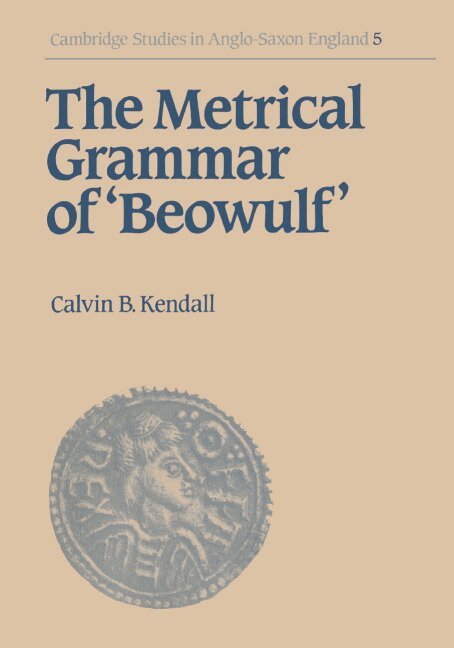
The Metrical Grammar of Beowulf
Inbunden, Engelska, 1991
1 431 kr
Skickas inom 7-10 vardagar
This book argues that the formal art of the Old English epic Beowulf is shaped and determined by the poetic language which the poet inherited from the traditional, oral culture of Anglo-Saxon England. The patterns of metre and alliteration exhibited in the poem were not imposed by the poet on his language, but were part of the language which he spoke, the rules of which constituted his metrical grammar. Professor Kendall investigates the constraints of syntax, metre and alliteration which govern the formal art of Beowulf. He shows how the half-lines of the poem, which are the basic units of composition, are marked by the metrical grammar for placement in the verse clause; he also establishes conditions for the presence or absence of alliteration, which enable him to say whether in any given instance the alliterative device is a mandatory function of the rules of the metrical grammar or an option exercised by the poet. Professor Kendall alters traditional views of metre; he concludes the book with a complete index of scansion according to the rules he has established.
Del 85 - Translated Texts for Historians
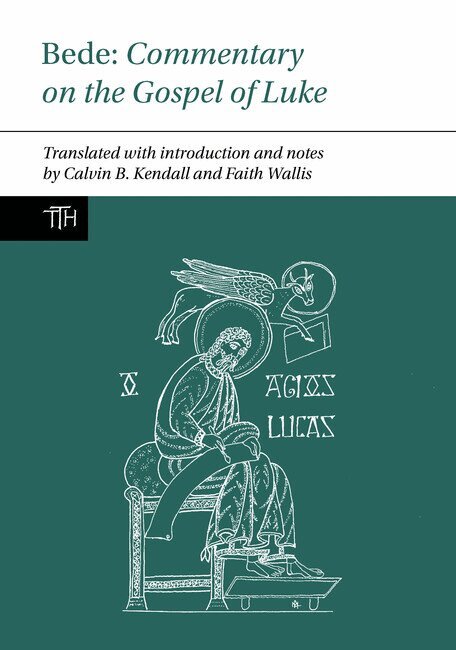
Bede: Commentary on the Gospel of Luke
Häftad, Engelska, 2025
715 kr
Skickas inom 7-10 vardagar
Commenting on the Bible was the principal way in which early medieval Christians conducted the work of theology; commentaries also open a window for modern readers onto the way in which these people strove to understand humanity, the world and history through complex acts of layered winterpretation and cross-referencing within the sacred text. Bede's commentary on Luke, composed in the first half of the 710s, is a turning point in his career as an exegete. It is ambitious in its length, but also in its subject-matter, because the life of Christ is the key to the meaning of the entire Bible. To expound a Gospel also entails engaging with a formidable body of commentary by the Church Fathers. In Bede's case, the Luke commentary marks as well the moment when he publically asserts his own intellectual authority by displaying his mastery of the Patristic tradition, and by deftly confronting criticisms of his earlier works. Finally, Bede's treatment of Luke was highly influential in the Carolingian Renaissance, and in the compilation of the Glossa Ordinaria in the twelfth century. This translation is thus an important resource for historians, as well as scholars interested in the role of the Bible in medieval culture.
Del 85 - Translated Texts for Historians
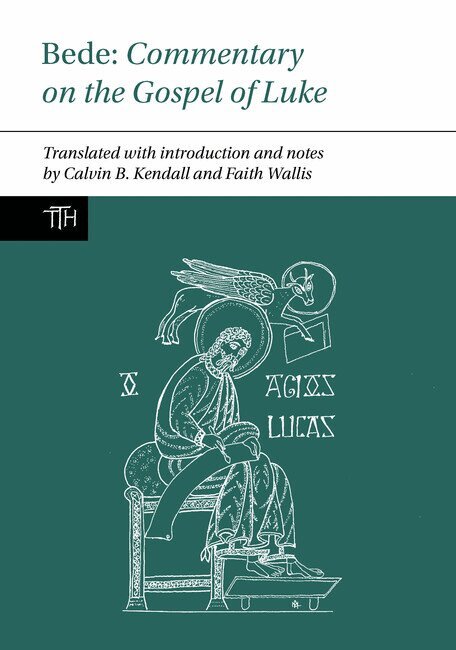
Bede: Commentary on the Gospel of Luke
Inbunden, Engelska, 2024
2 412 kr
Skickas inom 7-10 vardagar
Commenting on the Bible was the principal way in which early medieval Christians conducted the work of theology; commentaries also open a window for modern readers onto the way in which these people strove to understand humanity, the world and history through complex acts of layered winterpretation and cross-referencing within the sacred text. Bede's commentary on Luke, composed in the first half of the 710s, is a turning point in his career as an exegete. It is ambitious in its length, but also in its subject-matter, because the life of Christ is the key to the meaning of the entire Bible. To expound a Gospel also entails engaging with a formidable body of commentary by the Church Fathers. In Bede's case, the Luke commentary marks as well the moment when he publically asserts his own intellectual authority by displaying his mastery of the Patristic tradition, and by deftly confronting criticisms of his earlier works. Finally, Bede's treatment of Luke was highly influential in the Carolingian Renaissance, and in the compilation of the Glossa Ordinaria in the twelfth century. This translation is thus an important resource for historians, as well as scholars interested in the role of the Bible in medieval culture.