Carl Dahlhaus – författare
Visar alla böcker från författaren Carl Dahlhaus. Handla med fri frakt och snabb leverans.
19 produkter
Between Romanticism and Modernism
Four Studies in the Music of the Later Nineteenth Century
Häftad, 1989
245 kr
Lägg i varukorg
Carl Dahlhaus here treats Nietzsche's youthful analysis of the contradictions in Wagner's doctrine (and, more generally, in romantic musical aesthetics); the question of periodicization in romantic and neo-romantic music; the underlying kinship between Brahms' and Wagner's responses to the central …
Realism in Nineteenth-Century Music
Häftad, 1985
720 kr
Lägg i varukorg
The music of the nineteenth century was - and still is - thought of as a 'romantic' art, whereas the main current of the literature and fine arts of the age was 'realist' from about 1830. Yet some works are consistently described as 'realistic': Nusorgsky's Boris and Bizet's Carmen are only the …
Esthetics of Music
Häftad, 1982
351 kr
Lägg i varukorg
This book is an introduction to the esthetics of music. Aesthetics, which were of prime importance in thinking about music in the nineteenth century, are today sometimes suspected of being idle speculation. Yet judgments about music and every sort of musical activity are based on aesthetic …
Foundations of Music History
Häftad, 1983
351 kr
Lägg i varukorg
This book is the first thoroughgoing study in any language of the philosophy of music history. Drawing on competing philosophies of history throughout the ages, from the Enlightenment to the French structuralists, from the German idealist tradition to Russian formalism, the late Carl Dahlhaus …
Idea of Absolute Music
Häftad, 1991
588 kr
Lägg i varukorg
With a characteristically broad and provocative treatment, Dahlhaus examines a single music-aesthetical idea from various historical and philosophical viewpoints. "Essential reading for anyone interested in the larger intellectual framework in which Romantic music found its place, a framework that …
Nineteenth-Century Music
Häftad, 1991
417 kr
Lägg i varukorg
This magnificent survey of the most popular period in music history is an extended essay embracing music, aesthetics, social history, and politics, by one of the keenest minds writing on music in the world today. Dahlhaus organizes his book around 'watershed' years - for example, 1830, the year of …
Between Romanticism and Modernism
Four Studies in the Music of the Later Nineteenth Century
E-bok, 1989
423 kr
Lägg i varukorg
Carl Dahlhaus here treats Nietzsche''s youthful analysis of the contradictions in Wagner''s doctrine (and, more generally, in romantic musical aesthetics); the question of periodicization in romantic and neo-romantic music; the underlying kinship between Brahms''s and Wagner''s responses to the …
Schoenberg and the New Music
Essays by Carl Dahlhaus
Häftad, 1989
394 kr
Lägg i varukorg
This book is a collection of essays, by the leading German musicologist of our day, on one of the most controversial and influential composers of our century: Arnold Schoenberg. Schoenberg is considered here as a historical figure, as a thinker and theoretician and as a composer whose works may be …
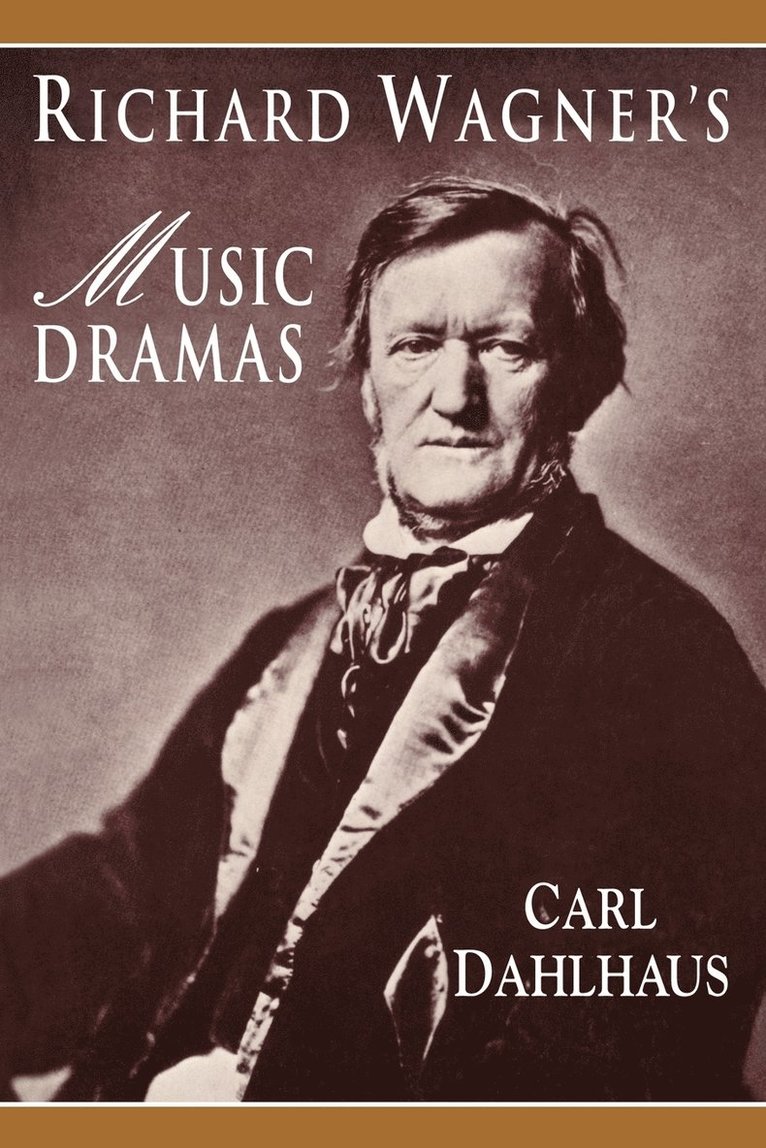
Richard Wagner's Music Dramas
Häftad, 1992
754 kr
Lägg i varukorg
Previous studies of Wagner's operas have tended to approach the works as chunks of autobiography, philosophical speculations or historical-political comments on the age in which they were written. Professor Dahlhaus dissociated himself from all such ventures. His aim is to reveal, by careful …
Studies on the Origin of Harmonic Tonality
Häftad, 2014
562 kr
Lägg i varukorg
Carl Dahlhaus was without doubt the premier musicologist of the postwar generation, a giant whose recent death was mourned the world over. Translated here for the first time, this fundamental work on the development of tonality shows his complete mastery of the theory of harmony. In it Dahlhaus …
Studies on the Origin of Harmonic Tonality
Inbunden, 2016
2843 kr
Lägg i varukorg
Carl Dahlhaus was without doubt the premier musicologist of the postwar generation, a giant whose recent death was mourned the world over. Translated here for the first time, this fundamental work on the development of tonality shows his complete mastery of the theory of harmony. In it Dahlhaus …
Studies on the Origin of Harmonic Tonality
E-bok, 2014
748 kr
Lägg i varukorg
Carl Dahlhaus was without doubt the premier musicologist of the postwar generation, a giant whose recent death was mourned the world over. Translated here for the first time, this fundamental work on the development of tonality shows his complete mastery of the theory of harmony. In it Dahlhaus …
Europäische Romantik in der Musik
Band 2: Oper und symphonischer Stil 1800–1850. Von E.T.A.Hoffmann zu Richard Wagner
Av Norbert Miller, Carl Dahlhaus
E-bok, 2017
1469 kr
Lägg i varukorg
Streifzug durch die Geschichte der Musik. Carl Dahlhaus und Norbert Miller erläutern, wie sich die traditionelle Opernform und der neue sinfonische Stil seit 1770 gegenseitig befruchten. Die Geschichte dieser Symbiose ist die Geschichte der klassisch-romantischen Musik als eine einheitliche Epoche. …
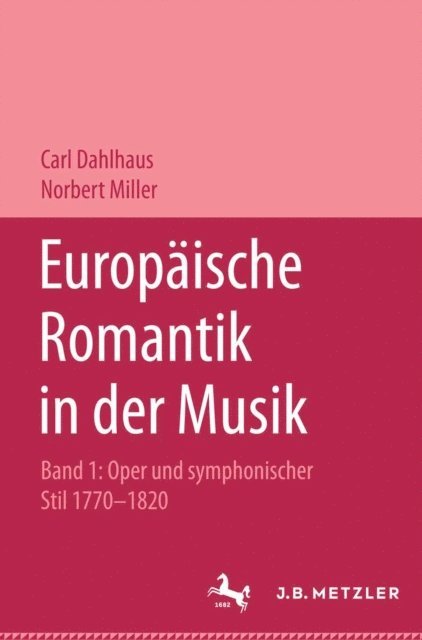
Europäische Romantik in der Musik
Band 1: Oper und symphonischer Stil 1770–1820
Av Carl Dahlhaus, Norbert Miller
Inbunden, 1998
1265 kr
Lägg i varukorg
Streifzug durch die Geschichte der Musik. Carl Dahlhaus und Norbert Miller erläutern, wie sich die traditionelle Opernform und der neue sinfonische Stil seit 1770 gegenseitig befruchten. Die Geschichte dieser Symbiose ist die Geschichte der klassisch-romantischen Musik als eine einheitliche Epoche. …
Europäische Romantik in der Musik
Band 2: Oper und symphonischer Stil 1800–1850. Von E.T.A.Hoffmann zu Richard Wagner
Av Carl Dahlhaus, Norbert Miller
Inbunden, 2007
1370 kr
Lägg i varukorg
Streifzug durch die Geschichte der Musik. Carl Dahlhaus und Norbert Miller erläutern, wie sich die traditionelle Opernform und der neue sinfonische Stil seit 1770 gegenseitig befruchten. Die Geschichte dieser Symbiose ist die Geschichte der klassisch-romantischen Musik als eine einheitliche Epoche. …
Europäische Romantik in der Musik
Band 1: Oper und symphonischer Stil 1770–1820
Av Norbert Miller, Carl Dahlhaus
E-bok, 2016
1335 kr
Lägg i varukorg
Streifzug durch die Geschichte der Musik. Carl Dahlhaus und Norbert Miller erläutern, wie sich die traditionelle Opernform und der neue sinfonische Stil seit 1770 gegenseitig befruchten. Die Geschichte dieser Symbiose ist die Geschichte der klassisch-romantischen Musik als eine einheitliche Epoche. …
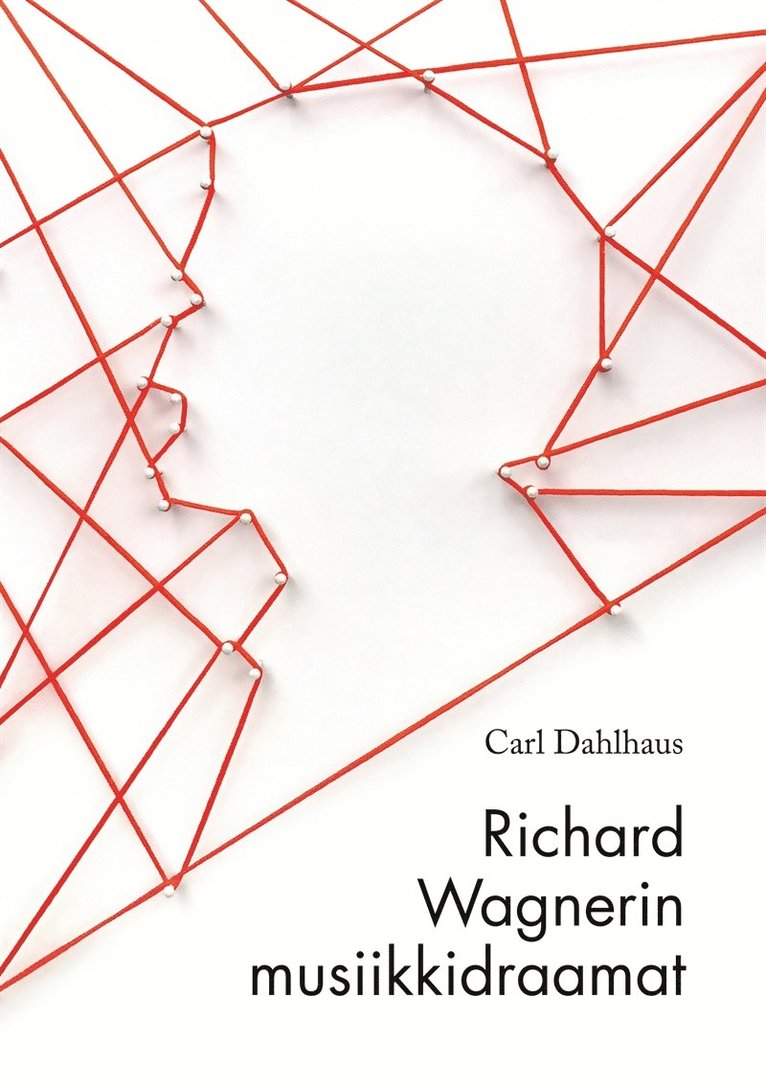
Richard Wagnerin musiikkidraamat
E-bok, 2019
149 kr
Lägg i varukorg
Carl Dahlhausin teos Richard Wagnerin musiikkidraamat (1971) on Wagner-kirjallisuuden klassikko, jonka teosanalyysit ovat yhä tutkijoiden ja musiikinystävien käytössä.Richard Wagnerin musiikkidraamat ilmestyy nyt ensi kertaa suomeksi. Teos julkaistaan yhteistyössä vuonna 1991 perustetun Suomen …