Carl R Hausman – författare
Visar alla böcker från författaren Carl R Hausman. Handla med fri frakt och snabb leverans.
5 produkter
5 produkter
339 kr
Skickas inom 5-8 vardagar
This collection provides a thorough grounding in the philosophy of American pragmatism by examining the views of four principal thinkers-Charles S. Peirce, William James, John Dewey, and George Herbert Mead-on issues of central and enduring importance to life in human society.Pragmatism emerged as a characteristically American response to an inheritance of British empiricism.Presenting a radical reconception of the nature of experience, pragmatism represents a belief that ideas are not merely to be contemplated but must be put into action, tested and refined through experience. At the same time, the American pragmatists argued for an emphasis on human community that would offset the deep-seated American bias in favor of individualism. Far from being a relic of the past, pragmatism offers a dynamic and substantive approach to questions of human conduct, social values, scientific inquiry, religious belief, and aesthetic experience that lie at the center of contemporary life. This volume is an invaluable introduction to a school of thought that remains vital, instructive, and provocative.
583 kr
Skickas inom 7-10 vardagar
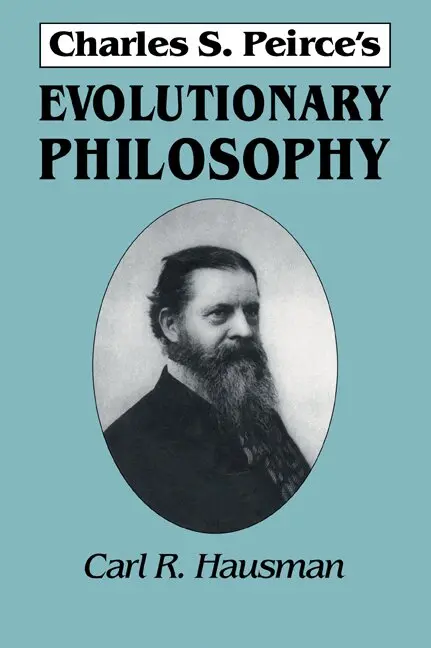
In this systematic introduction to the philosophy of Charles S. Peirce, the author focuses on four of Peirce's fundamental conceptions: pragmatism and Peirce's development of it into what he called 'pragmaticism'; his theory of signs; his phenomenology; and his theory that continuity is of prime importance for philosophy. He argues that at the centre of Peirce's philosophical project is a unique form of metaphysical realism, whereby continuity and evolutionary change are both necessary for our understanding of experience. In his final chapter Professor Hausman applies this version of realism to contemporary controversies between anti-realists and anti-idealists. Peirce's views are compared to those of such contemporary figures as Davidson, Putnam, and Rorty. The book will be of particular interest to philosophers concerned with American philosophy and current debates on realism as well as linguists working in semiotics.
304 kr
Skickas inom 5-8 vardagar
Albert Rothenberg, a psychiatrist, and Carl R. Hausman, a philosopher, have prepared a truly comprehensive interdisciplinary book of readings on creativity. This group of selections from the works of writers in psychiatry, philosophy, psychology, psychoanalysis, and education brings together, for the first time, major theoretical works, outstanding empirical findings, and discussions of the definition and nature of creativity.The organization of The Creativity Question is unique: it illustrates the various approaches and basic assumptions underlying studies of creativity throughout the course of history up to the present time. The main body of selections appears under the categories of descriptions, attempts at explanation, and alternate approaches. As specific orientations to creativity can be traced to particular initiating thinkers and investigators, there is a special chapter on seminal accounts containing selections from the works of Plato, Aristotle, Kant, Galton, and Freud. Another chapter includes recent illustrations of special types of exploratory trends: creativity of women, brain research, synectics, extrasensory perception, behaviorism, and creativity computer programming. This organization highlights the tension between strictly scientific accounts and alternative approaches offering new ways of understanding. The editors have provided for the books as a whole and for each chapter explanation and discussion of the basic issues raised by the various approaches to creativity.
1 031 kr
Skickas inom 10-15 vardagar
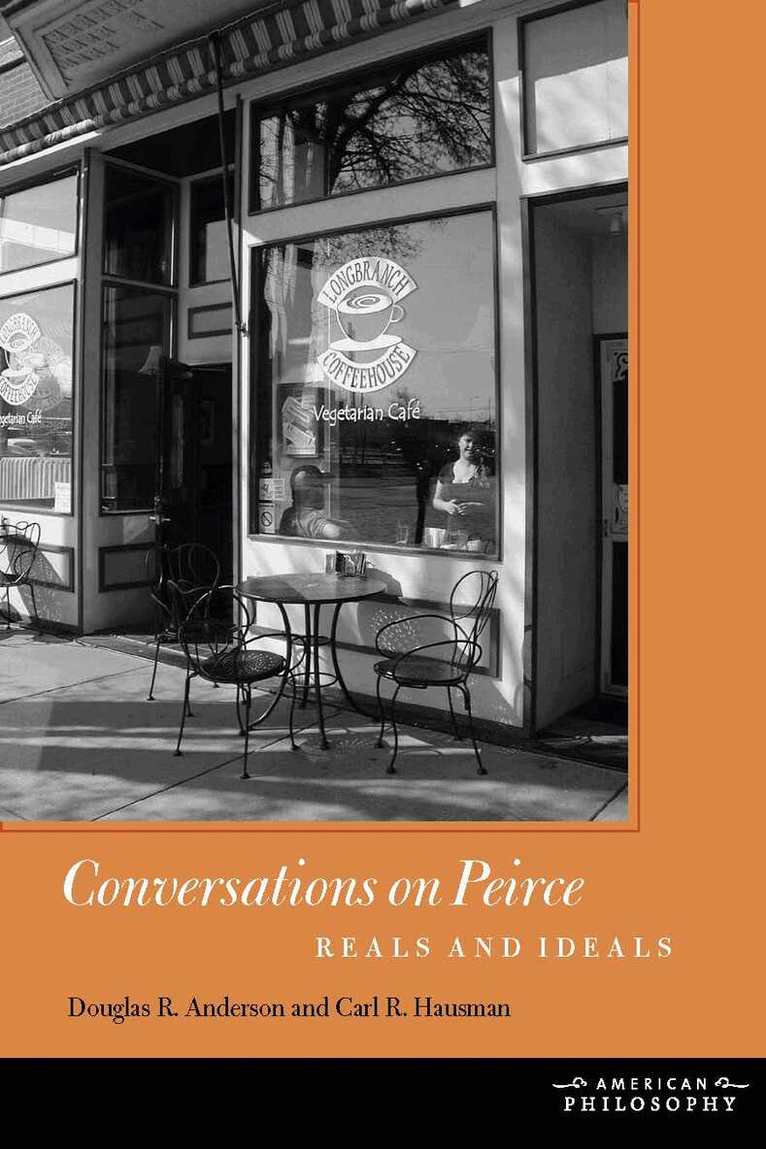
The essays in this book have grown out of conversations between the authors—and their colleagues and students—over the past decade and a half. Their germinal question concerned the ways in which Charles Sanders Peirce was and was not both an idealist and a realist. The dialogue began as an exploration of Peirce's explicit uses of these ideas and then turned to consider the way in which answers to the initial question shed light on other dimensions of Peirce's architectonic.The essays explore the nature of semiotic interpretation, perception, and inquiry. Moreover, considering the roles of idealism and realism in Peirce's thought led to considerations of Peirce's place in the historical development of pragmatism. The authors find his realism turning sharply against the nominalistic conceptions of science endorsed both explicitly and implicitly by his nonpragmatist contemporaries. And they find his version of pragmatism holding a middle ground between the thought of John Dewey and that of Josiah Royce. The essays aims to invite others to consider the import of these central themes of Peircean thought.
395 kr
Skickas inom 11-20 vardagar
The essays in this book have grown out of conversations between the authors—and their colleagues and students—over the past decade and a half. Their germinal question concerned the ways in which Charles Sanders Peirce was and was not both an idealist and a realist. The dialogue began as an exploration of Peirce's explicit uses of these ideas and then turned to consider the way in which answers to the initial question shed light on other dimensions of Peirce's architectonic.The essays explore the nature of semiotic interpretation, perception, and inquiry. Moreover, considering the roles of idealism and realism in Peirce's thought led to considerations of Peirce's place in the historical development of pragmatism. The authors find his realism turning sharply against the nominalistic conceptions of science endorsed both explicitly and implicitly by his nonpragmatist contemporaries. And they find his version of pragmatism holding a middle ground between the thought of John Dewey and that of Josiah Royce. The essays aims to invite others to consider the import of these central themes of Peircean thought.