Carly Wayne - Böcker
Visar alla böcker från författaren Carly Wayne. Handla med fri frakt och snabb leverans.
4 produkter
4 produkter
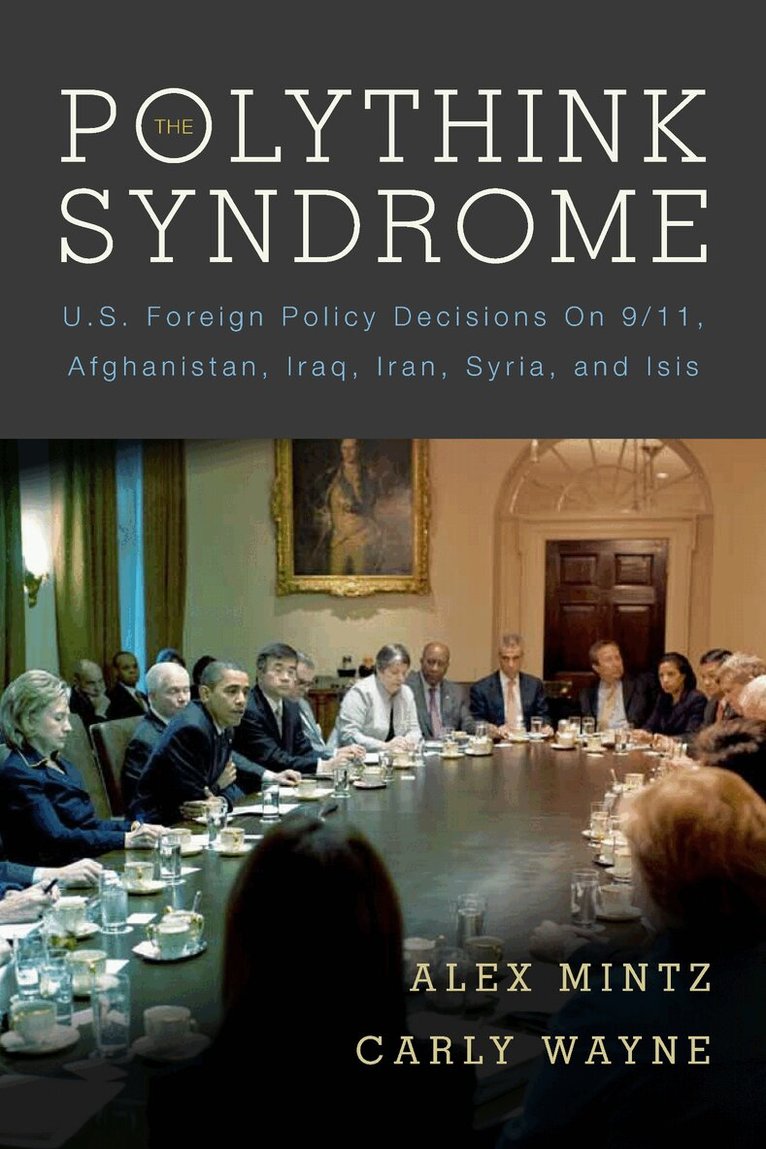
Polythink Syndrome
U.S. Foreign Policy Decisions on 9/11, Afghanistan, Iraq, Iran, Syria, and ISIS
Inbunden, Engelska, 2016
1 067 kr
Skickas inom 7-10 vardagar
Why do presidents and their advisors often make sub-optimal decisions on military intervention, escalation, de-escalation, and termination of conflicts? The leading concept of group dynamics, groupthink, offers one explanation: policy-making groups make sub-optimal decisions due to their desire for conformity and uniformity over dissent, leading to a failure to consider other relevant possibilities. But presidential advisory groups are often fragmented and divisive. This book therefore scrutinizes polythink, a group decision-making dynamic whereby different members in a decision-making unit espouse a plurality of opinions and divergent policy prescriptions, resulting in a disjointed decision-making process or even decision paralysis.The book analyzes eleven national security decisions, including the national security policy designed prior to the terrorist attacks of 9/11, the decisions to enter into and withdraw from Afghanistan and Iraq, the 2007 "surge" decision, the crisis over the Iranian nuclear program, the UN Security Council decision on the Syrian Civil War, the faltering Kerry Peace Process in the Middle East, and the U.S. decision on military operations against ISIS.Based on the analysis of these case studies, the authors address implications of the polythink phenomenon, including prescriptions for avoiding and/or overcoming it, and develop strategies and tools for what they call Productive Polythink. The authors also show the applicability of polythink to business, industry, and everyday decisions.
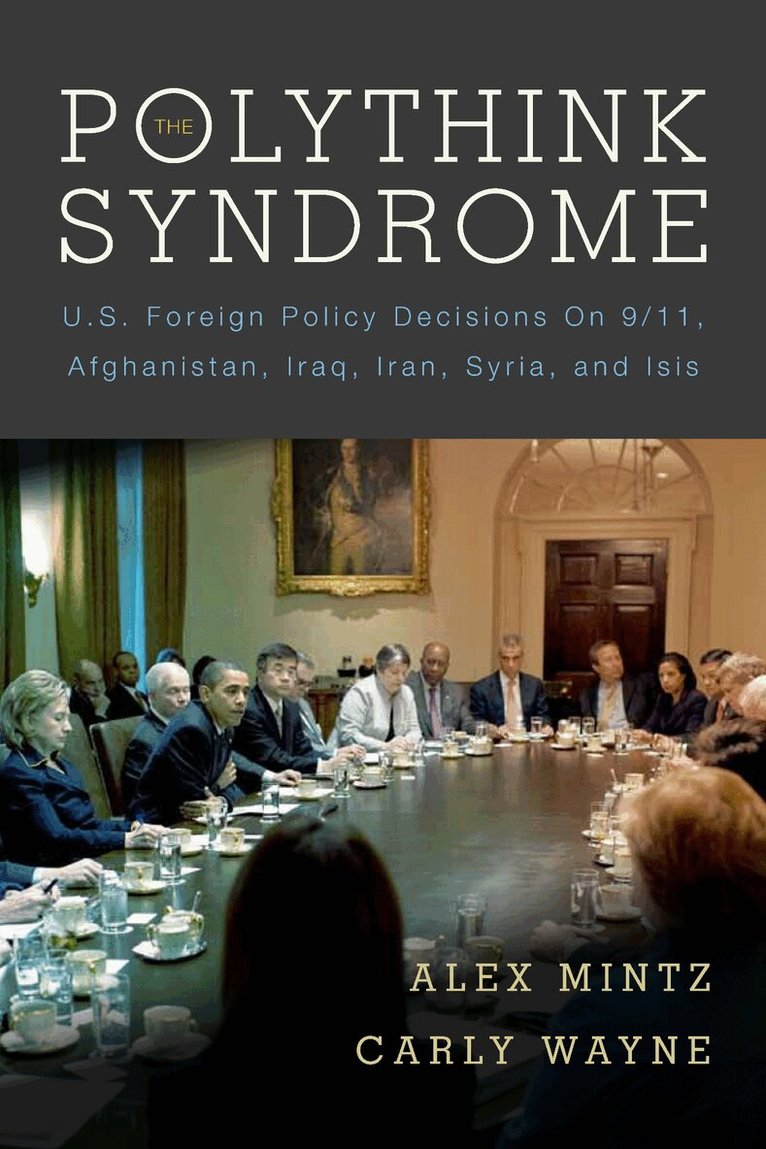
Polythink Syndrome
U.S. Foreign Policy Decisions on 9/11, Afghanistan, Iraq, Iran, Syria, and ISIS
Häftad, Engelska, 2016
262 kr
Skickas inom 10-15 vardagar
Why do presidents and their advisors often make sub-optimal decisions on military intervention, escalation, de-escalation, and termination of conflicts? The leading concept of group dynamics, groupthink, offers one explanation: policy-making groups make sub-optimal decisions due to their desire for conformity and uniformity over dissent, leading to a failure to consider other relevant possibilities. But presidential advisory groups are often fragmented and divisive. This book therefore scrutinizes polythink, a group decision-making dynamic whereby different members in a decision-making unit espouse a plurality of opinions and divergent policy prescriptions, resulting in a disjointed decision-making process or even decision paralysis.The book analyzes eleven national security decisions, including the national security policy designed prior to the terrorist attacks of 9/11, the decisions to enter into and withdraw from Afghanistan and Iraq, the 2007 "surge" decision, the crisis over the Iranian nuclear program, the UN Security Council decision on the Syrian Civil War, the faltering Kerry Peace Process in the Middle East, and the U.S. decision on military operations against ISIS.Based on the analysis of these case studies, the authors address implications of the polythink phenomenon, including prescriptions for avoiding and/or overcoming it, and develop strategies and tools for what they call Productive Polythink. The authors also show the applicability of polythink to business, industry, and everyday decisions.
578 kr
Skickas inom 7-10 vardagar
How and why do people make political decisions? This book is the first to present a unified framework of the Behavioral Political Science paradigm. - BPS presents a range of psychological approaches to understanding political decision-making. The integration of these approaches with Rational Choice Theory provides students with a comprehensible paradigm for understanding current political events around the world. Presented in nontechnical language and enlivened with a wealth of real-world examples, this is an ideal core text for a one-semester courses in political science, American government, political psychology, or political behavior. It can also supplement a course in international relations or public policy.
1 356 kr
Skickas inom 7-10 vardagar
How and why do people make political decisions? This book is the first to present a unified framework of the Behavioral Political Science paradigm. - BPS presents a range of psychological approaches to understanding political decision-making. The integration of these approaches with Rational Choice Theory provides students with a comprehensible paradigm for understanding current political events around the world. Presented in nontechnical language and enlivened with a wealth of real-world examples, this is an ideal core text for a one-semester courses in political science, American government, political psychology, or political behavior. It can also supplement a course in international relations or public policy.