Carsten F. Dormann - Böcker
Visar alla böcker från författaren Carsten F. Dormann. Handla med fri frakt och snabb leverans.
3 produkter
3 produkter
363 kr
Skickas inom 7-10 vardagar
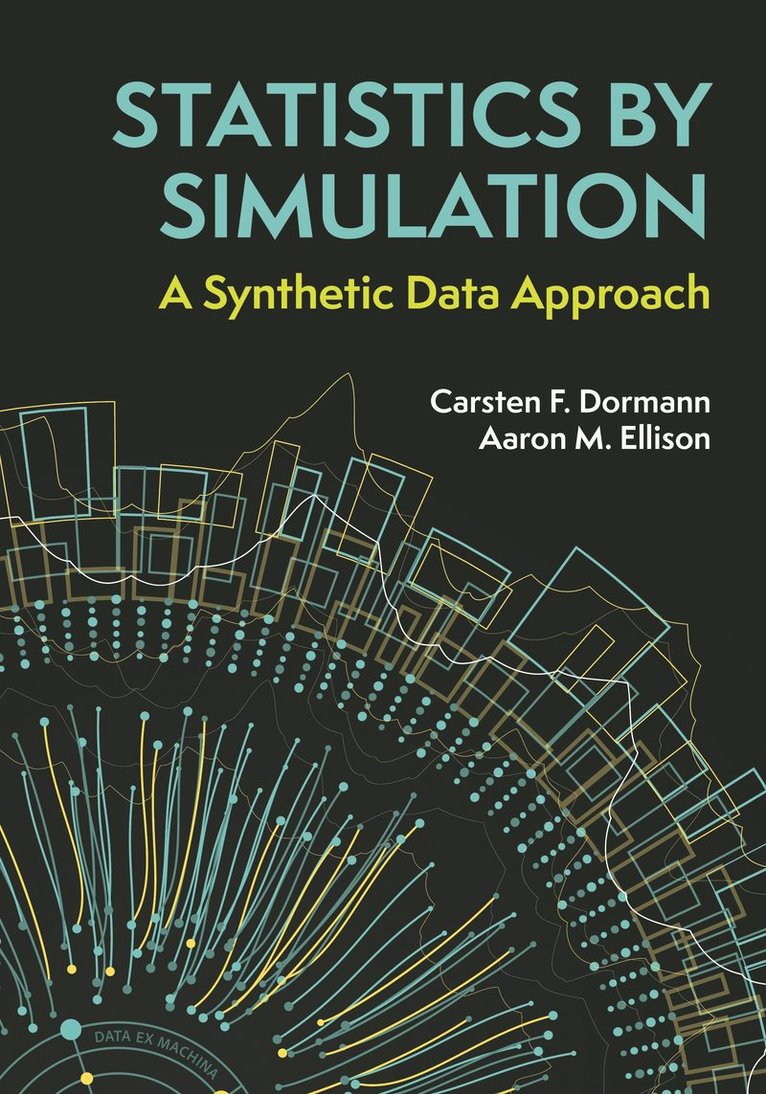
An accessible guide to understanding statistics using simulations, with examples from a range of scientific disciplinesReal-world challenges such as small sample sizes, skewed distributions of data, biased sampling designs, and more predictors than data points are pushing the limits of classical statistical analysis. This textbook provides a new tool for the statistical toolkit: data simulations. It shows that using simulation and data-generating models is an excellent way to validate statistical reasoning and to augment study design and statistical analysis with planning and visualization. Although data simulations are not new to professional statisticians, Statistics by Simulation makes the approach accessible to a broader audience, with examples from many fields. It introduces the reasoning behind data simulation and then shows how to apply it in planning experiments or observational studies, developing analytical workflows, deploying model diagnostics, and developing new indices and statistical methods.• Covers all steps of statistical practice, from planning projects to post-hoc analysis and model checking• Provides examples from disciplines including sociology, psychology, ecology, economics, physics, and medicine• Includes R code for all examples, with data and code freely available online• Offers bullet-point outlines and summaries of each chapter• Minimizes the use of jargon and requires only basic statistical background and skills
1 113 kr
Skickas inom 7-10 vardagar
An accessible guide to understanding statistics using simulations, with examples from a range of scientific disciplinesReal-world challenges such as small sample sizes, skewed distributions of data, biased sampling designs, and more predictors than data points are pushing the limits of classical statistical analysis. This textbook provides a new tool for the statistical toolkit: data simulations. It shows that using simulation and data-generating models is an excellent way to validate statistical reasoning and to augment study design and statistical analysis with planning and visualization. Although data simulations are not new to professional statisticians, Statistics by Simulation makes the approach accessible to a broader audience, with examples from many fields. It introduces the reasoning behind data simulation and then shows how to apply it in planning experiments or observational studies, developing analytical workflows, deploying model diagnostics, and developing new indices and statistical methods.• Covers all steps of statistical practice, from planning projects to post-hoc analysis and model checking• Provides examples from disciplines including sociology, psychology, ecology, economics, physics, and medicine• Includes R code for all examples, with data and code freely available online• Offers bullet-point outlines and summaries of each chapter• Minimizes the use of jargon and requires only basic statistical background and skills
416 kr
Skickas inom 10-15 vardagar
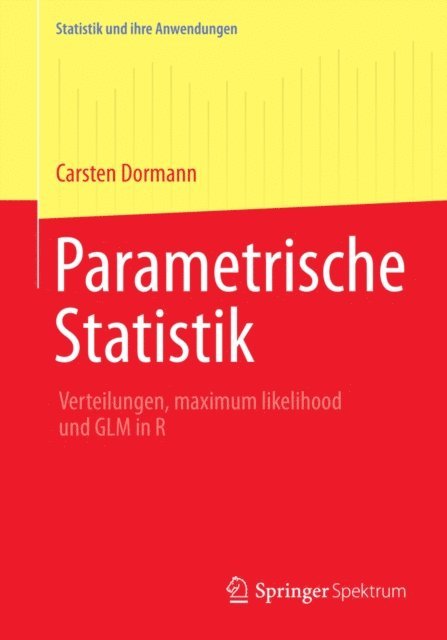
Beispielreich baut dieses Buch Schritt für Schritt die statistischen Grundlagen moderner Datenanalysen auf. Im Gegensatz zu anderen einführenden Werken legt dieses Buch großen Wert auf einen umfassend gespannten Bogen, einen roten Faden, der alle Methoden zusammenführt. Dabei werden klassische statistische Methoden (etwa t-Test oder multiple Regression) als Spezialfall des Generalisierten Linearen Modells entwickelt. Entsprechend legt das Buch zunächst eine Grundlage in beschreibender Statistik, Verteilungen und maximum likelihood, aus der dann alle anderen Verfahren abgeleitet werden (ANOVA, multiple Regression). Jeder Schritt ist auf zwei Kapitel verteilt: Im ungradzahligen Kapitel wird anhand von vielen Beispielen und Abbildungen die Idee der statistischen Herangehensweise erläutert. Im sich daran anschließenden gradzahligen Kapitel wird die Umsetzung in der freien Statistiksoftware R gezeigt. Ein Kapitel zur Wissenschafts- und Forschungstheorie und eines zum Design von Experimenten und Stichprobeverfahren komplettiert dieses einleitende Werk. Das Buch legt großen Wert auf Verständlichkeit und Umsetzung. Mathematische Herleitungen treten demgegenüber stark in den Hintergrund. Jedes Kapitel enthält explizit ausgewiesene Lerninhalte, die durch Übungen zu jedem R-Kapitel geprüft werden können. Ein ausführliches Schlagwortverzeichnis inklusive der R-Funktionen macht das Buch auch als Nachschlagewerk nutzbar. Die zweite Auflage wurde ergänzt um Schätzung mittels der Momentenmethode, Residuendiagnostik für nicht-normalverteilte Daten und die erschöpfende Modellsuche.