Carsten Herrmann-Pillath – författare
2 115 kr
Skickas inom 10-15 vardagar
728 kr
Skickas inom 10-15 vardagar
843 kr
Skickas inom 10-15 vardagar
2 025 kr
Skickas inom 10-15 vardagar
656 kr
Skickas inom 10-15 vardagar
2 385 kr
Skickas inom 10-15 vardagar
2 246 kr
Skickas inom 10-15 vardagar
730 kr
Läs direkt efter köp
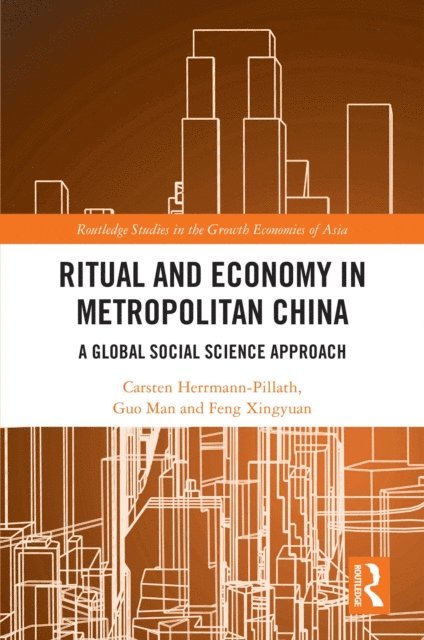
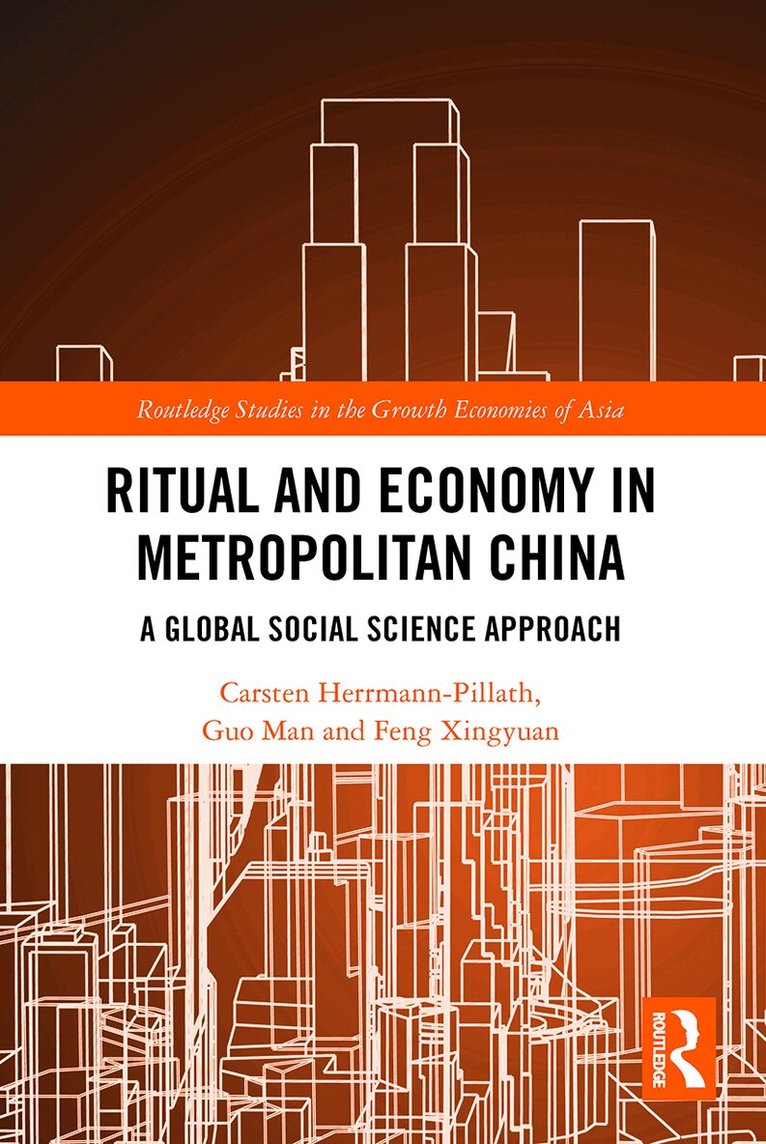
This book focuses on Shenzhen, one of China’s most globalized metropolises, a leading centre of high-tech industries and, as a melting pot of migrants from all over China, a place of vibrant cultural creativity. While in the early stages of Shenzhen’s development this vibrant cultural creativity was associated with the resilience of traditional social structures in Shenzhen’s migrant ‘urban villages’, today these structures undergird dynamic entrepreneurship and urban self-organization throughout Shenzhen, and have gradually merged with the formal structures of urban governance and politics. This book examines these developments, showing how important traditional social structures and traditional Chinese culture have been for China’s economic modernization. The book goes on to draw out the implications of this for the future of Chinese culture and Chinese economic engagement in a globalized world.
730 kr
Läs direkt efter köp
This book focuses on Shenzhen, one of China’s most globalized metropolises, a leading centre of high-tech industries and, as a melting pot of migrants from all over China, a place of vibrant cultural creativity. While in the early stages of Shenzhen’s development this vibrant cultural creativity was associated with the resilience of traditional social structures in Shenzhen’s migrant ‘urban villages’, today these structures undergird dynamic entrepreneurship and urban self-organization throughout Shenzhen, and have gradually merged with the formal structures of urban governance and politics. This book examines these developments, showing how important traditional social structures and traditional Chinese culture have been for China’s economic modernization. The book goes on to draw out the implications of this for the future of Chinese culture and Chinese economic engagement in a globalized world.
836 kr
Läs direkt efter köp
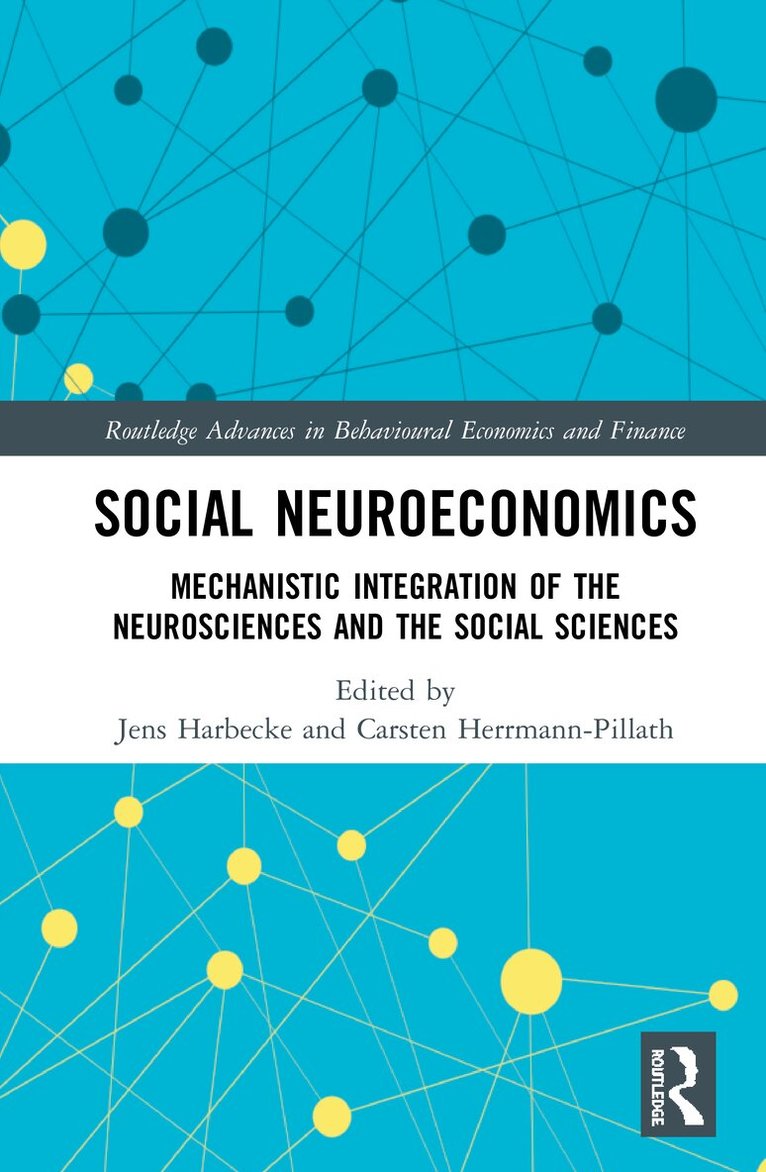
Neuroeconomics has emerged as a paradigmatic field where neuroscience and the social sciences are integrated in one analytical and empirical approach. However, the different disciplines involved often only relate to each other via the shared object of research, and less through the constructing of precise models of integrative mechanisms.Social Neuroeconomics explores the potential of philosophical and methodological reflections in the neurosciences and the social sciences to inform those efforts at cross-disciplinary integration, with a special focus on recent contributions to mechanistic explanations. The collected essays are drawn from the fields of neuroscience, psychology, economics, sociology and philosophy, and examine the ways and methods of constructing unified conceptual frameworks that can guide empirical work and hypothesis building. This is demonstrated in a range of applications, particularly regarding finance and consumer behavior. The concept of the ‘social brain’ is also explored; a multilevel framework in which complex analytical categories such as emotions or socially mediated cognitive processes connect neuronal and social phenomena in specific mechanisms that generate behavior.This book addresses a wide audience across the various disciplines, reaching from the neurosciences to the social sciences and philosophy.
836 kr
Läs direkt efter köp
Neuroeconomics has emerged as a paradigmatic field where neuroscience and the social sciences are integrated in one analytical and empirical approach. However, the different disciplines involved often only relate to each other via the shared object of research, and less through the constructing of precise models of integrative mechanisms.Social Neuroeconomics explores the potential of philosophical and methodological reflections in the neurosciences and the social sciences to inform those efforts at cross-disciplinary integration, with a special focus on recent contributions to mechanistic explanations. The collected essays are drawn from the fields of neuroscience, psychology, economics, sociology and philosophy, and examine the ways and methods of constructing unified conceptual frameworks that can guide empirical work and hypothesis building. This is demonstrated in a range of applications, particularly regarding finance and consumer behavior. The concept of the ‘social brain’ is also explored; a multilevel framework in which complex analytical categories such as emotions or socially mediated cognitive processes connect neuronal and social phenomena in specific mechanisms that generate behavior.This book addresses a wide audience across the various disciplines, reaching from the neurosciences to the social sciences and philosophy.
969 kr
Läs direkt efter köp
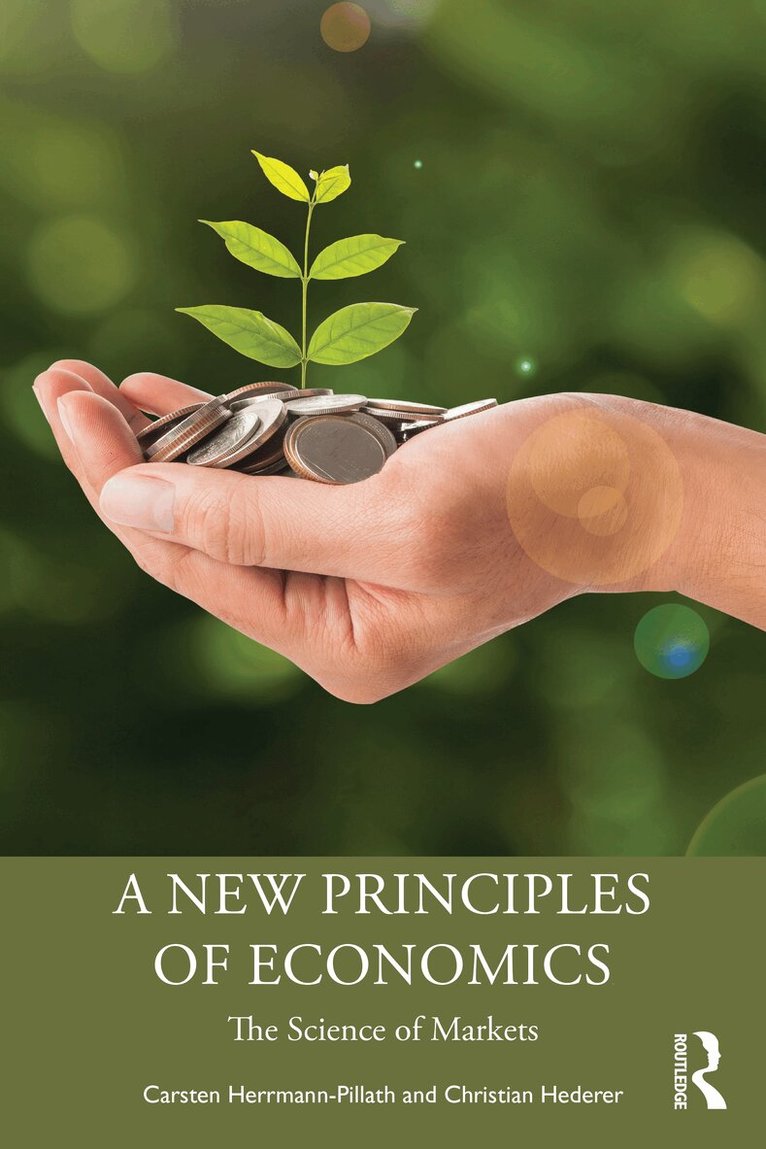
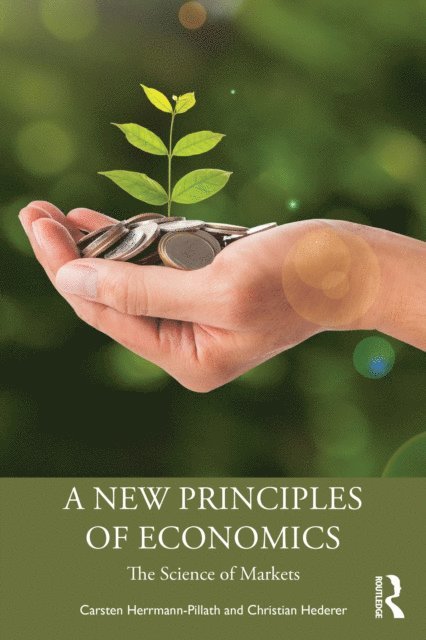
Despite the dynamic development of the discipline of economics, the ways in which economics is taught and how it defines its basic principles have hardly changed, resulting in economics being criticised for its inability to provide relevant insights on global challenges. In response, this book defines new principles of economics and seeks to establish economics as the science of markets.
A New Principles of Economics provides an alternative conceptual framework for the study of economics, integrating recent developments and research in both economics and neighbouring social sciences. Adopting the structure of a standard principles text, it separates the study of markets as mechanisms and markets in their wider contexts. In doing so, a number of new perspectives are introduced, including approaching the economy as part and parcel of the Earth system; directly connecting the analysis of production with an analysis of technology and thermodynamic principles; explicitly treating markets as forms of social networks mediated by the institution of money; and reinstating the central role of distribution in political economy analysis. The book is accompanied by a series of video lectures prepared by the authors, which can be accessed at www.youtube.com/playlist?list=PLKe-ures4LFR_uTvCekrha4WFY-OcRjHD
Drawing on the latest theories and research on the economy, and including both the natural and social sciences, this text provides a holistic introduction suitable for postgraduates and other advanced students.
969 kr
Läs direkt efter köp
Despite the dynamic development of the discipline of economics, the ways in which economics is taught and how it defines its basic principles have hardly changed, resulting in economics being criticised for its inability to provide relevant insights on global challenges. In response, this book defines new principles of economics and seeks to establish economics as the science of markets.
A New Principles of Economics provides an alternative conceptual framework for the study of economics, integrating recent developments and research in both economics and neighbouring social sciences. Adopting the structure of a standard principles text, it separates the study of markets as mechanisms and markets in their wider contexts. In doing so, a number of new perspectives are introduced, including approaching the economy as part and parcel of the Earth system; directly connecting the analysis of production with an analysis of technology and thermodynamic principles; explicitly treating markets as forms of social networks mediated by the institution of money; and reinstating the central role of distribution in political economy analysis. The book is accompanied by a series of video lectures prepared by the authors, which can be accessed at www.youtube.com/playlist?list=PLKe-ures4LFR_uTvCekrha4WFY-OcRjHD
Drawing on the latest theories and research on the economy, and including both the natural and social sciences, this text provides a holistic introduction suitable for postgraduates and other advanced students.
2 176 kr
Skickas inom 10-15 vardagar
651 kr
Skickas inom 10-15 vardagar
698 kr
Läs direkt efter köp
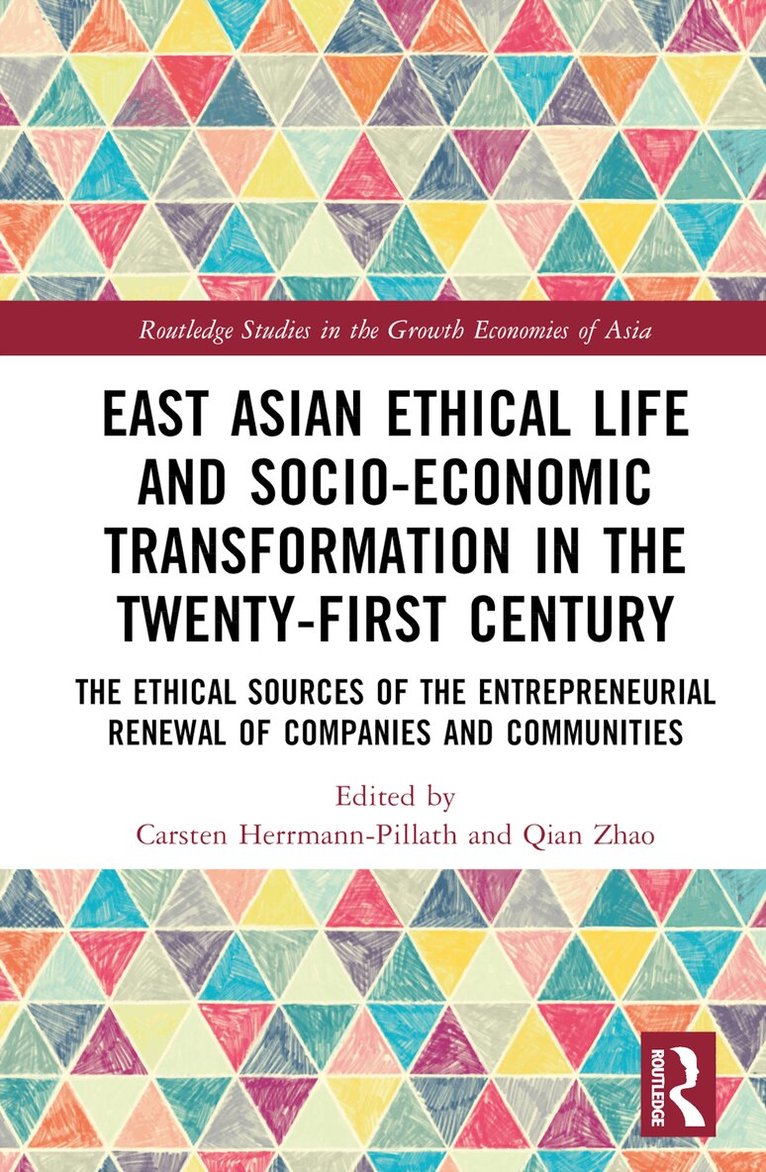
This book considers ethical culture in East Asia, examines the impact it has had on economic and social transformation, and explores what effect it might have on solving current problems. It views the ethical culture of East Asia, that is, the beliefs, values, and practices that define East Asian societies’ conceptions of ethics in everyday life, as different from what pertains in the West, with more emphasis in East Asia on respect for ancestors, concern about propriety of behaviour, and notions of community. The book discusses how these particular East Asian values are being applied, for example, in family businesses, and how they might further be applied to solve current crucial challenges for humanity, such as climate change, ageing, and persistent inequality, challenges that are not being solved by an exclusive focus on economic growth alone. The book includes a consideration of ethical innovation, for example, distinct forms of ecological ethics enshrined in newly emerging economic organizations, such as social entrepreneurship.
698 kr
Läs direkt efter köp
This book considers ethical culture in East Asia, examines the impact it has had on economic and social transformation, and explores what effect it might have on solving current problems. It views the ethical culture of East Asia, that is, the beliefs, values, and practices that define East Asian societies’ conceptions of ethics in everyday life, as different from what pertains in the West, with more emphasis in East Asia on respect for ancestors, concern about propriety of behaviour, and notions of community. The book discusses how these particular East Asian values are being applied, for example, in family businesses, and how they might further be applied to solve current crucial challenges for humanity, such as climate change, ageing, and persistent inequality, challenges that are not being solved by an exclusive focus on economic growth alone. The book includes a consideration of ethical innovation, for example, distinct forms of ecological ethics enshrined in newly emerging economic organizations, such as social entrepreneurship.
795 kr
Läs direkt efter köp
China''s spectacular rise challenges established economic moulds, both at the national level, with the concept of "state capitalism", and at the firm level, with the notion of indigenous "Chinese management practices". However, both Chinese and Western observers emphasise the transitional nature of the reforms, thereby leaving open the question as to whether China''s reform process is really a fast catch-up process, with ultimate convergence to global standards, or something different. This book, by a leading economist and sinologist, argues that "culture" is an exceptionally useful tool to help understand fully the current picture of the Chinese economy. Drawing on a range of disciplines including social psychology, cognitive sciences, institutional economics and Chinese studies, the book examines long-run path dependencies and cultural legacies, and shows how these contribute crucially to the current cultural construction of economic systems, business organisations and patterns of embedding the economy into society and politics.
795 kr
Läs direkt efter köp
China''s spectacular rise challenges established economic moulds, both at the national level, with the concept of "state capitalism", and at the firm level, with the notion of indigenous "Chinese management practices". However, both Chinese and Western observers emphasise the transitional nature of the reforms, thereby leaving open the question as to whether China''s reform process is really a fast catch-up process, with ultimate convergence to global standards, or something different. This book, by a leading economist and sinologist, argues that "culture" is an exceptionally useful tool to help understand fully the current picture of the Chinese economy. Drawing on a range of disciplines including social psychology, cognitive sciences, institutional economics and Chinese studies, the book examines long-run path dependencies and cultural legacies, and shows how these contribute crucially to the current cultural construction of economic systems, business organisations and patterns of embedding the economy into society and politics.
2 241 kr
Skickas inom 10-15 vardagar
2 241 kr
Skickas inom 10-15 vardagar
713 kr
Skickas inom 10-15 vardagar
833 kr
Skickas inom 10-15 vardagar
957 kr
Läs direkt efter köp
Hegel’s philosophy has witnessed periods of revival and oblivion, at times considered to be an unrivalled and all-embracing system of thought, but often renounced with no less ardour. This book renews the dialogue with Hegel by looking at his legacy as a source of insight and judgement that helps us rethink contemporary economics. This book focuses on a concept of institution which is equally important for Hegel''s political philosophy and for economic theory to date.
The key contributions of this Hegelian perspective on economics lead us to the synthesis of traditional approaches and new ideas gained in economic experiments and advanced by neuroeconomists, sociologists and cognitive scientists. The proper account of contemporary ''civil society'' involves comprehending it as a historically evolving totality of individual minds, ideas and intersubjective structures that are mutually dependent, tied by recognitive relations, and assert themselves as a whole in the ongoing performative movement of ''objective spitit''. The ethics of recognition is paired with the ethics of associations that supports moral principles and gives them true, concrete universality.
This unusual constellation of seemingly remote fields suggests that Hegel, read in a pragmatist mode, anticipated the new theories and philosophies of extended mind, social cognition and performativity. By providing a new conceptual apparatus and reformulating the theory of institutions in the light of this new synthesis, this book claims to give new meaning both to Hegel as interpreted from today, and to the social sciences. Seen from this perspective, such phenomena as cooperation in games, personal identity or justice in the version of Amartya Sen''s ''realization-focused comparisons'' are reinscribed into the logic of institutional theory. This ''Hegel'' clearly goes beyond the limits of philosophical discussion and becomes a decisive reference for economists, sociologists, political scientists and other scholars who study the foundations and consequences of human sociality and try to explore and design the institutions necessary for a worthy common life.
957 kr
Läs direkt efter köp
Hegel’s philosophy has witnessed periods of revival and oblivion, at times considered to be an unrivalled and all-embracing system of thought, but often renounced with no less ardour. This book renews the dialogue with Hegel by looking at his legacy as a source of insight and judgement that helps us rethink contemporary economics. This book focuses on a concept of institution which is equally important for Hegel''s political philosophy and for economic theory to date.
The key contributions of this Hegelian perspective on economics lead us to the synthesis of traditional approaches and new ideas gained in economic experiments and advanced by neuroeconomists, sociologists and cognitive scientists. The proper account of contemporary ''civil society'' involves comprehending it as a historically evolving totality of individual minds, ideas and intersubjective structures that are mutually dependent, tied by recognitive relations, and assert themselves as a whole in the ongoing performative movement of ''objective spitit''. The ethics of recognition is paired with the ethics of associations that supports moral principles and gives them true, concrete universality.
This unusual constellation of seemingly remote fields suggests that Hegel, read in a pragmatist mode, anticipated the new theories and philosophies of extended mind, social cognition and performativity. By providing a new conceptual apparatus and reformulating the theory of institutions in the light of this new synthesis, this book claims to give new meaning both to Hegel as interpreted from today, and to the social sciences. Seen from this perspective, such phenomena as cooperation in games, personal identity or justice in the version of Amartya Sen''s ''realization-focused comparisons'' are reinscribed into the logic of institutional theory. This ''Hegel'' clearly goes beyond the limits of philosophical discussion and becomes a decisive reference for economists, sociologists, political scientists and other scholars who study the foundations and consequences of human sociality and try to explore and design the institutions necessary for a worthy common life.
819 kr
Läs direkt efter köp
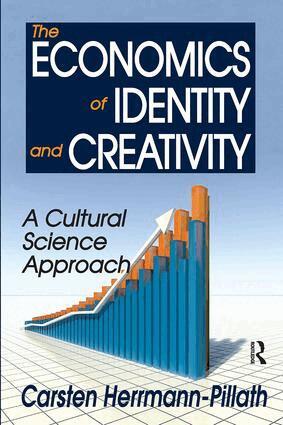
The Economics of Identity and Creativity aims to sythesize naturalistic evolutionary theory while discussing new developments in economics. The author''s approach reexamines fundamental assumptions about how a capitalist economy works, from the relation between producers and consumers to the functioning of intellectual property rights. In the creative economy, the author argues, identities merge with the flow of creative action. To explain these changes, he draws upon a range of theories from analytical philosophy to biology, and from economics to sociology.
The first part of the book examines the role of language in the naturalistic approach to cultural science. Hermann-Pillath draws on Darwinian evolutionary theory to map a concept of knowledge. Part Two offers a systematic approach to creativity and identity from the naturalistic point of view developed in Part One. Here the author builds a theory of creativity from the ideas of conceptual blending in the cognitive sciences.
Herrmann-Pillath presents a theory of identity based on analytical philosophy, and looks at the problems in fixing the boundaries of an individual identity both in biological evolutionary theory and brain sciences. He takes the concept of identity through the current economic approaches, examining the distinction between social and personal identity. This fascinating interdisciplinary work provides a precise argument that the foundations of economics can be found in cultural science, and it has evolved to become the cultural institution at the core of the modern economy.
819 kr
Läs direkt efter köp
The Economics of Identity and Creativity aims to sythesize naturalistic evolutionary theory while discussing new developments in economics. The author''s approach reexamines fundamental assumptions about how a capitalist economy works, from the relation between producers and consumers to the functioning of intellectual property rights. In the creative economy, the author argues, identities merge with the flow of creative action. To explain these changes, he draws upon a range of theories from analytical philosophy to biology, and from economics to sociology.
The first part of the book examines the role of language in the naturalistic approach to cultural science. Hermann-Pillath draws on Darwinian evolutionary theory to map a concept of knowledge. Part Two offers a systematic approach to creativity and identity from the naturalistic point of view developed in Part One. Here the author builds a theory of creativity from the ideas of conceptual blending in the cognitive sciences.
Herrmann-Pillath presents a theory of identity based on analytical philosophy, and looks at the problems in fixing the boundaries of an individual identity both in biological evolutionary theory and brain sciences. He takes the concept of identity through the current economic approaches, examining the distinction between social and personal identity. This fascinating interdisciplinary work provides a precise argument that the foundations of economics can be found in cultural science, and it has evolved to become the cultural institution at the core of the modern economy.
713 kr
Skickas inom 10-15 vardagar
430 kr
Läs direkt efter köp
- Stanley N. Salthe, Binghamton University, SUNY
3 191 kr
Skickas inom 5-8 vardagar