Catarina Dutilh Novaes – författare
Visar alla böcker från författaren Catarina Dutilh Novaes. Handla med fri frakt och snabb leverans.
18 produkter
18 produkter
Inbunden, Engelska, 2026
1 477 kr
Kommande
Many of the accounts of argumentation and deliberation available in the literature paint an overly idealized picture of these processes, assuming agents with no cognitive limitations and largely cooperative settings where all participants have a similar social standing and shared goals. This book breaks away from these idealized accounts; it investigates how reason and power interact in argumentative processes by focusing on the effects upon these processes of power differentials, conflicts of interests, and the cognitive limitations of human agents. It seeks to investigate the limits of discursive rationality, thus moderating unrestricted optimism on the power of reason, while also recognizing the important role that rational arguments play in various domains (science, politics, education). Its extensive use of real-life examples ensures that the analysis remain grounded in concrete situations, and facilitates the reader's understanding of the main theoretical framework developed throughout the book.
Inbunden, Engelska, 2012
1 292 kr
Skickas inom 7-10 vardagar
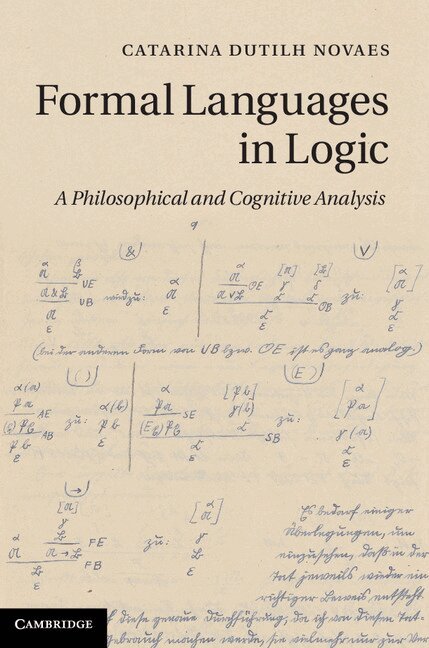
Formal languages are widely regarded as being above all mathematical objects and as producing a greater level of precision and technical complexity in logical investigations because of this. Yet defining formal languages exclusively in this way offers only a partial and limited explanation of the impact which their use (and the uses of formalisms more generally elsewhere) actually has. In this book, Catarina Dutilh Novaes adopts a much wider conception of formal languages so as to investigate more broadly what exactly is going on when theorists put these tools to use. She looks at the history and philosophy of formal languages and focuses on the cognitive impact of formal languages on human reasoning, drawing on their historical development, psychology, cognitive science and philosophy. Her wide-ranging study will be valuable for both students and researchers in philosophy, logic, psychology and cognitive and computer science.
Inbunden, Engelska, 2016
1 357 kr
Skickas inom 7-10 vardagar
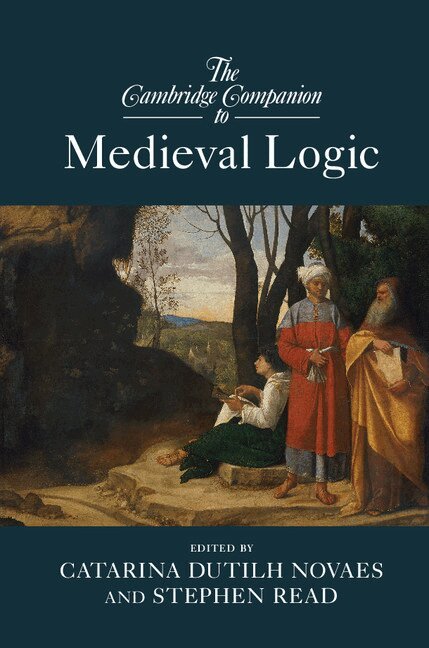
This volume, the first dedicated and comprehensive companion to medieval logic, covers both the Latin and the Arabic traditions, and shows that they were in fact sister traditions, which both arose against the background of a Hellenistic heritage and which influenced one another over the centuries. A series of chapters by both established and younger scholars covers the whole period including early and late developments, and offers new insights into this extremely rich period in the history of logic. The volume is divided into two parts, 'Periods and Traditions' and 'Themes', allowing readers to engage with the subject from both historical and more systematic perspectives. It will be a must-read for students and scholars of medieval philosophy, the history of logic, and the history of ideas.
Häftad, Engelska, 2014
448 kr
Skickas inom 7-10 vardagar
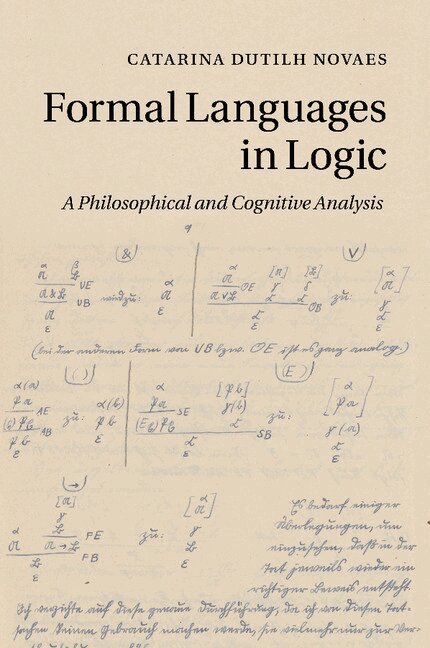
Formal languages are widely regarded as being above all mathematical objects and as producing a greater level of precision and technical complexity in logical investigations because of this. Yet defining formal languages exclusively in this way offers only a partial and limited explanation of the impact which their use (and the uses of formalisms more generally elsewhere) actually has. In this book, Catarina Dutilh Novaes adopts a much wider conception of formal languages so as to investigate more broadly what exactly is going on when theorists put these tools to use. She looks at the history and philosophy of formal languages and focuses on the cognitive impact of formal languages on human reasoning, drawing on their historical development, psychology, cognitive science and philosophy. Her wide-ranging study will be valuable for both students and researchers in philosophy, logic, psychology and cognitive and computer science.
Häftad, Engelska, 2016
404 kr
Skickas inom 7-10 vardagar
This volume, the first dedicated and comprehensive companion to medieval logic, covers both the Latin and the Arabic traditions, and shows that they were in fact sister traditions, which both arose against the background of a Hellenistic heritage and which influenced one another over the centuries. A series of chapters by both established and younger scholars covers the whole period including early and late developments, and offers new insights into this extremely rich period in the history of logic. The volume is divided into two parts, 'Periods and Traditions' and 'Themes', allowing readers to engage with the subject from both historical and more systematic perspectives. It will be a must-read for students and scholars of medieval philosophy, the history of logic, and the history of ideas.
E-bok
Engelska, 2016489 kr
Läs direkt efter köp
This volume, the first dedicated and comprehensive companion to medieval logic, covers both the Latin and the Arabic traditions, and shows that they were in fact sister traditions, which both arose against the background of a Hellenistic heritage and which influenced one another over the centuries. A series of chapters by both established and younger scholars covers the whole period including early and late developments, and offers new insights into this extremely rich period in the history of logic. The volume is divided into two parts, ''Periods and Traditions'' and ''Themes'', allowing readers to engage with the subject from both historical and more systematic perspectives. It will be a must-read for students and scholars of medieval philosophy, the history of logic, and the history of ideas.
E-bok
PDF, Engelska, 2016489 kr
Läs direkt efter köp
This volume, the first dedicated and comprehensive companion to medieval logic, covers both the Latin and the Arabic traditions, and shows that they were in fact sister traditions, which both arose against the background of a Hellenistic heritage and which influenced one another over the centuries. A series of chapters by both established and younger scholars covers the whole period including early and late developments, and offers new insights into this extremely rich period in the history of logic. The volume is divided into two parts, ''Periods and Traditions'' and ''Themes'', allowing readers to engage with the subject from both historical and more systematic perspectives. It will be a must-read for students and scholars of medieval philosophy, the history of logic, and the history of ideas.
Inbunden, Engelska, 2020
1 136 kr
Skickas inom 7-10 vardagar
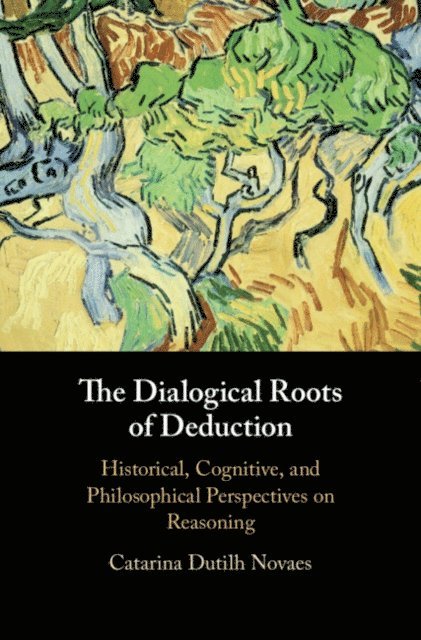
This comprehensive account of the concept and practices of deduction is the first to bring together perspectives from philosophy, history, psychology and cognitive science, and mathematical practice. Catarina Dutilh Novaes draws on all of these perspectives to argue for an overarching conceptualization of deduction as a dialogical practice: deduction has dialogical roots, and these dialogical roots are still largely present both in theories and in practices of deduction. Dutilh Novaes' account also highlights the deeply human and in fact social nature of deduction, as embedded in actual human practices; as such, it presents a highly innovative account of deduction. The book will be of interest to a wide range of readers, from advanced students to senior scholars, and from philosophers to mathematicians and cognitive scientists.
Häftad, Engelska, 2022
353 kr
Skickas inom 7-10 vardagar
This comprehensive account of the concept and practices of deduction is the first to bring together perspectives from philosophy, history, psychology and cognitive science, and mathematical practice. Catarina Dutilh Novaes draws on all of these perspectives to argue for an overarching conceptualization of deduction as a dialogical practice: deduction has dialogical roots, and these dialogical roots are still largely present both in theories and in practices of deduction. Dutilh Novaes' account also highlights the deeply human and in fact social nature of deduction, as embedded in actual human practices; as such, it presents a highly innovative account of deduction. The book will be of interest to a wide range of readers, from advanced students to senior scholars, and from philosophers to mathematicians and cognitive scientists.
E-bok
Engelska, 2020413 kr
Läs direkt efter köp
This comprehensive account of the concept and practices of deduction is the first to bring together perspectives from philosophy, history, psychology and cognitive science, and mathematical practice. Catarina Dutilh Novaes draws on all of these perspectives to argue for an overarching conceptualization of deduction as a dialogical practice: deduction has dialogical roots, and these dialogical roots are still largely present both in theories and in practices of deduction. Dutilh Novaes'' account also highlights the deeply human and in fact social nature of deduction, as embedded in actual human practices; as such, it presents a highly innovative account of deduction. The book will be of interest to a wide range of readers, from advanced students to senior scholars, and from philosophers to mathematicians and cognitive scientists.
E-bok
PDF, Engelska, 2020413 kr
Läs direkt efter köp
This comprehensive account of the concept and practices of deduction is the first to bring together perspectives from philosophy, history, psychology and cognitive science, and mathematical practice. Catarina Dutilh Novaes draws on all of these perspectives to argue for an overarching conceptualization of deduction as a dialogical practice: deduction has dialogical roots, and these dialogical roots are still largely present both in theories and in practices of deduction. Dutilh Novaes'' account also highlights the deeply human and in fact social nature of deduction, as embedded in actual human practices; as such, it presents a highly innovative account of deduction. The book will be of interest to a wide range of readers, from advanced students to senior scholars, and from philosophers to mathematicians and cognitive scientists.
Inbunden, Engelska, 2007
1 633 kr
Skickas inom 10-15 vardagar
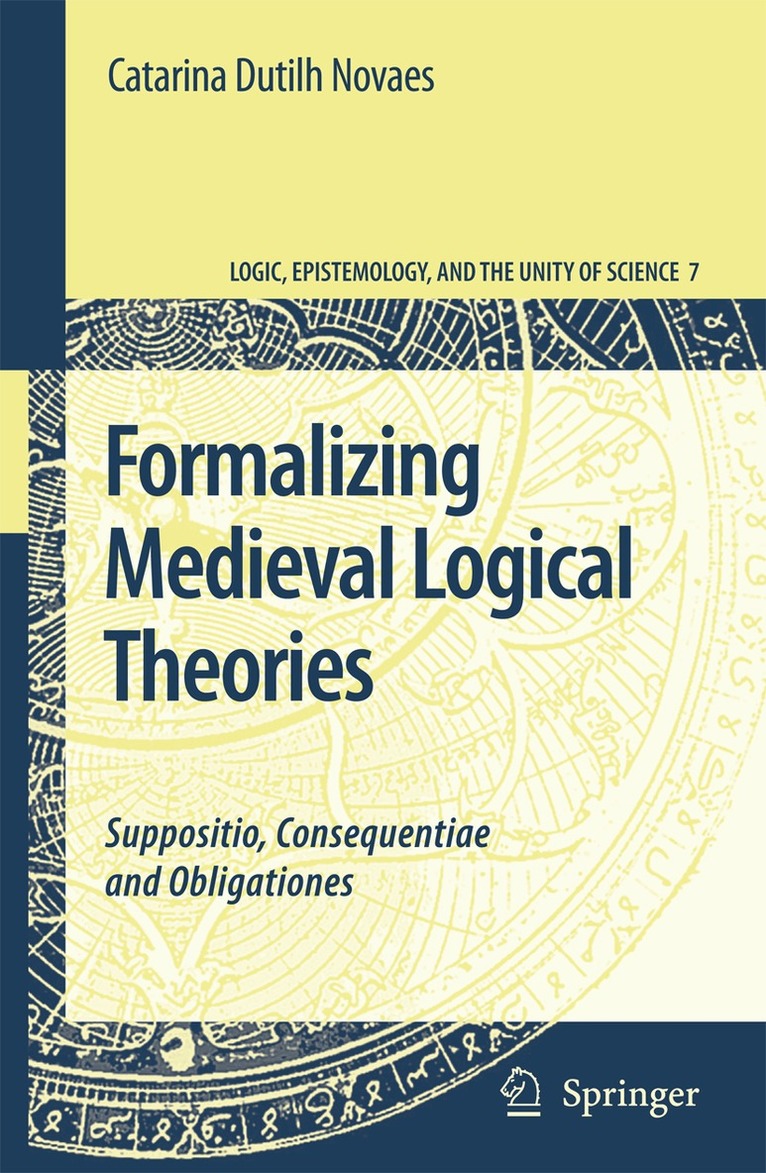
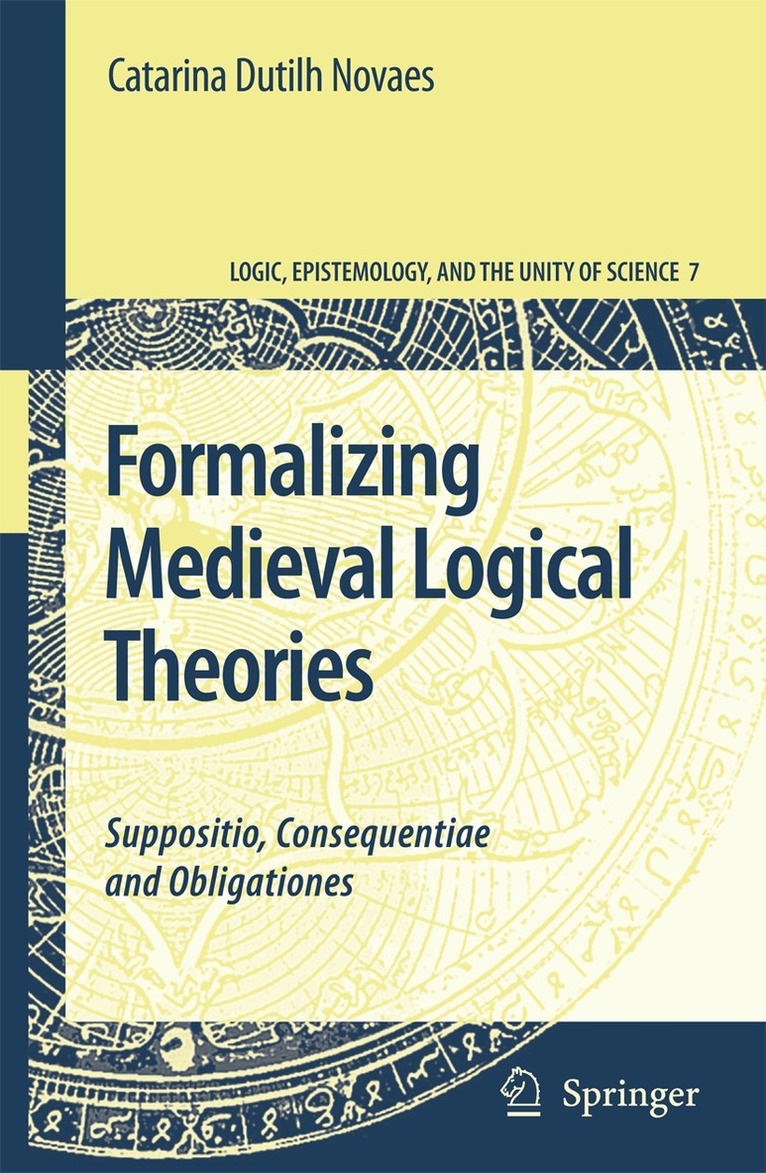
Perhaps one of the most striking characteristics of later medieval philosophy and science is the remarkable unity with which the different fields of investigation were articulated to each other, in particular with respect to the methodology used. While it is fair to say that current science is characterized by a plurality of methodologies and by a high degree of specialization in each discipline, in the later medieval period there was one fundamental methodology being used across disciplines, namely logic. One can say without hesitation that logic provided unity to knowledge and science in the later medieval times. Logic (which was then understood more broadly than it is now, including semantics and formal epistemology) was one of the first subject-matters in the medieval curriculum; it was thought that the knowledge of logic was a necessary, methodological requirement for a student to move on to the other disciplines. And indeed, the widespread use of this logical and semantic methodology can be perceived in disciplines as diverse as natural philosophy (physics), theology, ethics and even medicine. Besides the fact that medieval logic provided unity to science then, while modern logic does not play the same role now (if anything at all, it is mathematics that might be considered as the fundamental methodology for current investigations), it is also widely acknowledged that the medieval and modern traditions in logic are very d- similar in many other respects.
E-bok
PDF, Engelska, 20071 995 kr
Läs direkt efter köp
Perhaps one of the most striking characteristics of later medieval philosophy and science is the remarkable unity with which the different fields of investigation were articulated to each other, in particular with respect to the methodology used. While it is fair to say that current science is characterized by a plurality of methodologies and by a high degree of specialization in each discipline, in the later medieval period there was one fundamental methodology being used across disciplines, namely logic. One can say without hesitation that logic provided unity to knowledge and science in the later medieval times. Logic (which was then understood more broadly than it is now, including semantics and formal epistemology) was one of the first subject-matters in the medieval curriculum; it was thought that the knowledge of logic was a necessary, methodological requirement for a student to move on to the other disciplines. And indeed, the widespread use of this logical and semantic methodology can be perceived in disciplines as diverse as natural philosophy (physics), theology, ethics and even medicine. Besides the fact that medieval logic provided unity to science then, while modern logic does not play the same role now (if anything at all, it is mathematics that might be considered as the fundamental methodology for current investigations), it is also widely acknowledged that the medieval and modern traditions in logic are very d- similar in many other respects.
Häftad, Engelska, 2012
215 kr
Skickas inom 5-8 vardagar
Häftad, Engelska, 2020
309 kr
Skickas inom 5-8 vardagar
Häftad, Engelska, 2020
255 kr
Skickas inom 5-8 vardagar
Häftad, Engelska, 2020
255 kr
Skickas inom 5-8 vardagar
Häftad, Engelska, 2010
1 633 kr
Skickas inom 10-15 vardagar
Perhaps one of the most striking characteristics of later medieval philosophy and science is the remarkable unity with which the different fields of investigation were articulated to each other, in particular with respect to the methodology used. While it is fair to say that current science is characterized by a plurality of methodologies and by a high degree of specialization in each discipline, in the later medieval period there was one fundamental methodology being used across disciplines, namely logic. One can say without hesitation that logic provided unity to knowledge and science in the later medieval times. Logic (which was then understood more broadly than it is now, including semantics and formal epistemology) was one of the first subject-matters in the medieval curriculum; it was thought that the knowledge of logic was a necessary, methodological requirement for a student to move on to the other disciplines. And indeed, the widespread use of this logical and semantic methodology can be perceived in disciplines as diverse as natural philosophy (physics), theology, ethics and even medicine. Besides the fact that medieval logic provided unity to science then, while modern logic does not play the same role now (if anything at all, it is mathematics that might be considered as the fundamental methodology for current investigations), it is also widely acknowledged that the medieval and modern traditions in logic are very d- similar in many other respects.