Cezar Mihai Hâj – författare
Visar alla böcker från författaren Cezar Mihai Hâj. Handla med fri frakt och snabb leverans.
4 produkter
4 produkter
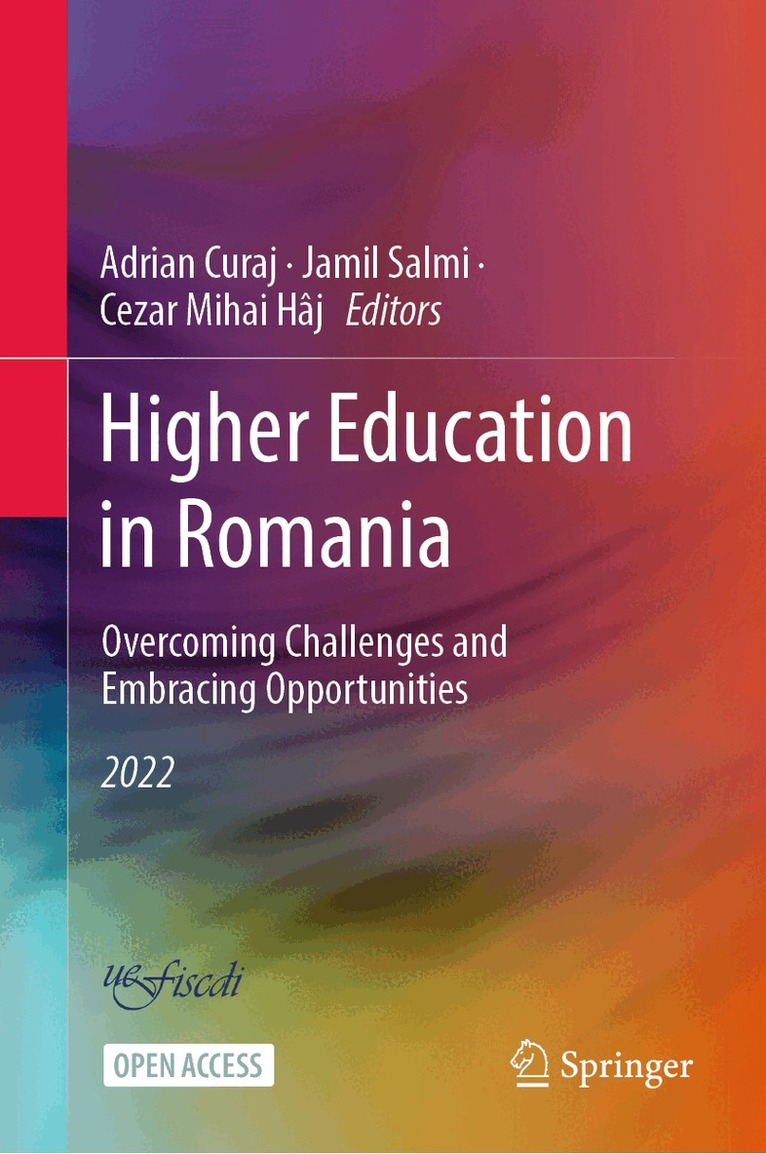
Higher Education in Romania: Overcoming Challenges and Embracing Opportunities
Inbunden, Engelska, 2022
519 kr
Skickas inom 10-15 vardagar
This open access book includes a series of relevant policy research articles, elaborared in the framework of the “Quality in higher education: internationalisation and databases to enhance the Romanian education system” project, implemented by the Executive Agency for Higher Education, Research, Development and Innovation Funding (UEFISCDI), together with the Ministry of Education. The project aims to develop and implement systemic measures at tertiary education level, leading to an increased quality of the overall higher education system and universities better prepared for labour market requirements and international standards. The book focuses on areas of interest for Romanian higher education, such as systemic measures to improve access, participation and completion for (vulnerable) students, better promotion of the Romanian higher education to attract students, as well as instruments for a more efficient use of data at higher education level. Each article includes evidence-based policy proposals that could support new strategic initiatives in higher education, including new legislation. Additionally, the collection of articles tells a comprehensive story about the audacity of a higher education system which went through significant challenges to align itself with both European and international trends, as well as respond to national imperatives.Over the last three decades, since the fall of the Iron Curtain, Romanian higher education has undergone significant transformations, aiming to align itself to the latest developments and trends at European and international level. The National Law on Education no. 1/2011 has set the stage for a full implementation of the Bologna Process action lines, taking into account that Romania was already a part of the largest European intergovernmental process – currently the European Higher Education Area (EHEA) – as a founding member.However, since the adoption of this normative framework, the law suffered numerous amendments, making it challenging to observe and achieve coherence in its implementation. Furthermore, Romania is also currently redesigning the strategy for the alocation of European structural funds 2021-2027, based on two strategic documents - the new Education and Employment Operational Programme and the National Recovery and Resilience Plan which highlight the reform and investment priorities at a national level.At the same time, 2021 is a good time to analyze the level of implementation for the objectives and measures included in the National Strategy for Tertiary Education 2015-2020, the Europe 2020 Strategy, and the Bologna Process action lines in the 2010 – 2020 timeframe. Therefore, the present moment may be an important time to assess the impact of strategic documents and actions in the last decade and, possibly, to draft a new National Education Law, better adapted to current realities, starting from the recent initiative by the President of Romania – theEducated Romania strategic vision which was also politically assumed by the Romanian Government.
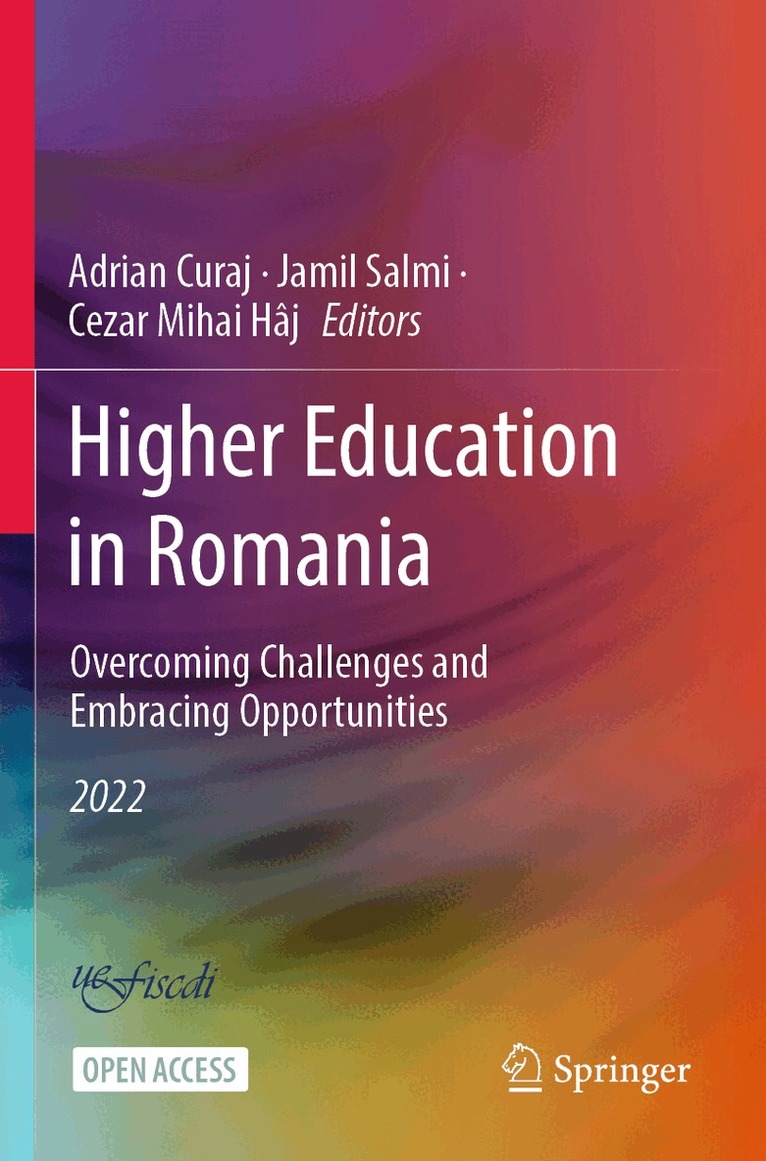
Higher Education in Romania: Overcoming Challenges and Embracing Opportunities
Häftad, Engelska, 2022
417 kr
Skickas inom 10-15 vardagar
This open access book includes a series of relevant policy research articles, elaborared in the framework of the “Quality in higher education: internationalisation and databases to enhance the Romanian education system” project, implemented by the Executive Agency for Higher Education, Research, Development and Innovation Funding (UEFISCDI), together with the Ministry of Education. The project aims to develop and implement systemic measures at tertiary education level, leading to an increased quality of the overall higher education system and universities better prepared for labour market requirements and international standards. The book focuses on areas of interest for Romanian higher education, such as systemic measures to improve access, participation and completion for (vulnerable) students, better promotion of the Romanian higher education to attract students, as well as instruments for a more efficient use of data at higher education level. Each article includes evidence-based policy proposals that could support new strategic initiatives in higher education, including new legislation. Additionally, the collection of articles tells a comprehensive story about the audacity of a higher education system which went through significant challenges to align itself with both European and international trends, as well as respond to national imperatives.Over the last three decades, since the fall of the Iron Curtain, Romanian higher education has undergone significant transformations, aiming to align itself to the latest developments and trends at European and international level. The National Law on Education no. 1/2011 has set the stage for a full implementation of the Bologna Process action lines, taking into account that Romania was already a part of the largest European intergovernmental process – currently the European Higher Education Area (EHEA) – as a founding member.However, since the adoption of this normative framework, the law suffered numerous amendments, making it challenging to observe and achieve coherence in its implementation. Furthermore, Romania is also currently redesigning the strategy for the alocation of European structural funds 2021-2027, based on two strategic documents - the new Education and Employment Operational Programme and the National Recovery and Resilience Plan which highlight the reform and investment priorities at a national level.At the same time, 2021 is a good time to analyze the level of implementation for the objectives and measures included in the National Strategy for Tertiary Education 2015-2020, the Europe 2020 Strategy, and the Bologna Process action lines in the 2010 – 2020 timeframe. Therefore, the present moment may be an important time to assess the impact of strategic documents and actions in the last decade and, possibly, to draft a new National Education Law, better adapted to current realities, starting from the recent initiative by the President of Romania – theEducated Romania strategic vision which was also politically assumed by the Romanian Government.
2 063 kr
Skickas inom 10-15 vardagar
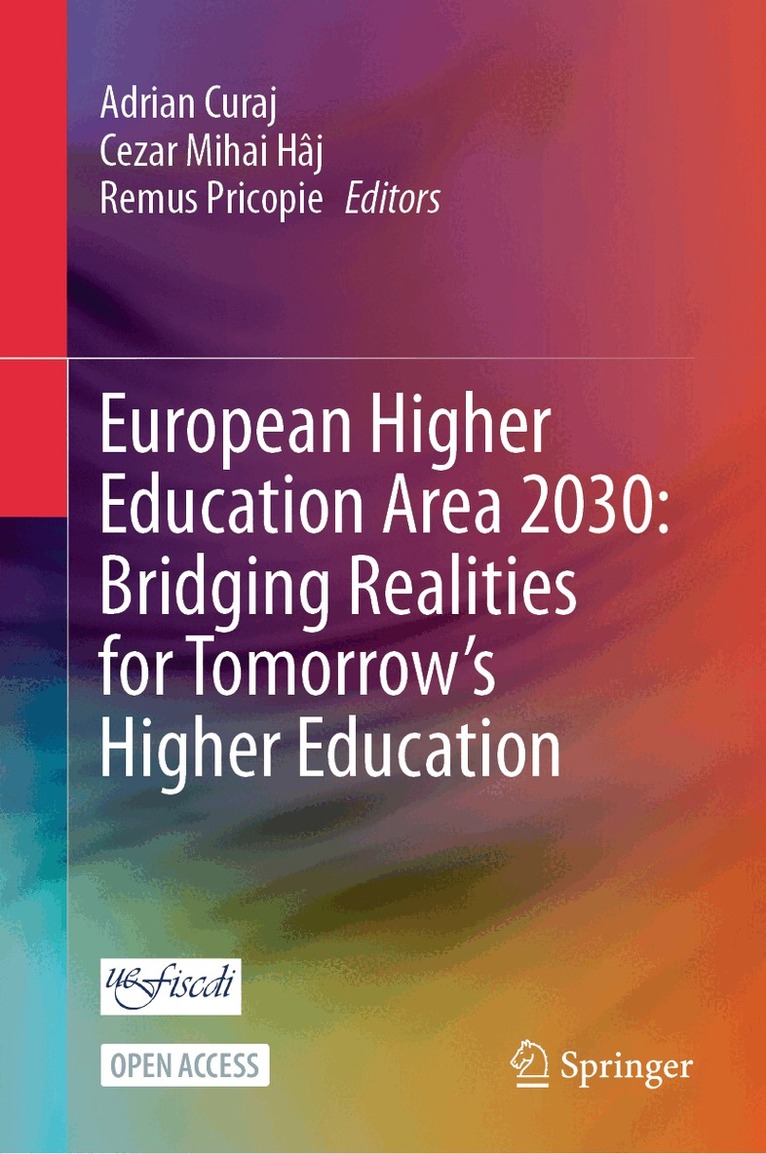
This open access book presents the major outcomes of the fifth edition of the Future of Higher Education – Bologna Process Researchers’ Conference (FOHE-BPRC5), organized by the Executive Agency for Higher Education, Research, Development and Innovation Funding (UEFISCDI) prior to the 2024 Ministerial Conference in Tirana.The Conference is considered a landmark in the European Higher Education Area, encouraging dialogue between researchers and policy-makers. The resulting book provides a forward-looking perspective on how the EHEA is evolving in response to current challenges and opportunities, by focusing on topics such as internationalization, equity and employability, fundamental values, impact of digitalization or innovative learning and teaching. The papers presented offer insights in these areas, illustrating successful or failed implementations within the EHEA and are published in open access format to ensure that the researchers’ perspectives are widely available to European policy and decision makers.Since 2024 marks the first post pandemic edition of the Conference, it is a good moment to not only to take stock of the challenges brought by the Covid-19 pandemic and the war in Ukraine, but also to explore how scientific research can support policy into shaping the directions for the future to come.
492 kr
Skickas inom 10-15 vardagar
This open access book presents the major outcomes of the fifth edition of the Future of Higher Education – Bologna Process Researchers’ Conference (FOHE-BPRC5), organized by the Executive Agency for Higher Education, Research, Development and Innovation Funding (UEFISCDI) prior to the 2024 Ministerial Conference in Tirana.The Conference is considered a landmark in the European Higher Education Area, encouraging dialogue between researchers and policy-makers. The resulting book provides a forward-looking perspective on how the EHEA is evolving in response to current challenges and opportunities, by focusing on topics such as internationalization, equity and employability, fundamental values, impact of digitalization or innovative learning and teaching. The papers presented offer insights in these areas, illustrating successful or failed implementations within the EHEA and are published in open access format to ensure that the researchers’ perspectives are widely available to European policy and decision makers.Since 2024 marks the first post pandemic edition of the Conference, it is a good moment to not only to take stock of the challenges brought by the Covid-19 pandemic and the war in Ukraine, but also to explore how scientific research can support policy into shaping the directions for the future to come.